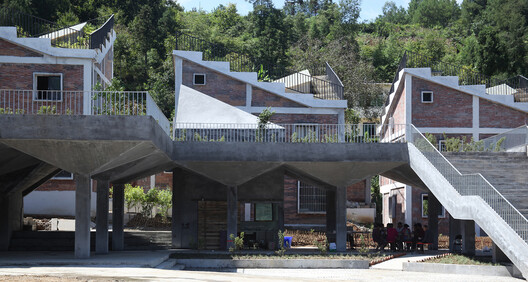
On June 24, 2026, a severe seismic event consisting of two major earthquakes with magnitudes of 7.2 and 7.5 struck north-central Venezuela just 39 seconds apart. The widespread destruction was concentrated along the country's northern coast, heavily impacting the capital city of Caracas and the neighboring state of La Guaira, where fragile urban infrastructure and vulnerable housing stock led to the collapse or severe damage of thousands of residential structures. This disaster mirrors previous devastating events observed during other major seismic events, including the 2008 Wenchuan earthquake and 2011 landslides in Sichuan, the 2014 Ludian earthquake in Yunnan, and the 2017 earthquake across central Mexico. When high-magnitude natural disasters damage entire communities, architects have the opportunity to help by proposing post-disaster architecture with strategic recovery models. Rather than relying on generic, standardized emergency shelters, conscious architectural design can deliver low-cost, rapidly deployable residential infrastructure that preserves human dignity through culturally contextual and dignified spaces.
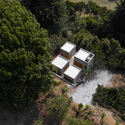
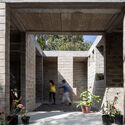
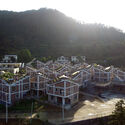
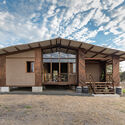
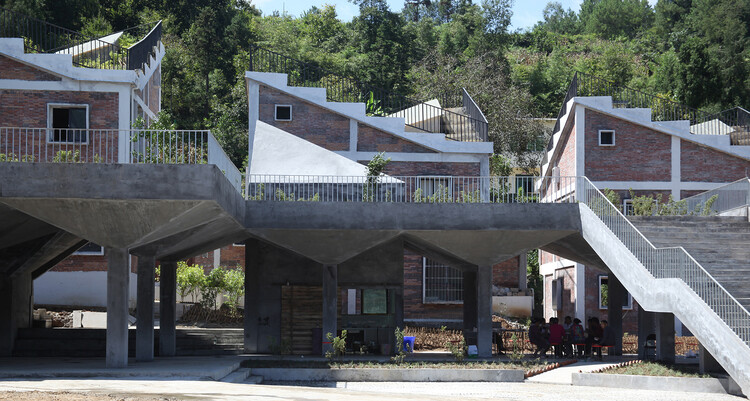
When analyzing several global post-earthquake reconstruction models, architects seem to consistently deploy localized material optimization and modular structural configurations to balance economic constraints with seismic resilience. Instead of relying on expensive, imported industrial solutions, post-disaster strategies prioritize the engineering of local soils, vernacular brick masonry, and salvaged building components to ensure affordability and community-driven execution. Spatially, these projects often maximize restricted footprints by decentralizing residential floor plans: separating functional zones like kitchens, bedrooms, and workspace courtyards to eliminate dead circulation space and improve internal air and light distribution. Structural integrity is achieved through simple, replicable engineering upgrades, such as embedding horizontal concrete ring beams and vertical steel reinforcement bars within localized earth or block walls to resist lateral seismic forces. By integrating passive thermal systems and flexible spatial configurations, these reconstruction efforts transition from temporary relief structures into highly functional, permanent residential landscapes that support the long-term economic and social recovery of displaced populations.