Architectural ornamentation has been a recurrent subject of debate across the industry for decades. A practice that was largely abandoned during the Modernist movement could now be standing on a platform that might, again, allow its resurgence, due to the current convergence of robotics, artificial intelligence (AI), and digital fabrication. Technology has seemingly removed the primary obstacle to decorative detail: the high cost of skilled manual labor. However, this new technical capacity demands a critical examination: What does ornamentation truly represent, and what do we gain or lose by resurrecting it through algorithmic design?
Howl's Moving Castle. Image Courtesy of Studio Ghibli
Every evening when we get home, without ceremony, we perform a small rite. We arrive at a door, we open it, and we step through into a space that belongs to us in a way no other space does. It is such a mundane act that we rarely notice it has a structure at all, and yet philosophers and anthropologists have written entire books describing these psychological structures. Interestingly, visual works such as the animated worlds of Studio Ghibli seem to reflect this dynamic to create worlds which contain architecture and layouts that provide a path to escape by tapping into our memories in a legible yet enchanted form.
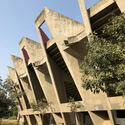
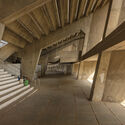
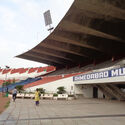
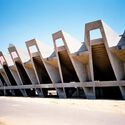
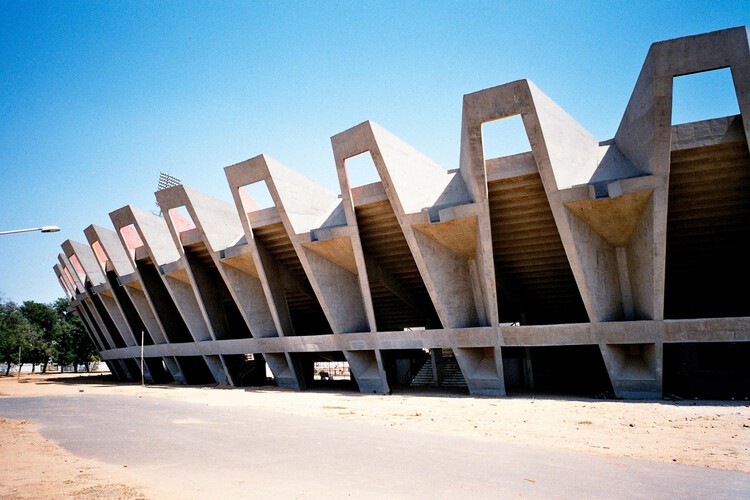
In the heart of Ahmedabad's Navrangpura district in India sits the Sardar Vallabhbhai Patel Stadium. More than just a cricket ground, the stadium stands as one of India's earliest experiments in modernist public architecture. Built in the decades following the country's independence, the structure has not only become an engineering landmark, but also a major public space within Ahmedabad's urban fabric. Despite the building's architectural and historical significance, as well as its deep involvement in daily community life, it has suffered significant physical degradation as a result of decades of poor maintenance and lack of funding. That fragility is precisely why it has drawn international attention. In 2020, the World Monuments Fund (WMF) placed the Sardar Vallabhbhai Patel Stadium on its World Monuments Watch, a global list highlighting cultural heritage sites facing urgent preservation challenges.
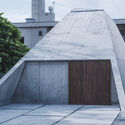
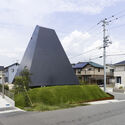
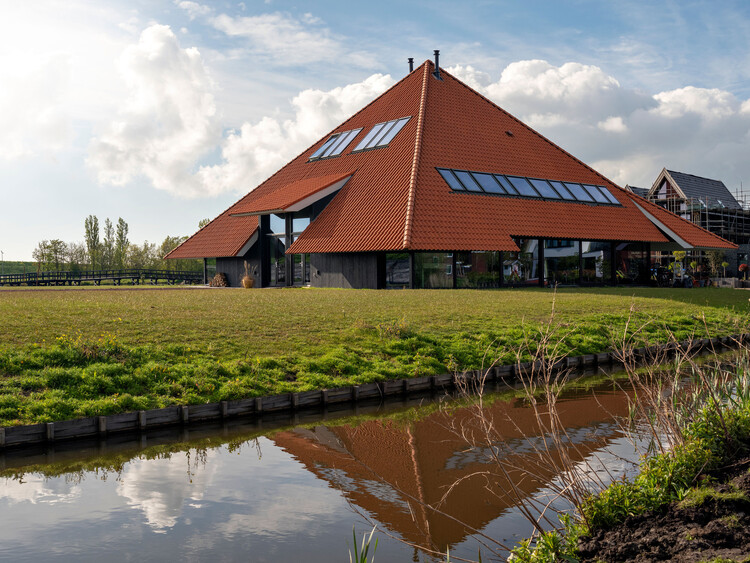
While pyramidal geometry appears in monumental historical structures, its contemporary application remains limited. The primary constraint is the sloping envelope, which contracts the building's floor area as it ascends and reduces usable interior volume compared to orthogonal or cylindrical forms. However, from a structural standpoint, the geometry offers lateral stability against wind and seismic loads due to its broad base, central mass distribution, and self-bracing triangular faces. Nonetheless, applying this shape at a residential scale introduces several layout constraints. These slanted walls limit vertical wall surfaces, which complicates the placement of standard windows, doors, and floor partitions. At the same time, the low clearance along the perimeter also creates unusable floor area at the edges of the room.
On June 24, 2026, a severe seismic event consisting of two major earthquakes with magnitudes of 7.2 and 7.5 struck north-central Venezuela just 39 seconds apart. The widespread destruction was concentrated along the country's northern coast, heavily impacting the capital city of Caracas and the neighboring state of La Guaira, where fragile urban infrastructure and vulnerable housing stock led to the collapse or severe damage of thousands of residential structures. This disaster mirrors previous devastating events observed during other major seismic events, including the 2008 Wenchuan earthquake and 2011 landslides in Sichuan, the 2014 Ludian earthquake in Yunnan, and the 2017 earthquake across central Mexico. When high-magnitude natural disasters damage entire communities, architects have the opportunity to help by proposing post-disaster architecture with strategic recovery models. Rather than relying on generic, standardized emergency shelters, conscious architectural design can deliver low-cost, rapidly deployable residential infrastructure that preserves human dignity through culturally contextual and dignified spaces.
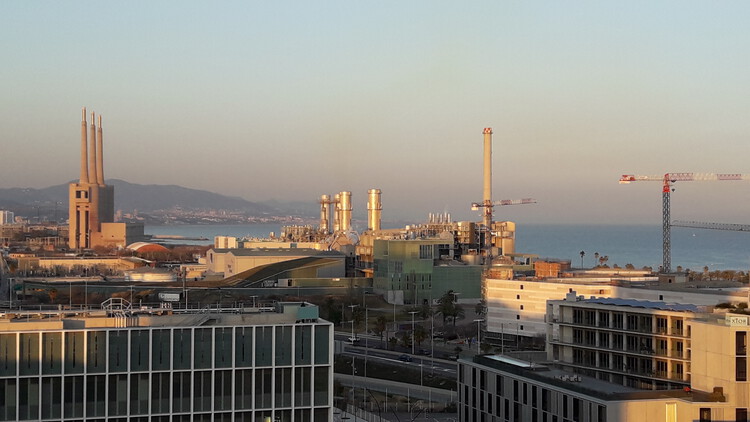
Every three years, the International Union of Architects' (UIA) World Congress lands in a different city, under a different theme set years in advance. A quick mapping of these host cities reveals a deliberate pattern: throughout the decades, the UIA has purposefully chosen a wide range of venues across all continents, rendering each edition a snapshot of what mattered in that specific place, at that exact moment. The result of this geographic rotation has been a diverse kaleidoscope of conversations, analyzing the profession from countless angles and adapting it to changing times. But 2026 is different; this time the UIA is repeating a host city for the first time: Barcelona, under the theme "Becoming. Architectures for a planet in transition".
Concept : Living and Working on the Moon. Image Courtesy of NASA
After Artemis II's return to Earth, NASA unveiled a new phased plan to establish a Moon Base. Although most of the media's attention went to rockets, budgets, and geopolitical competition, a quieter question was lingering for architects in the background: How can a human being actually live on the surface of the Moon, and for how long? The establishment of a permanent human presence on the Moon marks a fundamental shift in space exploration that requires a new architectural paradigm. In their presentation, NASA officials suggested the strategy would drift away from highly constrained, vehicle-dependent environments toward autonomous, site-adaptive, and eventually permanently habitable structures.
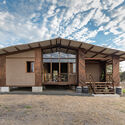
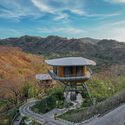
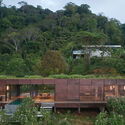
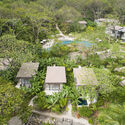
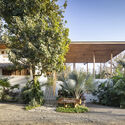
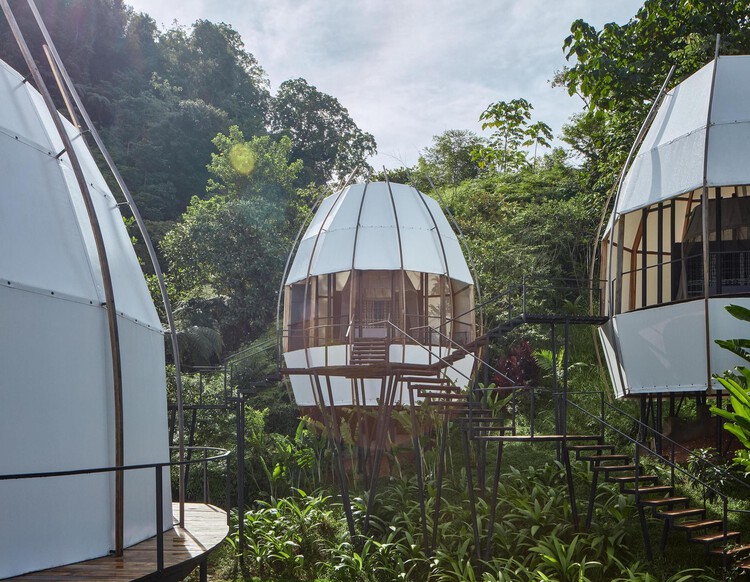
In the coastal and jungle regions of Costa Rica, high humidity and intense solar radiation dictate an architectural strategy centered on permeability rather than enclosure. Unlike the airtight envelopes required in cold climates to retain heat, Costa Rican architecture uses the building envelope as a climatic filter to maximize air exchange. The primary mechanism for managing these thermal gradients seems to be the oversized roof overhang. By extending the roof plane significantly beyond the floor plate, architects create a permanent buffer of deep shade that reduces solar gain and lowers the ambient temperature before air enters the structure. This strategy, combined with permeable or non-existent walls, allows for constant airflow. This is a critical technical requirement for humidity control and the prevention of material degradation through mold and rot.
The architectural history of North American cities in the 20th century is often characterized by the pursuit of urban renewal. In the United States, Boston, Portland, and San Francisco are just some examples of when municipal governments prioritized high-speed vehicular infrastructure over the existing urban fabric. In Canada, Montreal would have followed this trajectory if not for the intervention of several figures throughout its history, most notably Blanche Lemco van Ginkel (1923–2022). A Harvard-trained planner and architect who, along with her husband Sandy Van Ginkel, advocated for the preservation of urban heritage while applying the principles of modernist infrastructure.
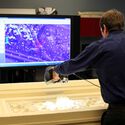
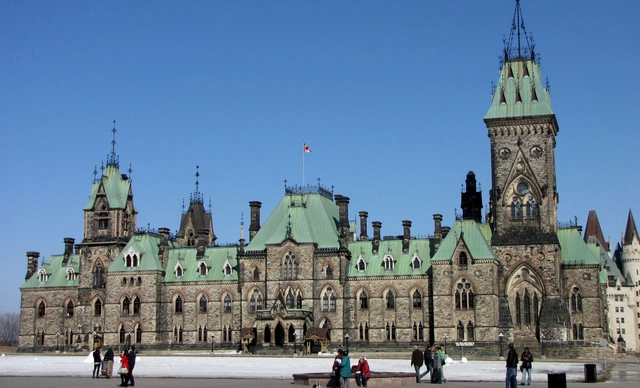
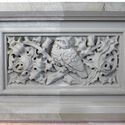
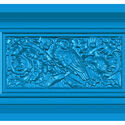
Heritage restoration has always been an intricate process that requires delicate balancing between preserving the integrity of historic materials while integrating contemporary techniques that can enhance accuracy, efficiency, and resilience. With the restoration process of Parliament Hill in Ottawa, Canada's capital city, this intersection of tradition and technology is now on full display. The East Block, built in 1865, offers a compelling example of how digital tools can support the efforts of heritage restoration and contribute to a centuries-old craft such as stone carving.
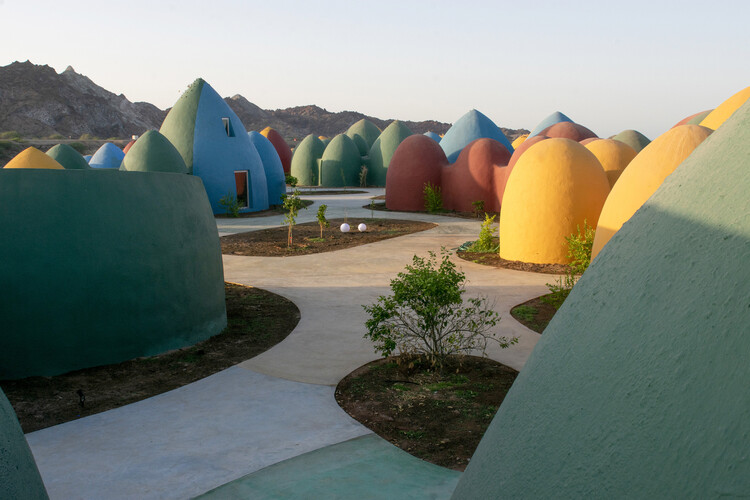
Hormuz Island, located in Iran, was a strategically significant port in the Persian Gulf, characterized by its landscape of colorful mountains. Despite its tourist appeal, the island faces significant socio-economic problems, with the local population having historically faced economic hardship. In response, the Majara Complex by ZAV Architects was conceived not merely as a building but as a deliberate architectural intervention designed to give control, opportunity, and economic benefit directly to the local community. To do this, the project channeled investment into local human resources and prioritized accessible construction techniques, creating a pathway for localized wealth creation. This allowed the Majara Complex to be one of the recipients of the Aga Khan Award for Architecture in 2025.
The island of Taiwan presents a varied natural and topographical context, characterized by a land area of 36,197 square kilometers and a high population density of 644 people per square kilometer. Its geological location, situated on the edges of the Eurasian and Philippine Sea plates, has resulted in a predominantly mountainous and rugged topography. While this forces the majority of the 23 million residents to inhabit large urban centers on the western coastal plains, the island maintains an active agricultural sector, with approximately 22% of its land allocated to farming.
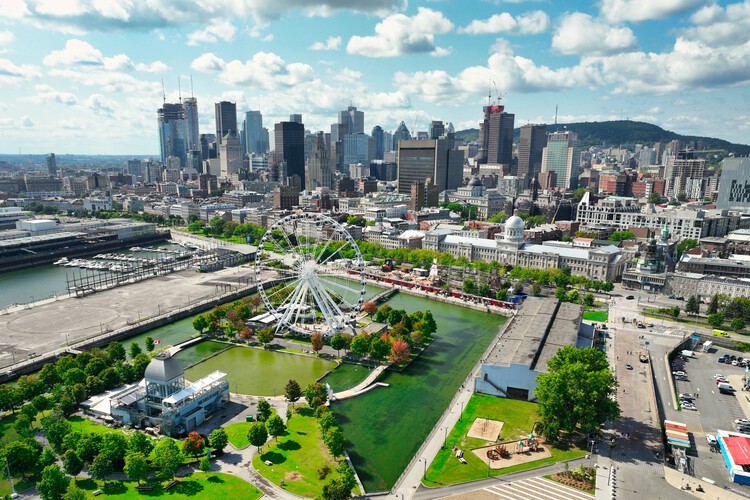
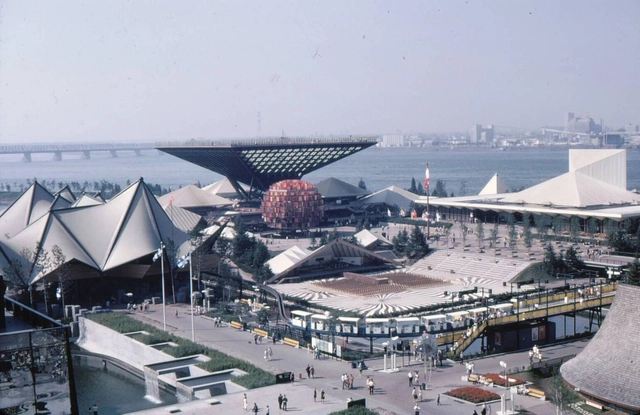
Canada's Expo 67 stands as one of the most successful world expos ever held, setting records and leaving an enduring impact on Montreal's urban landscape. As part of Canada's 100 years celebrations, the event provided an opportunity for the city to showcase its cultural and technological achievements on a global platform. With over 50 million visitors in just six months, it shattered attendance records, including an astonishing 569,500 visitors in a single day. An unprecedented feat for a world fair at the time. Now, 58 years later, and with the Osaka Expo 2025 set to showcase how to design the future society for our lives, it is worth revisiting the legacy of Expo 67 and exploring the urban transformations it brought to Montreal.
‘’We’re in a seismic area. Beirut has been buried seven times, so it has to resist any earthquake, and that’s why it also resisted the explosion in the port,’’ expresses Lina Ghotmeh in conversation with Louisiana Channel, in regards to the Stone Garden. A building constructed with resilience in mind, in a city that has been buried within rubble and rebuilt multiple times.
Lina Ghotmeh was interviewed by Marc-Christoph Wagner at her studio in Paris in November 2021. Renowned for her Humanist approach to Architecture, the Stone Garden offers a very personal relationship as the first building to be constructed in Ghotmeh’s hometown of Beirut. Positioned on the edge of the city center, it is very much a form of vernacular architecture echoing the lives of the people who reside here.
‘’The delight I get out of doing buildings is to say: Screw you, it can be built’’ says Architect Peter Cook in conversation with Louisiana Channel, where he discusses his determination to communicate ideas through vivid Architectural drawings and the skepticism he has faced in regards to his ambitious design proposals and their outlandish appearance.
Videos
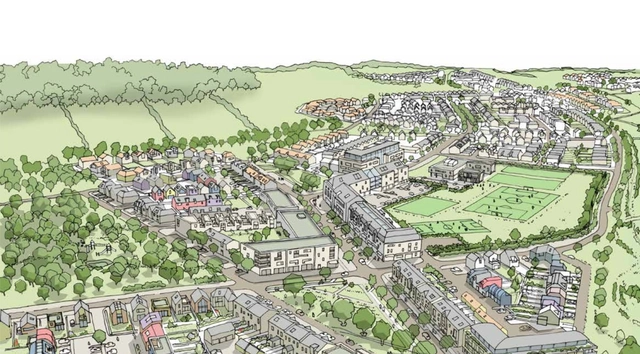
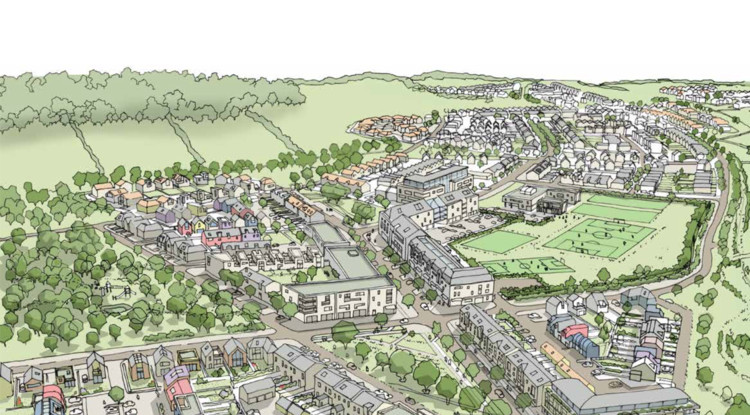
via Graven Hill Village Development Company
“Self-build”: no mention of an architect, or anyone else for that matter. Maybe it’s a prehistoric urge that makes this idea so enticing; our earliest ancestors constructed their primitive huts to suit their unique needs and reflect their status or style. “Self-build” promises to physically re-connect people to the homes they live in.
However, the romantic notion of "self-build" housing is rarely compatible with the modern reality we live in. Building has become increasingly clouded by the difficulty of procuring land, excessive governmental red-tape, and an increase in building complexity. While self-build remains the purest form of this dream, there are now a series of nuanced processes that can help us achieve similar results. As a new generation of communities that encourage this dream emerges, we must look at the role the architect plays within them.
Red is everywhere. From stop signs to bricks and lipstick to wine, our constant use of the color in everyday objects has slowly taken over our subconscious. Red is a color that always blends with the context, telling us how to feel or what to think, but why are we attracted to it? Why did cavemen choose ochre-based paint to draw on their walls? Why do revolutions always seem to use red to stir support? Why do we parade celebrities down red carpets, when green or blue would surely do the same job? While the answers to these questions may be vague and indefinite, red’s use in architecture is almost always meticulously calculated.
Not many architects will come across the challenge of building in outer space, but who knows what the future will hold... asteroid mining and space photobioreactors? In a recent article, Metropolis Magazine looks into the design of the International Space Station, examining how our conventional rules of architecture become obsolete in zero gravity. Walls, ceilings, and floors can be interchangeable, and "form follows function" is taken to the extreme.
2018 marks 20 years since construction first began on the International Space Station. The satellite is made up of 34 separate pieces, each of which was either delivered by space shuttle or self-propelled into space. With absolutely no room for error, the 13-year construction of the space station was perhaps one of the big success stories of the millennium, seeing 230 astronauts, cosmonauts and space-tourists visit over the past two decades.














































.jpg?1528724681)