1. ArchDaily
  2. Seismic Resistance

Seismic Resistance: The Latest Architecture and News

What are Metamaterials? Innovations in Architecture from Acoustic Invisibility to Seismic Protection

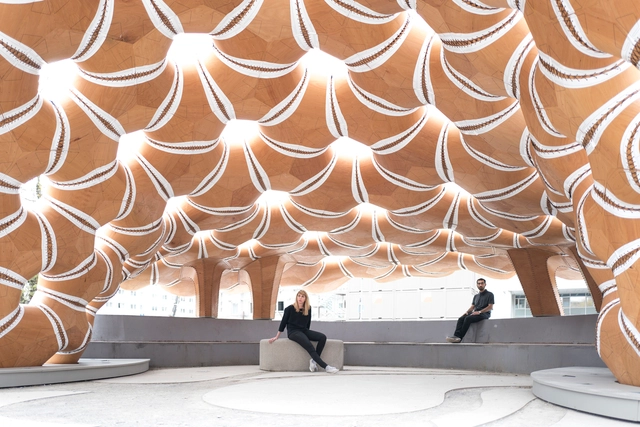
The future of the architecture industry holds countless possibilities, as research in the domain progresses. One innovation is the ability for structures to be rendered acoustically invisible, absorb earthquake energy, or harvest electricity from the sounds around them. Qualities of this nature can help redefine the functionality and sustainability of buildings. Architects and scientists are at the forefront of this creation. What makes this possible are metamaterials that could offer alternative methods of designing good buildings.

What are Metamaterials? Innovations in Architecture from Acoustic Invisibility to Seismic Protection - Image 1 of 4What are Metamaterials? Innovations in Architecture from Acoustic Invisibility to Seismic Protection - Image 5 of 4What are Metamaterials? Innovations in Architecture from Acoustic Invisibility to Seismic Protection - Image 2 of 4What are Metamaterials? Innovations in Architecture from Acoustic Invisibility to Seismic Protection - Image 3 of 4What are Metamaterials? Innovations in Architecture from Acoustic Invisibility to Seismic Protection - More Images+ 3

Earthquake Hits Taiwan: How Strict Building Codes Averted a Larger Disaster

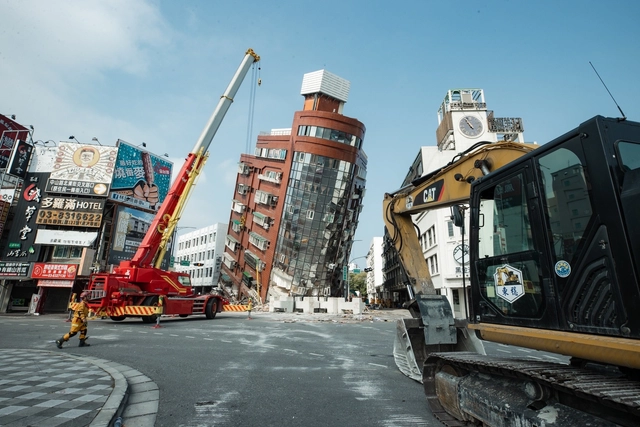
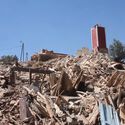
On April 3, Taiwan was hit by a 7.4 magnitude earthquake, the strongest one in 25 years. According to the latest reports, nine people have been killed, and at least 900 others have been injured by damaged buildings and landslides on the island. The seism was centered off the eastern coast of Hualien County, severely damaging buildings, some leaning at severe angles. However, the country’s strict building codes, developed in the past two decades in response to the area’s intense seismic activity, have prevented even more extensive damage and loss of life.

Building Resilience: A Closer Look at 2023's Response to Disaster Challenges

As we reflect on the tumultuous events of 2023, it becomes evident that the challenges posed by changing environmental conditions have left an indelible mark on communities worldwide. In response, architects and urban planners have set out, searching for the ways in which their actions can help create safer environments for communities worldwide, responding with both fast-to-deploy emergency architectures and long-term strategies to build resilience and mitigate risks.

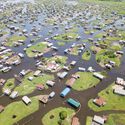
Beyond merely responding to events like the devastating earthquakes in Turkey, Syria, and Morocco, or the widespread flooding in Libya or Pakistan, professionals are attempting to take proactive approaches, developing strategies that extend from predictive modeling to the application of re-naturalizing techniques or the ongoing research into the physics of safer and resilient structures.

Building Resilience: A Closer Look at 2023's Response to Disaster Challenges - Image 1 of 4Building Resilience: A Closer Look at 2023's Response to Disaster Challenges - Image 2 of 4Building Resilience: A Closer Look at 2023's Response to Disaster Challenges - Image 3 of 4Building Resilience: A Closer Look at 2023's Response to Disaster Challenges - Image 4 of 4Building Resilience: A Closer Look at 2023's Response to Disaster Challenges - More Images+ 15

How Can Cities Create Resilience in the Face of Natural Disasters

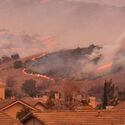
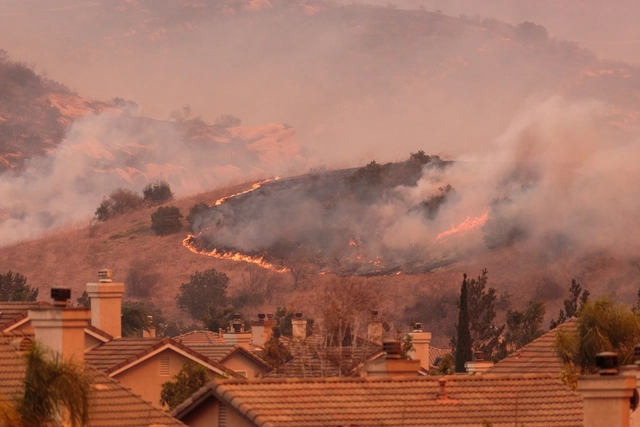
As the world grapples with the effects of climate change, natural disasters like flooding, and the spread of incontrollable wildfires are increasingly threatening cities and inhabitants. While architecture and urban planning cannot prevent these occurrences, they still possess strategies to minimize the damage associated with these events and help protect the citizens. Unfortunate events over the course of last year, like the earthquake that hit central Turkey and north-west Syria this February or the more recent earthquake in western Afghanistan, the flooding and dam failures in Libya, and the wildfires that devastated the city of Lahaina, Hawaii, demonstrate the urgency of implementing preventative and mitigation measures in addition to creating procedures for emergency intervention. This article explores the strategies and resources available to architects and urban planners to address these challenges in three types of natural disasters: flooding, wildfires, and earthquakes.

How Can Cities Create Resilience in the Face of Natural Disasters - Image 1 of 4How Can Cities Create Resilience in the Face of Natural Disasters - Image 2 of 4How Can Cities Create Resilience in the Face of Natural Disasters - Image 3 of 4How Can Cities Create Resilience in the Face of Natural Disasters - Image 4 of 4How Can Cities Create Resilience in the Face of Natural Disasters - More Images+ 11

First-Ever Earthquake Simulation in a 10-Story Mass Timber Building

Subscriber Access | 

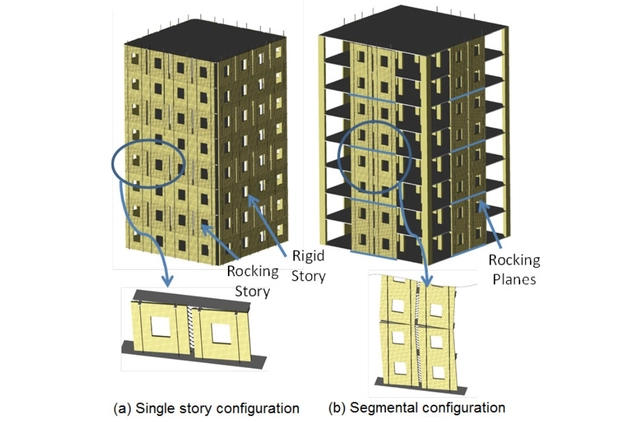
When it comes to seismic resistance, there are a number of myths that question the ability of wood to adequately perform in the event of an earthquake. However, its ductility allows it to deform plastically without breaking, absorbing and dissipating the energy generated by movement and vibration. Furthermore, unlike steel or concrete, wood is a lightweight material with a good strength-to-weight ratio, enabling it to withstand seismic forces without adding excessive load to the construction. This has been extensively verified in smaller-scale structures around the world, but how does a high-rise mass timber building behave in the face of an earthquake?

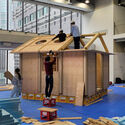
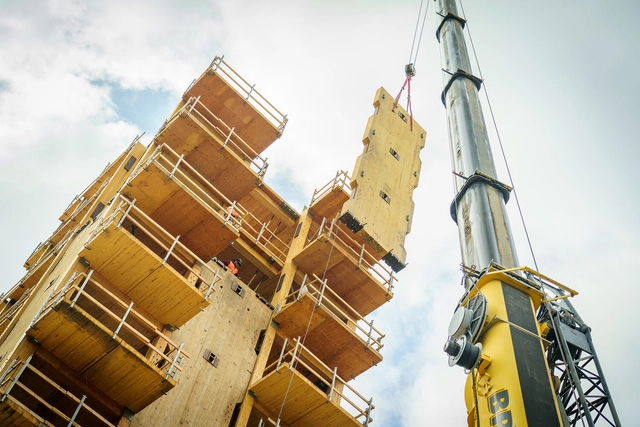
To dispel doubts, the Tallwood Project recently erected a 10-story building made of cross-laminated timber (CLT) at the University of California, San Diego (UCSD). The structure was tested on a shake table that simulated the 1994 Northridge earthquake in Los Angeles, magnitude 6.7, and the 1999 Chi-Chi earthquake in Taiwan, magnitude 7.7.

SET Architects' Climbing-Frame Inspired Sassa School Prioritizes Adaptability

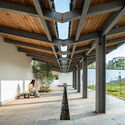
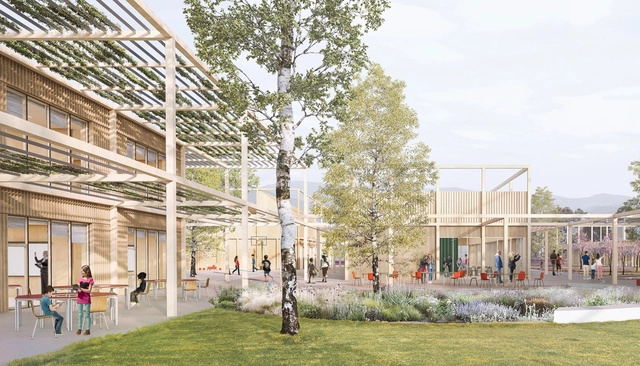
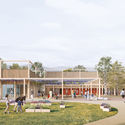
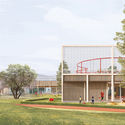
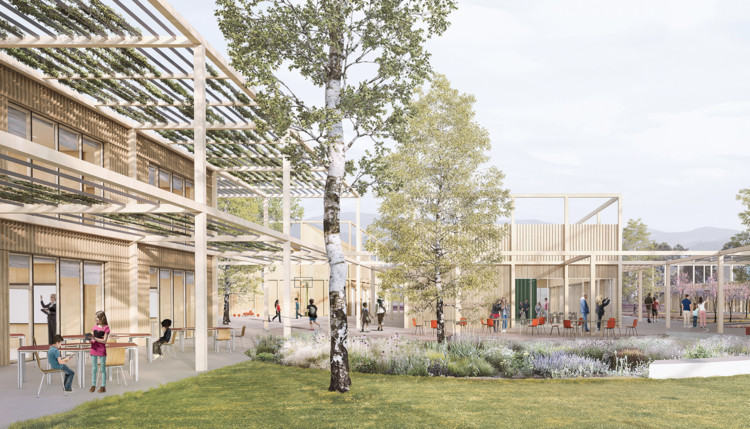
Ten years after a destructive earthquake rocked Italy's central Abruzzo region, many students still attend class in temporary modules similar to containers. Named winners of an international competition, SET Architects’ design for the new “Sassa School Complex” proposes reconstructing a place for students and the community to learn, gather, and grow. Inspired by the modularity and essential nature of climbing frame play structures, the architects describe the design as a metaphor for “freedom and social aggregation as a fundamental value for dynamic and innovative teaching.”

SET Architects' Climbing-Frame Inspired Sassa School Prioritizes Adaptability  - Image 1 of 4SET Architects' Climbing-Frame Inspired Sassa School Prioritizes Adaptability  - Image 2 of 4SET Architects' Climbing-Frame Inspired Sassa School Prioritizes Adaptability  - Image 3 of 4SET Architects' Climbing-Frame Inspired Sassa School Prioritizes Adaptability  - Image 4 of 4SET Architects' Climbing-Frame Inspired Sassa School Prioritizes Adaptability  - More Images+ 23

UBC Researchers Develop New Concrete That Resists Earthquakes

Researchers from the university of British Columbia have developed a new fiber-reinforced concrete treatment that can “dramatically [enhance] the earthquake resistance of seismically vulnerable [structures].”

Called EDCC (eco-friendly ductile cementitious composite), the material is engineered at the molecular level to react similarly to steel – with high strength, ductility and malleability. When sprayed onto the surface of traditionally poured interior concrete walls, it reinforces against seismic intensities as high as the magnitude 9.0-9.1 earthquake that hit Tohoku, Japan in 2011.

Learn About Seismic Design of Wooden Buildings With These Online Resources

Subscriber Access | 

With the aim of raising awareness and expanding knowledge about the advantages of wood in the built environment, reThink Wood has created an online library that collects a series of articles, reports, studies and videos that can be freely accessed right now.

Here we have 5 outstanding resources related to seismic design and performance, which can help you solve this issue on your next project.