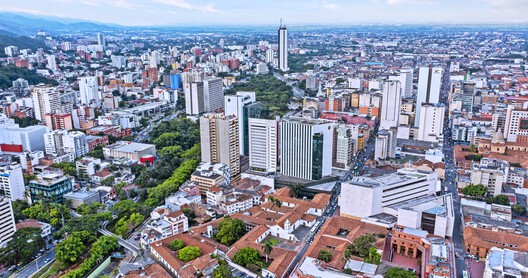
On Monday, 10 August 2026, a magnitude 7.4 earthquake struck Colombia's Pacific and Caribbean coasts. While the seismic event lightly affected the southern border of Panama and the northern border of Ecuador, Colombia has declared a national state of emergency. The earthquake has caused 111 deaths according to official reports, with the toll expected to rise as search and rescue efforts continue. According to the Servicio Geológico Colombiano (SGC), the epicentre was located 96 kilometres beneath the surface near San José del Palmar, a rural area in the northwest of the Chocó province. Infrastructure damage extends to densely populated cities including Cali, Pereira, Manizales, and Armenia, affecting an area with a population of about 3.5 million people. This seismic event follows four others that occurred less than two months ago in Japan, the United States, and Venezuela, adding to reconstruction efforts already underway worldwide.
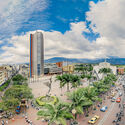
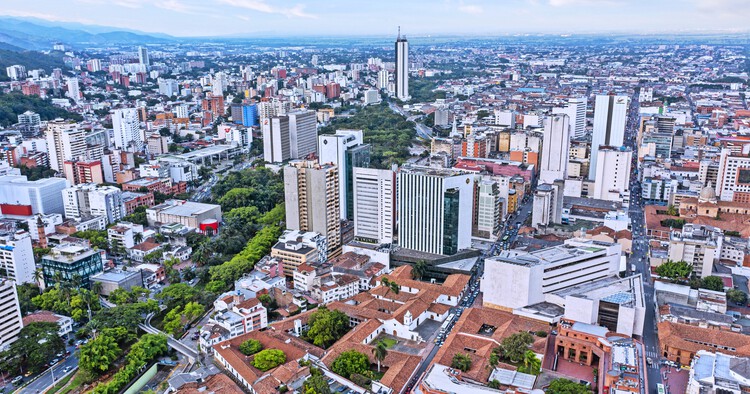
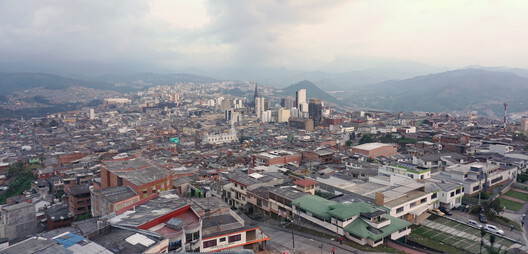
Colombia is located in an area where the Nazca, South American, and Caribbean tectonic plates interact, making it a seismically active country. According to the United States Geological Survey (USGS), this is the strongest earthquake in Colombia since the 1979 Tumaco earthquake, and is surpassed in magnitude only by a 1906 earthquake on the same coast. The movement was felt in the country's largest cities, Bogotá and Medellín, though most strongly in departments along the Pacific coast, such as Chocó, Valle del Cauca, and Cauca, and in the Coffee Region, including Risaralda, Caldas, and Quindío. In the first official announcement, Colombian President Abelardo de la Espriella, recently in office, reported a total of 1,575 damaged housing units, 37 destroyed, 61 collapsed buildings, 18 affected healthcare facilities, 52 affected educational institutions, 18 affected roads, and six affected airports.
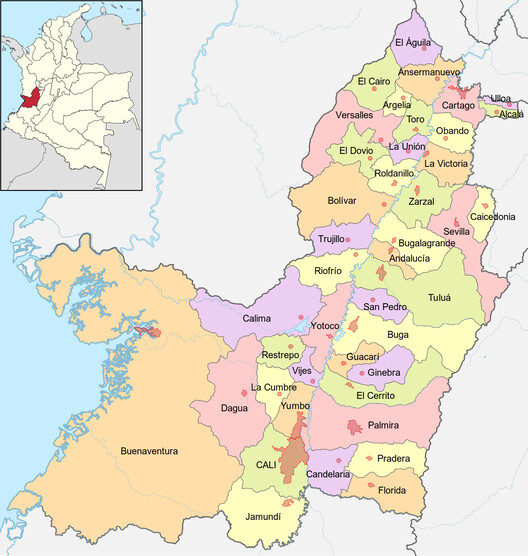
Architecture in Valle del Cauca is described as a layered historical landscape formed by colonial urban areas, republican buildings, institutional architecture, transportation infrastructure, religious buildings, and traditional houses. Cali is also an important centre of Colombian modern architecture. Colombia's traditional buildings frequently use tapia, adobe, bahareque, and timber, and the Ministry of Culture has specifically recognised the need to develop compatible structural reinforcement approaches for heritage buildings constructed using these ancestral systems. Although the latest government announcement does not provide details about the buildings in question, local reports have indicated damage to some architectural landmarks, both modern and time-honored.
Related Article
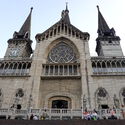
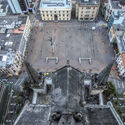
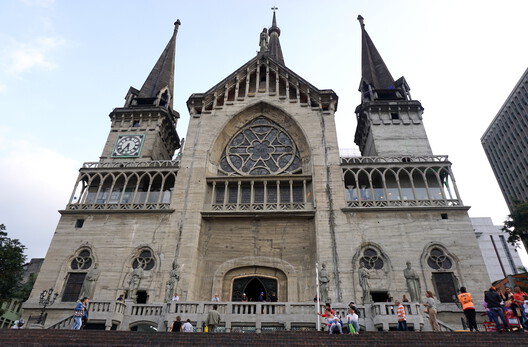
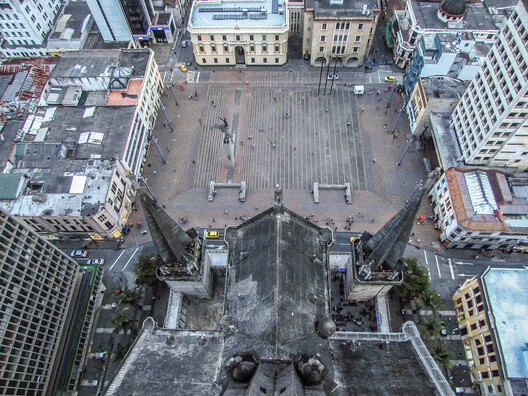
Beyond Emergency Shelters: Modular and Vernacular Architecture in Post-Earthquake ReconstructionThe cities of Pereira, Cali, Manizales, Quibdó, and Armenia have accounted for the highest number of reports of infrastructural damage so far. The largest reported loss is the partial destruction of Colombia's tallest cathedral, the Catedral Basílica de Nuestra Señora del Rosario de Manizales, located in Manizales' Plaza de Bolívar in the coffee-growing region. The earthquake caused the collapse of one of the side towers of the Neo-Gothic building, designed by Julien Polti and built between 1928 and 1939. At Cali's Hospital Universitario del Valle, a modern building lost three floors in a partial collapse, and six other healthcare centres reported structural damage. In Pereira, the exterior walls of the Law School at Universidad Libre collapsed, while in Armenia, damage was reported at Universidad del Quindío.
Damage in Ecuador and Panama has not yet been reported. Panama is outside the main seismic region and experienced only light tremors, while Ecuador previously experienced a magnitude 7.8 earthquake in 2016. According to the USGS, this earthquake was close in magnitude to the one that occurred in Venezuela in June, but was felt with less intensity at the surface due to the difference in depth (the epicentre in Venezuela was recorded at a depth of 10 km). That earthquake heavily affected the capital city of Caracas and the state of La Guaira, causing the collapse of or severe damage to thousands of residential structures. This adds to a magnitude 7.2 earthquake that struck Japan's northeastern coast within the same 48-hour period in June, and a magnitude 5.6 event recorded in Northern California.
Whether caused by natural or human factors, the destruction of built heritage represents a loss not only of practical function but also of historical significance. In the Middle East, military conflict has also affected people and infrastructure in Lebanon, Syria, Iraq, and Jordan, where active combat zones remain, as well as in the Gulf States, affecting cultural infrastructure of global value. After completing the restoration program for the City of Mosul in Iraq, UNESCO launched new restoration projects in Beirut following the 2020 explosion, coordinating international efforts to protect the city's cultural fabric. In Armenia, Gyumri's regeneration process following a devastating 1988 earthquake is still ongoing, while the country's government is implementing coordinated urban development strategies to restore the area's built heritage and infrastructure.


