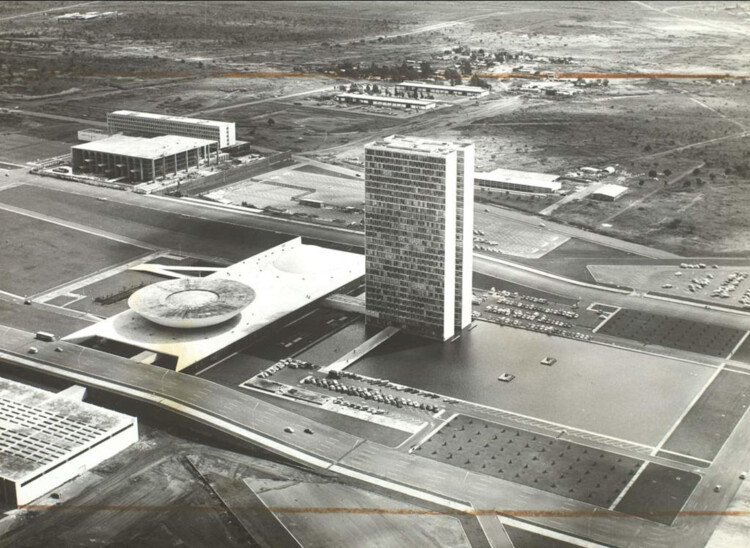
Palacio do congreso Nacional Brasilia. Image via Wikimedia Commons (Public Domain)
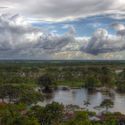
A different social order is easier to imagine when it sits far from the one that already exists. In Latin America, that distance has often been territorial. Parts of the region have repeatedly been treated as places where another world could begin. These places were never empty.
For architects, this idea has a familiar starting point: the plan. Seen from above, a territory can look like a clean sheet, ready for an axis or a grid. At eye level, the same ground is already full of people and the paths they use.
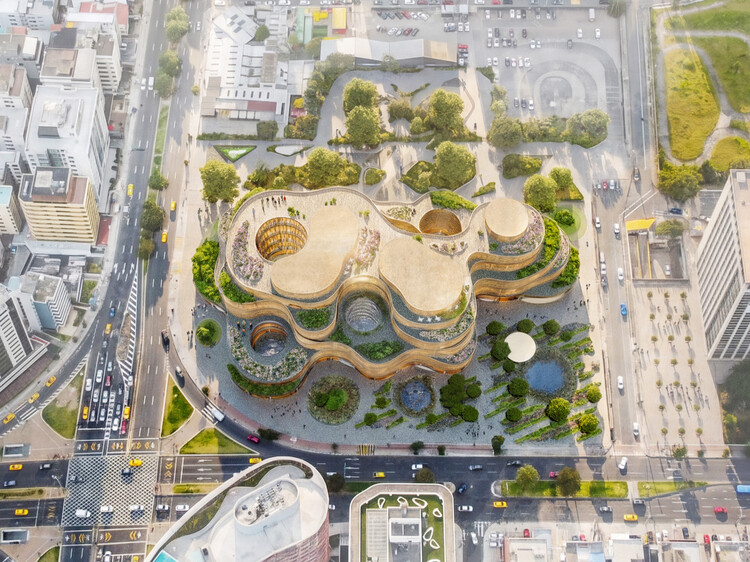
Museo Nacional del Ecuador (MuNA) by SANAA, Estudio A0, Caá Porá Arquitectura, Jerome Haferd Studio, Taller Capital Landscape. Image Courtesy of Jerome Haferd Studio
Architecture across Latin America this month reflects a growing emphasis on adaptation, whether responding to environmental risks, rethinking cultural institutions, or extending the life of existing buildings. Recent developments reveal a regional conversation shaped by resilience, heritage, and public space, where architecture is increasingly understood as part of broader urban, social, and environmental systems. From the aftermath of major earthquakes in Venezuela to the debate surrounding Ecuador's future National Museum, the month's stories highlight how design is intertwined with questions of identity, civic life, and long-term sustainability.
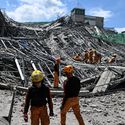
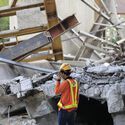
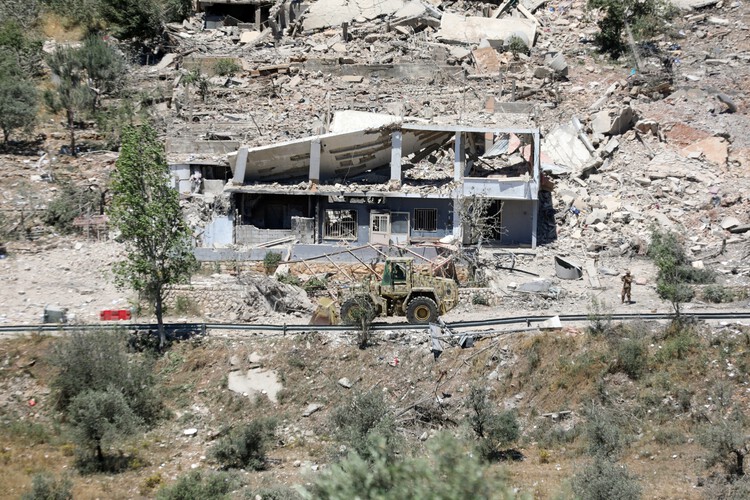
On June 24, 2026, a severe seismic event consisting of two major earthquakes with magnitudes of 7.2 and 7.5 struck north-central Venezuela just 39 seconds apart. The widespread destruction was concentrated along the country's northern coast, heavily impacting the capital city of Caracas and the neighboring state of La Guaira, where fragile urban infrastructure and vulnerable housing stock led to the collapse or severe damage of thousands of residential structures. This disaster mirrors previous devastating events observed during other major seismic events, including the 2008 Wenchuan earthquake and 2011 landslides in Sichuan, the 2014 Ludian earthquake in Yunnan, and the 2017 earthquake across central Mexico. When high-magnitude natural disasters damage entire communities, architects have the opportunity to help by proposing post-disaster architecture with strategic recovery models. Rather than relying on generic, standardized emergency shelters, conscious architectural design can deliver low-cost, rapidly deployable residential infrastructure that preserves human dignity through culturally contextual and dignified spaces.
Recent events highlighted the many ways architecture responds to changing environmental, social, and cultural conditions. Major earthquakes in Venezuela, Japan, and Northern California renewed attention to the role of planning, infrastructure, and building practices in shaping resilience to natural hazards. As these questions continue to inform the built environment, the opening of the 2026 UIA World Congress of Architects in Barcelona brought together practitioners and researchers to discuss climate, housing, public space, and the future of the profession. Recent project announcements, preservation initiatives, completed works, and new design tools further reflected the range of approaches shaping architectural practice today, from heritage conservation and adaptive reuse to environmental performance and long-term planning.
The architecture of Latin America and Spain is testament to the rich and diverse cultures, traditions, needs, and solutions that define these territories. With more than 700 projects built in Spanish-speaking countries published on ArchDaily en Español, the time has come to explore, debate, and choose your favorites for the Obra del Año 2026 award.
In its seventeenth edition, the Obra del Año reaffirms its place as the largest architecture award in the Spanish-speaking world, decided by its community. Starting today, March 24, readers will take on the responsibility of choosing the best architectural works of 2025.
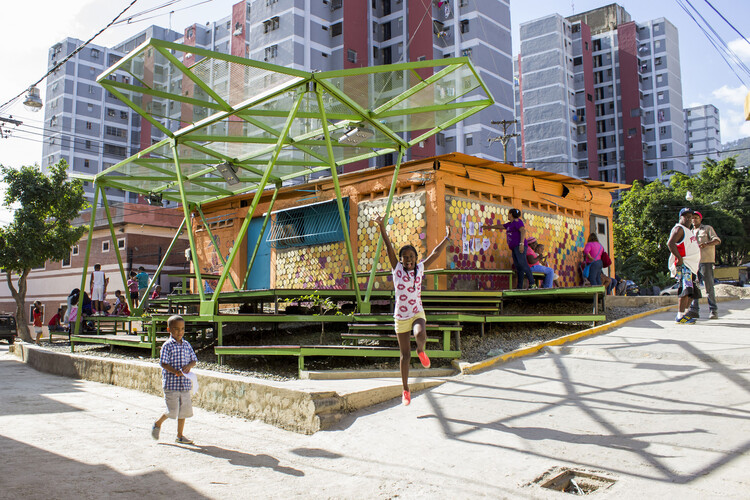
How the "Spaces of Peace" Project is Transforming Community Spaces in Venezuela: Pinto Salinas -- Oficina Lúdica + PKMN. Image Courtesy of PICO Estudio
In Latin America, encounters do not necessarily arise from grand architectural gestures or monumental urban plans. Instead, they emerge from the between, from intermediate spaces: the courtyard, the veranda, the sidewalk, and the shared corridor. These spaces, often considered residual or informal by traditional disciplines, are precisely where daily life builds connections.
This Latin American culture fosters a spatial logic in which daily life is organized in a relational and expansive way. Practices such as sitting at the front door, occupying the sidewalk, and playing in the street produce a lived city that extends far beyond the formal boundaries of design.
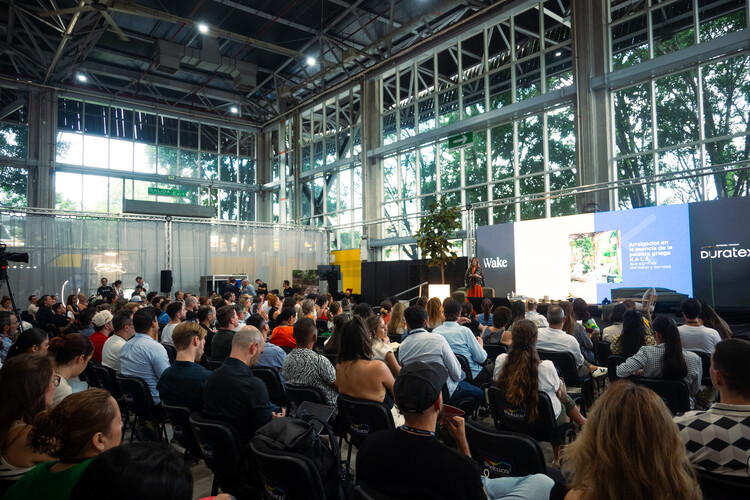
Asking questions is the first step toward challenging what we take for granted and opening up new possibilities for planning and building. These questions, valuable in themselves, gain new strength when shared and examined through different perspectives. As they intersect with the experiences of professionals and brands, they weave together viewpoints that enrich the discussion. Design fairs and events around the world have become spaces where these conversations gain momentum, fostering connections and encouraging collaborative dynamics. In this landscape, Colombia has emerged as a hub, serving as a platform that promotes architecture and design across Latin America and the Caribbean while bringing the region's voice to the global stage.
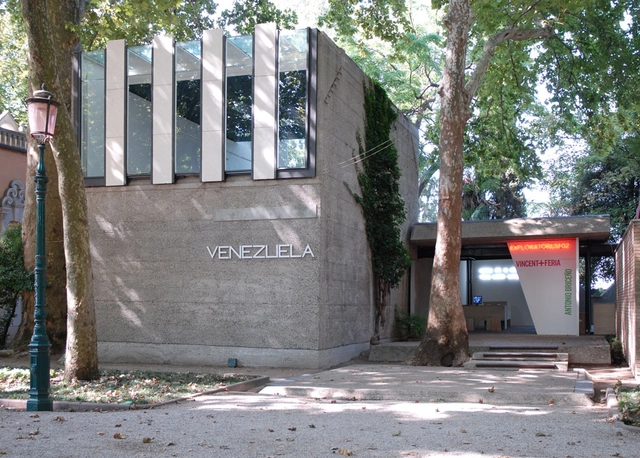
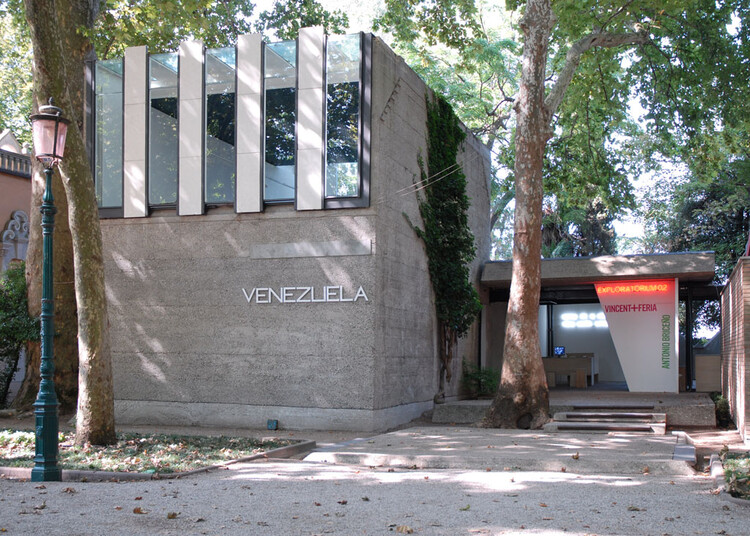
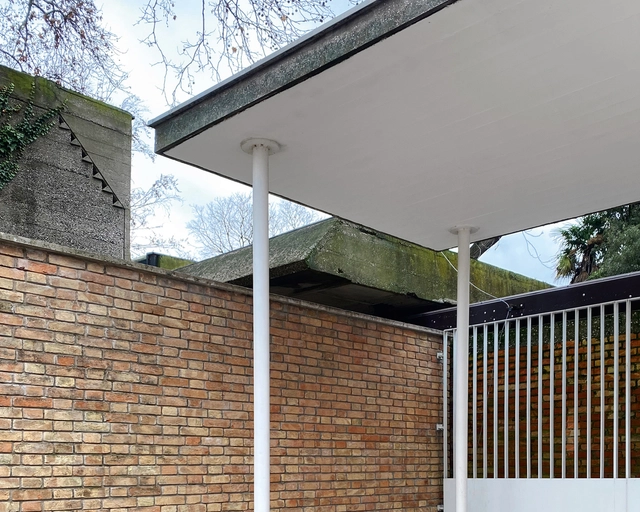
Nestled amongst the plethora of grandiose and carefully crafted national pavilions in the Giardini della Biennale in the Italian city of Venice is one pavilion by the city's perhaps most well-known modern architect. Sited between the pavilions of Russia and Switzerland is the VenezuelaPavilion, by architect Carlo Scarpa. In many ways, the structure typifies the design approach of its architect but has its idiosyncrasies. Built for Europe's most important biennial art exhibition, it is a member of a cohort of Modernist pavilions that came after the earlier, more classicist pavilions. This is its story.
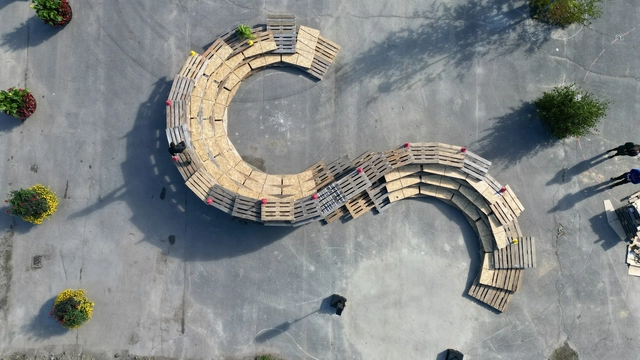
Pallet Parliament / Alejandro Haiek, Rebecca Rudolph, and Raffaele Errichiello. Umeå, Sweden 2022 Photo: Kent Brodin. Image Courtesy of Alejandro Haiek Coll
Architecture practices usually start their design process with a client, who provides a program and a site. Alejandro Haiek, founder of The Public Machinery, approaches things differently. The Public Machinery describes itself as a network of architects and designers working collectively, actively observing, imagining, and proposing public urban interventions themselves. Their proposals are at the intersection of art, architecture, and engineering and weave community engagement, ecology, and new technologies into innovative forms of social infrastructure. They secure funding through research and public grants, enabling them to create public spaces that defy expectations in both their design process and in the form their projects take.
Sustainability has taken center stage in the broad world of architecture and design, inspiring and directing the construction of new structures towards environmental harmony. The use of wood, a classic material with enormous potential to lessen our ecological impact while providing limitless design possibilities, is a notable example of this movement's implementation. In the fight for sustainability in the field of architecture, wood has become an ally. Its distinctive qualities, such as renewability and carbon neutrality, have inspired creative methods among architects worldwide.
A wide range of architectural projects, from vital healthcare facilities to exciting mixed-use buildings, cultural hubs, and welcoming residential spaces, benefit from wood's extraordinary versatility as a building material. In fact, wood's natural warmth and biophilic qualities can create spaces that reduce stress and promote well-being. Furthermore, the carbon-neutral nature of wood aligns perfectly with the design industry's commitment to environmental responsibility.
At the 18th International Architecture Exhibition – La Biennale di Venezia, Karin Sander, and Philip Ursprung curated the Swiss Pavilion “Neighbors”. In her interview with Louisiana Channel, Karin Sander talks about expanding the understanding of the pavilion, reimagining the connected role of architecture and art, and explaining her artistic process. “Neighbors” was focused on spatial proximity between the Swiss Pavilion and its Venezuelan neighbor. Sander highlights also the conversation between the two structures, that became possible after the removal of a separating wall.
The Architecture in Development Global Challenge has just announced the finalists for the 2022 edition of the competition. Highlighting and celebrating the ongoing efforts of self-built community-led initiatives worldwide, the Global Challenge offers a platform for those initiatives while connecting partners and collaborators globally.
Neighbours, Karin Sander, Philip Ursprung, Swiss Pavilion, 18th International Architecture Exhibition - La Biennale di Venezia, 2023. Image via KS 2023
Switzerland’s project for its national pavilion at the 18th International Architecture Exhibition–La Biennale di Venezia will be curated by Karin Sander and Philip Ursprung to explore territorial relationships within the Giardini of La Biennale. Titled “Neighbours,” their project is focused on the spatial and structural proximity between the Swiss Pavilion and its Venezuelan neighbor. By turning architecture itself into the exhibit, the project also highlights the bond between the architects of the two structures: the Swiss Bruno Giacometti (1907 - 2012) and the Italian Carlo Scarpa (1906 - 1978). The exhibition will be on display from May 20 to November 26, 2023.
In 1996, at the International Union of Architects Congress held in Barcelona, Spain, the organization established that World Architecture Day should coincide with UN-Habitat's World Habitat Day. Therefore, World Architecture Day is celebrated on the first Monday of every October, to celebrate the architect's commitment to our societies, our ecosystems, and our cities.
Clásicos de Arquitectura: Árbol para Vivir / Fruto Vivas. Image Cortesía de IX BIAU
Venezuelan architect José Fructoso Vivas, better known as Fruto Vivas, has passed away at 94 in Caracas on Tuesday, August 23.
Recognized for his design of projects such as the Tree for Living social housing, the Táchira Club, the Divino Redentor Church, and the Mausoleum of the Four Elements where the body of Hugo Chávez is preserved, Vivas has always aimed to further integrate the life of the human being to nature.
Almost seven kilometers from the green of Uhuru Park in central Nairobi, lies the informal settlement of Kibera. It is an area whose urban character consists of corrugated iron roofs, mud walls, and a complicated network of utility poles. Kibera, at this point in time, is a well-known place. Much has been written and researched on this “city within a city,” from its infrastructural issues to its navigation of the COVID-19 pandemic.
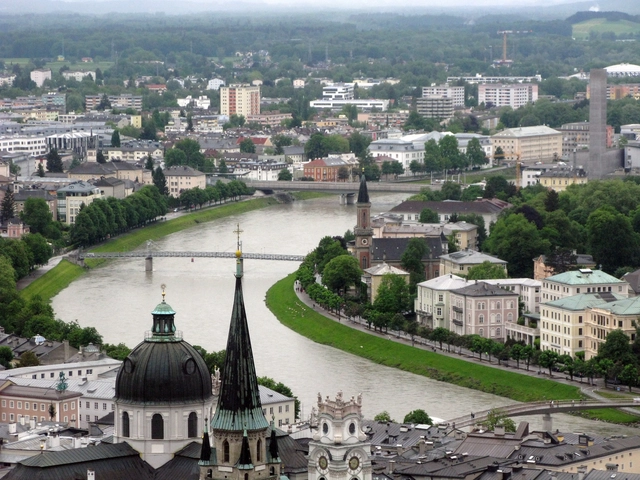
Salzburg seen from the Festung Hohensalzburg (Hohensalzburg Fortress). Image via Flickr User Janusz Sliwinski
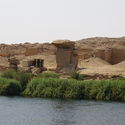
Rivers have long been considered as Earth’s arteries, serving as the essence of urban communities as human settlements developed their shelters and crop beds around them. Centuries later, riverside architecture remained vital as these areas expanded beyond residential typologies, and harnessed dynamic mixed-use developments and public functions. As valuable as they may seem though, these landscapes come with the risk of unexpected floods, increased water levels, or complete droughts, which has forced architects to design built environments that are able to respond to these abrupt changes. So how were these settlements built in the past, and how has today’s urban densification and technological advancements influence the way they are built?



















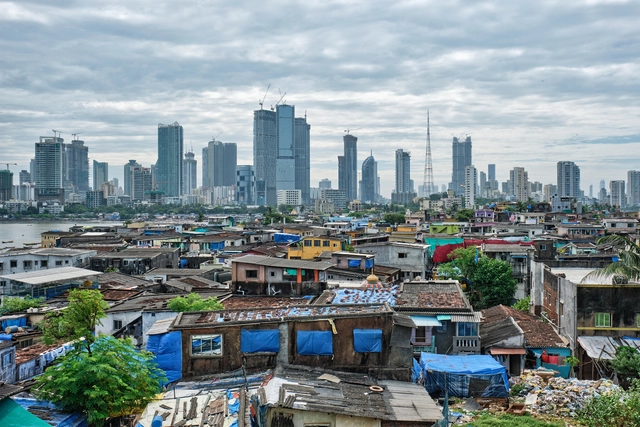


.jpg?1651830269 "Khayelitsha Township - Cape Town. Image © Olga Ernst under the Creative Commons Attribution-Share Alike 4.0 International license.")