1. ArchDaily
  2. Disaster Relief Architecture

Disaster Relief Architecture: The Latest Architecture and News

Building Light in a Flood Zone: Architecture for Seasonal Inundation

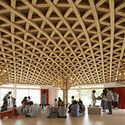
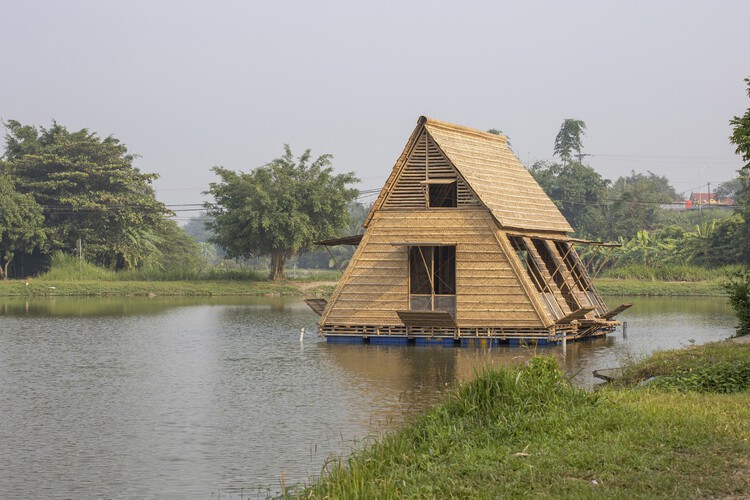
The flood does not arrive as a surprise. It returns, following the same swollen rivers and monsoon skies, loosening the ground and entering homes that were never meant to resist it. Walls are untied before they are lost, materials are gathered before they drift, and structures are rebuilt with a familiarity that suggests this is not destruction, but sequence. In landscapes where water returns each year, survival is defined by the ability to begin again.

Across the floodplains of Bangladesh, the Brahmaputra basin, and the Mekong Delta, inundation is a seasonal certainty. Reports by institutions such as the World Bank and the Intergovernmental Panel on Climate Change often frame floods through exposure and damage, measuring success through resistance and durability. Yet in territories that are submerged annually, such metrics only partially describe the problem. The ground itself oscillates between solid and liquid states. To build as if it were fixed is to design against the very condition that defines it.

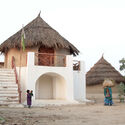
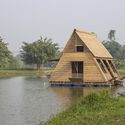
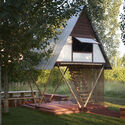
Building Light in a Flood Zone: Architecture for Seasonal Inundation - Image 1 of 4Building Light in a Flood Zone: Architecture for Seasonal Inundation - Image 2 of 4Building Light in a Flood Zone: Architecture for Seasonal Inundation - Image 3 of 4Building Light in a Flood Zone: Architecture for Seasonal Inundation - Image 4 of 4Building Light in a Flood Zone: Architecture for Seasonal Inundation - More Images+ 6

From Bologna to Mexico City: 8 Unbuilt Masterplans Reimagining Communities Through Regeneration and Design

Subscriber Access | 

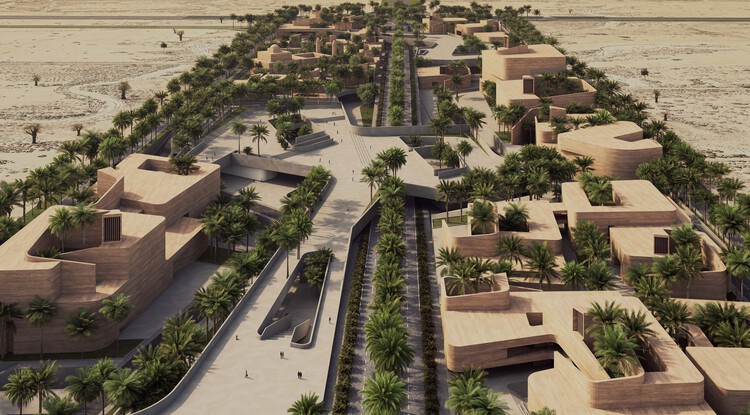
In today's architectural discourse, masterplanning is increasingly recognized as a means to reconcile growth with long-term social, cultural, and environmental priorities. Beyond organizing buildings and infrastructure, these large-scale proposals aim to regenerate urban fabrics, adapt historic or underutilized sites, and establish frameworks for inclusive and resilient communities. Submitted by the ArchDaily community, the projects featured in this edition of Unbuilt Architecture highlight how masterplans can respond to contemporary challenges while preparing cities for an uncertain future.

Spanning diverse geographies, from Europe to the Middle East and the Americas, the selected projects reinterpret industrial complexes, cultural sites, and residential neighborhoods through strategies that prioritize sustainability, mobility, and collective identity. Many share a focus on regenerative design: reopening historic canals, creating climate-adapted public spaces, and introducing green corridors and community hubs to reconnect people with their environments. Together, they showcase how masterplanning is evolving into a critical tool for rethinking how cities grow, adapt, and sustain civic life.

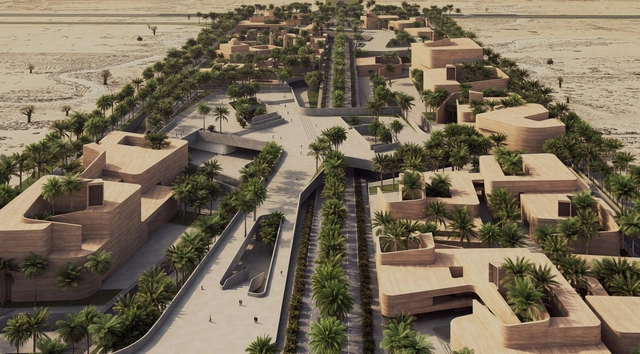
From Bologna to Mexico City: 8 Unbuilt Masterplans Reimagining Communities Through Regeneration and Design - Image 9 of 4From Bologna to Mexico City: 8 Unbuilt Masterplans Reimagining Communities Through Regeneration and Design - Image 22 of 4From Bologna to Mexico City: 8 Unbuilt Masterplans Reimagining Communities Through Regeneration and Design - Image 30 of 4From Bologna to Mexico City: 8 Unbuilt Masterplans Reimagining Communities Through Regeneration and Design - Image 38 of 4From Bologna to Mexico City: 8 Unbuilt Masterplans Reimagining Communities Through Regeneration and Design - More Images+ 45

Gyumri’s Revival: Rebuilding Armenia’s Cultural Heritage After the 1988 Earthquake

Subscriber Access | 

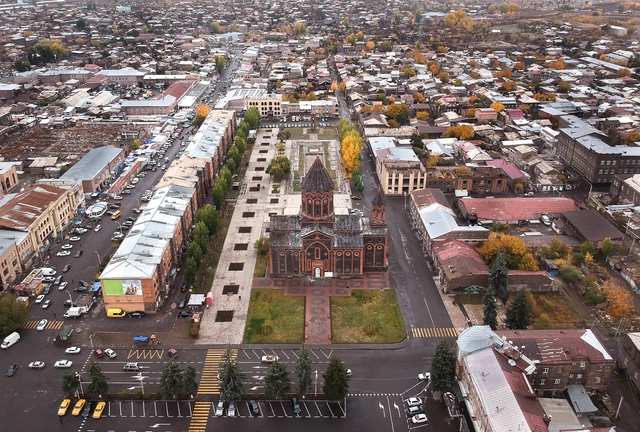
Gyumri, the capital of Armenia's Shirak region and the country's second-largest city, was historically known for its culture and architectural heritage. While it was part of the Soviet Union, the city hosted many factories that turned it into a primary industrial center in the region, reaching a population of approximately 225,000 people. However, during the past decades, Gyumri has seen a considerable population decline as a consequence of a devastating earthquake that destroyed the city in 1988 and killed thousands of people. More than 30 years later, Gyumri's regeneration process is still unfolding. The city's ongoing efforts to restore its built environment and boost economic development offer valuable insights into how urban regeneration can be navigated in the aftermath of disaster.
Gyumri’s Revival: Rebuilding Armenia’s Cultural Heritage After the 1988 Earthquake - Image 1 of 4Gyumri’s Revival: Rebuilding Armenia’s Cultural Heritage After the 1988 Earthquake - Image 2 of 4Gyumri’s Revival: Rebuilding Armenia’s Cultural Heritage After the 1988 Earthquake - Image 3 of 4Gyumri’s Revival: Rebuilding Armenia’s Cultural Heritage After the 1988 Earthquake - Image 4 of 4Gyumri’s Revival: Rebuilding Armenia’s Cultural Heritage After the 1988 Earthquake - More Images+ 5

Earthquake in Istanbul Raises Questions About the City's Seismic Preparedness

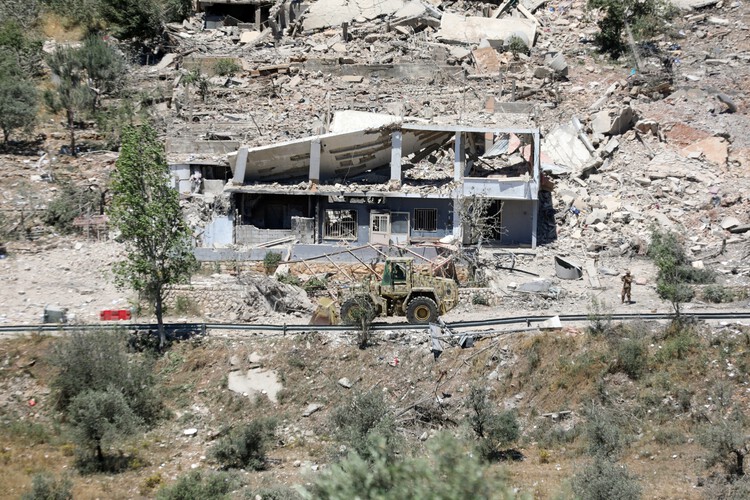
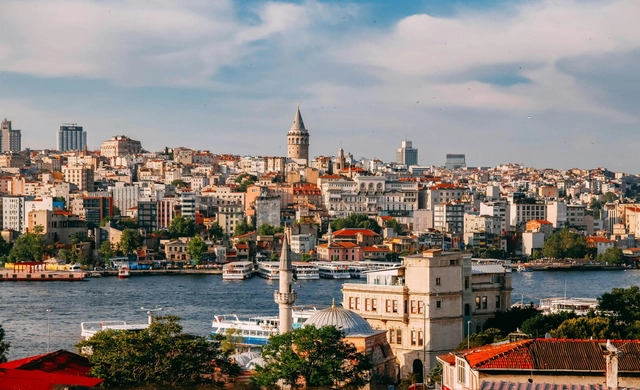
On April 23, 2025, a 6.2 magnitude earthquake in the Sea of Marmara struck Türkiye's largest city, Istanbul, causing widespread panic and injuring over 230 people, primarily due to falls and panic-induced accidents. Over the course of the day, at least 272 aftershocks were recorded, with the strongest reaching a magnitude of 5.9. According to an initial statement by Minister of the Interior Ali Yerlikaya, there was no major destruction apart from the collapse of a single abandoned building. However, the event has reignited public and professional discourse around the city's preparedness for a much larger seismic event, long anticipated by experts monitoring the North Anatolian Fault.

Earthquake in Istanbul Raises Questions About the City's Seismic Preparedness - Image 1 of 4Earthquake in Istanbul Raises Questions About the City's Seismic Preparedness - Image 2 of 4Earthquake in Istanbul Raises Questions About the City's Seismic Preparedness - Image 3 of 4Earthquake in Istanbul Raises Questions About the City's Seismic Preparedness - Image 4 of 4Earthquake in Istanbul Raises Questions About the City's Seismic Preparedness - More Images

Who Is Liu Jiakun? 10 Things to Know About the 2025 Pritzker Architecture Laureate

Subscriber Access | 

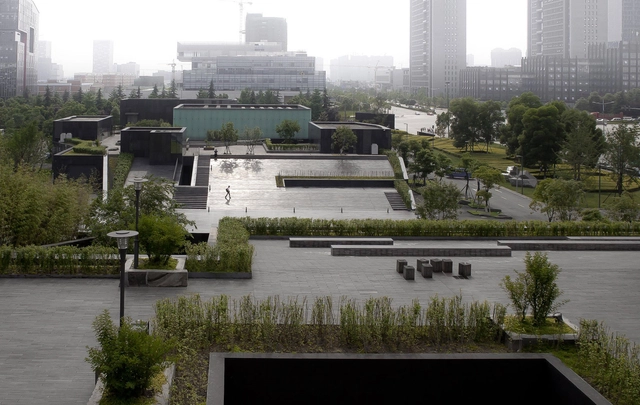
Liu Jiakun, the 2025 Pritzker Prize winner, has spent decades redefining Chinese architecture by combining utopia with function and social engagement with personal memory. His buildings are reflections of the everyday lives of ordinary people, crafted with an understanding of place, culture, and materiality. Rejecting the pursuit of a fixed architectural style, Jiakun believes in a strategy rather than a signature aesthetic, tailoring each project to its specific context and needs. His work integrates history with contemporary urban needs, collectivism with individual experience, and density with openness, offering timely solutions to the challenges of rapid urbanization.

Jiakun's approach is deeply rooted in Chinese philosophy, common sense, and local craftsmanship, ensuring that architecture grows naturally from its surroundings rather than being imposed upon them. His buildings reflect an authenticity that speaks to both past and present, avoiding grand gestures in favor of spaces that foster interaction, spirituality, and human connection.

Who Is Liu Jiakun? 10 Things to Know About the 2025 Pritzker Architecture Laureate - Image 1 of 4Who Is Liu Jiakun? 10 Things to Know About the 2025 Pritzker Architecture Laureate - Image 5 of 4Who Is Liu Jiakun? 10 Things to Know About the 2025 Pritzker Architecture Laureate - Image 2 of 4Who Is Liu Jiakun? 10 Things to Know About the 2025 Pritzker Architecture Laureate - Image 3 of 4Who Is Liu Jiakun? 10 Things to Know About the 2025 Pritzker Architecture Laureate - More Images+ 18

"I Am Disappointed in Architects" Shigeru Ban on Socially Conscious Architecture in Louisiana Channel Interview

In a recent interview with Louisiana Channel, acclaimed Japanese architect Shigeru Ban shared his perspectives on architecture, his journey in the field, and his dedication to socially responsible design. Known for his innovative use of materials such as paper and timber, Ban has spent much of his career creating solutions for disaster-stricken communities and displaced populations around the world.

"I Am Disappointed in Architects" Shigeru Ban on Socially Conscious Architecture in Louisiana Channel Interview - Image 1 of 4"I Am Disappointed in Architects" Shigeru Ban on Socially Conscious Architecture in Louisiana Channel Interview - Image 2 of 4"I Am Disappointed in Architects" Shigeru Ban on Socially Conscious Architecture in Louisiana Channel Interview - Image 3 of 4"I Am Disappointed in Architects" Shigeru Ban on Socially Conscious Architecture in Louisiana Channel Interview - Image 4 of 4I Am Disappointed in Architects Shigeru Ban on Socially Conscious Architecture in Louisiana Channel Interview - More Images+ 5

What is Low-Tech Architecture: Comparing Shigeru Ban and Yasmeen Lari's Approaches

The concept of low-tech architecture recognizes the impact of carbon-intensive technologies and building practices and proposes an alternative: a rediscovery of practical, rational, locally adapted solutions that count on smart design strategies instead of energy-intensive devices to ensure a safe, comfortable living environment. Far from being a regressive approach, the term remains open to innovations but seeks to rebalance the industry's reliance on mechanization. It thus favors an architecture of fewer components, minimized dependence on high-tech solutions, and a preference for low-embodied carbon materials.

What is Low-Tech Architecture: Comparing Shigeru Ban and Yasmeen Lari's Approaches - Image 1 of 4What is Low-Tech Architecture: Comparing Shigeru Ban and Yasmeen Lari's Approaches - Image 2 of 4What is Low-Tech Architecture: Comparing Shigeru Ban and Yasmeen Lari's Approaches - Image 3 of 4What is Low-Tech Architecture: Comparing Shigeru Ban and Yasmeen Lari's Approaches - Image 4 of 4What is Low-Tech Architecture: Comparing Shigeru Ban and Yasmeen Lari's Approaches - More Images+ 15

MVRDV Transforms Shipping Containers into Sports and Community Hubs for Refugees

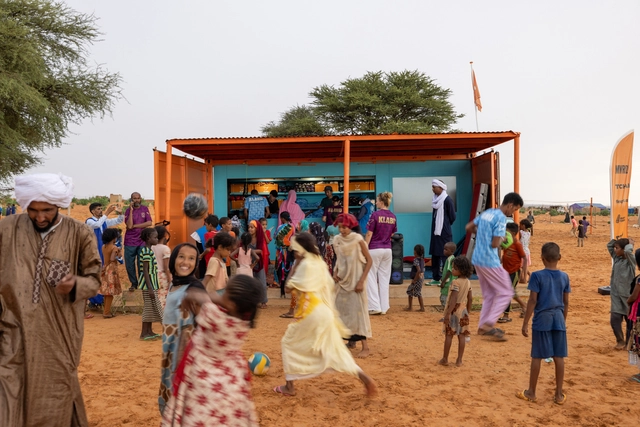
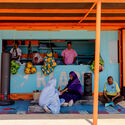
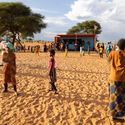
MVRDV has partnered with KLABU, a social enterprise based in Amsterdam, to design a modular, multi-functional clubhouse aimed at supporting refugees. This collaboration, which began in 2022, is founded on the belief that sports can play a pivotal role in helping individuals rebuild their lives, fostering joy, pride, and hope. KLABU's initiative involves constructing clubhouses within refugee camps, settlements, and urban areas, where they serve as community hubs offering access to sports equipment, activities, and connectivity through Wi-Fi and TV broadcasts.

MVRDV Transforms Shipping Containers into Sports and Community Hubs for Refugees - Image 1 of 4MVRDV Transforms Shipping Containers into Sports and Community Hubs for Refugees - Image 2 of 4MVRDV Transforms Shipping Containers into Sports and Community Hubs for Refugees - Image 3 of 4MVRDV Transforms Shipping Containers into Sports and Community Hubs for Refugees - Image 4 of 4MVRDV Transforms Shipping Containers into Sports and Community Hubs for Refugees - More Images+ 15

Ukrainian Orginization Livyj Bereh Wins 2024 Royal Academy Dorfman Prize for Community-Centric Architecture

The Ukrainian volunteer organization Livyj Bereh has been named the recipient of the 2024 Royal Academy Dorfman Prize, which comes with a £10,000 (€12,000) award. This recognition celebrates emerging architectural talent and innovative practices that significantly impact the future of the built environment. The Dorfman Prize, supported by the Dorfman Foundation, highlights work that transcends conventional boundaries, embracing bold new ideas and community-driven approaches.

Ukrainian Orginization Livyj Bereh Wins 2024 Royal Academy Dorfman Prize for Community-Centric Architecture - Image 1 of 4Ukrainian Orginization Livyj Bereh Wins 2024 Royal Academy Dorfman Prize for Community-Centric Architecture - Image 2 of 4Ukrainian Orginization Livyj Bereh Wins 2024 Royal Academy Dorfman Prize for Community-Centric Architecture - Image 3 of 4Ukrainian Orginization Livyj Bereh Wins 2024 Royal Academy Dorfman Prize for Community-Centric Architecture - Image 4 of 4Ukrainian Orginization Livyj Bereh Wins 2024 Royal Academy Dorfman Prize for Community-Centric Architecture - More Images+ 4

World Cities Day 2024: Transforming Urban Futures Through Preservation, Innovation, and Resilience

Subscriber Access | 

In honor of World Cities Day, which concludes Urban October, this year's theme, "Youth Leading Climate and Local Action for Cities," reflects a growing momentum for sustainable urban solutions championed by local communities and progressive policies. Around the world, cities face intensified demands for resilience, preservation, and innovation as they address challenges from the climate crisis to cultural heritage conservation. These initiatives illustrate a global trend in urban planning, where sustainability, adaptability, and inclusive community priorities take center stage.

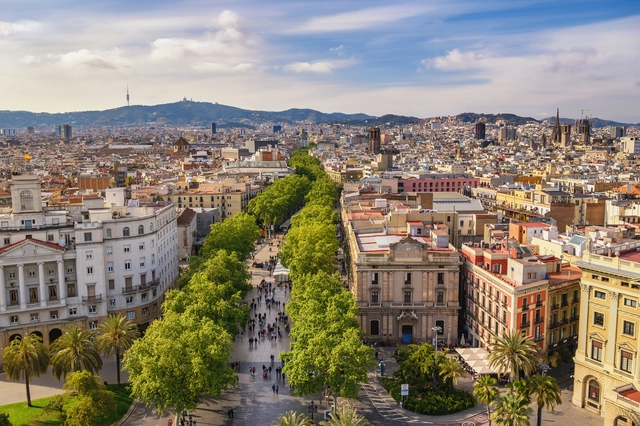
In this roundup, ArchDaily consolidates this year's transformative updates in cities worldwide, organized into thematic clusters that capture the evolving nature of urban design and policy in 2024. Projects like the extensive renovations of Barcelona's La Rambla and the preservation efforts around Chicago's historic skyscrapers highlight preservation of urban heritage, while initiatives in Venice and Los Angeles respond to overtourism and housing pressures, balancing livability with growth. Meanwhile, ambitious master plans have been announced, including the revitalization of industrial sites in Tallinn and Connecticut, reflect how cities are reimagining their urban fabric. Finally, post-disaster rebuilding in Kharkiv and Türkiye underscores the urgency of resilience-driven design, ensuring that cities can endure and evolve even in challenging times. Together, these updates offer a glimpse into the global forces reshaping urban landscapes

Shigeru Ban Receives the 2024 Praemium Imperiale for Architecture

Japanese architect and humanitarian Shigeru Ban has been named the 35th Laureate of the Praemium Imperiale Award for Architecture. Established in 1988 by the Japan Art Association, the annual award seeks to recognize exceptional achievements in Painting, Sculpture, Architecture, Music, and Theatre/Film. Shigeru Ban's contributions to architecture have been significant, not only for the distinctive design aesthetics but also for the innovative use of materials, particularly in the context of emergency interventions and humanitarian work.

Shigeru Ban Receives the 2024 Praemium Imperiale for Architecture - Image 1 of 4Shigeru Ban Receives the 2024 Praemium Imperiale for Architecture - Image 2 of 4Shigeru Ban Receives the 2024 Praemium Imperiale for Architecture - Image 3 of 4Shigeru Ban Receives the 2024 Praemium Imperiale for Architecture - Image 4 of 4Shigeru Ban Receives the 2024 Praemium Imperiale for Architecture - More Images+ 2

Empowering Children Through Public Spaces in Lebanon: In Conversation with CatalyticAction

Subscriber Access | 

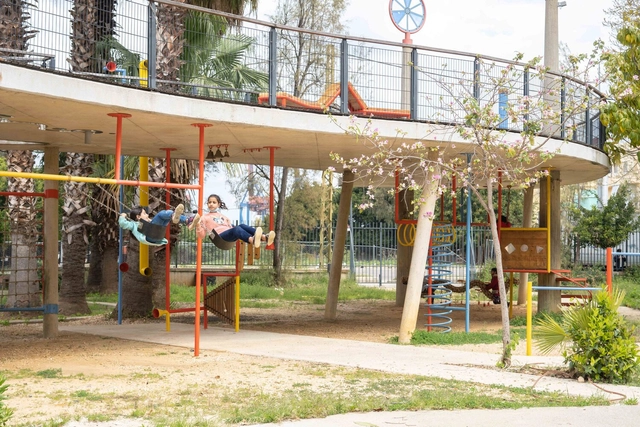
Public spaces are not always shaped by planning but by the practices they host. Their existence stems from our inherent need for connection with others. As spaces of encounter, these urban, open, and accessible areas reflect how we interact with our surroundings and each other while offering places for exercise, play, socializing, and recreation.

Recognizing that public spaces are more than just physical environments, CatalyticAction is dedicated to fostering a sense of community, safety, and belonging, especially for children, who are among the most vulnerable in society. Their mission is not only to create spaces where children can play and grow but also to empower them, ensuring they have a voice in shaping their surroundings. To learn more about their work, Christele Harrouk, ArchDaily's Editor-in-Chief, spoke with Joana Dabaj, Co-founder and Director of Programmes at CatalyticAction.

Empowering Children Through Public Spaces in Lebanon: In Conversation with CatalyticAction - Image 1 of 4Empowering Children Through Public Spaces in Lebanon: In Conversation with CatalyticAction - Image 2 of 4Empowering Children Through Public Spaces in Lebanon: In Conversation with CatalyticAction - Image 3 of 4Empowering Children Through Public Spaces in Lebanon: In Conversation with CatalyticAction - Image 4 of 4Empowering Children Through Public Spaces in Lebanon: In Conversation with CatalyticAction - More Images+ 41

Designing for Disaster in an Increasingly Dangerous World

This article was originally published on Common Edge.

Developers often make it sound as though their latest LEED platinum office building will single-handedly reverse climate change. The unfortunate reality is that they could spend a lifetime designing and building all of their work to meet the highest environmental standards, but it wouldn’t fix the problem. The planet will grow hotter, the seas will rise, and storms will intensify. A century of burning fossil fuels has baked global warming into the atmosphere for our lifetime.

Designing for Disaster in an Increasingly Dangerous World - Image 1 of 4Designing for Disaster in an Increasingly Dangerous World - Image 2 of 4Designing for Disaster in an Increasingly Dangerous World - Image 3 of 4Designing for Disaster in an Increasingly Dangerous World - Image 4 of 4Designing for Disaster in an Increasingly Dangerous World - More Images+ 1

From Paper Tube Shelters to Timber Innovations: Shigeru Ban's Complete Works Explored by Philip Jodidio for Taschen

Japanese architect Shigeru Ban stands out in the architectural world for his commitment to socially responsible design, his eagerness to respond to disaster-related emergencies, and his creativity in adapting solutions to local conditions. He pioneered the use of materials such as paper and cardboard, employing them to create high-quality low-cost shelters and even community amenities such as churches, containers for creating a Nomadic Museum, and mass timber to push the possibilities of responsible design. The works of the Pritzker Prize laureate are now explored in the latest monography by Taschen, “Shigeru Ban. Complete Works 1985–Today” led by author Philip Jodidio. The multilingual edition features texts in English, French, and German, and will become available on June 14, 2024.

From Paper Tube Shelters to Timber Innovations: Shigeru Ban's Complete Works Explored by Philip Jodidio for Taschen - Image 1 of 4From Paper Tube Shelters to Timber Innovations: Shigeru Ban's Complete Works Explored by Philip Jodidio for Taschen - Image 2 of 4From Paper Tube Shelters to Timber Innovations: Shigeru Ban's Complete Works Explored by Philip Jodidio for Taschen - Image 3 of 4From Paper Tube Shelters to Timber Innovations: Shigeru Ban's Complete Works Explored by Philip Jodidio for Taschen - Image 4 of 4From Paper Tube Shelters to Timber Innovations: Shigeru Ban's Complete Works Explored by Philip Jodidio for Taschen - More Images+ 7

Shigeru Ban Architects Unveils "Paper Log House" on Display at Philip Johnson's Glass House

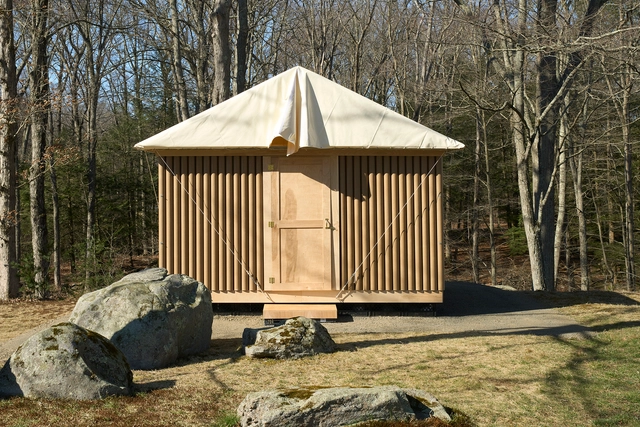
Shigeru Ban Architects, in collaboration with The Glass House and The Irwin S. Chanin School of Architecture of the Cooper Union, have just revealed “Shigeru Ban: The Paper Log House at The Glass House.” This collaborative installation opened on April 15th and is on display until December 15th, 2024, welcoming more than 13,000 annual visitors. This year, students from The Cooper Union actively participated in the making of this structure as part of the university’s Building Technology Course.

Shigeru Ban Architects Unveils "Paper Log House" on Display at Philip Johnson's Glass House - Image 1 of 4Shigeru Ban Architects Unveils "Paper Log House" on Display at Philip Johnson's Glass House - Image 2 of 4Shigeru Ban Architects Unveils "Paper Log House" on Display at Philip Johnson's Glass House - Image 3 of 4Shigeru Ban Architects Unveils "Paper Log House" on Display at Philip Johnson's Glass House - Image 4 of 4Shigeru Ban Architects Unveils Paper Log House on Display at Philip Johnson's Glass House - More Images+ 8

Building Resilience: A Closer Look at 2023's Response to Disaster Challenges

As we reflect on the tumultuous events of 2023, it becomes evident that the challenges posed by changing environmental conditions have left an indelible mark on communities worldwide. In response, architects and urban planners have set out, searching for the ways in which their actions can help create safer environments for communities worldwide, responding with both fast-to-deploy emergency architectures and long-term strategies to build resilience and mitigate risks.

Beyond merely responding to events like the devastating earthquakes in Turkey, Syria, and Morocco, or the widespread flooding in Libya or Pakistan, professionals are attempting to take proactive approaches, developing strategies that extend from predictive modeling to the application of re-naturalizing techniques or the ongoing research into the physics of safer and resilient structures.

Building Resilience: A Closer Look at 2023's Response to Disaster Challenges - Image 1 of 4Building Resilience: A Closer Look at 2023's Response to Disaster Challenges - Image 2 of 4Building Resilience: A Closer Look at 2023's Response to Disaster Challenges - Image 3 of 4Building Resilience: A Closer Look at 2023's Response to Disaster Challenges - Image 4 of 4Building Resilience: A Closer Look at 2023's Response to Disaster Challenges - More Images+ 15

Yasmeen Lari Sets Out to Build One Million Flood-Resistant Homes in Pakistan by 2024

Following the extreme floods that affected Pakistan in 2022, architect Yasmeen Lari the Heritage Foundation of Pakistan pledged to help build one million resilient houses in the country. In 2022, 33 million people have been displaced, and an estimated 500,000 houses have been destroyed or severely damaged. In September 2022, Lari’s NGO launched a target program to start rebuilding and to help communities protect themselves against future disasters. The program is built on Lari’s expertise in working with the communities and employing vernacular and local building materials to achieve resilient and sustainable structures. According to the Heritage Foundation of Pakistan, one-third of the goal has already been reached.

Yasmeen Lari Sets Out to Build One Million Flood-Resistant Homes in Pakistan by 2024 - Image 1 of 4Yasmeen Lari Sets Out to Build One Million Flood-Resistant Homes in Pakistan by 2024 - Image 2 of 4Yasmeen Lari Sets Out to Build One Million Flood-Resistant Homes in Pakistan by 2024 - Image 3 of 4Yasmeen Lari Sets Out to Build One Million Flood-Resistant Homes in Pakistan by 2024 - Image 4 of 4Yasmeen Lari Sets Out to Build One Million Flood-Resistant Homes in Pakistan by 2024 - More Images+ 16

The Role of Biomimicry in Disaster-Resilient Architecture

Subscriber Access | 

The terms resiliency and sustainability, although similar in meaning, refer to different design approaches in the context of architecture and cities. Sustainability involves the preservation of natural resources to uphold ecological equilibrium, while resiliency entails the ability to rebound, adapt, and persist in moments of adversity. These concepts greatly influence and complement each other, especially in cases of designing disaster-resilient buildings. Conventional design processes relating to resilient infrastructure have been based on principles of structural robustness and integrity as a measure against anticipated natural disasters. However, sustainable resiliency points at the opportunity of reinforcing buildings by embedding them in biological and ecological systems.

The Role of Biomimicry in Disaster-Resilient Architecture - Image 1 of 4The Role of Biomimicry in Disaster-Resilient Architecture - Image 2 of 4The Role of Biomimicry in Disaster-Resilient Architecture - Image 3 of 4The Role of Biomimicry in Disaster-Resilient Architecture - Image 4 of 4The Role of Biomimicry in Disaster-Resilient Architecture - More Images+ 1