

"By 2050, almost every child in the world — nearly 2.2 billion children — will be exposed to frequent heat waves." UNICEF's warning is often read as a public health forecast, but it is also a challenge to architecture and the way cities are built. As extreme heat intensifies across Asia, Europe, and beyond, thermal comfort should not be reduced to merely an indoor service delivered by machines. Air-conditioning has become a life-support system for many cities, especially in dense, humid, and rapidly urbanizing regions. Yet to rely on it as the default answer is to treat heat as something that can simply be moved elsewhere (and in the process generating extra heat) — expelled from interiors into streets, service alleys, energy grids, and the atmosphere. Its expansion increases energy demand, produces waste heat, and reinforces unequal access to comfort.
Heat, however, does not stop at the human body. It reorganizes the wider urban ecosystem: trees struggle with compacted soil and radiant paving; birds and insects lose habitat when planting is reduced to decorative greenery; aquatic systems warm, microbial life shifts, and materials absorb and release heat long after the sun has set. Heat is not simply a climatic problem to be escaped indoors. It is an urban actor that reshapes public space, labor, mobility, planting, material choices, and the fragile relationships between human and nonhuman life.
To design with heat, then, is not only to cool people. It is to work with the systems that make cooling possible: trees, soil, shade, water bodies, wind corridors, reflective surfaces, porous ground, nocturnal rhythms, and traditional practices of ventilation and shelter. More-than-human cooling does not mean extending human comfort standards to animals or plants. It means recognizing that human thermal comfort depends on the survival of nonhuman systems: a shaded street requires trees with enough soil and water to mature; a wetland tempers microclimate only if its ecological processes remain active.
Related Article
Designed Comfort, Purchased Comfort: Passive Design and Air Conditioning in Hong Kong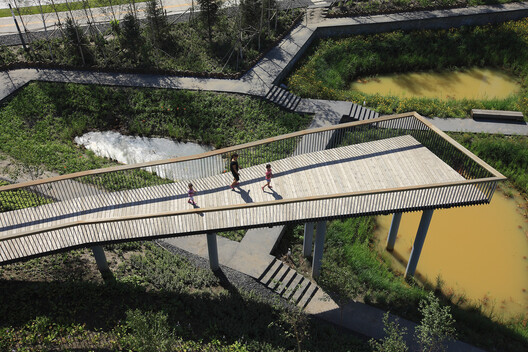
Beyond the Sealed Interior
The modern promise of air-conditioning is spatially simple: the exterior is hot, the interior is controlled, and the building envelope mediates between the two. In many cities across the Asia-Pacific region, this logic has expanded from the scale of small residential units and window-mounted systems to thousands of square meters of cooled malls, office towers, apartments, cars, and transit concourses. Around these conditioned interiors, public life survives through shaded shortcuts, covered walkways, underground passages, arcades, street trees, night markets, and other occupations of cooler hours.
The problem is not AC itself, which can save lives in extreme heat, and is extremely useful in temporary situations, but the assumption and over-reliance that comfort can remain private while the public realm becomes progressively less inhabitable. When the street is too hot, the city loses more than comfort: it loses sociability, informal economies, outdoor play, elderly mobility, and everyday encounters with urban nature. Heat becomes a quiet form of spatial exclusion, dividing those who can move between cooled interiors from those who must remain exposed.
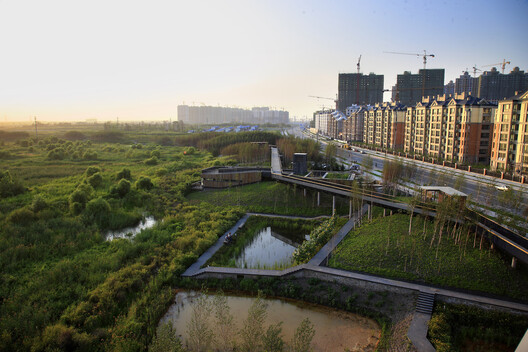
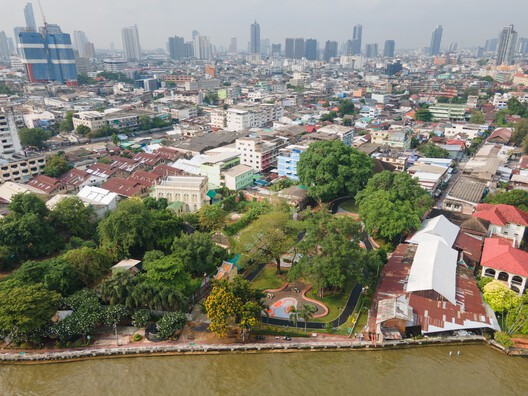
Architecture's task is therefore not only to design better interiors, but to make cooling spatial, civic, and ecological. Buildings can cast shade, allow air movement, reduce radiant surfaces, protect soil, support vegetation, collect water, and avoid discharging mechanical heat into already stressed streets and service alleys. At a territorial scale, Qunli Stormwater Wetland Park by Turenscape is useful not only as flood-control infrastructure, but as a reminder that water, vegetation, soil, and habitat can participate in the thermal life of the city. Such projects challenge the assumption that cooling belongs only to the room, the machine, or the individual body.
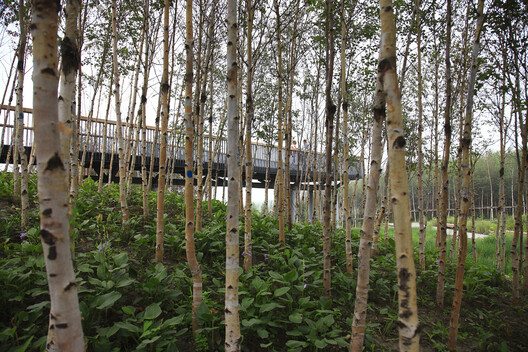
Trees Are Not Amenities
In much contemporary development, planting is treated as visual compensation: a green layer added to satisfy environmental metrics or produce marketable images of "nature". Trees, shrubs, wetlands, and planted surfaces are not amenities. They are living cooling infrastructure, and their value lies not only in the shade they provide to people, but in the microclimates and habitats they can produce around them.
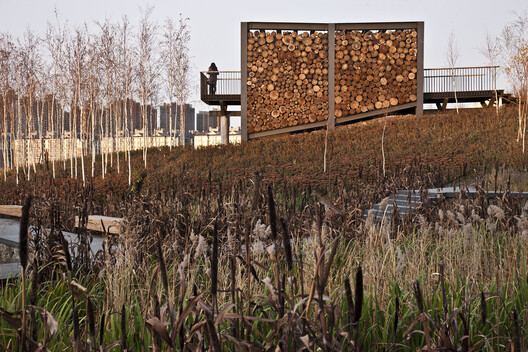
A tree, once understood as part of a larger environmental system, shades and cools the air through evapotranspiration, filters light, shelters birds and insects, and depends in turn on the soil, water, and microbial life around its roots. It can also change the building itself: reducing heat gain, softening exposed surfaces, and extending the threshold between interior and exterior. When planting is reduced to isolated planters or thin ornamental strips, it may appear green while failing as an environmental system. But when vegetation is given enough depth and continuity to mature, it begins to operate as a small ecosystem.
There are, of course, legitimate doubts about the effectiveness of moving soil and trees onto buildings, especially when planting depends on heavy structures, waterproofing layers, irrigation systems, and high embodied energy. Yet this critique should not lead us to dismiss vegetated systems as part of architectural practice altogether. It should push architects to design for longer cycles of growth, maintenance, shade, habitat, and repair — to treat planting not as instant green image-making, but as an environmental system that must be allowed to mature.
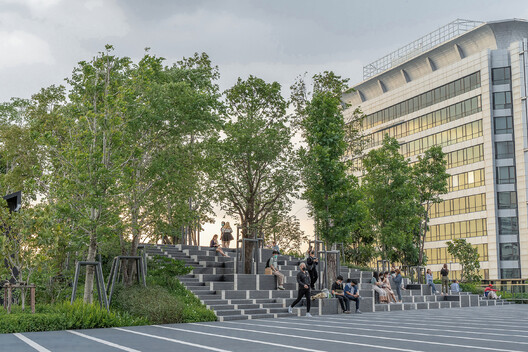
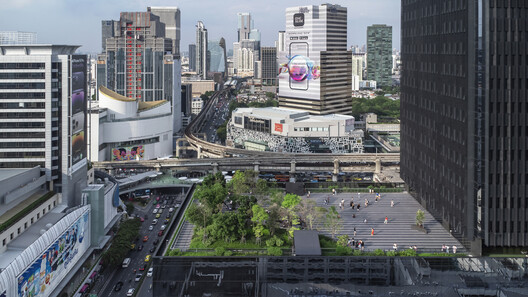
Sky Forest Scape in Bangkok by Shma Company Limited suggests how this logic can be reintroduced at a denser urban scale. By lifting greenery onto a rooftop public realm in Siam Square, the project treats the roof as a fifth façade: not a leftover technical surface, but a vegetated ground that gives back some of the soil, shade, moisture, and natural cooling capacity displaced by the building's footprint. Its significance is not simply that it adds plants to the city, but that it allows vegetation to gather and thicken into inhabitable infrastructure — a social and ecological surface where more-than-human habitats begin to overlap.
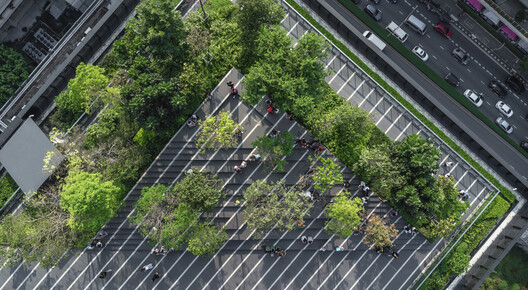
Cooling as Public Space
In fact, cooling has long been negotiated through architectural rather than mechanical means: deep overhangs, verandas, courtyards, raised floors, shaded compounds, porous walls, high ceilings, water courts, and night-time social life. The value of these practices is not nostalgic. They remind us that comfort should not rely on a guaranteed solution, but should be negotiated through gradients of thresholds, breezes, shadows, surfaces, vegetation, and changing patterns of occupation.
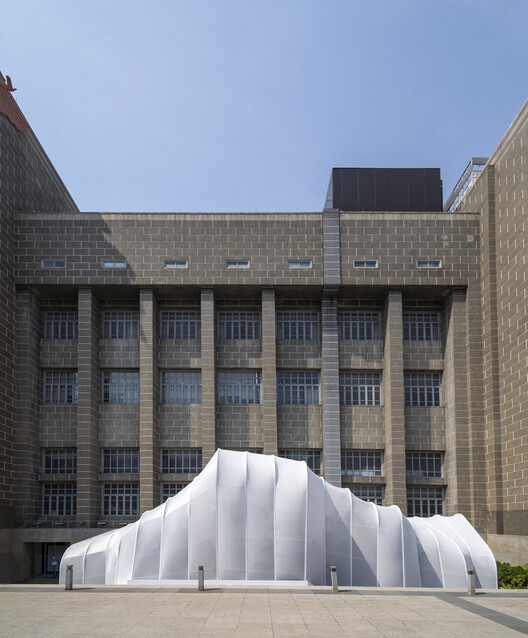
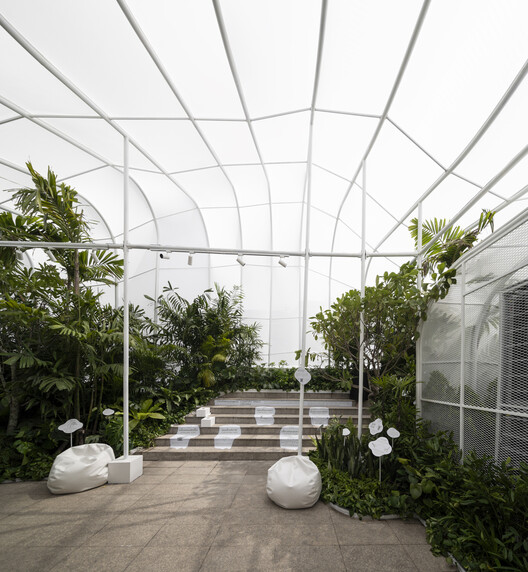
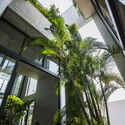
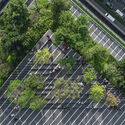
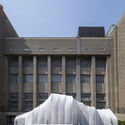
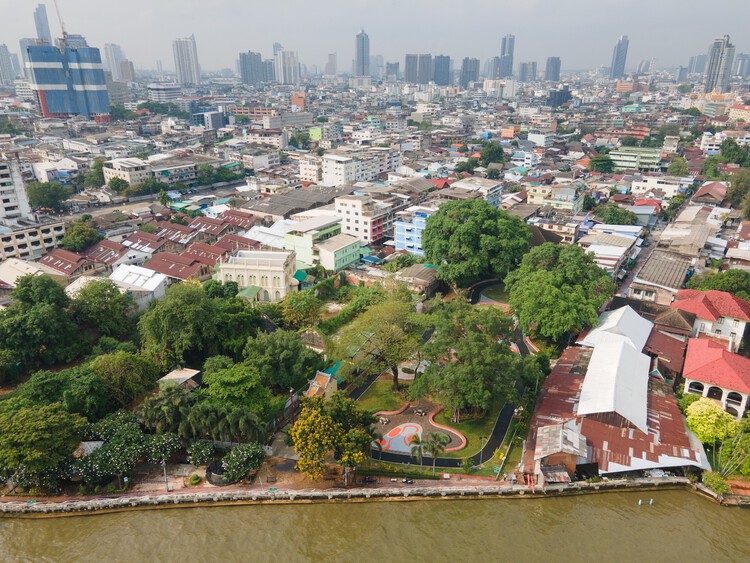
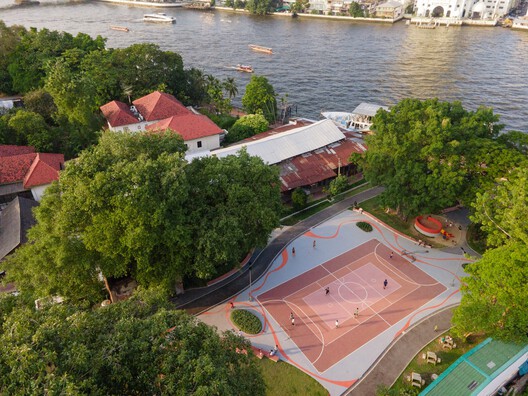
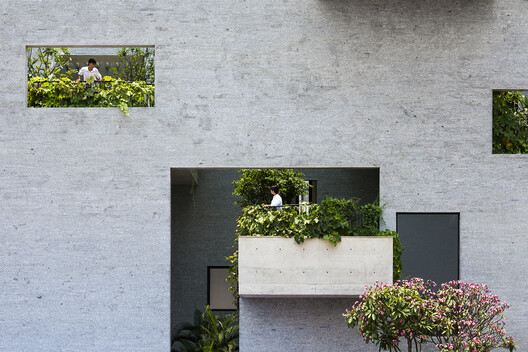
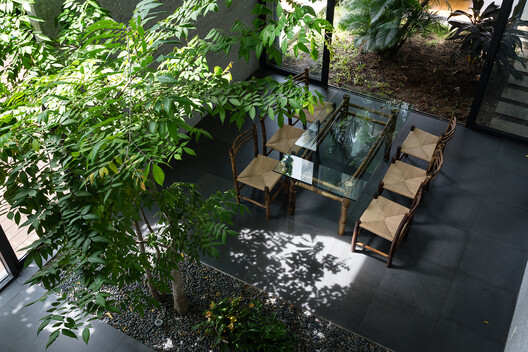
Contemporary projects across the region continue to explore this expanded field of cooling at different scales. Safezone Shelter by Shma Company Limited, though temporary, points to one possibility: small-scale interventions that address environmental stress directly, creating pockets of comfort while making air quality and urban exposure visible. Binh House by VTN Architects offers another approach, working through planted voids, layered domestic spaces, and cross-ventilation to reconnect housing with the cooling capacity of vegetation in dense Vietnamese neighborhoods. At the scale of the pocket park, Suan San Pocket Park in Bangkok suggests how even small urban remnants can be reorganized as shaded, planted, and socially useful microclimates rather than leftover land. The strongest examples are not those that simply add greenery, but those that alter the relationship between built form and climate: not through biomimicry or environmental image-making, but through direct attention to air exchange, canopy, shade, surface temperature, and zones of habitation.
Toward More-Than-Human Cooling
In Asian cities where high density, humidity, rapid development, and climate vulnerability intersect, the future of cooling cannot be imagined only as more efficient machines. A city cooled only by private interiors remains socially and ecologically brittle. A more resilient city requires thermal plasticity and publicness: shared spaces of shade, air, moisture, vegetation, and material relief, where cooling is understood as a civic and ecological condition.
Buildings can participate in this shift when they are designed less as self-contained objects and more as contributors to the environments around them. They can shade sidewalks, open ground floors to air, protect mature trees, integrate water retention, reduce radiant surfaces, use materials that do not intensify heat, and connect interior comfort to exterior habitability. The goal is not to return to a pre-mechanical past, nor to romanticize vernacular forms. It is to combine passive intelligence, ecological infrastructure, and necessary technologies into cooling systems that operate across scales.
As heat becomes one of the defining forces of urban life, architecture must ask a broader question: not only how to shelter humans from a hostile climate, but how to reduce the hostility produced by the city itself. More-than-human cooling begins there — with the recognition that the systems that protect human life also depend on the life of trees, soil, water, animals, insects, microbes, and materials. To cool the city is not simply to lower the temperature. It is to rebuild the relationships that make urban life breathable.
This article is part of the ArchDaily Topic: Transspecies Architecture: The Life of Materials, Ecological Alliances, and Nature's Agency. Every month we explore a topic in-depth through articles, interviews, news, and architecture projects. We invite you to learn more about our ArchDaily Topics. And, as always, at ArchDaily we welcome the contributions of our readers; if you want to submit an article or project, contact us.


