1. ArchDaily
  2. Passive Design

Passive Design: The Latest Architecture and News

Dogtrot House: Vernacular Knowledge and Climate-Responsive Design

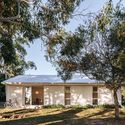
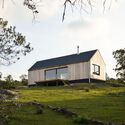
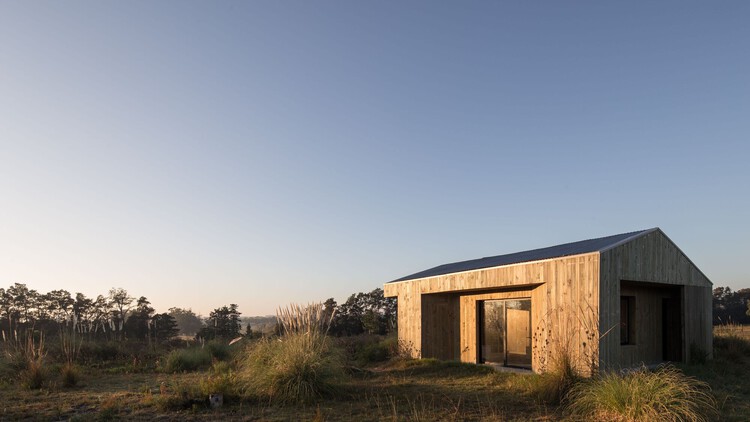
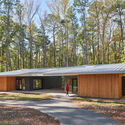
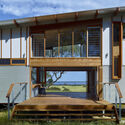
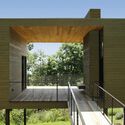
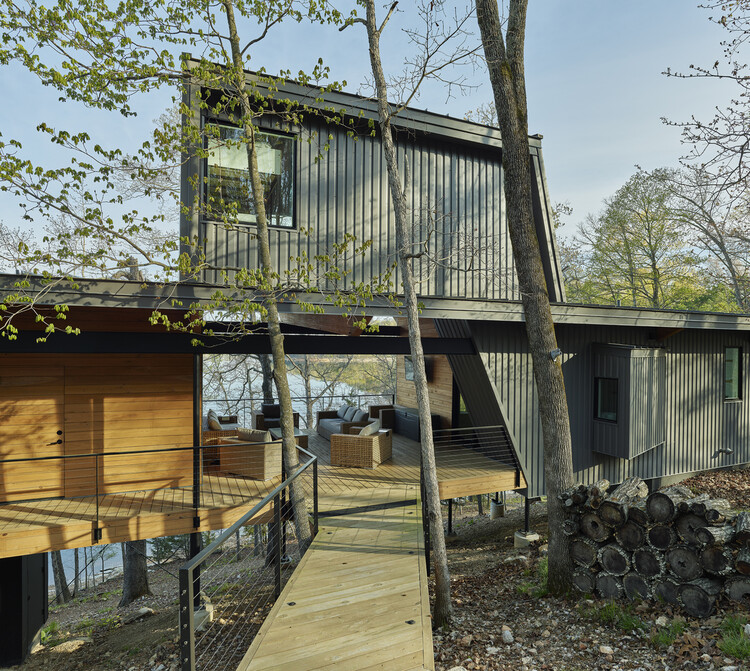
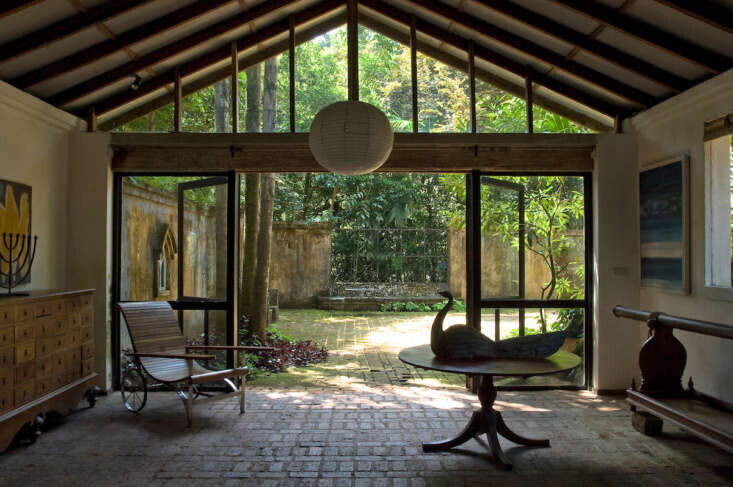
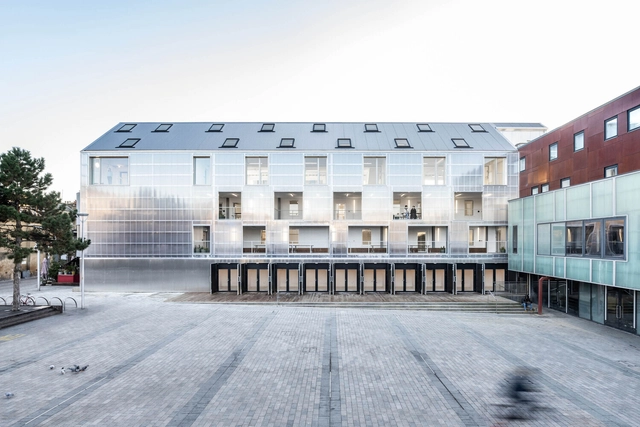
The dogtrot house emerged across the South of the United States during the late nineteenth century as a direct response to humid climates, material availability, and patterns of rural habitation. Found throughout the Appalachian Mountains, coastal Carolinas, and lowlands of Louisiana, the dogtrot house appeared in numerous regional variations, yet its fundamental spatial logic remained remarkably consistent. Two enclosed living masses are separated by an open central passage and unified beneath a continuous roof, creating a dwelling that is simultaneously economical and responsive to long, hot summers. Although architectural historians continue to debate the precise geographic origins of the dogtrot, the typology represents a broader vernacular intelligence that emerged through the convergence of environmental necessity, local construction practices, and rural living.


Dogtrot House: Vernacular Knowledge and Climate-Responsive Design - Image 1 of 4Dogtrot House: Vernacular Knowledge and Climate-Responsive Design - Image 2 of 4Dogtrot House: Vernacular Knowledge and Climate-Responsive Design - Image 3 of 4Dogtrot House: Vernacular Knowledge and Climate-Responsive Design - Image 4 of 4Dogtrot House: Vernacular Knowledge and Climate-Responsive Design - More Images+ 36

Tropical Modernism Beyond Aesthetics: The Politics of Shade and Air

The image is familiar, a façade layered with brise-soleil, light softened into a patterned shadow, interiors kept cool without machines. It appears as intelligence made visible, architecture that understands the sun. This image is rarely examined closely. The same devices that temper heat also organize access, distribute comfort, and depend on particular forms of labor. What looks like a climatic response is also a decision about who gets relief from heat, and how. Tropical modernism, often reduced to a visual language of shade and porosity, emerges instead as a set of situated practices where climate, labor, and power are negotiated differently across contexts.

At the scale of the element, tropical modernism begins as a technical problem. In hot climates, solar radiation is not incidental but constant, requiring buildings to mediate light, heat, and air before they reach the interior. Architects like Maxwell Fry and Jane Drew approached this with a level of precision that resists any reading of these elements as decorative. Shading devices are calibrated according to solar angles, orientation, and seasonal variation. Brise-soleil are dimensioned to block high-angle sun while admitting diffuse light; overhangs extend just enough to prevent direct gain at peak hours; openings are aligned to encourage cross-ventilation. Mid-century research further tested these strategies, measuring temperature reductions and airflow improvements. In this sense, the language of tropical modernism is not symbolic. It is performative: each projection, void, and screen is part of an environmental system.

Tropical Modernism Beyond Aesthetics: The Politics of Shade and Air  - Image 1 of 4Tropical Modernism Beyond Aesthetics: The Politics of Shade and Air  - Image 2 of 4Tropical Modernism Beyond Aesthetics: The Politics of Shade and Air  - Image 3 of 4Tropical Modernism Beyond Aesthetics: The Politics of Shade and Air  - Image 4 of 4Tropical Modernism Beyond Aesthetics: The Politics of Shade and Air  - More Images+ 7

Designing with Air: Rethinking Architecture Beyond the Wall

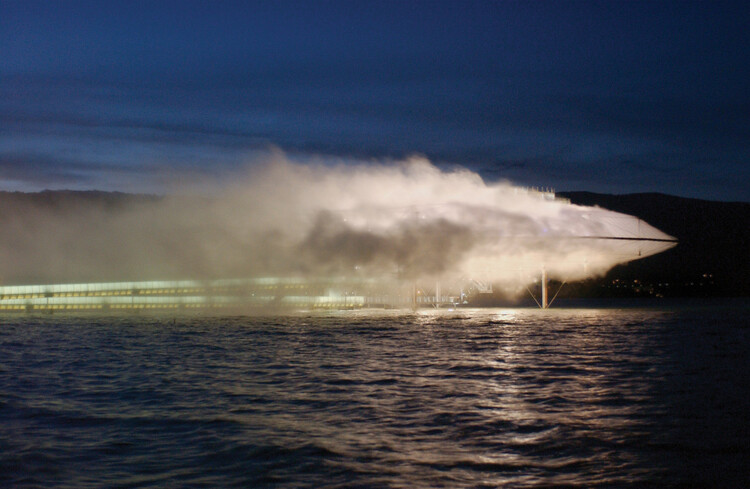
Architecture is traditionally chronicled through the persistence of the solid. We define the discipline by the weight of the lintel, the mass of the pier, and the resistance of the wall. Even when lightness is invoked, it is usually understood as a subtractive act, the thinning of a section or the precarious reduction of a load. Yet there is a parallel history, less visible and harder to isolate, in which the primary material of construction is not what occupies space, but what moves through it.

To treat air as a medium is to move past the binary of the envelope. The boundary between the interior and the world ceases to be a line of absolute separation and becomes, instead, a site of filtration and pressure. We begin to see the building as a thermal valve, a series of gradients where moisture, velocity, and heat are not merely background "conditions" to be mitigated by mechanical systems, but are the very substances being shaped.

Designing with Air: Rethinking Architecture Beyond the Wall - Image 1 of 4Designing with Air: Rethinking Architecture Beyond the Wall - Image 2 of 4Designing with Air: Rethinking Architecture Beyond the Wall - Image 3 of 4Designing with Air: Rethinking Architecture Beyond the Wall - Image 4 of 4Designing with Air: Rethinking Architecture Beyond the Wall - More Images+ 6

Ideology of Performance: Sustainability and the Limits of Efficiency

This article is part of our new Opinion section, a format for argument-driven essays on critical questions shaping our field.

The modern sustainability project is built on the promise that evolving technologies can reconcile urban and economic growth with ecological responsibility. By the metrics developed by the built environment professions and the policies adopted by governments, progress is tangible and accelerating: buildings consume less energy per square foot than they did a generation ago, vehicles emit fewer pollutants per mile, and urban infrastructure is more integrated and measurably cleaner in many cities. And yet total resource consumption continues to rise. Sustainability, as currently practiced across the built environment professions, has become a strategy for optimizing consumption rather than reducing it. Until the profession is willing to question the scale and structure of demand rather than the efficiency with which that demand is met, its most celebrated achievements will continue to fall short of the problem they claim to address.

Ideology of Performance: Sustainability and the Limits of Efficiency - Image 1 of 4Ideology of Performance: Sustainability and the Limits of Efficiency - Image 2 of 4Ideology of Performance: Sustainability and the Limits of Efficiency - Image 5 of 4Ideology of Performance: Sustainability and the Limits of Efficiency - Image 3 of 4Ideology of Performance: Sustainability and the Limits of Efficiency - More Images+ 23

Jaali, Mashrabiya, Cobogó: The Lightest Skins in Architecture

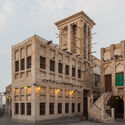
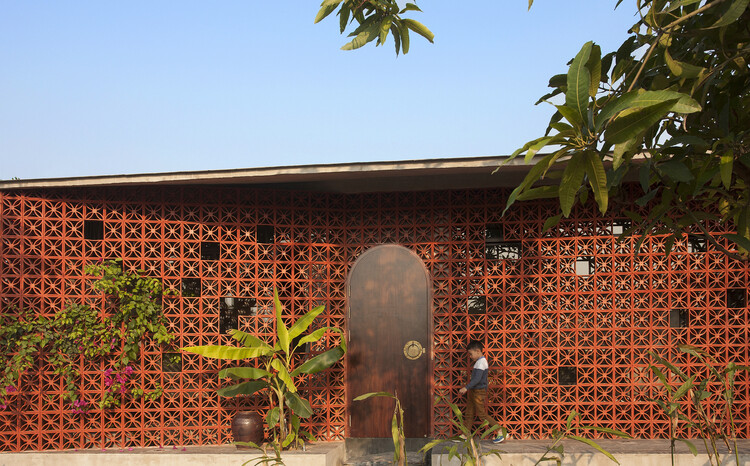
A perforated screen is often treated as an afterthought, something applied to soften light, to decorate a façade, or to add texture where a wall might otherwise feel flat. It is photographed as a surface, drawn as a pattern, and discussed as a craft. But in many buildings across the Indian subcontinent and the Islamic world, the screen was never an addition. It was the wall itself. Remove it, and the building does not simply change in appearance; it loses its ability to regulate heat, move air, and mediate between inside and outside.

This misreading reveals more about contemporary habits than about the screen itself. Architectural thinking has long separated structure from envelope, performance from expression. Within that framework, elements like the jaali or mashrabiya are easy to categorize as ornamental, visually rich but technically secondary. Yet these screens were conceived as integrated systems, where geometry, material, and climate operate together. Their intelligence lies in what they do.

Jaali, Mashrabiya, Cobogó: The Lightest Skins in Architecture - Image 1 of 4Jaali, Mashrabiya, Cobogó: The Lightest Skins in Architecture - Image 2 of 4Jaali, Mashrabiya, Cobogó: The Lightest Skins in Architecture - Image 3 of 4Jaali, Mashrabiya, Cobogó: The Lightest Skins in Architecture - Image 4 of 4Jaali, Mashrabiya, Cobogó: The Lightest Skins in Architecture - More Images+ 11

7 Unbuilt Houses Shaped by Site, Climate, and Constraints

Subscriber Access | 

Residential architecture continues to offer a productive ground for unbuilt exploration, revealing how architects respond to site, climate, and constraint at the scale of the domestic. In this Unbuilt edition, submitted by the ArchDaily community, the selected projects bring together a range of proposals that reconsider the house not as an isolated object, but as a spatial system shaped by its environment. These works position architecture as a framework that negotiates between ground, material, and inhabitation, often emerging directly from the conditions of the site.

Across varied geographies, from Kerala and Cartagena to Amman, Tromsø, and Zwolle, the projects demonstrate diverse responses to domestic architecture. They include compact urban dwellings organized through vertical layering, courtyard houses partially embedded within the ground, residences adapted to sloping terrains, and typological transformations shaped by regulatory constraints. Some projects explore linear spatial sequences rooted in traditional proportions, while others organize domestic life around atria or excavated voids that mediate light, ventilation, and privacy. Together, these proposals examine how the house can be structured through section, material, and environmental performance rather than formal expression.

7 Unbuilt Houses Shaped by Site, Climate, and Constraints - Image 6 of 47 Unbuilt Houses Shaped by Site, Climate, and Constraints - Image 10 of 47 Unbuilt Houses Shaped by Site, Climate, and Constraints - Image 28 of 47 Unbuilt Houses Shaped by Site, Climate, and Constraints - Image 36 of 47 Unbuilt Houses Shaped by Site, Climate, and Constraints - More Images+ 42

Designed Comfort, Purchased Comfort: Passive Design and Air Conditioning in Hong Kong

Subscriber Access | 

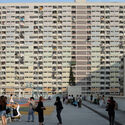
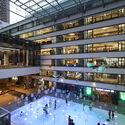
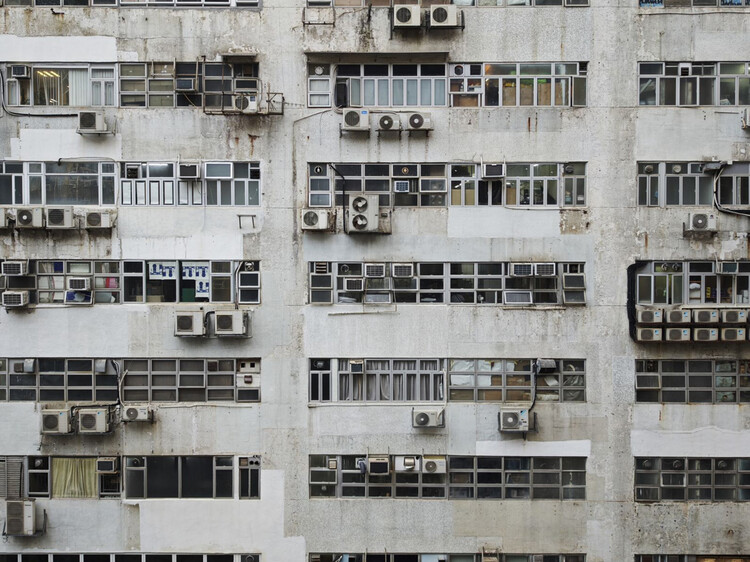
Establishing thermal comfort once demanded a far more deliberate and calibrated architectural intelligence—an interplay of orientation, massing, material behavior, ventilation potential, shading, and the ways daylight and surfaces absorb and release heat. This was not simply a matter of taste, but of necessity. When many of Hong Kong's post-war modernist buildings were constructed in the late 1960s and 1970s, forming a substantial portion of the city's public housing and broader residential stock, air-conditioning was not yet a ubiquitous, default service. Cooling, where present at all, was limited and unevenly distributed; comfort had to be negotiated through passive means, through section, façade depth, operable openings, and climatic detailing. It was only later, particularly through the 1970s and 1980s, as air-conditioning became increasingly standardized across the region, that mechanical cooling began to displace this earlier matrix of architectural decision-making.

Did air conditioning negatively affect architectural space, particularly in Hong Kong and the nearby region? The more precise claim is that widespread reliance on AC has profoundly rearranged the incentive structure of building design.

Designed Comfort, Purchased Comfort: Passive Design and Air Conditioning in Hong Kong - Image 1 of 4Designed Comfort, Purchased Comfort: Passive Design and Air Conditioning in Hong Kong - Image 2 of 4Designed Comfort, Purchased Comfort: Passive Design and Air Conditioning in Hong Kong - Image 3 of 4Designed Comfort, Purchased Comfort: Passive Design and Air Conditioning in Hong Kong - Image 4 of 4Designed Comfort, Purchased Comfort: Passive Design and Air Conditioning in Hong Kong - More Images+ 9

Building with Earth: Traditional Knowledge in Contemporary Architecture 

Subscriber Access | 

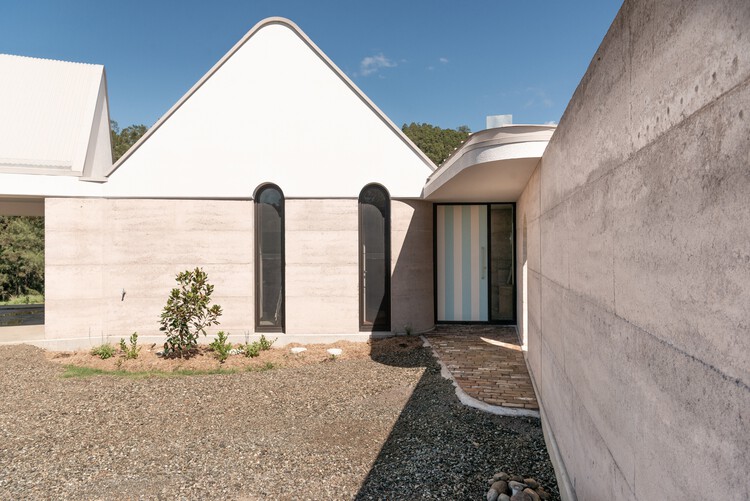
In recent years, earthen construction has gained renewed attention in architecture. Materials such as adobe, rammed earth, and compressed earth blocks, once mainly associated with vernacular traditions, are increasingly being explored by contemporary architects. Rather than representing a simple return to the past, this renewed interest reflects a broader reconsideration of how architecture engages with materials, local resources, and environmental conditions.

For centuries, building with earth was part of everyday construction across many regions of the world. Techniques such as adobe, rammed earth, cob, and other soil-based systems developed gradually through adaptation to climate, available resources, and local construction practices. These methods responded directly to environmental conditions while shaping cultural ways of building. This knowledge circulated through collective practices rather than formal architectural education, allowing techniques to evolve through continuous experimentation.

Building with Earth: Traditional Knowledge in Contemporary Architecture  - Image 1 of 4Building with Earth: Traditional Knowledge in Contemporary Architecture  - Image 2 of 4Building with Earth: Traditional Knowledge in Contemporary Architecture  - Image 3 of 4Building with Earth: Traditional Knowledge in Contemporary Architecture  - Image 4 of 4Building with Earth: Traditional Knowledge in Contemporary Architecture  - More Images+ 13

Thermal Memory: How Climate Shapes Architectural Heritage

On a hot afternoon in May, when the air over western India turns metallic with heat, no one remembers façade composition. They remember where the shade falls. They remember which corridor breathed. They remember the house that was cooler than the street. What stays in memory is comfort beyond the form. Repeated thermal preference stabilizes into spatial configuration, and over time, those configurations become building types.

Heritage is usually catalogued by what can be drawn, not by what changed temperature. In heat, buildings are learned first through skin, only later through sight. Generations learn, through their bodies, what works. Shade reduces glare and radiant heat. Air movement shifts perception by several degrees. Thick walls slow temperature swings. Over time, these experiences accumulate into a spatial preference. What feels right is repeated. What is repeated stabilizes into type.

Thermal Memory: How Climate Shapes Architectural Heritage - Image 1 of 4Thermal Memory: How Climate Shapes Architectural Heritage - Image 2 of 4Thermal Memory: How Climate Shapes Architectural Heritage - Image 3 of 4Thermal Memory: How Climate Shapes Architectural Heritage - Image 4 of 4Thermal Memory: How Climate Shapes Architectural Heritage - More Images+ 8

RINA-Led Team With Zaha Hadid Architects Wins Malpensa Hospital Competition in Italy

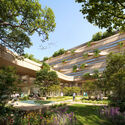
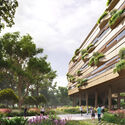
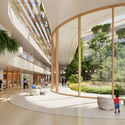
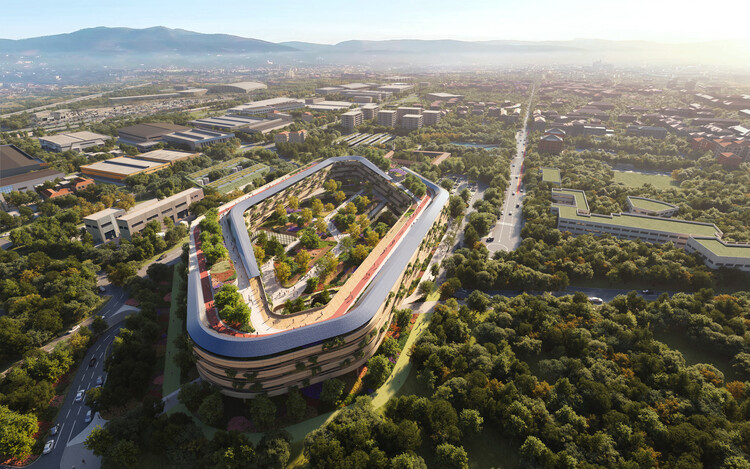
Zaha Hadid Architects, in collaboration with RINA as team leader, Studio Plicchi, WSP, STI Engineering, and BC Building Consulting, has won the international competition to design Malpensa Hospital (Grande Ospedale della Malpensa) in Italy. Commissioned by the Lombardy Regional Health Authority, the project will consolidate the existing Gallarate and Busto Arsizio hospitals into a single medical campus serving the area between Milan and Varese, with a catchment of nearly one million residents.

RINA-Led Team With Zaha Hadid Architects Wins Malpensa Hospital Competition in Italy - Image 1 of 4RINA-Led Team With Zaha Hadid Architects Wins Malpensa Hospital Competition in Italy - Image 2 of 4RINA-Led Team With Zaha Hadid Architects Wins Malpensa Hospital Competition in Italy - Image 3 of 4RINA-Led Team With Zaha Hadid Architects Wins Malpensa Hospital Competition in Italy - Image 4 of 4RINA-Led Team With Zaha Hadid Architects Wins Malpensa Hospital Competition in Italy - More Images+ 1

Rice Museum: Architecture Rooted in Rural Memory and Ecology

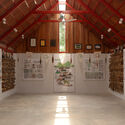
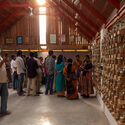
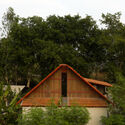
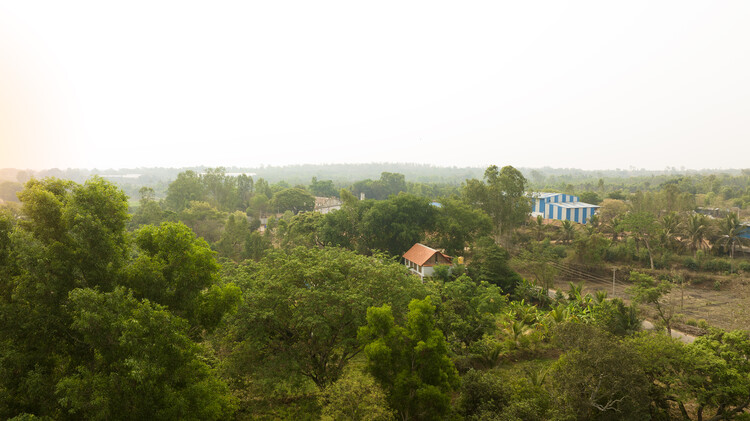
Located on a farm in southern India, the Rice Museum occupies the upper floor of Syed Ghani's home, nestled in the verdant agricultural landscape of Mandya — a region shaped by brick structures, expansive greenery, and ancestral farming knowledge. Syed Ghani, a farmer, historian, and museologist, has dedicated himself to preserving indigenous rice varieties through seed conservation, proliferation, and educational initiatives. With the support of local farmers, he has helped recover more than 1,000 native paddy (rice) varieties, safeguarding an essential part of India's agricultural heritage.

Rice Museum: Architecture Rooted in Rural Memory and Ecology - Image 1 of 4Rice Museum: Architecture Rooted in Rural Memory and Ecology - Image 2 of 4Rice Museum: Architecture Rooted in Rural Memory and Ecology - Image 3 of 4Rice Museum: Architecture Rooted in Rural Memory and Ecology - Image 4 of 4Rice Museum: Architecture Rooted in Rural Memory and Ecology - More Images+ 21

How Breathable Should Facades Be? Exploring Permeability and Impermeability in Building Envelopes

The main role of architecture is to create structures that protect us from the environment and create spaces that are safe and comfortable for all types of needs and activities. By providing shelter, architecture also shapes the way people interact with their surroundings. Building technologies of the past rarely managed, however, to create a complete separation between us and the outside world.

While impermeability was a desired outcome, the porous building materials available always allowed some water, wind, or outside particles to leak into the interior spaces. In contrast, modern technologies now allow for almost completely impermeable building envelopes, allowing for complete separation between indoors and outdoors, thus relying on engineered systems to regulate temperature, airflow, or humidity. This article explores the differences between these two contrasting approaches, exploring how building facades are equipped to regulate indoor comfort and its environmental impact.

How Breathable Should Facades Be? Exploring Permeability and Impermeability in Building Envelopes - Image 1 of 4How Breathable Should Facades Be? Exploring Permeability and Impermeability in Building Envelopes - Image 2 of 4How Breathable Should Facades Be? Exploring Permeability and Impermeability in Building Envelopes - Image 3 of 4How Breathable Should Facades Be? Exploring Permeability and Impermeability in Building Envelopes - Image 4 of 4How Breathable Should Facades Be? Exploring Permeability and Impermeability in Building Envelopes - More Images+ 5

What is Low-Tech Architecture: Comparing Shigeru Ban and Yasmeen Lari's Approaches

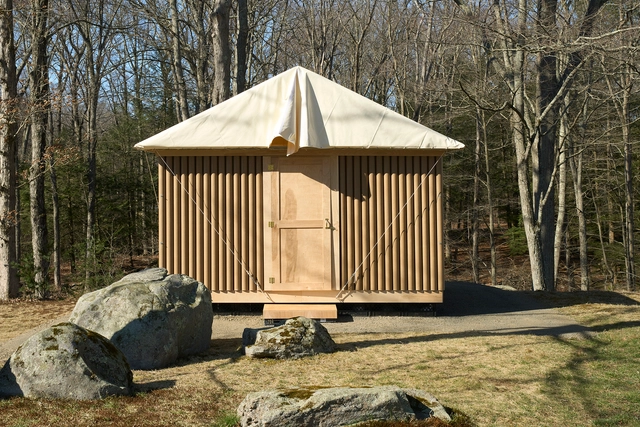
The concept of low-tech architecture recognizes the impact of carbon-intensive technologies and building practices and proposes an alternative: a rediscovery of practical, rational, locally adapted solutions that count on smart design strategies instead of energy-intensive devices to ensure a safe, comfortable living environment. Far from being a regressive approach, the term remains open to innovations but seeks to rebalance the industry's reliance on mechanization. It thus favors an architecture of fewer components, minimized dependence on high-tech solutions, and a preference for low-embodied carbon materials.

What is Low-Tech Architecture: Comparing Shigeru Ban and Yasmeen Lari's Approaches - Image 1 of 4What is Low-Tech Architecture: Comparing Shigeru Ban and Yasmeen Lari's Approaches - Image 2 of 4What is Low-Tech Architecture: Comparing Shigeru Ban and Yasmeen Lari's Approaches - Image 3 of 4What is Low-Tech Architecture: Comparing Shigeru Ban and Yasmeen Lari's Approaches - Image 4 of 4What is Low-Tech Architecture: Comparing Shigeru Ban and Yasmeen Lari's Approaches - More Images+ 15

Capturing Serenity: 10 Beach Houses that Enhance the Caribbean Oceanfront Landscape

Subscriber Access | 

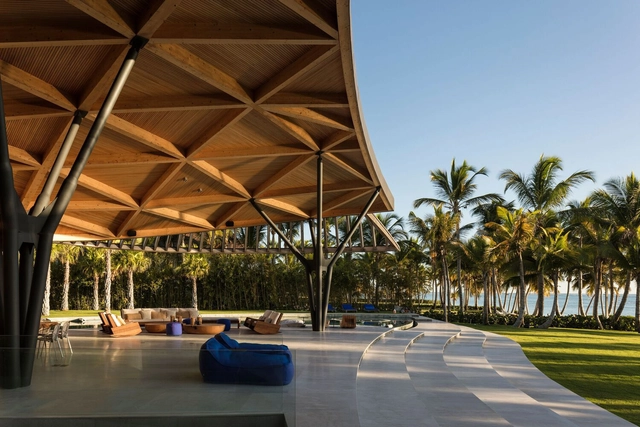
Beach houses along the Caribbean coast perfectly blend comfort, nature, and tranquility. With landscapes of white sands and crystal-clear waters, the Caribbean is home to some of the world’s most enchanting seaside retreats. Whether situated on popular islands like the Dominican Republic and Cozumel in Mexico or secluded spots like the untouched beaches of Costa Rica, these homes are designed to fully immerse guests in the lush natural surroundings, providing a uniquely serene experience.

Capturing Serenity: 10 Beach Houses that Enhance the Caribbean Oceanfront Landscape - Image 1 of 4Capturing Serenity: 10 Beach Houses that Enhance the Caribbean Oceanfront Landscape - Image 2 of 4Capturing Serenity: 10 Beach Houses that Enhance the Caribbean Oceanfront Landscape - Image 3 of 4Capturing Serenity: 10 Beach Houses that Enhance the Caribbean Oceanfront Landscape - Image 4 of 4Capturing Serenity: 10 Beach Houses that Enhance the Caribbean Oceanfront Landscape - More Images+ 20

Revisiting Skyscraper Design: The Benefits of Responsive Facades and Passive Designs

Subscriber Access | 

Our contemporary society has been witnessing a surge in skyscraper construction in urban centers worldwide for various reasons—including engineering advancements, increased urban density, space constraints, and, arguably, a competitive drive for building the tallest structures. The allure of all-glass facades and the pursuit of curtain walls with larger panes of continuous glass have often come at the cost of functionality.

In these towers, operable windows are sacrificed for aesthetics and expansive views, with a central core layout that maximizes 360-degree views while creating architectural "solar heat-gain monsters." Without natural or cross ventilation, these glass skyscrapers trap significant heat from solar radiation within habitable spaces, relying almost exclusively on mechanical HVAC systems to cool these spaces. This raises the question: is passive ventilation strategy becoming obsolete in high-rise design, or can operable systems be integrated effectively into our high-tech towers?

Revisiting Skyscraper Design: The Benefits of Responsive Facades and Passive Designs - Image 1 of 4Revisiting Skyscraper Design: The Benefits of Responsive Facades and Passive Designs - Image 2 of 4Revisiting Skyscraper Design: The Benefits of Responsive Facades and Passive Designs - Image 3 of 4Revisiting Skyscraper Design: The Benefits of Responsive Facades and Passive Designs - Image 4 of 4Revisiting Skyscraper Design: The Benefits of Responsive Facades and Passive Designs - More Images+ 24

Zaha Hadid Architects Reveals Design for New Scientific Research Centre in Tashkent, Uzbekistan

Zaha Hadid Architects (ZHA) has been announced as the architect of the Alisher Navoi International Scientific Research Centre, an expansive cultural and educational facility taking shape in New Tashkent, Uzbekistan. The center is set to incorporate the Navoi State Museum of Literature, along with a 400-seat auditorium and an International Research Center and residential school dedicated to training 200 students in the Uzbek language, literature, and music.

Zaha Hadid Architects Reveals Design for New Scientific Research Centre in Tashkent, Uzbekistan - Image 1 of 4Zaha Hadid Architects Reveals Design for New Scientific Research Centre in Tashkent, Uzbekistan - Image 2 of 4Zaha Hadid Architects Reveals Design for New Scientific Research Centre in Tashkent, Uzbekistan - Image 3 of 4Zaha Hadid Architects Reveals Design for New Scientific Research Centre in Tashkent, Uzbekistan - Image 4 of 4Zaha Hadid Architects Reveals Design for New Scientific Research Centre in Tashkent, Uzbekistan - More Images+ 8

Passive Design and Urban Heat Islands: Strategies from the United Arab Emirates and India

As temperatures rise globally, the impacts of urban heat islands—once considered an invisible threat—are becoming increasingly pronounced and ever more dangerous. Despite this mounting threat, however, the public realm which constitutes about 30% of cities offers immense potential to provide respite from scorching heat and introduce new opportunities to improve urban resilience efforts. As global temperatures rise, cities in regions like the United Arab Emirates and India are facing unprecedented challenges in maintaining livable urban spaces.

Passive Design and Urban Heat Islands: Strategies from the United Arab Emirates and India - Image 1 of 4Passive Design and Urban Heat Islands: Strategies from the United Arab Emirates and India - Image 2 of 4Passive Design and Urban Heat Islands: Strategies from the United Arab Emirates and India - Image 3 of 4Passive Design and Urban Heat Islands: Strategies from the United Arab Emirates and India - Image 4 of 4Passive Design and Urban Heat Islands: Strategies from the United Arab Emirates and India - More Images+ 2

Designing in Connection with Nature: An Interview with Tom Bassett-Dilley on Sustainable, Healthy Architecture

When addressing the world's broader problems—such as the climate emergency, energy crisis, and housing shortage—, we often seek sweeping, grand solutions that could tackle them all at once. As alluring as these ideas may be, they eventually run into the thousands of complexities and interconnections our world presents. But what if we sought more decentralized and domestic solutions? Chicago-based firm Tom Bassett-Dilley Architects has been pursuing just this, focusing on sustainable design, carbon-free and energy-efficient projects for residences, historical buildings, institutions, and commercial projects. In their Manifesto: The New American Dwelling, they argue that the single-family home, once the great American dream, needs to be redefined to emphasize minimalism, efficiency, health, connection with nature, durability, and personal kindness, moving away from wasteful, artificial, and toxic practices. We spoke with Tom Bassett-Dilley, FAIA, CPHC, LFA, and founder of the firm, about some aspects of their work.