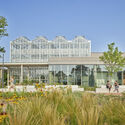
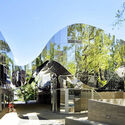
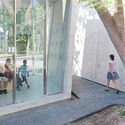
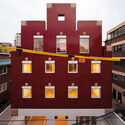
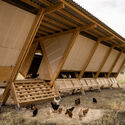
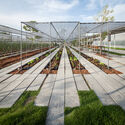
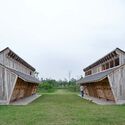
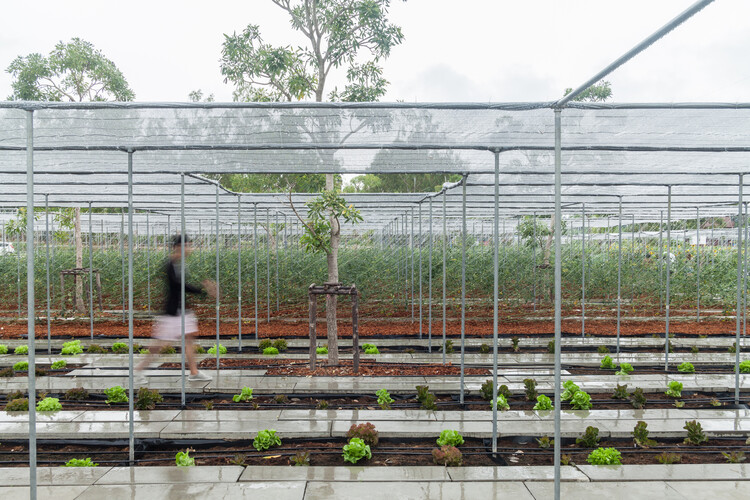
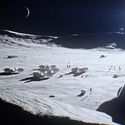
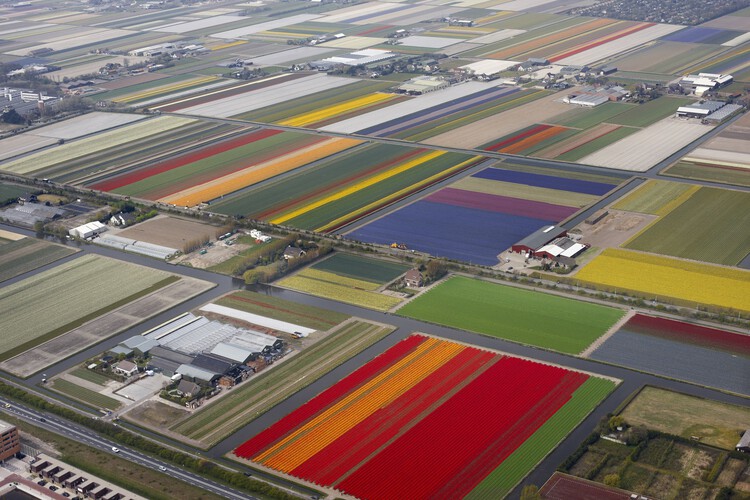
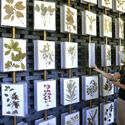
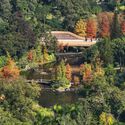
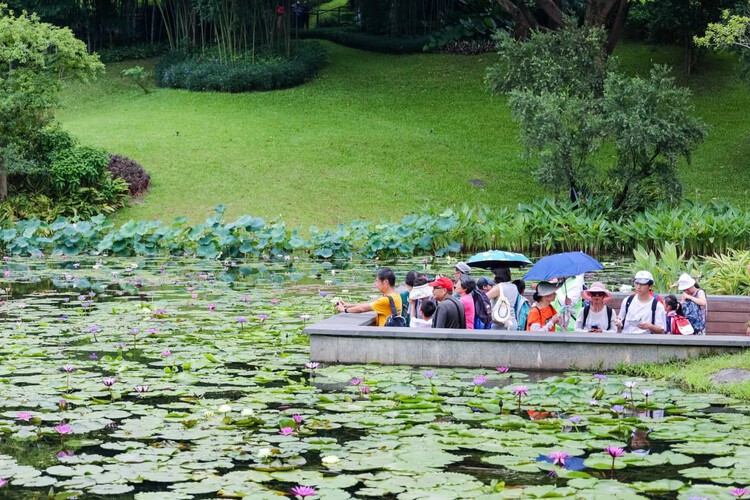
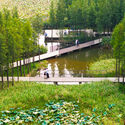
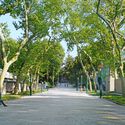
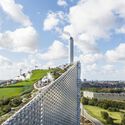
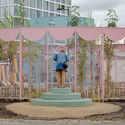
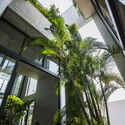
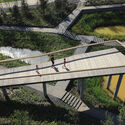
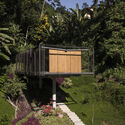
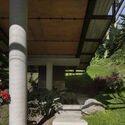
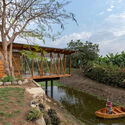
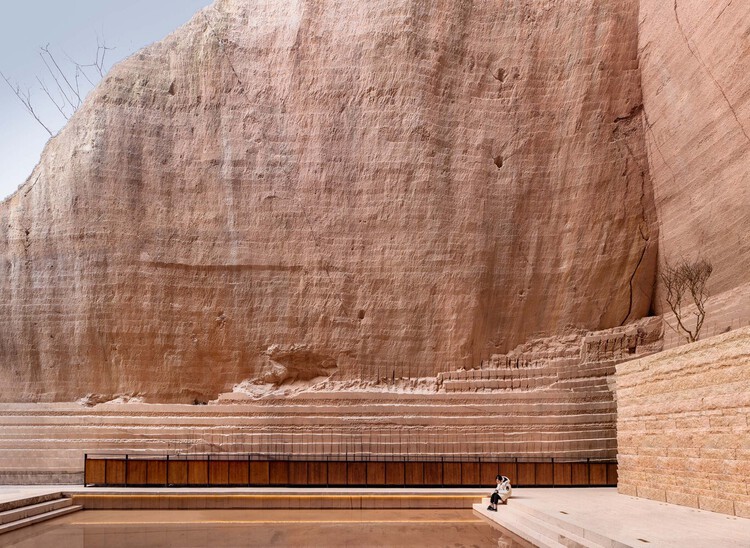
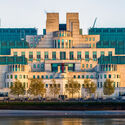
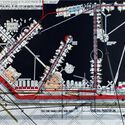
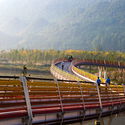
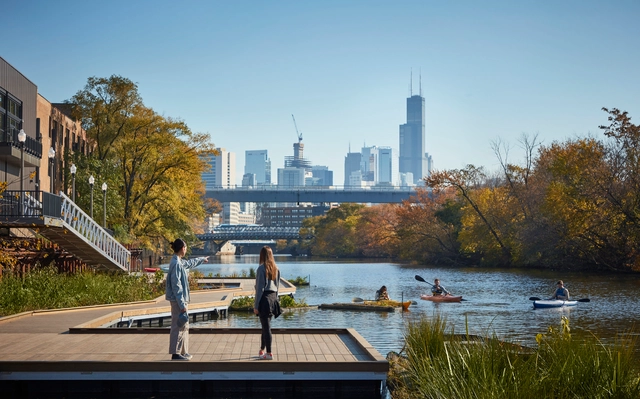
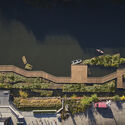
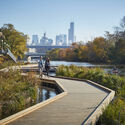
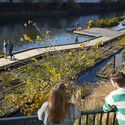
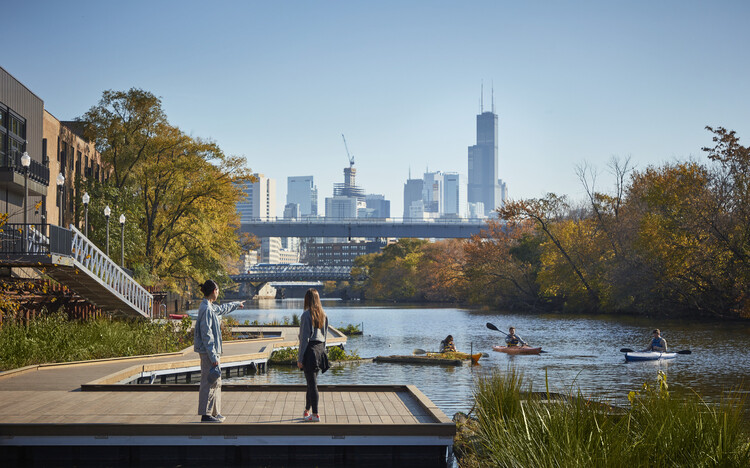
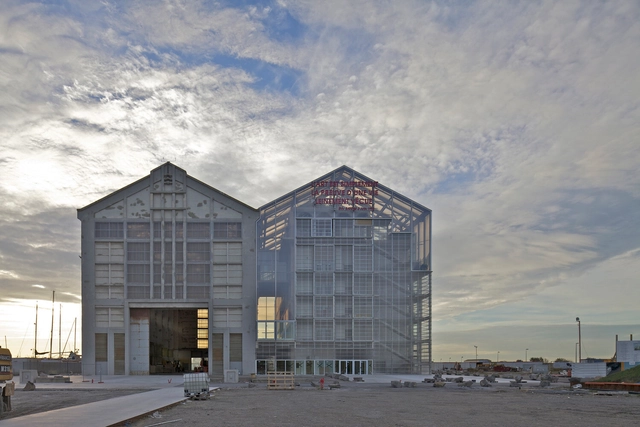
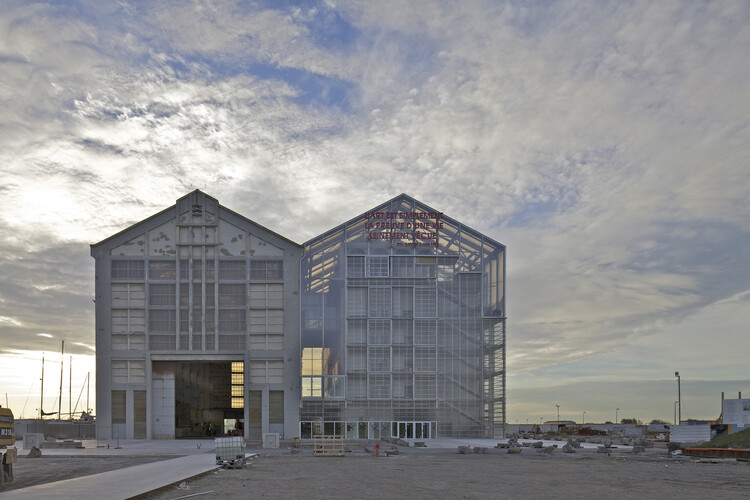
Guangzhou Yunxi Botanical Garden / AECOM + Architectural Design & Research Institute of SCUT + Guangzhou Landscape Architectural Design & Research Institute . Image Courtesy of AECOM
In a slim volume with a yellow-edged cover, recently published by the Porto-based imprint Circo de Ideias, the architect Paulo Martins Barata (a founding partner of Promontório) makes a deceptively bold claim that the architecture produced in Europe since the Great Recession belongs to neither of the two camps that structured the twentieth century's fiercest disciplinary debate.
The Language of Metamodern Architecture borrows its title, with evident irony, from Charles Jencks' 1977 The Language of Post-Modern Architecture, the book that famously declared modern architecture dead at 3:32 pm on July 15, 1972, with the demolition of Pruitt-Igoe. His wager is that another death, never officially certified, occurred somewhere around 2008, and that architecture has been living, mostly unaware, in what grew up around the grave.
The built environment has historically served humans as a mechanism of environmental control. Through our intellectual capacities and ability to organize, we have used buildings to actively influence and terraform the immediate context in which they are inserted, often treating geography, water, and ecosystems as resources to be extracted and managed. However, more and more, architecture is transitioning from exploiting physical and biological matter to actively collaborating with it. This shift demands that architects explore how buildings and their materials grow, transform, decay, and persist beyond human timelines. This thinking also serves as a starting point for the profession to reflect on how it influences the natural world, as well as the non-human species around it, creating networks and connections between humans, buildings, living organisms, and natural environments.
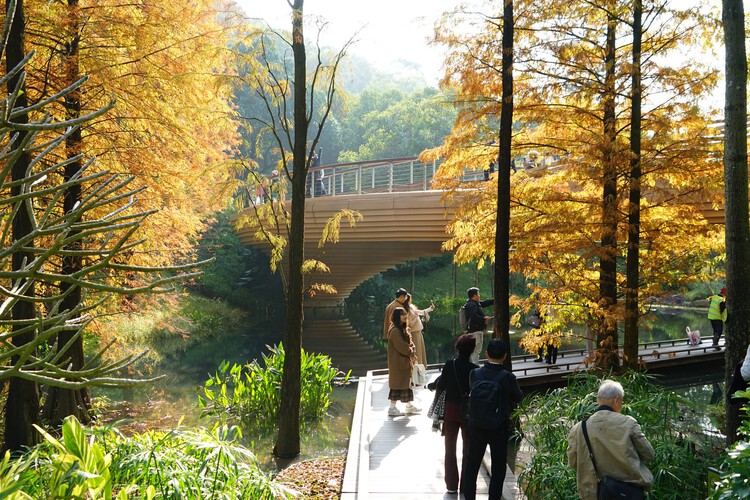
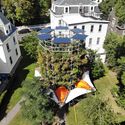
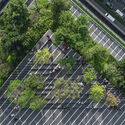
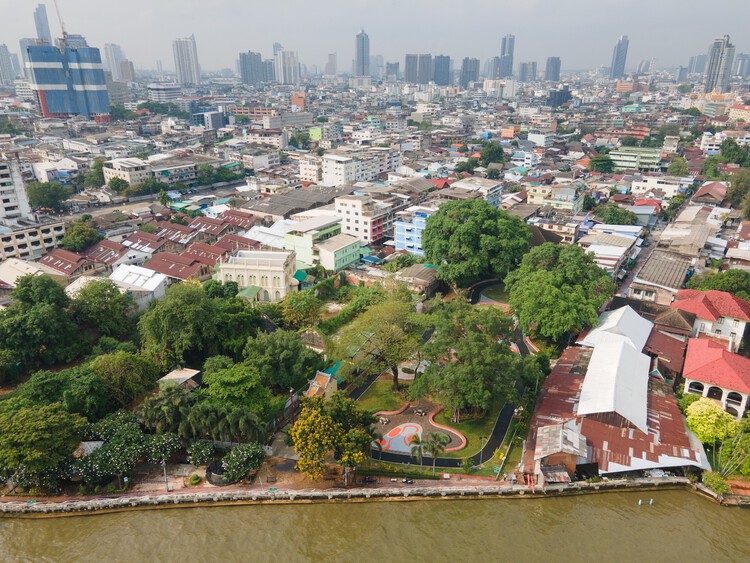
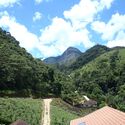
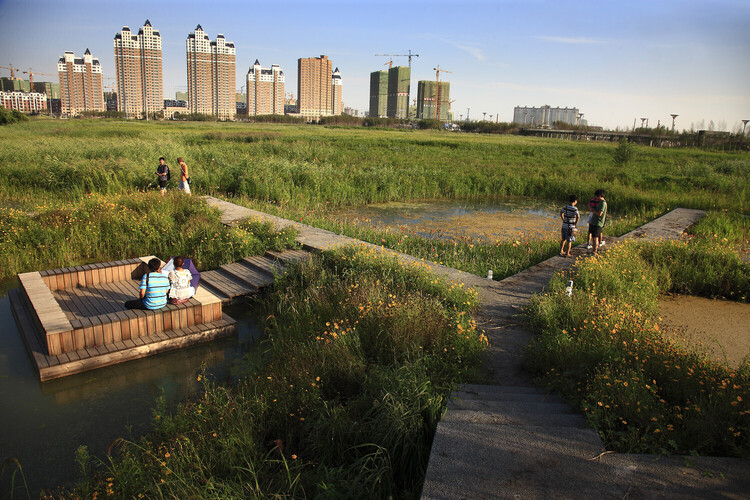
Guangzhou Yunxi Botanical Garden / AECOM + Architectural Design & Research Institute of SCUT + Guangzhou Landscape Architectural Design & Research Institute. Image Courtesy of Yunxi Botanical Garden
While human life depends heavily on plants for the medicines, building materials, and fuel they provide, they also play a vital role in many ecological processes. From climate regulation through carbon dioxide absorption to soil fertility and the purification of air and water, plant diversity offers opportunities to address some of the most pressing challenges of this century, including food security, energy availability, climate change, and habitat degradation. In this context, botanical gardens act as living refuges that foster innovation, adaptation, and human resilience. But what can architectural practice learn from botany and its methods?
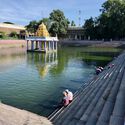
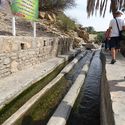
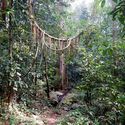
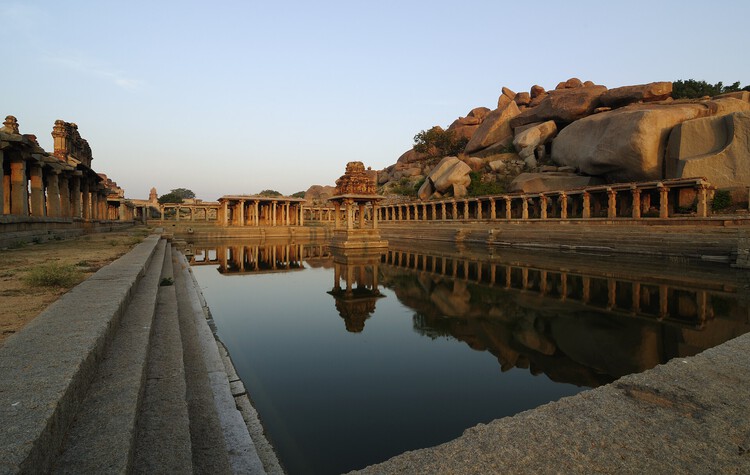
Architecture often speaks about ecological design as though it were a recent discovery. Biodiversity corridors, regenerative landscapes, sponge cities, and more-than-human urbanism are presented as emerging responses to contemporary environmental crises. Across India and the SWANA region, landscapes shaped through religious practice have long organized relationships between people, water, vegetation, and animals. Long before ecological performance became a design metric, temple tanks stored monsoon water, sacred groves protected biodiversity, and oasis settlements sustained life in some of the world's most arid environments. Few of these places emerged from explicit environmental agendas. They emerged through cultural and spiritual practices. Their environmental logic remains highly relevant today. Many of the conditions now discussed through more-than-human design have existed for centuries within landscapes architects rarely study as ecological infrastructure.
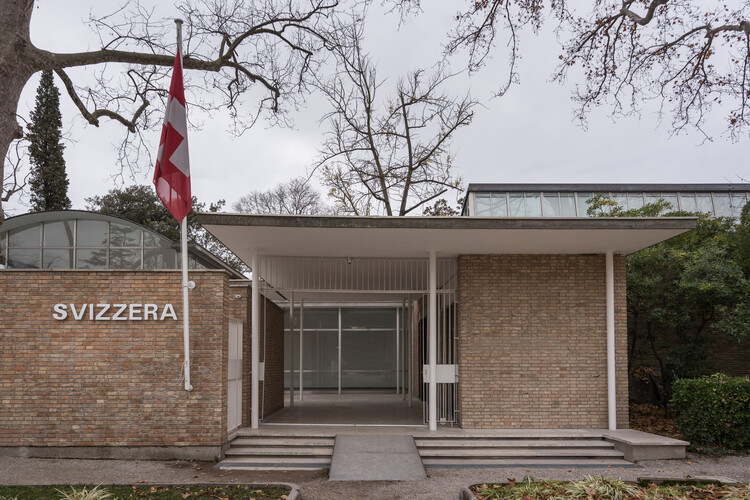
Architect and urbanist Paola Viganò has been selected by Pro Helvetia to curate the Swiss Pavilion at the 20th International Architecture Exhibition – La Biennale di Venezia. Chosen following a unanimous recommendation from the selection jury, Viganò's proposal explores water as a territorial, ecological, and political condition, taking Switzerland's role as "Europe's water tower" as its conceptual point of departure. Developed with StudioPaolaViganò and an interdisciplinary team, the project examines water not only as a resource but also as a subject, a legal entity, and a force that shapes landscapes, infrastructures, and the built environment.
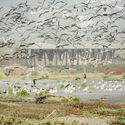
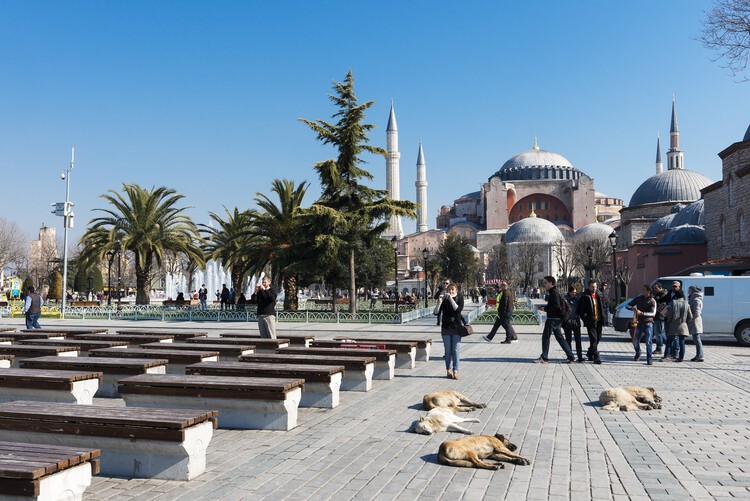
Stray dogs in Istanbul. Image by istanbulphotos, via Shutterstock
Architecture continues to draw cities as though humans occupy them alone. Plans trace circulation routes, zoning maps assign functions, and buildings are evaluated according to human comfort, safety, and efficiency. Walking through cities across India and Southwest Asia reveals something much more complex. Dogs sleep beneath market stalls, monkeys move across rooftops, birds nest in temple towers and mosque façades, and insects pollinate urban landscapes hidden in plain sight. These species are woven into daily urban life as consistently as human occupants. Streets, courtyards, roofs, drainage systems, markets, and vacant lots are already occupied by multiple species simultaneously. Architectural thinking has been slower to account for this reality.
"By 2050, almost every child in the world — nearly 2.2 billion children — will be exposed to frequent heat waves." UNICEF's warning is often read as a public health forecast, but it is also a challenge to architecture and the way cities are built. As extreme heat intensifies across Asia, Europe, and beyond, thermal comfort should not be reduced to merely an indoor service delivered by machines. Air-conditioning has become a life-support system for many cities, especially in dense, humid, and rapidly urbanizing regions. Yet to rely on it as the default answer is to treat heat as something that can simply be moved elsewhere (and in the process generating extra heat) — expelled from interiors into streets, service alleys, energy grids, and the atmosphere. Its expansion increases energy demand, produces waste heat, and reinforces unequal access to comfort.
Heat, however, does not stop at the human body. It reorganizes the wider urban ecosystem: trees struggle with compacted soil and radiant paving; birds and insects lose habitat when planting is reduced to decorative greenery; aquatic systems warm, microbial life shifts, and materials absorb and release heat long after the sun has set. Heat is not simply a climatic problem to be escaped indoors. It is an urban actor that reshapes public space, labor, mobility, planting, material choices, and the fragile relationships between human and nonhuman life.
Western philosophical tradition has long placed culture in opposition to nature. This dual thinking has shaped the canon of the sciences and humanities, and architecture was not left aside. Under that logic, everything that is not human exists to be exploited by them and is named "natural resource". This extractivist mindset has shaped the development of many parts of the world in the last centuries, leaving deep—sometimes irreparable—marks on the planet. Nevertheless, other ways of living have always existed. From West-African religious practices based on animism to the herbal sciences of the masters of the Sacred Jurema in Brazil; from indigenous communities in India whose life rhythm mirrors the monsoons, to the Arctic's Inuits who can see dozens of shades of white: humans and nature bear no distinction, what exists is life.
Contemporary authors bring this discussion to the realms of philosophy and, more specifically, architecture. Donna Haraway, Antônio Bispo dos Santos, Achille Mbembe, and Beatriz Colomina are only a few whose work has helped expand the narrow Western perspective, shedding light on alternative ways of living together—with other humans and more-than-humans—on this planet.
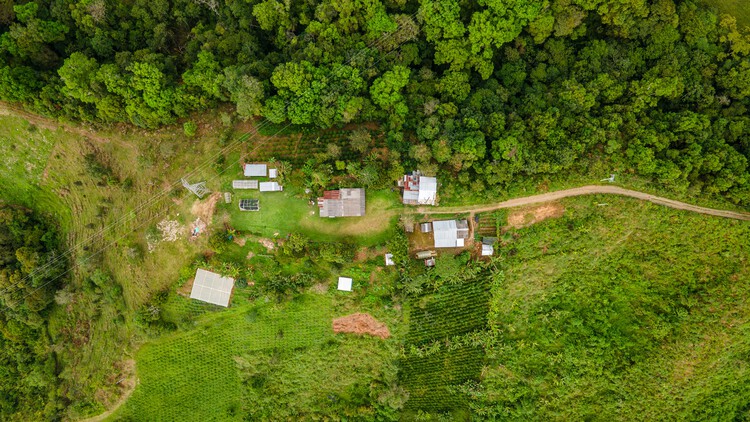
Aerial View of Lush Green Hills and Traditional Homes in Cauca, Colombia, Showcasing Nature and Rural Tourism. Image by Jhampier Giron M, via Shutterstock
Before a building can be inhabited, many other things need to happen. Water has to arrive, energy has to be generated, food has to be grown or transported, and waste has to go somewhere. These processes are usually treated as something outside architecture, even though they shape the most basic conditions of everyday life.
This is why the idea of self-sufficient communities is more complex than it first appears. It can suggest a place that provides more of what it needs: energy, water, food, shelter, and waste management. Yet, in many Latin American contexts, autonomy is not a complete separation from the world. It is a way of bringing the systems of daily life closer to the people who use, maintain, and care for them.
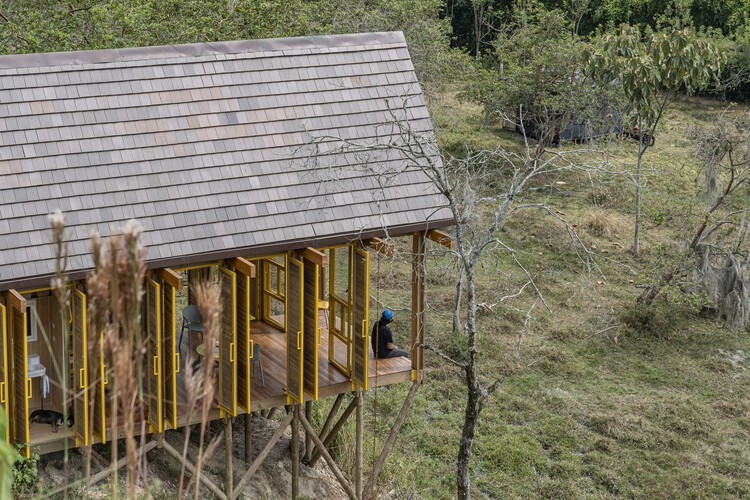
In Latin America, the ground is rarely just a surface to build on. It can be a river edge, a steep slope, a humid forest floor, a floodable landscape, or a territory under ecological pressure, and in many cases, it carries a history of communities that already knew how to respond to it, building on stilts, on platforms, over water, long before contemporary architecture asked the same questions.
These projects continue that conversation. They engage with conditions that move, absorb, erode, and grow, rather than treating the ground as something to level or control. Elevation allows architecture to adapt without fully taking over: water can pass below, vegetation can remain, and slopes can keep their original condition. In each case, the decision to rise is tied to something specific: water, humidity, topography, vegetation, or ecological recovery, and the knowledge of how to build within it and not against it.
Architecture has traditionally been described as a discipline concerned with space, form, and material presence. Yet this understanding becomes increasingly limited when confronted with the conditions that shape contemporary construction. Buildings no longer emerge from a stable relationship between site, program, and material. Instead, they are produced within a dense web of technological systems that operate across territorial, ecological, and temporal scales. Energy networks, data infrastructures, extraction processes, and global logistics shape architecture as decisively as climate or urban context.
Seen from this angle, architecture is less a discrete object than a moment within a larger technical field. Supply chains, data systems, automated maintenance, and energy grids do not sit "behind" the built environment. In a certain way, they influence what can be built, what is affordable, how buildings perform over time, and what kinds of waste they produce. When architecture is assessed primarily through form, it risks overlooking the systems that condition its production and afterlife.
Every year brings new ideas, projects, and shifts in architectural culture, but it also marks the loss of voices that have shaped the discipline across decades. Architecture moves forward, but it also advances through absence. When figures who helped articulate its language and its ambitions disappear, they leave behind more than completed works or influential texts. Their absence becomes a threshold, a moment in which the discipline pauses to understand what remains, what evolves, and what continues to guide us. These moments of loss remind us that architecture is a long, collective construction, carried not only by those shaping the present but also by those whose visions continue to orient how we think about cities and landscapes.
The architects and thinkers we lost in 2025 came from remarkably different worlds, yet the questions that shaped their work often intersected. Some approached the city through identity, symbolism, and historical continuity, seeking to ground the built environment in cultural memory. Others interpreted it through engineering precision, ecological systems, or radical experimentation, expanding what architecture could be and how it could be experienced. Their work spans contexts as diverse as postwar Britain, rapidly urbanizing China, Central European avant-gardes, and the evolving cultural institutions of Berlin and New York. Together, they form a spectrum of responses that defined, and continue to define, architectural culture over the last half-century, revealing the multiplicity of ways in which architecture can engage with society, technology, and the environment.
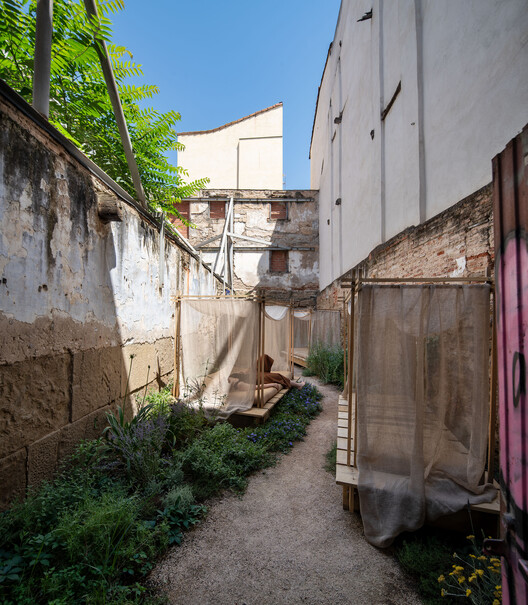
In a world facing ecological exhaustion and spatial saturation, the act of building has come to represent both creation and consumption. For decades, architectural progress was measured by the new: new materials, new technologies, new monuments of ambition. Yet today, the discipline is increasingly shaped by another form of intelligence, one that values what already exists. Architects are learning that doing less can mean designing more, and this shift marks the emergence of what might be called an architecture of restraint: a practice defined by care, maintenance, and the deliberate choice not to build.
The principle recognizes that the most sustainable building is often the one that already stands, and that transformation can occur through preservation, repair, or even absence. Choosing not to build becomes a political and creative act, a response to the material limits of the planet and to the ethical limits of endless growth. That Architecture moves beyond the production of new forms to embrace continuity, extending the life of structures, materials, and memories that already inhabit the world.
As architecture moves beyond human-centered design, new practices are rethinking coexistence as an ethical and ecological framework. From political infrastructures to habitats, these approaches invite us to imagine architecture as a shared living system.
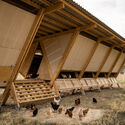
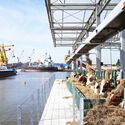
Modern architecture has long been written through an anthropocentric lens, placing the human at its center and rendering other species invisible. Yet this paradigm continues to shift, as architects and researchers redefine the role of design in more-than-human worlds. Studios such as Office for Political Innovation, Studio Ossidiana, and Husos Architects are questioning human-centered narratives and reframing design as a shared practice between species. In this context, architecture is no longer a tool of control but a medium for coexistence, a discipline that mediates between species, environments, and cultures.