Beyond Human-Centered Architecture: Designing Spaces with Other Species

Subscriber Access

As architecture moves beyond human-centered design, new practices are rethinking coexistence as an ethical and ecological framework. From political infrastructures to habitats, these approaches invite us to imagine architecture as a shared living system.

Modern architecture has long been written through an anthropocentric lens, placing the human at its center and rendering other species invisible. Yet this paradigm continues to shift, as architects and researchers redefine the role of design in more-than-human worlds. Studios such as Office for Political Innovation, Studio Ossidiana, and Husos Architects are questioning human-centered narratives and reframing design as a shared practice between species. In this context, architecture is no longer a tool of control but a medium for coexistence, a discipline that mediates between species, environments, and cultures.
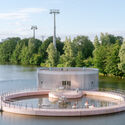
Beyond Human-Centered Architecture: Designing Spaces with Other Species - Image 7 of 28Beyond Human-Centered Architecture: Designing Spaces with Other Species - Image 11 of 28Beyond Human-Centered Architecture: Designing Spaces with Other Species - Image 24 of 28Beyond Human-Centered Architecture: Designing Spaces with Other Species - Image 5 of 28Beyond Human-Centered Architecture: Designing Spaces with Other Species - More Images+ 23

Content Loader

Image gallery

See allShow less
About this author
Cite: Daniela Andino. "Beyond Human-Centered Architecture: Designing Spaces with Other Species" 17 Nov 2025. ArchDaily. Accessed . <https://www.archdaily.com/1035986/beyond-human-centered-architecture-designing-spaces-with-other-species> ISSN 0719-8884
Bioclimatic Prototype of a Host and Nectar Garden Building, Husos Architects. Image © Manuel Salinas

超越以人类为中心的建筑:与其他物种共同设计空间

You've started following your first account!

Did you know?

You'll now receive updates based on what you follow! Personalize your stream and start following your favorite authors, offices and users.