1. ArchDaily
  2. Biophilic Design

Biophilic Design: The Latest Architecture and News

When Façades Become Habitats: Architecture Making Room for Other Species

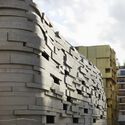
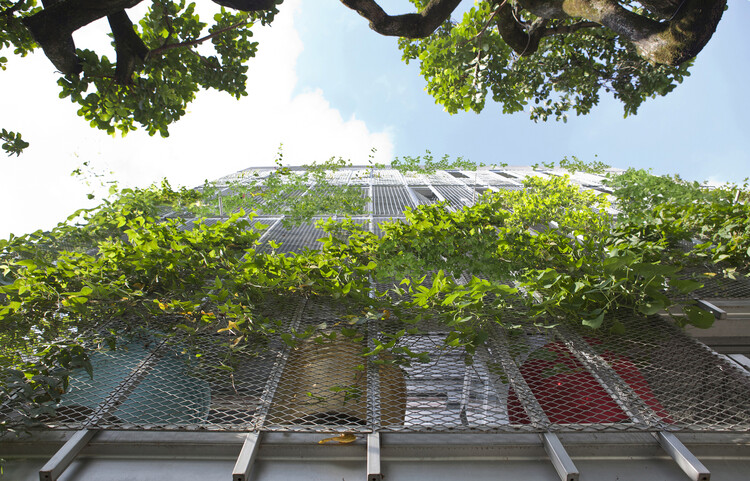
When we think of façades, we rarely think of them as habitats. We see them as the elements that separate interior from exterior, regulate temperature, reduce noise, and protect buildings from external conditions. They give architecture its visual language, but they are also expected to keep the outside world at a distance. In doing so, façades have often been understood as barriers: surfaces that define where human comfort begins and where the environment is meant to remain outside.

But the outside of a building is never empty. For centuries, architecture has unintentionally created opportunities for other forms of life. Birds nested beneath roof tiles, insects occupied cracks in masonry walls, and mosses or plants took root along ledges, gutters, and rough stone surfaces. These conditions were rarely designed with other species in mind, but they created small opportunities for life to inhabit them.

When Façades Become Habitats: Architecture Making Room for Other Species - Image 1 of 4When Façades Become Habitats: Architecture Making Room for Other Species - Image 2 of 4When Façades Become Habitats: Architecture Making Room for Other Species - Image 3 of 4When Façades Become Habitats: Architecture Making Room for Other Species - Image 4 of 4When Façades Become Habitats: Architecture Making Room for Other Species - More Images+ 21

Qbiss Notch: A Red Dot Design Award–Winning Modular Façade System

 | Sponsored Content

Qbiss Notch, a new design edition developed by Pininfarina for Trimo's Qbiss façade system, has received the Red Dot Design Award. Based on Trimo's Qbiss façade technology, the project introduces vertically installed modular Qbiss panels, an alphabet of engraved Glyphs, and Notches with integrated lighting. Together, these elements allow designers to create distinctive façade compositions. Despite its visual flexibility, the system is designed around the efficiency and precision of prefabricated construction.

Above Water, Slope, and Forest: Elevated Architecture in Latin America

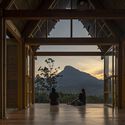
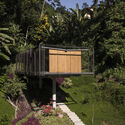
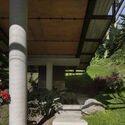
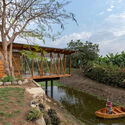
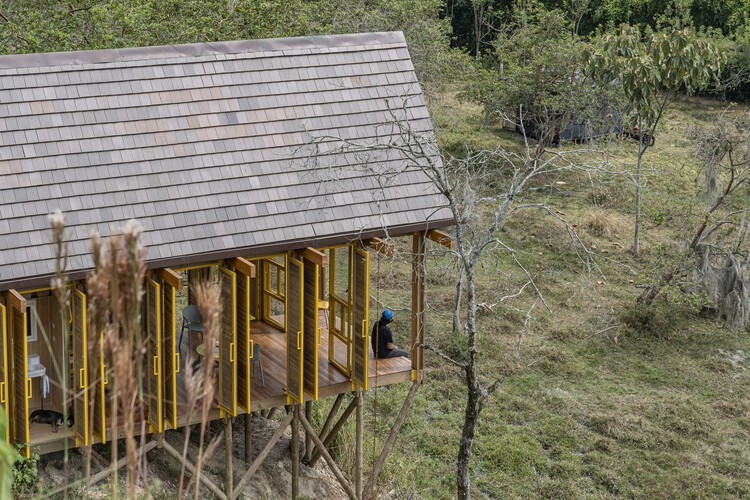
In Latin America, the ground is rarely just a surface to build on. It can be a river edge, a steep slope, a humid forest floor, a floodable landscape, or a territory under ecological pressure, and in many cases, it carries a history of communities that already knew how to respond to it, building on stilts, on platforms, over water, long before contemporary architecture asked the same questions.

These projects continue that conversation. They engage with conditions that move, absorb, erode, and grow, rather than treating the ground as something to level or control. Elevation allows architecture to adapt without fully taking over: water can pass below, vegetation can remain, and slopes can keep their original condition. In each case, the decision to rise is tied to something specific: water, humidity, topography, vegetation, or ecological recovery, and the knowledge of how to build within it and not against it.

Above Water, Slope, and Forest: Elevated Architecture in Latin America - Image 1 of 4Above Water, Slope, and Forest: Elevated Architecture in Latin America - Image 2 of 4Above Water, Slope, and Forest: Elevated Architecture in Latin America - Image 3 of 4Above Water, Slope, and Forest: Elevated Architecture in Latin America - Image 4 of 4Above Water, Slope, and Forest: Elevated Architecture in Latin America - More Images+ 12

On World Health Day: How Architecture Shapes Well-Being in Everyday Spaces

Observed annually on April 7, World Health Organization's World Health Day draws attention to global health priorities while situating them within broader environmental and societal contexts. Established following the first World Health Assembly in 1948 and observed since 1950, the day has evolved into a platform for addressing the shifting conditions that shape health, from local systems of care to planetary-scale challenges. The 2026 edition, held under the theme "Together for health. Stand with science," calls for renewed engagement with scientific knowledge as a basis for collective action. The year-long campaign emphasizes collaboration in protecting the health of people, animals, plants, and the planet, foregrounding the One Health approach as a framework for understanding their interdependence.

On World Health Day: How Architecture Shapes Well-Being in Everyday Spaces - Image 1 of 4On World Health Day: How Architecture Shapes Well-Being in Everyday Spaces - Image 2 of 4On World Health Day: How Architecture Shapes Well-Being in Everyday Spaces - Image 3 of 4On World Health Day: How Architecture Shapes Well-Being in Everyday Spaces - Image 4 of 4On World Health Day: How Architecture Shapes Well-Being in Everyday Spaces - More Images+ 9

Designing With Living Systems: Discover the Works of Yong Ju Lee Architecture

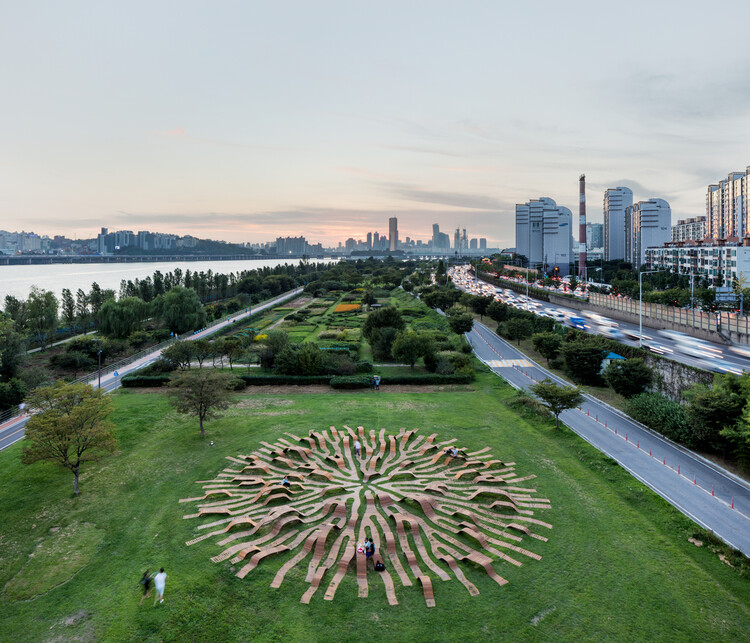
What does it mean to practice ecological responsibility beyond performance metrics or carbon calculations? How can fabrication become a design method rather than a final outcome? Founded in Seoul, Yong Ju Lee Architecture is a practice led by architect and researcher Yong Ju Lee. Across installations, research-driven proposals, and cultural projects, the studio positions architecture as an experimental discipline rooted in making: a process in which design emerges from material behavior, prototyping, and fabrication logic as much as from drawing or representation. Bridging professional practice and academia, his work consistently expands the architectural toolkit through computational design, experimental material research, and an evolving commitment to ecology as a responsibility and a design driver. In 2025, the studio was selected as a winner of the ArchDaily Next Practices Awards.

Designing With Living Systems: Discover the Works of Yong Ju Lee Architecture - Image 1 of 4Designing With Living Systems: Discover the Works of Yong Ju Lee Architecture - Image 2 of 4Designing With Living Systems: Discover the Works of Yong Ju Lee Architecture - Image 3 of 4Designing With Living Systems: Discover the Works of Yong Ju Lee Architecture - Image 4 of 4Designing With Living Systems: Discover the Works of Yong Ju Lee Architecture - More Images+ 21

Architecture in Rhythm with Time: Designing Through Solar, Lunar, and Biological Cycles

Subscriber Access | 

As the solstice marks the shortest day of the year in the Northern Hemisphere, it also draws attention to something architecture has long negotiated but often overlooked: time. Beyond form or function, buildings and spaces are continuously shaped by cycles of light and darkness, seasonal shifts, and environmental rhythms that affect how they are inhabited.

In recent years, a growing number of architectural projects have begun to work explicitly with these cycles. Rather than designing spaces to function in a single, fixed way, architects are creating environments that change throughout the day, across seasons, or in response to natural phenomena such as the sun's path, lunar phases, wind patterns, or circadian rhythms. These projects operate in dialogue with time, appearing, transforming, and activating differently depending on environmental conditions.

Architecture in Rhythm with Time: Designing Through Solar, Lunar, and Biological Cycles - Image 1 of 4Architecture in Rhythm with Time: Designing Through Solar, Lunar, and Biological Cycles - Image 2 of 4Architecture in Rhythm with Time: Designing Through Solar, Lunar, and Biological Cycles - Image 3 of 4Architecture in Rhythm with Time: Designing Through Solar, Lunar, and Biological Cycles - Image 4 of 4Architecture in Rhythm with Time: Designing Through Solar, Lunar, and Biological Cycles - More Images+ 11

Light, Material, Reaction: How Active Surfaces® Transform Cybernet Systems’ Tokyo Headquarters

 | Sponsored Content

The new headquarters for Cybernet Systems was designed around the Japanese architectural concept of flexibility, promoting well-being, collaboration, and productivity. As a global leader in Computer-Aided Engineering, supporting industrial production through advanced digital solutions, the headquarters, located in the Fuji Soft Akihabara Building in Tokyo, embodies the company's commitment to creating a dynamic, technology-driven community.  

Developed by MB-AA (Matteo Belfiore Architect & Associates) and Shukoh, in collaboration with Cybernet Systems, the project translates corporate values into spatial design. Minimalism, natural light, and openness define the environment. Transparent partitions and adaptable layouts foster communication while allowing each employee to personalize their workspace. Well-being, creativity, flexibility, and technology form the core of the project.

Beyond Human-Centered Architecture: Designing Spaces with Other Species

Subscriber Access | 

As architecture moves beyond human-centered design, new practices are rethinking coexistence as an ethical and ecological framework. From political infrastructures to habitats, these approaches invite us to imagine architecture as a shared living system.

Modern architecture has long been written through an anthropocentric lens, placing the human at its center and rendering other species invisible. Yet this paradigm continues to shift, as architects and researchers redefine the role of design in more-than-human worlds. Studios such as Office for Political Innovation, Studio Ossidiana, and Husos Architects are questioning human-centered narratives and reframing design as a shared practice between species. In this context, architecture is no longer a tool of control but a medium for coexistence, a discipline that mediates between species, environments, and cultures.

Beyond Human-Centered Architecture: Designing Spaces with Other Species - Image 6 of 4Beyond Human-Centered Architecture: Designing Spaces with Other Species - Image 10 of 4Beyond Human-Centered Architecture: Designing Spaces with Other Species - Image 23 of 4Beyond Human-Centered Architecture: Designing Spaces with Other Species - Image 4 of 4Beyond Human-Centered Architecture: Designing Spaces with Other Species - More Images+ 23

Can the Floor Beneath Us Shape How We Learn, Focus, and Feel?

 | Sponsored Content

For over 125 years, Tarkett has been manufacturing linoleum flooring based on its original 1898 formulation. Trusted by architects worldwide, this natural floor covering is a benchmark in sustainability, durability, and timeless design. Today, Tarkett Linoleum is not only known for its heritage but also for its innovative application in modern architecture — particularly in the education sector. Learn more about the impact of Lino Materiale by Tarkett on today's spaces.

The Safari Lodge: An Overlooked Typology with Social and Environmental Potential

Subscriber Access | 

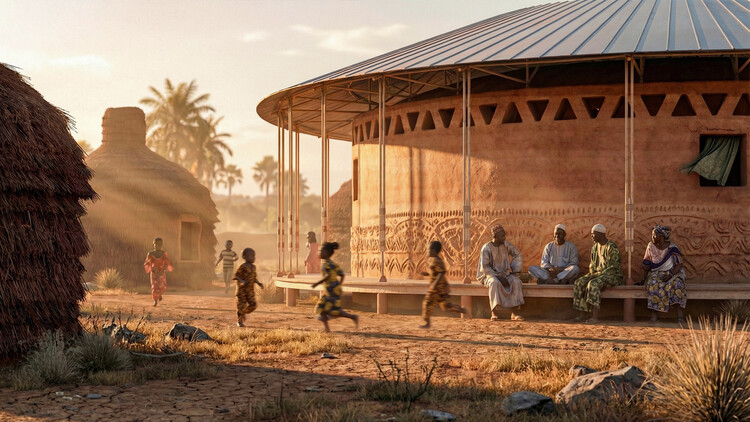
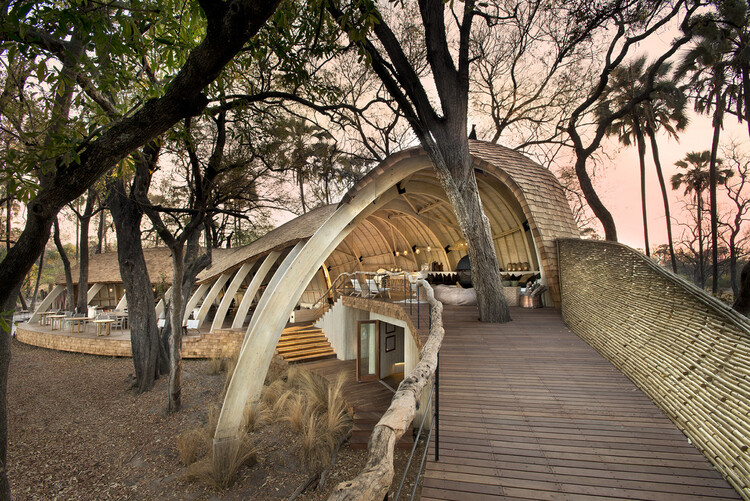
In Eastern and Southern Africa, safari lodges attract tourists from around the world wishing to witness the landscapes and fauna of the natural world. Usually situated in national parks and game reserves, their remote locations make for costly journeys and are therefore suitable for luxury stays. Often overlooked as an architectural typology, many lodges risk falling into the trap of being contextually insensitive or crudely mimicking vernacular building methods, resulting in pastiche. On the other hand, the safari lodge sits at the intersection of the man-made and natural worlds, bringing together rural dwellers and townfolk, wealth and poverty, wildlife and humans. Thus, it can be an opportunity to design with the highest social and environmental responsibility.

The Safari Lodge: An Overlooked Typology with Social and Environmental Potential - Image 1 of 4The Safari Lodge: An Overlooked Typology with Social and Environmental Potential - Image 2 of 4The Safari Lodge: An Overlooked Typology with Social and Environmental Potential - Image 3 of 4The Safari Lodge: An Overlooked Typology with Social and Environmental Potential - Image 4 of 4The Safari Lodge: An Overlooked Typology with Social and Environmental Potential - More Images+ 9

Rugs as Woven Memory: How Origin and Materiality Shape Interiors

 | In Collaboration

Materials can carry memory. They do more than finish a space; they can anchor it, shape atmosphere, and connect interiors to broader cultural and material narratives. Some architects and designers explore local techniques, natural resources, and craft traditions to balance cultural preservation with modern functionality, introducing context and depth. This is not necessarily a return to the past, but a reinterpretation of inherited knowledge to create architecture that resonates with contemporary needs.

"Nature is an Incredible Teacher": Jenny Sabin on the Fusion of the Digital, Biological and Physical in Louisiana Channel Interview

Jenny E. Sabin is an American architect, designer, and educator known for her work at the intersection of architecture, computation, and biomaterials. She integrates digital fabrication, responsive materials, and bio-inspired design into her architectural practice and runs an experimental architecture studio, Jenny Sabin Studio, based in Ithaca, NY. In this interview with Louisiana Channel, she shares her personal journey from artist to scientist, explains how biological and material systems can be applied at an architectural scale, and discusses her teaching and research roles at Cornell University. She elaborates on her interest in bringing people together through new strategies for responsive and adaptive architecture. In her view, the connections between the digital, the physical, and the biological define a paradigm shift in the evolution of architecture, converging with other realms of physical experience to create a more interconnected future.

"Nature is an Incredible Teacher": Jenny Sabin on the Fusion of the Digital, Biological and Physical in Louisiana Channel Interview - Featured Image"Nature is an Incredible Teacher": Jenny Sabin on the Fusion of the Digital, Biological and Physical in Louisiana Channel Interview - Image 3 of 4"Nature is an Incredible Teacher": Jenny Sabin on the Fusion of the Digital, Biological and Physical in Louisiana Channel Interview - Image 1 of 4"Nature is an Incredible Teacher": Jenny Sabin on the Fusion of the Digital, Biological and Physical in Louisiana Channel Interview - Image 2 of 4Nature is an Incredible Teacher: Jenny Sabin on the Fusion of the Digital, Biological and Physical in Louisiana Channel Interview - More Images+ 2

Rhythms of the Soil: Architecture as Agroecology

At a time of ecological collapse and rising food insecurity, architecture is increasingly called upon to engage not only with landscapes but with the systems that sustain and regenerate them. Among these systems, agriculture occupies a paradoxical role, as both a leading contributor to environmental degradation and a potential agent of ecological recovery. Industrial farming has depleted soils, fragmented habitats, and driven climate change through monocultures, fossil-fuel dependency, and territorial standardization. In response, agroecology has emerged as a counter-practice rooted in biodiversity, local knowledge, and the cyclical rhythms of nature. It reframes farming not as extraction, but as regeneration of ecosystems, communities, and the soil itself.

This reframing opens space for architecture to contribute meaningfully. To align with agroecology is not only to support food production, but to engage with the broader cultural, spatial, and ecological conditions that sustain it. It implies designing with seasonal variation, supporting shared use, and building in ways that respect both the land and those who work it. Architecture becomes more than enclosure — it becomes a mediator of cultivation, reciprocity, and coexistence.

Rhythms of the Soil: Architecture as Agroecology - Image 1 of 4Rhythms of the Soil: Architecture as Agroecology - Image 2 of 4Rhythms of the Soil: Architecture as Agroecology - Image 3 of 4Rhythms of the Soil: Architecture as Agroecology - Image 4 of 4Rhythms of the Soil: Architecture as Agroecology - More Images+ 47

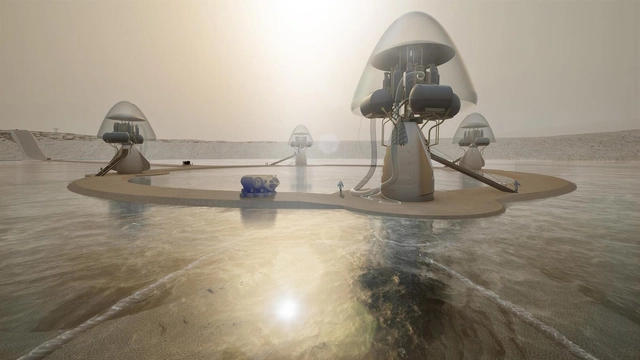
From Martian Hydrospheres to Forest-Like Cities: 6 Radical Urban Visions Unveiled at the Venice 2025 Architecture Biennale

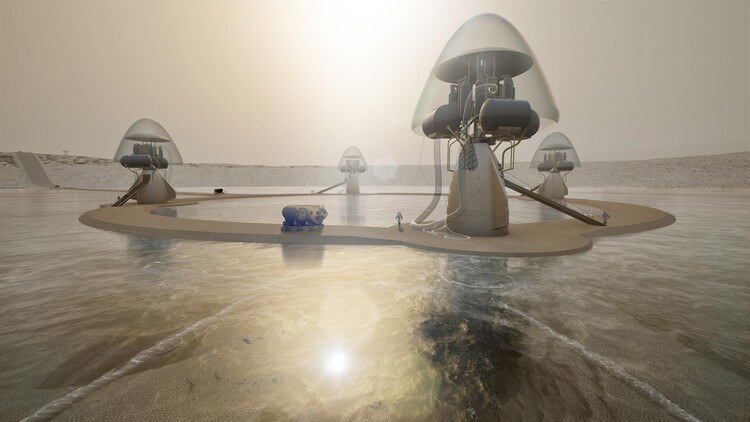
Cities today are being reimagined as living, evolving organisms, combining digital intelligence, ecological systems, and new materials to shape radical futures. At Carlo Ratti's "Intelligens. Natural. Artificial. Collective." biennial, over 750 participants challenge established boundaries between architecture, landscape, and technology. Several conceptual projects showcased in the main exhibition challenge conventional boundaries between architecture, landscape, and technology. From bio-adaptive urban systems and Martian water-based settlements to immersive symphonies of satellite data, these works collectively envision new models for cohabitation, resilience, and planetary awareness.

This month's Unbuilt selection presents six speculative projects, presented as part of the 2025 Venice Architecture Biennale exhibition, as provocations for rethinking the future of cities and human settlement. While some proposals transform architecture into self-sustaining, living infrastructures, others explore how data and sensory interfaces can redefine our relationship with natural and urban environments. Together, they offer a cross-section of how architects and designers are using unbuilt work to imagine new possibilities for life on Earth and beyond.

From Martian Hydrospheres to Forest-Like Cities: 6 Radical Urban Visions Unveiled at the Venice 2025 Architecture Biennale - Image 1 of 4From Martian Hydrospheres to Forest-Like Cities: 6 Radical Urban Visions Unveiled at the Venice 2025 Architecture Biennale - Image 2 of 4From Martian Hydrospheres to Forest-Like Cities: 6 Radical Urban Visions Unveiled at the Venice 2025 Architecture Biennale - Image 3 of 4From Martian Hydrospheres to Forest-Like Cities: 6 Radical Urban Visions Unveiled at the Venice 2025 Architecture Biennale - Featured ImageFrom Martian Hydrospheres to Forest-Like Cities: 6 Radical Urban Visions Unveiled at the Venice 2025 Architecture Biennale - More Images+ 21

How Biophilic Cities Address the Urban Health Crisis in the United States 

Subscriber Access | 

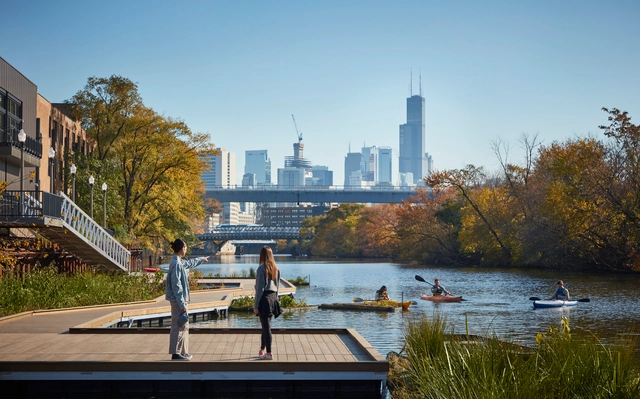
In the United States, nearly 1 in 10 children are affected with asthma, a condition with rates significantly higher in urban areas of the country. However, in a community just outside Atlanta with a population of more than 300 children, not a single case of the condition has been reported. This is by design. Most cities and neighborhoods across the country are not designed with human biology in mind, an oversight that contributes to the growing prevalence of cardiovascular disease and mental health challenges. Are we treating chronic conditions as purely medical, when they may actually be symptoms of poor design?

How Biophilic Cities Address the Urban Health Crisis in the United States  - Image 1 of 4How Biophilic Cities Address the Urban Health Crisis in the United States  - Image 2 of 4How Biophilic Cities Address the Urban Health Crisis in the United States  - Image 3 of 4How Biophilic Cities Address the Urban Health Crisis in the United States  - Image 4 of 4How Biophilic Cities Address the Urban Health Crisis in the United States  - More Images+ 2

How Breathable Should Facades Be? Exploring Permeability and Impermeability in Building Envelopes

The main role of architecture is to create structures that protect us from the environment and create spaces that are safe and comfortable for all types of needs and activities. By providing shelter, architecture also shapes the way people interact with their surroundings. Building technologies of the past rarely managed, however, to create a complete separation between us and the outside world.

While impermeability was a desired outcome, the porous building materials available always allowed some water, wind, or outside particles to leak into the interior spaces. In contrast, modern technologies now allow for almost completely impermeable building envelopes, allowing for complete separation between indoors and outdoors, thus relying on engineered systems to regulate temperature, airflow, or humidity. This article explores the differences between these two contrasting approaches, exploring how building facades are equipped to regulate indoor comfort and its environmental impact.

How Breathable Should Facades Be? Exploring Permeability and Impermeability in Building Envelopes - Image 1 of 4How Breathable Should Facades Be? Exploring Permeability and Impermeability in Building Envelopes - Image 2 of 4How Breathable Should Facades Be? Exploring Permeability and Impermeability in Building Envelopes - Image 3 of 4How Breathable Should Facades Be? Exploring Permeability and Impermeability in Building Envelopes - Image 4 of 4How Breathable Should Facades Be? Exploring Permeability and Impermeability in Building Envelopes - More Images+ 5

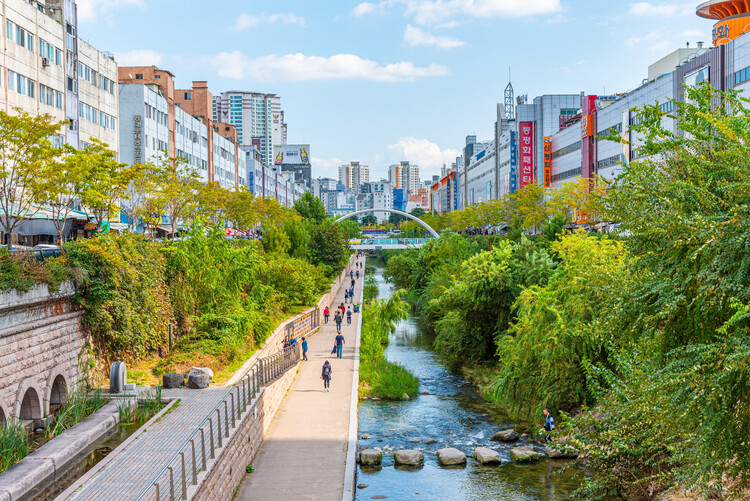
To Live Well in High-Density Cities: Connections of Urban Density and Public Health

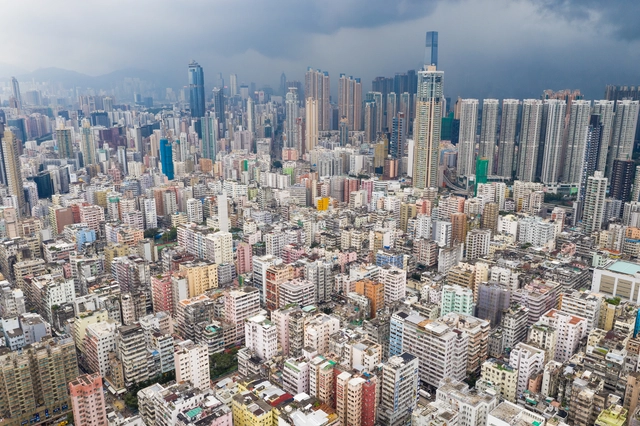
As the global population continues to surge, cities become increasingly complex ecosystems, dense and bustling environments home to millions of people. Today, more than half of the world's population lives in cities, which is expected to grow dramatically in the coming decades. This rapid urbanization presents a complex set of challenges for the architects and planners tasked with creating spaces that can accommodate urban residents' lives.

To Live Well in High-Density Cities: Connections of Urban Density and Public Health - Image 1 of 4To Live Well in High-Density Cities: Connections of Urban Density and Public Health - Image 2 of 4To Live Well in High-Density Cities: Connections of Urban Density and Public Health - Image 3 of 4To Live Well in High-Density Cities: Connections of Urban Density and Public Health - Image 4 of 4To Live Well in High-Density Cities: Connections of Urban Density and Public Health - More Images+ 10

Biophilic Architecture without Plants: Invisible Design for Wellbeing

The term "biophilia" understandably conjures images of buildings engulfed by vegetation and integrated into natural landscapes. In modern architectural discourse, the concept has come to be associated with the incorporation of greenery into built environments, yet such applications represent only a sliver of biophilic design's true scope. Inarguably, nature plays a central role in biophilic design. However, its influence stretches to often-overlooked strategies that involve spatial configuration and environmental patterning. "Invisible" biophilia frequently leads to positive health outcomes for occupants, working impactfully beneath the surface.

Biophilic Architecture without Plants: Invisible Design for Wellbeing - Image 1 of 4Biophilic Architecture without Plants: Invisible Design for Wellbeing - Image 2 of 4Biophilic Architecture without Plants: Invisible Design for Wellbeing - Image 3 of 4Biophilic Architecture without Plants: Invisible Design for Wellbeing - Image 4 of 4Biophilic Architecture without Plants: Invisible Design for Wellbeing - More Images+ 4