Trees are often the first things to vanish when construction starts. Clearing a site has long been one of architecture's most immediate acts, removing what already exists to make room for something new. When vegetation is preserved, it is typically treated as a secondary layer, added back as landscape rather than shaping the project itself.
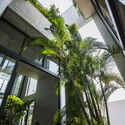
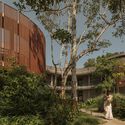
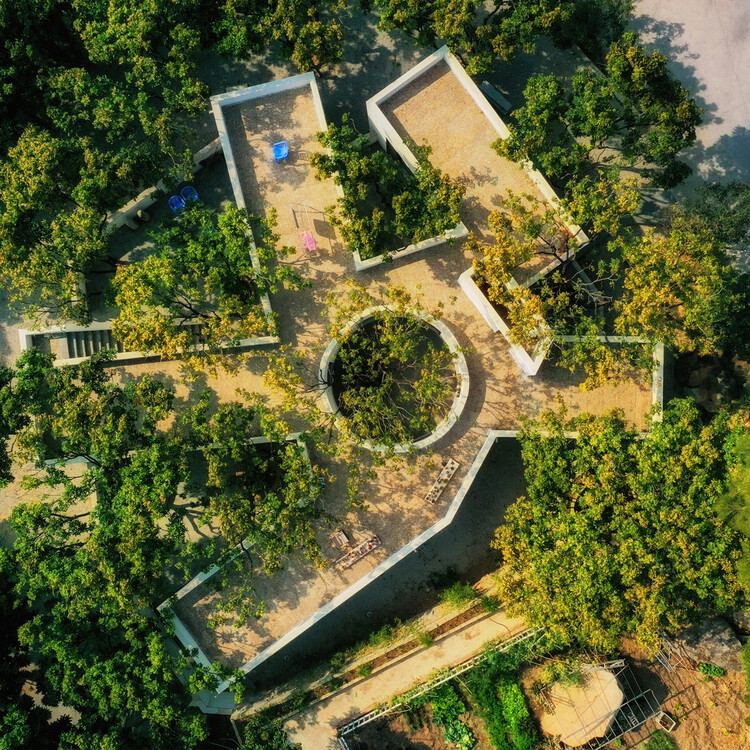
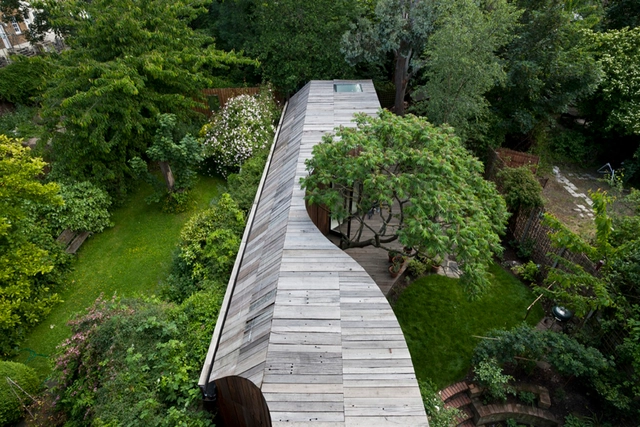
However, some projects begin elsewhere. Instead of starting from a blank site, they work with what is already there. Trees remain in place, not as elements to frame, but as conditions that influence how space is organized, how light enters, and how architecture takes form.
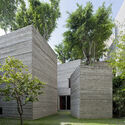
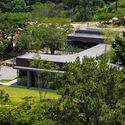
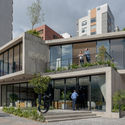
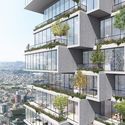
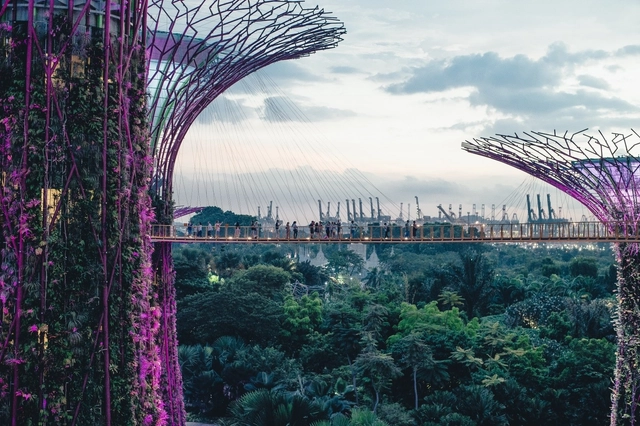
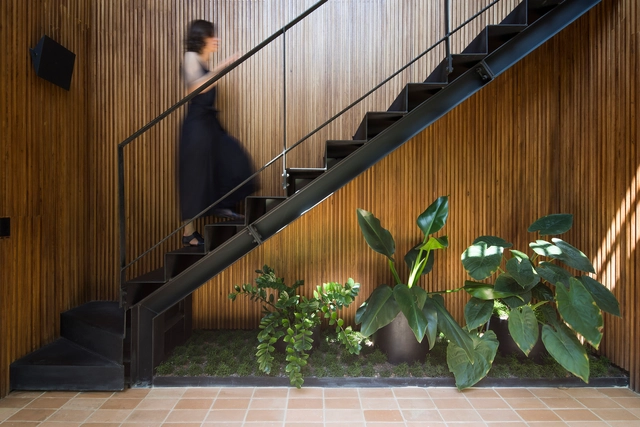
The preservation of the environment and the harmonious integration of the built and natural elements are fundamental principles in contemporary architecture. Various design strategies are employed to achieve this balance, ranging from the revival of vernacular techniques to the use of advanced technologies. However, this concern goes beyond the choice of specific construction systems or innovative materials; it also manifests in the design approach that ensures the preservation of the site's natural elements. In this context, we present 15 homes designed to protect local trees, showcasing how architectural decisions can adapt to nature rather than impose on it.
CityMakers, The Global Community of Architects Who Learn from Exemplary Cities and Their Makers, is working with Archdaily to publish a series of articles about Barcelona, Medellin, and Rotterdam. The authors are the architects, urban planners, and/or strategists behind the projects that have transformed these three cities and are studied in the "Schools of Cities" and "Documentary Courses" made by CityMakers. On this occasion, Jaume Barnada, coordinator of the award-winning Climate Shelters project in Barcelona schools and speaker at the "Schools of Cities", presents his article "Barcelona, the public place as a synonym for the adaptation of the built city."
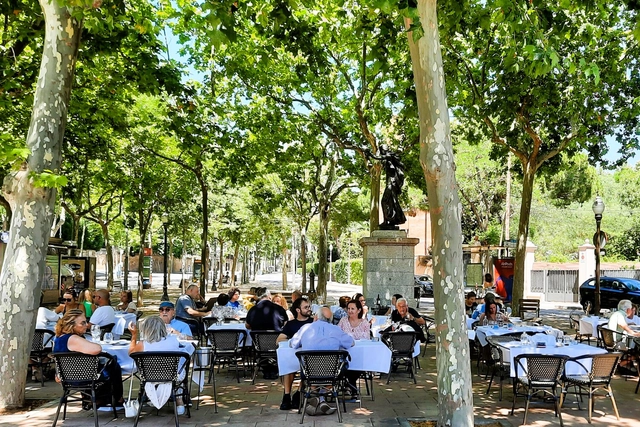
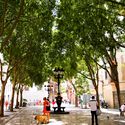
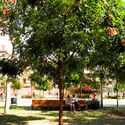
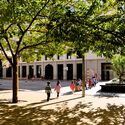
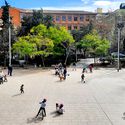
Cities are dense, built spaces in which pavements have been efficiently imposed on the natural soil. Cities like Barcelona have almost 75% of the land paved and waterproof. Without a doubt, it is an excess to reverse at a time of climate emergency, where we must reconnect with nature. Oriol Bohigas [1] told us that good urbanization had paved the squares of Mediterranean cities and that no one wanted to live in a mudhole. I'm sure he was right. Also, he taught us that the green and, consequently, the natural soil had to have dimension and especially an urban position. Squares are squares and parks are parks, and each space has a type of project. Today, concepts are too frequently confused when urbanizing public places and consequently, we find projects that blur the model.
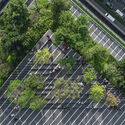
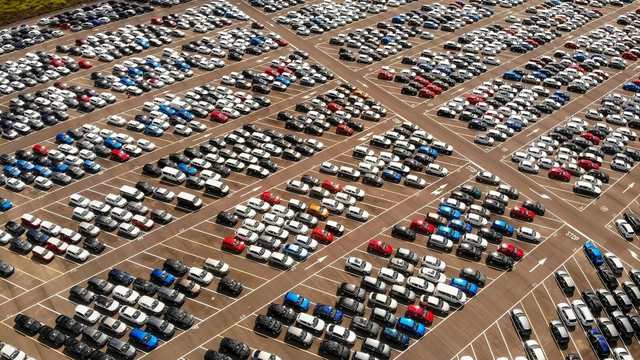
The urban heat island effect occurs when pavements, roads, and buildings absorb the sun's heat and radiate it back, causing the temperature to increase and preventing the city from cooling down. With the growing reliance on cars in cities, the number of urban car park spaces is also increasing to accommodate buildings. This has resulted in the conversion of large areas of pervious land covered with vegetation into impervious hard surfaces for more car parks. The use of materials like asphalt, combined with the lack of shade, reflective steel surfaces of parked cars, and loss of greenery in these extensive car parks, contributes to the amplification of high-temperature effects and extreme heat events, making urban spaces uncomfortable. This transformation is impacting the climate of car-dependent regions and calls for collaborative ideas and efforts to mitigate the negative effects of rising heat.
Today is the premiere of the first episode of a new documentary series that explores the projects of Al Borde. Titled "Building with Living Trees", this first instalment highlights the stories behind Casa Jardín (Garden House), a single-family home located in the suburban area of Quito, Ecuador.
Designed for an ecologist named José, the residence is developed into three small independent pavilions with hybrid structures that combine living trees with various construction systems. These structures utilize a vernacular technique of living fences that has been employed in the Andes since ancient times, showcasing a genuine pursuit of coexistence between architecture and nature.
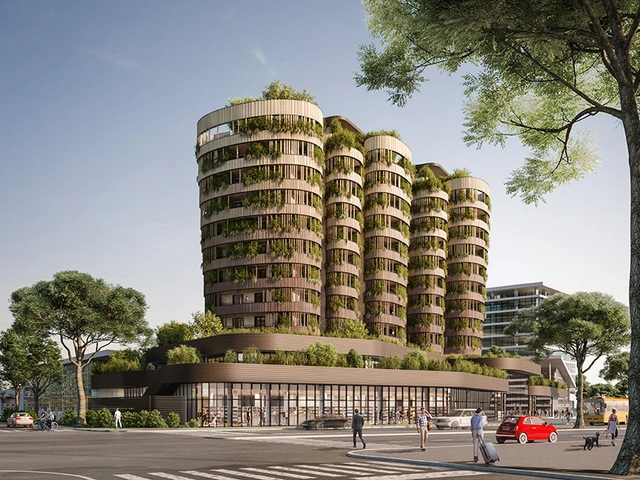
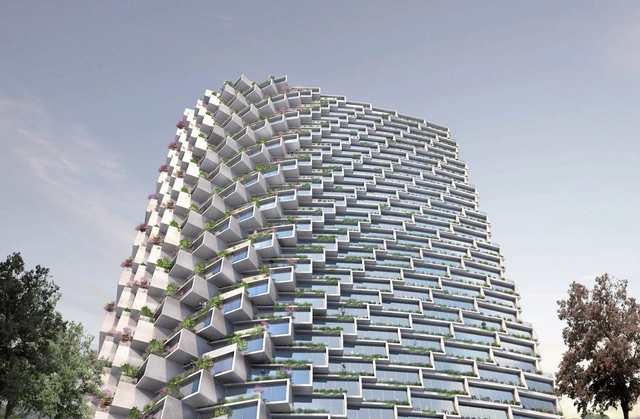
Mario Cucinella Architects has unveiled the design for the new Piazza dei Navigatori in Rome, Italy. Planned as a mixed-use development, the design is predominantly for residential spaces, with a retail and office component, parking, and "plant rooms". The development is located in an area rich in natural elements, which heavily inspires this urban agglomeration.
Architects have long explored the concept of integrating interior and exterior, smoothing out the physical and visual boundaries in an attempt to bring the landscape into the architecture. However, when visiting the site to develop the project, two distinct scenarios may appear: an urban terrain, lacking a view, or natural elements; or a green area with trees and bushes, for example. In the latter case, many projects rely on the on-site location of each tree to accommodate the architectural design, respecting them, and creating new views, through patios and connecting them with the new landscape design. However, based on studies of the species and their size, it is increasingly common for these trees to be incorporated into the interior space, either partially or completely enclosed.
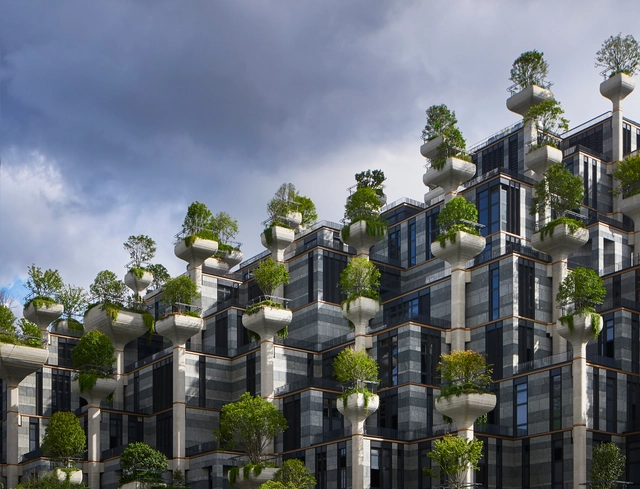
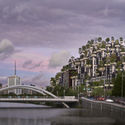
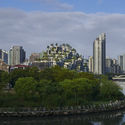
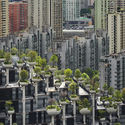
Heatherwick Studio has released their latest images for the 1,000 Trees Development in Shanghai. Dating back to August 2019, the images showcase the construction progress of the 300,000-square-meter project, with the near completion of one of two mountains, set to open in 2020.
Just like the architectural elements that make up built space - floor, walls and ceilings - natural elements are also capable of creating spaces in large-, medium- and small-scale areas, in places like public and residential gardens.
According to Brazilian landscape architect Benedito Abbud, "Landscaping is the only artistic expression in which the five senses of the human being participate. While architecture, painting, sculpture and other visual arts use and abuse only the vision, landscaping also involves smell, hearing, taste and touch, providing a rich sensory experience by adding the most diverse and complete perceptual experiences. The more a garden can sharpen all the senses, the better it fulfills its role. " [1]
Below we list some of the key elements of landscape planning and design. See the principles and learn why you should never randomize the placement trees!
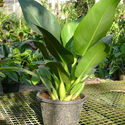
Adding a plant makes any space instantly cozier. No need to have a large balcony to grow them, there are many species that develop well in living rooms, kitchens, and even bathrooms, with little maintenance as well as space efficient. The vases used also add to the composition of well-decorated environments. Flowers add color and diversity to all environments, but it is worth mentioning that species that do not produce flowers do less photosynthesis and therefore require smaller amounts of sunshine and are therefore more suitable for indoor cultivation. It is also important to note that popular names can be quite different, so you should always pay attention to its scientific names when choosing your species.
Below, we selected 12 ornamental plants ideal for indoor cultivation.
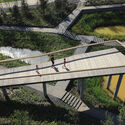
The 300,000-square-meter development is located 20 minutes from downtown Shanghai next to the M50 arts district, taking the form of two “tree-covered mountains.” As the name suggests, the design will feature concrete structural columns that widen at the top to create large planters for 1000 trees. The video captures the building in its half-completed status, showing how it will interacts with its surroundings and the adjacent Wusong (Suzhou) River.
In #donotsettle’s latest video, architects and vlogging provocateurs Wahyu Pratomo and Kris Provoost provide breathtaking footage of one of Shanghai’s most curious projects, M50. The 300,000-square-meter Heatherwick Studio building is an undulating mass of mixed use urban topography.
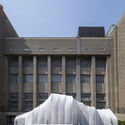
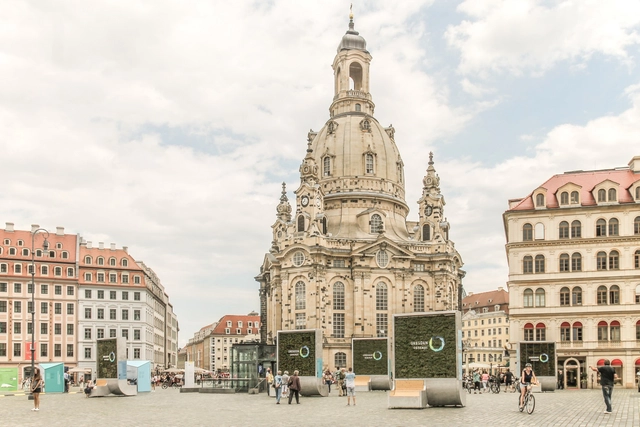
Developed in Germany, the CityTree is a mobile structure that incorporates mosses and urban furniture to create a possible solution to the polluted air of urban centers.
Rectangular, trunkless and flat, this "tree" basically consists of a large vertical panel, a wall of mosses which, according to its creators, has the capacity to absorb the same amount of nitrogen dioxide and microscopic particles from the air as 275 natural trees.
On a tree-lined avenue in Singapore, fittingly named Orchard Road, Apple has opened its first Flagship store in the city-state, highlighting its role as a global center for creativity and innovation. Designed by Fosters + Partners, in collaboration with the design team at Apple, the Orchard Road Flagship seeks to create a new social focus by working in tandem with nature, blurring the boundaries between inside and out.
https://www.archdaily.com/872749/apple-opens-its-first-flagship-store-in-singaporeNiall Patrick Walsh
Users can compare their green canopy to cities across the world. Image Courtesy of MIT Senseable City Lab
Researchers at the MIT Senseable City Lab have launched a new platform using Google Street View data to measure and compare the green canopies of major cities across the world. Treepedia, created in collaboration with the World Economic Forum, is an interactive website which allows users to view the location and size of their city’s trees, submit information to help tag them, and advocate for more trees in their area. In the development of Treepedia, the Senseable City Lab recognizes the role of green canopies in urban life, and asks how citizens can be more integral to the process of greening their neighborhoods.
Cesare Leonardi, Franca Stagi, "11.3.1 Carpinus Betulus," 1978–1982
The Villa Croce Museum of Contemporary Art presents the first monographic exhibition on the work of Cesare Leonardi (Italian, b. 1935). In the course of a career spanning more than four decades Leonardi, an architect and photographer, has continuously challenged the boundary between design and artistic practice. In spite of the recognition gained by his early furniture design, most of Leonardi’s oeuvre has remained little known, even within Italy. Cesare Leonardi: Strutture, organised in close cooperation with Leonardi’s archive, sheds light on an intimate yet multifaceted body of work.
The Goods Line proposal. Image Courtesy of ASPECT Studios
As cities continue to attract more people, naturally vegetated areas slowly wither, leaving little to no green spaces for city dwellers to escape to, no trees to purify the air and enhance the environment. Australia plans to change this. The 202020 Vision is a concerted effort from the government, academic and private sectors to create twenty percent green areas in Australia's urban centers by 2020. “Urban heat islands, poor air quality, lack of enjoyable urban community areas are all poor outcomes when green spaces aren't incorporated into new developments and large scale building projects.” Read about the 202020 initiative here, "More green spaces in urban areas, says new national initiative."
https://www.archdaily.com/448875/australia-plans-for-greener-cities-by-2020Jose Luis Gabriel Cruz
Michael Green is calling for a drastic paradigm shift in the way we build. Forget steel, straw, concrete and shipping containers; use wood to erect urban skyscrapers. In a 240 page report - complete with diagrams, plans, renders and even typical wooden curtain wall details - Green outlines a new way of designing and constructing tall buildings using mass timber, all the while addressing common misconceptions of fire safety, structure, sustainability, cost and climate concerns.
https://www.archdaily.com/443626/the-case-for-tall-wood-buildingsJose Luis Gabriel Cruz