1. ArchDaily
  2. Landscape Design

Landscape Design: The Latest Architecture and News

Design as Repair: How Architecture Is Advancing Environmental Justice

Subscriber Access | 

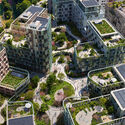
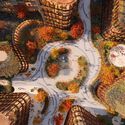
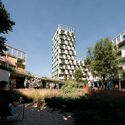
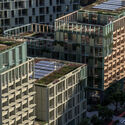
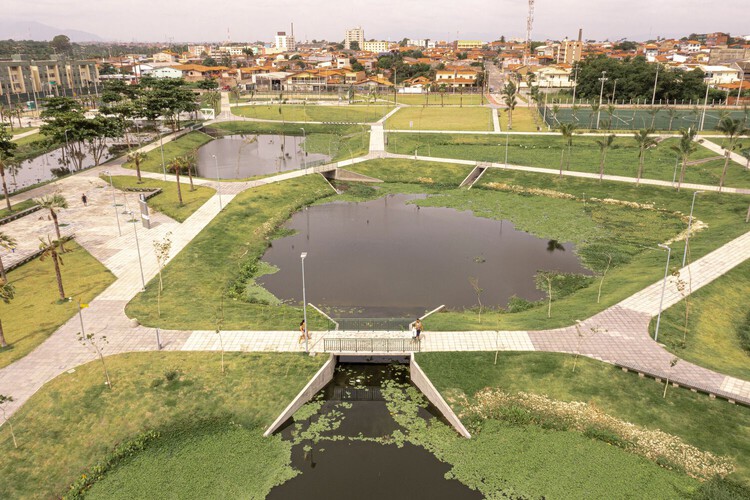
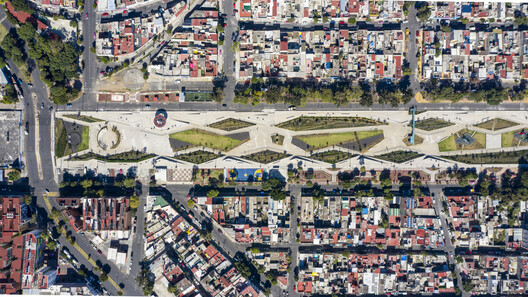
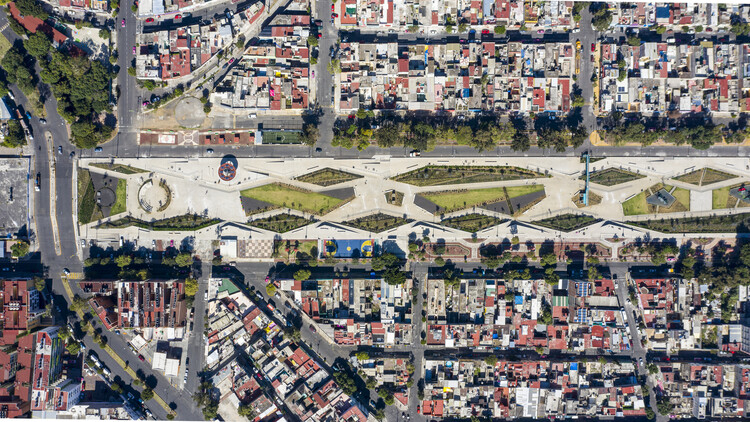
Environmental justice confronts a simple but uncomfortable truth: the benefits and burdens of the environment are not shared equally. Marginalized communities bear a disproportionate share of polluted air, unsafe water, toxic land uses, extreme heat, and the accelerating risks of climate change in cities around the world. These are the consequential products of decades of policy decisions, investment patterns, exclusionary planning practices, and planning choices that have consistently favored certain communities over others.

In cities and landscapes alike, these injustices are written into the physical fabric of places, even revealing extreme differences in environmental conditions between neighborhoods and districts. Dense neighborhoods with little tree canopy, for example, absorb and hold heat, exposing residents to higher rates of heat-related illness. Highways, industrial corridors, ports, and waste facilities cluster near low-income neighborhoods and communities of color, shaping conditions of health, air and soil quality, and long-term safety.

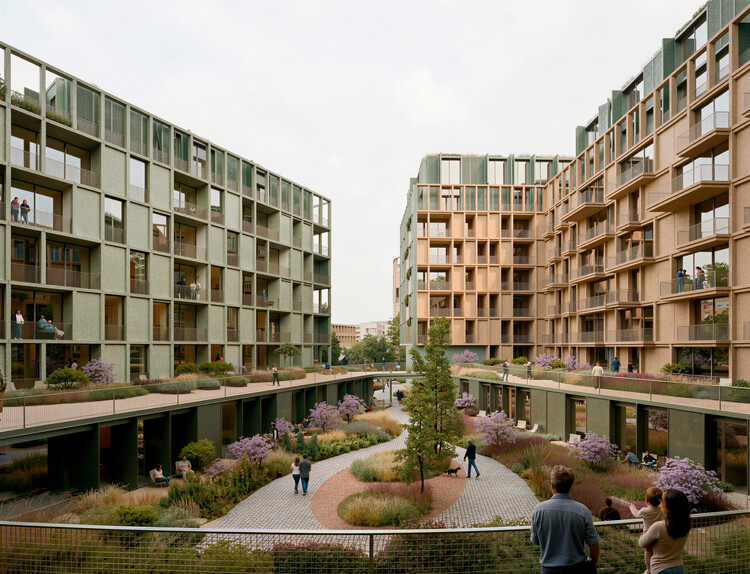
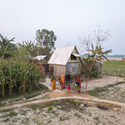
Design as Repair: How Architecture Is Advancing Environmental Justice - Image 1 of 4Design as Repair: How Architecture Is Advancing Environmental Justice - Image 2 of 4Design as Repair: How Architecture Is Advancing Environmental Justice - Image 3 of 4Design as Repair: How Architecture Is Advancing Environmental Justice - Image 4 of 4Design as Repair: How Architecture Is Advancing Environmental Justice - More Images+ 35

SLA Designs Public Spaces and Streetscapes for Toronto's New Island Community in the Port Lands

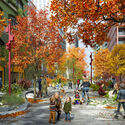
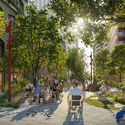
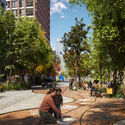
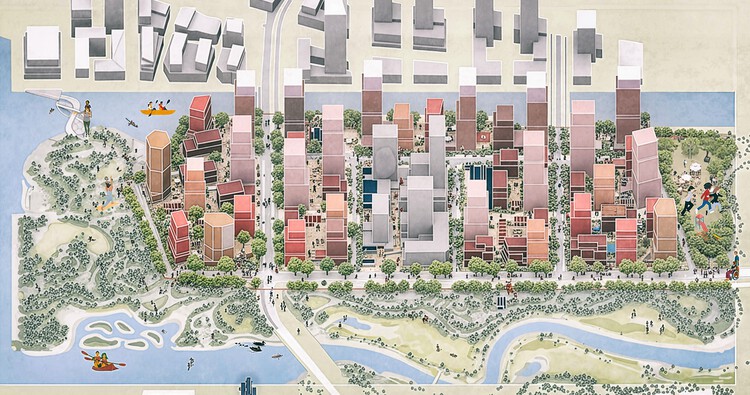
Landscape and urban design studio SLA has unveiled the design for the public realm and streetscapes of Toronto's new 39.8-hectare waterfront community. The urban landscape project "Ookwemin Minising" is located in the Port Lands, an industrial and recreational district southeast of downtown Toronto, currently undergoing urban revitalization to transform the area from a former industrial zone into a naturalized river valley, mixed-use neighbourhoods, and public parkland. The overall transformation is being led by Waterfront Toronto, a publicly funded, not-for-profit corporation established in 2001 to oversee the regeneration of the area, as part of a broader government initiative to renaturalize urban areas and increase housing density. The redevelopment of Ookwemin Minising is expected to be completed in phases between 2031 and 2040.

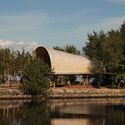
SLA Designs Public Spaces and Streetscapes for Toronto's New Island Community in the Port Lands - Image 1 of 4SLA Designs Public Spaces and Streetscapes for Toronto's New Island Community in the Port Lands - Image 2 of 4SLA Designs Public Spaces and Streetscapes for Toronto's New Island Community in the Port Lands - Image 3 of 4SLA Designs Public Spaces and Streetscapes for Toronto's New Island Community in the Port Lands - Image 4 of 4SLA Designs Public Spaces and Streetscapes for Toronto's New Island Community in the Port Lands - More Images+ 6

Reading the Territory: The Landscapes of Estudio Ome

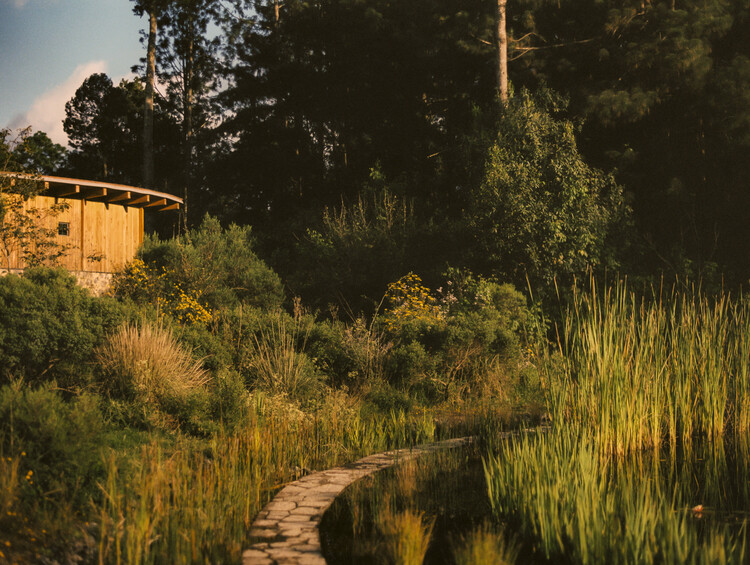
Based in Mexico City, Estudio Ome, founded by Susana Rojas Saviñón and Hortense Blanchard, is an architectural and landscape practice working across forests, volcanic terrains, urban fragments, and former industrial sites. Winner of the ArchDaily 2025 Next Practices Awards, the studio develops projects through sustained observation of ecological and territorial conditions, where design decisions arise directly from the behavior of soil, water, vegetation, and ground.

Each project begins with repeated encounters. The terrain is first approached through walking and prolonged observation, letting drainage patterns, erosion, and seasonal shifts become legible before any formal measurement occurs. These visits form the basis for interpreting both visible and subterranean layers—hydrology and historical transformations that continue to exert force on the surface.

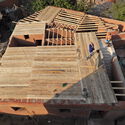
Reading the Territory: The Landscapes of Estudio Ome - Image 1 of 4Reading the Territory: The Landscapes of Estudio Ome - Image 2 of 4Reading the Territory: The Landscapes of Estudio Ome - Image 3 of 4Reading the Territory: The Landscapes of Estudio Ome - Image 4 of 4Reading the Territory: The Landscapes of Estudio Ome - More Images+ 31

“Material Is Where the Story Begins”: Studio NEiDA on Building Through Craft and Context

Studio NEiDA operates at the intersection of architectural practice, research, and curatorial work, with a consistent focus on how buildings emerge from the material and cultural conditions of a place. Rather than treating materiality as a finishing language, the studio frames it as the beginning of an architectural narrative—starting from what is locally available, they look at what craft knowledge exists on the ground, and how those resources and skills situate a project within an architectural lineage. This approach foregrounds limitations and possibilities as productive forces, and positions design as an iterative process of aligning spatial intent with the realities of construction culture and vernacular intelligence.

Across their work, NEiDA's interests extend beyond form toward the socio-political and climatic contexts that shape how architecture is made and inhabited. They emphasize learning from non-authored, vernacular, and informal building practices as a way of establishing a shared grammar for intervention, and they describe an indoor–outdoor continuity not as a stylistic preference but as a response to local life and ventilation logics—where outdoor rooms can be as spatially defined and programmatically central as interior ones. Collaboration, in this framework, is not auxiliary: the studio highlights on-site exchange with craftspeople and builders as a core methodology, where projects evolve through collective intelligence and adaptive communication.

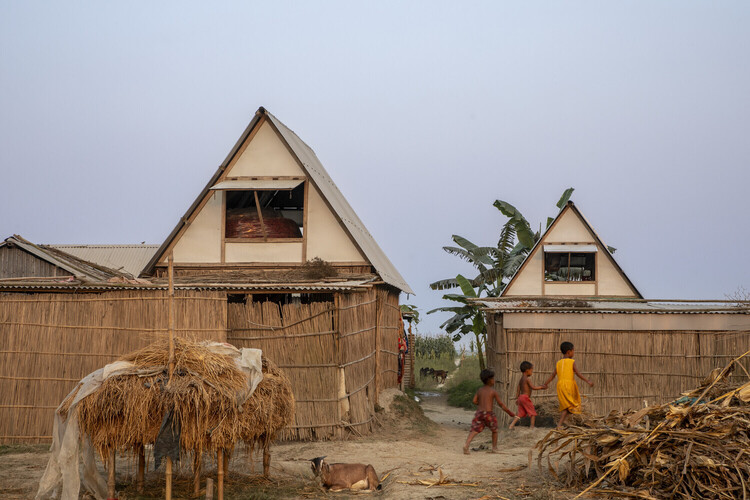
“Material Is Where the Story Begins”: Studio NEiDA on Building Through Craft and Context - Image 1 of 4“Material Is Where the Story Begins”: Studio NEiDA on Building Through Craft and Context - Image 2 of 4“Material Is Where the Story Begins”: Studio NEiDA on Building Through Craft and Context - Image 3 of 4“Material Is Where the Story Begins”: Studio NEiDA on Building Through Craft and Context - Image 9 of 4“Material Is Where the Story Begins”: Studio NEiDA on Building Through Craft and Context - More Images+ 12

No Solid Ground: Three Approaches to Building Below Sea Level in Rotterdam

Architects carefully calibrate their relationship to the earth, adjusting foundations to soil, groundwater, climate, risk, and culture. Driven timber piles, rammed-earth platforms, and poured concrete slabs are each a response to a specific set of ground conditions, and each shapes the architecture that rises from it. The way a building meets the earth determines its durability and its limits because foundations are among the most consequential design choices an architect makes.

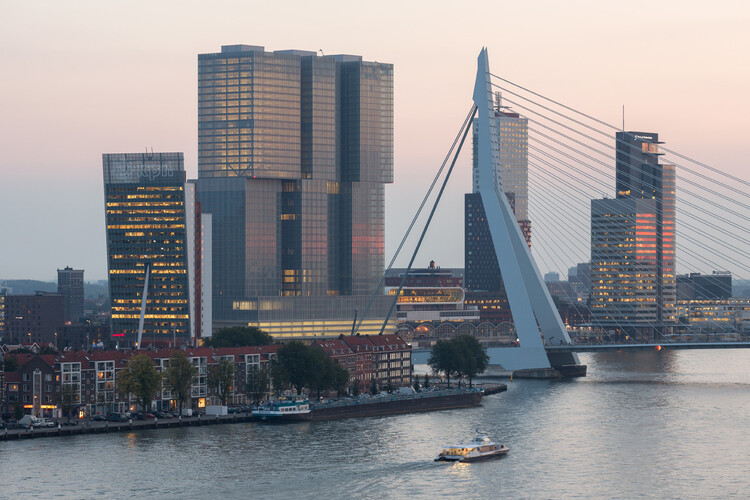
The city of Rotterdam sits approximately one meter below sea level, an organizing condition that shapes daily life in the Netherlands' second-largest city and is a growing preoccupation amid unstable coastal conditions. The city occupies the delta of the Rhine and Maas rivers, a landscape that was never naturally dry but has been kept functional through centuries of hydraulic intervention. The water boards in this region are among the oldest democratic institutions in the world, created in the thirteenth century to manage shared water drainage and still operating today as elected bodies with technical capacity. As sea levels rise and rainfall across Northern Europe grows less predictable and more extreme, Rotterdam faces a significantly increased risk of coastal storm surges and urban flooding driven by overwhelmed drainage infrastructure.

No Solid Ground: Three Approaches to Building Below Sea Level in Rotterdam - Image 16 of 4No Solid Ground: Three Approaches to Building Below Sea Level in Rotterdam - Image 57 of 4No Solid Ground: Three Approaches to Building Below Sea Level in Rotterdam - Image 25 of 4No Solid Ground: Three Approaches to Building Below Sea Level in Rotterdam - Image 54 of 4No Solid Ground: Three Approaches to Building Below Sea Level in Rotterdam - More Images+ 65

Parc de la Villette Opens New Urban Farm and Rewilded Landscapes in Paris

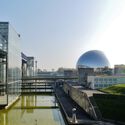
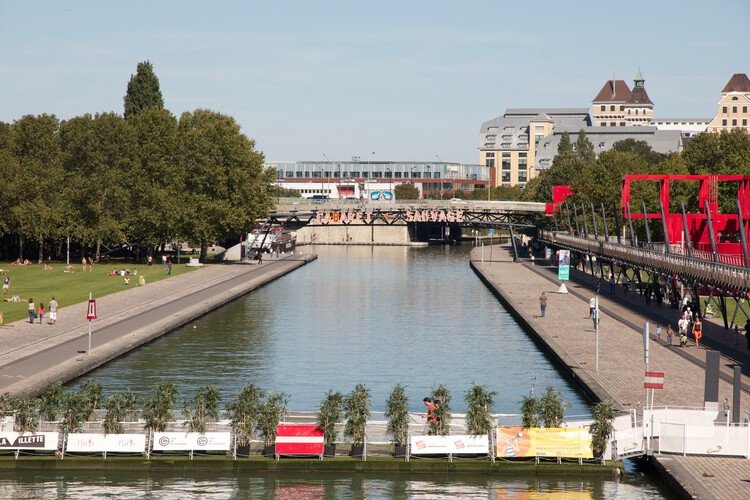
Paris's 19th arrondissement Parc de la Villette is undergoing a major transformation, combining a newly opened urban farm with restored biodiversity as part of a strategy to adapt the 55.5-hectare park to climate change. Masterplanned by Bernard Tschumi in 1982 and opened to the public in 1987, the park stands as a landmark of European modernism in public space design, breaking from the traditional concept of the metropolitan park. With a 15,000-square-meter extension, this major green lung in northeast Paris is reimagining its lawns as a living laboratory for environmental education, where animals, plants, and humans coexist. The extensive renovation follows the addition of Tschumi's HyperTent in 2022, a hyperbolic paraboloid structure functioning as a new ticket booth on the podium of Folie L4, and marks the park's most significant transformation since its inauguration.

Parc de la Villette Opens New Urban Farm and Rewilded Landscapes in Paris - Image 1 of 4Parc de la Villette Opens New Urban Farm and Rewilded Landscapes in Paris - Image 2 of 4Parc de la Villette Opens New Urban Farm and Rewilded Landscapes in Paris - Image 3 of 4Parc de la Villette Opens New Urban Farm and Rewilded Landscapes in Paris - Image 4 of 4Parc de la Villette Opens New Urban Farm and Rewilded Landscapes in Paris - More Images

The Built Path: Pilgrimage and Architectural Sequence on the Camino de Santiago

Subscriber Access | 

Pilgrimage is one of the oldest and most persistent cultural practices, a spatial expression of humanity's search for meaning that has taken form across geographies and religions. While traditionally tied to formal belief systems, its definition has expanded in recent decades, reflecting new understandings of what is sacred and where meaning can be found. This shift reveals something fundamental: the act of moving through space remains central to how people construct meaningful experience. Yet most built environments constructed today are designed to be approached at speed from roads, transit corridors, airports, and optimized urban cores. The Camino de Santiago stands as a sustained counterargument to this condition. It is a piece of distributed architecture, refined over centuries, that remains a sophisticated example of design organized around the moving human body.

The Built Path: Pilgrimage and Architectural Sequence on the Camino de Santiago - Image 1 of 4The Built Path: Pilgrimage and Architectural Sequence on the Camino de Santiago - Image 2 of 4The Built Path: Pilgrimage and Architectural Sequence on the Camino de Santiago - Image 3 of 4The Built Path: Pilgrimage and Architectural Sequence on the Camino de Santiago - Image 4 of 4The Built Path: Pilgrimage and Architectural Sequence on the Camino de Santiago - More Images+ 36

Multidisciplinary Team Led by Coldefy Wins Masterplan to Transform Budapest Brownfield into Rewilded Urban District

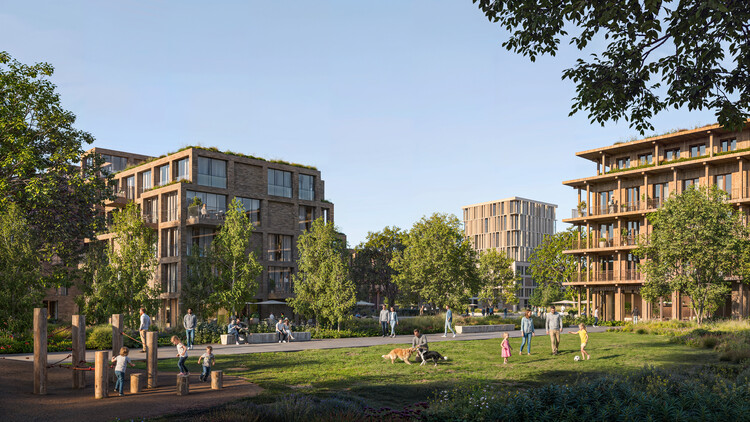
A team led by French architecture practice Coldefy, comprising CITYFÖRSTER, Sporaarchitects, TREIBHAUS.LAND, Marko & Placemakers has won the competition to design a masterplan for Rákosrendező in Budapest, with visualizations by ZOA Studio. The project is developed for the Budapest Capital Asset Management Centre, acting on behalf of the Municipality of Budapest. The design outlines a 15-year scheme to transform a brownfield site long regarded as the city's "rust belt," located on the eastern side of the Hungarian capital. The regeneration plan includes over 10,000 apartments, new transportation links, and commercial and civic spaces, forming a comprehensive urban redevelopment strategy aligned with 15-minute city principles.

Multidisciplinary Team Led by Coldefy Wins Masterplan to Transform Budapest Brownfield into Rewilded Urban District - Image 1 of 4Multidisciplinary Team Led by Coldefy Wins Masterplan to Transform Budapest Brownfield into Rewilded Urban District - Image 2 of 4Multidisciplinary Team Led by Coldefy Wins Masterplan to Transform Budapest Brownfield into Rewilded Urban District - Image 3 of 4Multidisciplinary Team Led by Coldefy Wins Masterplan to Transform Budapest Brownfield into Rewilded Urban District - Image 4 of 4Multidisciplinary Team Led by Coldefy Wins Masterplan to Transform Budapest Brownfield into Rewilded Urban District - More Images+ 2

Building with Trees: Rethinking Architecture’s Relationship to Site

Subscriber Access | 

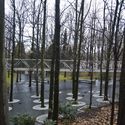
Trees are often the first things to vanish when construction starts. Clearing a site has long been one of architecture's most immediate acts, removing what already exists to make room for something new. When vegetation is preserved, it is typically treated as a secondary layer, added back as landscape rather than shaping the project itself.

However, some projects begin elsewhere. Instead of starting from a blank site, they work with what is already there. Trees remain in place, not as elements to frame, but as conditions that influence how space is organized, how light enters, and how architecture takes form.

Building with Trees: Rethinking Architecture’s Relationship to Site - Image 1 of 4Building with Trees: Rethinking Architecture’s Relationship to Site - Image 2 of 4Building with Trees: Rethinking Architecture’s Relationship to Site - Image 3 of 4Building with Trees: Rethinking Architecture’s Relationship to Site - Image 4 of 4Building with Trees: Rethinking Architecture’s Relationship to Site - More Images+ 8

Quiet Hope: Frank Gehry’s Maggie’s Centre Hong Kong

Subscriber Access | 

Earlier this month, news of Frank Gehry's passing prompted an outpouring of tributes to the architect behind flamboyant museums, concert halls, and sinuous residential complexes. Rather than revisit that well-charted terrain, it is worth pausing on a more contemplative work in his oeuvre: Maggie's Cancer Caring Centre in Hong Kong. Quiet, optimistic, and calibrated for everyday resilience, the building reflects multiple registers of Gehry's intent: a commitment to positivity and survival—and, more personally, an architect's own reckoning with loss and end-of-life care.

The remark reframes Maggie's Hong Kong as more than a commission; it suggests a design process shaped by grief and turned toward comfort, dignity, and the possibility of hope—an ethos that aligns closely with the organization's mission.

Quiet Hope: Frank Gehry’s Maggie’s Centre Hong Kong - Image 1 of 4Quiet Hope: Frank Gehry’s Maggie’s Centre Hong Kong - Image 2 of 4Quiet Hope: Frank Gehry’s Maggie’s Centre Hong Kong - Image 3 of 4Quiet Hope: Frank Gehry’s Maggie’s Centre Hong Kong - Image 4 of 4Quiet Hope: Frank Gehry’s Maggie’s Centre Hong Kong - More Images+ 20

Team SLA to Design New 30-hectare Coastal Nature Park in Copenhagen, Denmark

The City of Copenhagen has announced Team SLA as the winner of a design competition to create a new, large-scale urban park in Nordhavn. The project, titled "Nordør – New Park", was designed by Team SLA and By & Havn, and envisions a 30-hectare (75-acre) coastal nature park. Led by the design studio SLA, Team SLA includes VITA Engineers, Urban Agency, Aaen Engineering, Pihlmann Architects, Buro Happold, Kerstin Bergendal, Holdbart, and Aiming Spaces.

A "nature park" is a protected area where conservation is balanced with sustainable development and human use. It often encompasses human-shaped cultural landscapes and integrates strategies for regional development, supporting local communities and promoting the conscious use of the land. This framework allows the proposal to be understood as a platform for recreation, eco-tourism, environmental education, research, and regional growth.

Team SLA to Design New 30-hectare Coastal Nature Park in Copenhagen, Denmark - Image 1 of 4Team SLA to Design New 30-hectare Coastal Nature Park in Copenhagen, Denmark - Image 2 of 4Team SLA to Design New 30-hectare Coastal Nature Park in Copenhagen, Denmark - Image 3 of 4Team SLA to Design New 30-hectare Coastal Nature Park in Copenhagen, Denmark - Image 4 of 4Team SLA to Design New 30-hectare Coastal Nature Park in Copenhagen, Denmark - More Images+ 3

Bridging Disciplines, Connecting Cities: The Interdisciplinary Approach to Urban Mobility in Portugal

An architecture degree may provide a vast curriculum, but many of the skills needed for a project lie outside the discipline. This is especially true for urban-scale projects. They demand expertise in areas like traffic studies, structural calculations, landscape design, and technical installation forecasting. These are often seen as "complementary" but are, in fact, fundamental to the overall design.

In a country like Portugal, with a relatively small but geographically diverse territory, the challenge of connecting different parts of the territory – whether to cross a river or link one level of a city to another – is a constant one. Its largest metropolitan areas, such as Lisbon and Porto, share a rugged geography of steep valleys and hills. These features led to the development of elevators and funiculars, like the Santa Justa Lift and the Bica Funicular in Lisbon, and the Guindais Funicular in Porto. Today, besides improving urban mobility, they have become tourist landmarks.

Bridging Disciplines, Connecting Cities: The Interdisciplinary Approach to Urban Mobility in Portugal - Image 1 of 4Bridging Disciplines, Connecting Cities: The Interdisciplinary Approach to Urban Mobility in Portugal - Image 2 of 4Bridging Disciplines, Connecting Cities: The Interdisciplinary Approach to Urban Mobility in Portugal - Image 3 of 4Bridging Disciplines, Connecting Cities: The Interdisciplinary Approach to Urban Mobility in Portugal - Image 4 of 4Bridging Disciplines, Connecting Cities: The Interdisciplinary Approach to Urban Mobility in Portugal - More Images+ 4

September Editorial Topic: Architecture Without Limits

Architects today work across many worlds: from designing furniture, landscapes, and urban blocks to creating film sets, photographs, and videos. They restore and retrofit old buildings rather than build anew, while also writing, researching, and publishing. Some design virtual spaces for video games or speculate on habitats in outer space and underwater. Others engage directly with society through politics, activism, or community projects. Many experiment with biology, test new materials, and step into the role of scientist. Architects are decolonizing old narratives and decarbonizing the construction industry, and by weaving together personal passions with pressing social and environmental challenges, they are pushing the limits of the profession and expanding its scope.

With so many changes in the profession, especially in recent years, one may ask: How is the role of the architect evolving in response to global crises and shifting societal needs? In what ways can interdisciplinarity expand the scope and impact of architectural practice? And what skills beyond traditional design are becoming essential for architects in today's world?

A Natural Childhood: How Architecture Connects Landscape, Culture, and Play

How do nature and landscape dialogue within spaces designed for children? How are architecture and urban design capable of shaping natural atmospheres that integrate practices of play, participation, and exploration? From participatory projects that involve children in the design process to built environments that incorporate furniture adapted to their needs, the conception of spaces for childhood entails the creation of places for encounter, learning, and coexistence. At times, these spaces are able to strengthen the relationships between interiors and exteriors, connecting their users with nature and the surrounding environment. Depending on their cultures, customs, and histories of attachment to place, several contemporary projects deploy tools and strategies that integrate architecture, nature, and pedagogy to form broad experiences of learning, play, and discovery.

A Natural Childhood: How Architecture Connects Landscape, Culture, and Play - Image 1 of 4A Natural Childhood: How Architecture Connects Landscape, Culture, and Play - Image 2 of 4A Natural Childhood: How Architecture Connects Landscape, Culture, and Play - Image 3 of 4A Natural Childhood: How Architecture Connects Landscape, Culture, and Play - Image 4 of 4A Natural Childhood: How Architecture Connects Landscape, Culture, and Play - More Images+ 21

From Bologna to Mexico City: 8 Unbuilt Masterplans Reimagining Communities Through Regeneration and Design

Subscriber Access | 

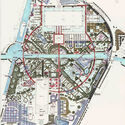
In today's architectural discourse, masterplanning is increasingly recognized as a means to reconcile growth with long-term social, cultural, and environmental priorities. Beyond organizing buildings and infrastructure, these large-scale proposals aim to regenerate urban fabrics, adapt historic or underutilized sites, and establish frameworks for inclusive and resilient communities. Submitted by the ArchDaily community, the projects featured in this edition of Unbuilt Architecture highlight how masterplans can respond to contemporary challenges while preparing cities for an uncertain future.

Spanning diverse geographies, from Europe to the Middle East and the Americas, the selected projects reinterpret industrial complexes, cultural sites, and residential neighborhoods through strategies that prioritize sustainability, mobility, and collective identity. Many share a focus on regenerative design: reopening historic canals, creating climate-adapted public spaces, and introducing green corridors and community hubs to reconnect people with their environments. Together, they showcase how masterplanning is evolving into a critical tool for rethinking how cities grow, adapt, and sustain civic life.

From Bologna to Mexico City: 8 Unbuilt Masterplans Reimagining Communities Through Regeneration and Design - Image 9 of 4From Bologna to Mexico City: 8 Unbuilt Masterplans Reimagining Communities Through Regeneration and Design - Image 22 of 4From Bologna to Mexico City: 8 Unbuilt Masterplans Reimagining Communities Through Regeneration and Design - Image 30 of 4From Bologna to Mexico City: 8 Unbuilt Masterplans Reimagining Communities Through Regeneration and Design - Image 38 of 4From Bologna to Mexico City: 8 Unbuilt Masterplans Reimagining Communities Through Regeneration and Design - More Images+ 45

Mapping as Design: A Resource-Based Approach to Rural Design in the United States

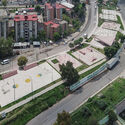
In 1982, at a conference on earth building in Tucson, Arizona, an unusual presentation challenged everything architects thought they knew about rural resources. Instead of focusing on construction techniques, the presenter, architect Pliny Fisk III, spread out a series of hand-drawn maps that revealed something extraordinary - rural Texas wasn't resource-poor, as conventional wisdom suggested, but material-rich beyond imagination. The maps showed volcanic ash perfect for lightweight concrete, caliche deposits stretching across vast territories, and mesquite forests that could supply both hardwood flooring and insulation. The revelation redefined prevailing notions of value in architecture.
Mapping as Design: A Resource-Based Approach to Rural Design in the United States - Image 1 of 4Mapping as Design: A Resource-Based Approach to Rural Design in the United States - Image 2 of 4Mapping as Design: A Resource-Based Approach to Rural Design in the United States - Image 3 of 4Mapping as Design: A Resource-Based Approach to Rural Design in the United States - Image 4 of 4Mapping as Design: A Resource-Based Approach to Rural Design in the United States - More Images+ 1

BIG and Dencityworks Design New Mixed-Use Waterfront Tower in Brooklyn, New York

The proposed mixed-use tower at 175 Third Street is the fifth building planned across four sites within the Gowanus Wharf development in Brooklyn, New York. With views toward Manhattan and the Statue of Liberty, the 1,080,000 sq ft proposal includes affordable housing, retail and artist spaces, fitness areas, social and entertainment spaces, culminating in a rooftop with lounging zones and an outdoor pool. The project also envisions a 28,000-sq-ft public waterfront esplanade designed by Field Operations, intended to contribute to the ecological rehabilitation of the Gowanus Canal, continuing the broader transformation of this industrial neighborhood. Other project collaborators include dencityworks | architecture, AKRF, bucharest.studio, DeSimone, Ettinger Engineering Associates, Fried Frank, Hatfield Group, Impact Environmental, and Jenkins and Huntington.

BIG and Dencityworks Design New Mixed-Use Waterfront Tower in Brooklyn, New York - Image 1 of 4BIG and Dencityworks Design New Mixed-Use Waterfront Tower in Brooklyn, New York - Image 2 of 4BIG and Dencityworks Design New Mixed-Use Waterfront Tower in Brooklyn, New York - Image 3 of 4BIG and Dencityworks Design New Mixed-Use Waterfront Tower in Brooklyn, New York - Image 4 of 4BIG and Dencityworks Design New Mixed-Use Waterfront Tower in Brooklyn, New York - More Images+ 2

EUmies Awards for Young Talent 2025 Unveils the Finalist Projects at the Venice Architecture Biennale

The exhibition "Intelligens. Talent. EUmies Awards. Young Talent 2025" has officially opened as a Collateral Event of the 19th International Architecture Exhibition – La Biennale di Venezia. Organized by Fundació Mies van der Rohe with the support of the Creative Europe Programme of the European Union, the exhibition presents the Shortlist and Finalist projects of the EUmies Awards in the Young Talent category. It brings together 12 master's thesis projects from 11 architecture schools across 7 countries, offering a comprehensive insight into emerging voices in architecture, urban planning, and landscape design.
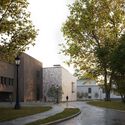
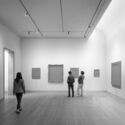
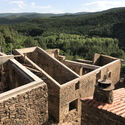
On 19 June 2025, the exhibition will expand to include models of the three winning proposals, which will be announced during the EUmies Awards Day 2025 at Palazzo Michiel in Venice. This event will also unveil the winners of the Young Talent Open, which extends the awards' reach beyond the Creative Europe countries to include participants from the Council of Europe member states and the Asia-Pacific region. All selected works will be documented in a publication and incorporated into the EUmies Awards Archive, contributing to a growing repository of architectural experimentation and discourse.

Read on to discover the 12 finalist projects of the EUmies Awards Young Talent 2025.

EUmies Awards for Young Talent 2025 Unveils the Finalist Projects at the Venice Architecture Biennale - Image 1 of 4EUmies Awards for Young Talent 2025 Unveils the Finalist Projects at the Venice Architecture Biennale - Image 2 of 4EUmies Awards for Young Talent 2025 Unveils the Finalist Projects at the Venice Architecture Biennale - Image 3 of 4EUmies Awards for Young Talent 2025 Unveils the Finalist Projects at the Venice Architecture Biennale - Image 4 of 4EUmies Awards for Young Talent 2025 Unveils the Finalist Projects at the Venice Architecture Biennale - More Images+ 14