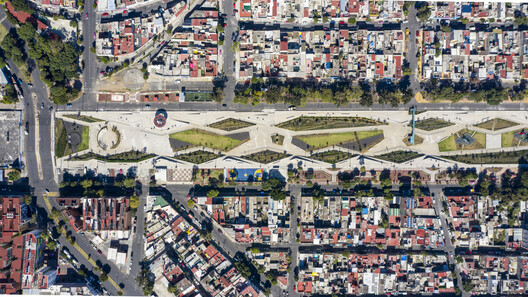
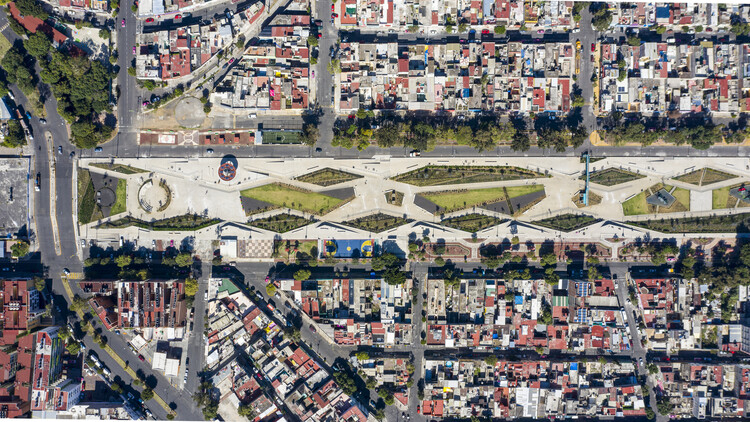
Mexico's rapid urban growth over recent decades has left many cities struggling with fragmented neighborhoods, high crime rates, and severe shortages of quality public spaces. In many low-income urban areas, informal development occurred alongside raw infrastructure like drainage canals, rail lines, and steep ravines, dividing communities and creating hazardous vacant zones. To address this spatial segregation and lack of civic amenities, public agencies and architects across Mexico are intervening in these abandoned buffer zones to construct public parks. By converting former physical barriers into accessible pedestrian corridors, these projects rejoin separated neighborhoods, re-establish safe visual sight lines, and provide spaces for community gathering and daily recreation.
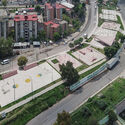
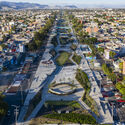
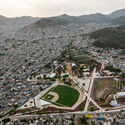
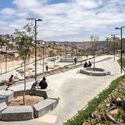
To ensure these interventions survive harsh climate conditions and potential municipal maintenance neglect, architects rely on durable, low-cost construction strategies centered on integrally colored concrete and locally sourced materials. Poured concrete (often tinted with earth tones) is used for retainers, steps, climbing walls, and site furniture, providing structural stability and high wear resistance without needing regular repainting or specialized upkeep. These concrete structures are frequently combined with porous local gravels and recycled elements such as tire retaining walls to manage stormwater runoff and control soil erosion. By pairing long-lasting, heavy-duty materials with step-free accessibility and open layouts, these designs establish permanent civic infrastructure that remains functional for long-term public use.