1. ArchDaily
  2. Mexico City

Mexico City: The Latest Architecture and News

When Modernism Meets Local Resistance: Housing and Urban Friction in Latin America

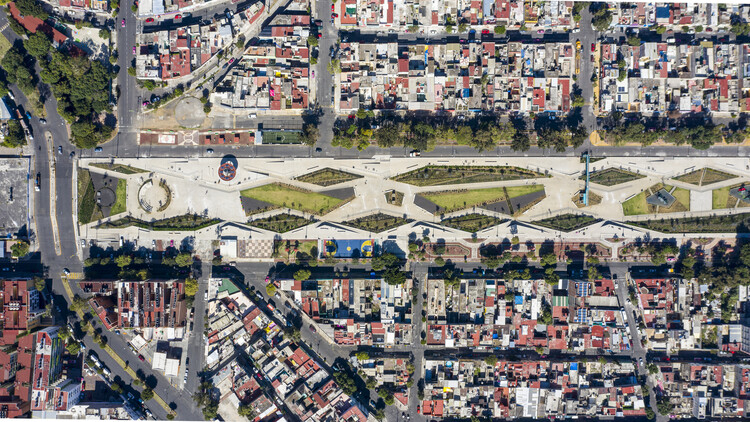
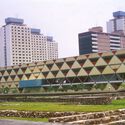
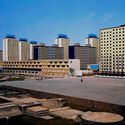
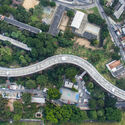
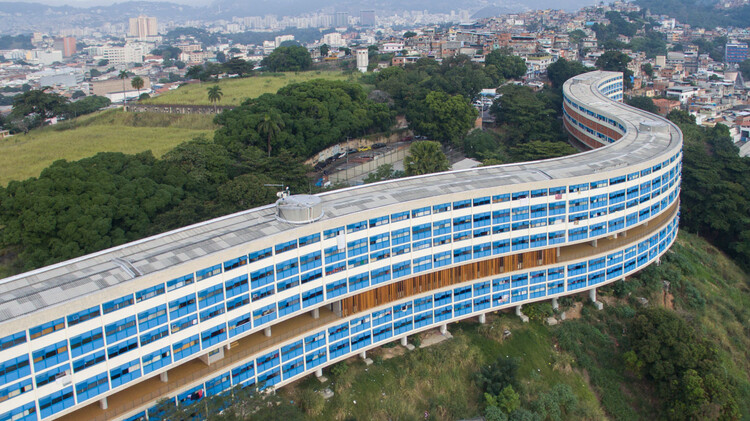
Modern housing was one of the places where modernism made its boldest promise: that architecture could reshape not only the city, but the way people lived within it. As Argentine architectural historian Ramón Gutiérrez has argued, popular housing is "the great unresolved subject, one that usually does not appear in histories of architecture." In Latin America, this absence is significant. Across the 20th century, expanding cities turned housing into one of the clearest ways to imagine urban change, and modernism entered not only plans and drawings, but apartments, neighborhoods, streets, and domestic routines.
Yet once built, these projects entered cities shaped by politics, memory, inequality, and changing ways of occupation. Their meanings no longer belonged only to the original plan, but to the ways they were inhabited, altered, and transformed over time. What this history reveals is not adaptation, but friction: the moment when architecture stops being an ideal model and meets the city it cannot fully control.
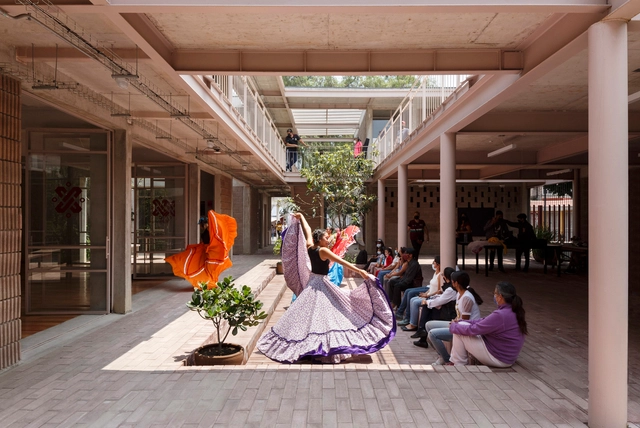
When Modernism Meets Local Resistance: Housing and Urban Friction in Latin America - Image 1 of 4When Modernism Meets Local Resistance: Housing and Urban Friction in Latin America - Image 2 of 4When Modernism Meets Local Resistance: Housing and Urban Friction in Latin America - Image 3 of 4When Modernism Meets Local Resistance: Housing and Urban Friction in Latin America - Image 4 of 4When Modernism Meets Local Resistance: Housing and Urban Friction in Latin America - More Images+ 20

Reading the Territory: The Landscapes of Estudio Ome

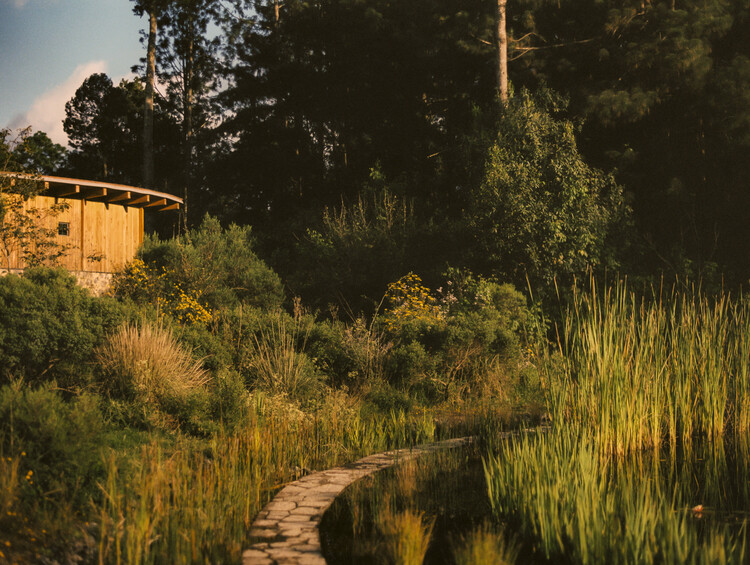
Based in Mexico City, Estudio Ome, founded by Susana Rojas Saviñón and Hortense Blanchard, is an architectural and landscape practice working across forests, volcanic terrains, urban fragments, and former industrial sites. Winner of the ArchDaily 2025 Next Practices Awards, the studio develops projects through sustained observation of ecological and territorial conditions, where design decisions arise directly from the behavior of soil, water, vegetation, and ground.

Each project begins with repeated encounters. The terrain is first approached through walking and prolonged observation, letting drainage patterns, erosion, and seasonal shifts become legible before any formal measurement occurs. These visits form the basis for interpreting both visible and subterranean layers—hydrology and historical transformations that continue to exert force on the surface.

Reading the Territory: The Landscapes of Estudio Ome - Image 1 of 4Reading the Territory: The Landscapes of Estudio Ome - Image 2 of 4Reading the Territory: The Landscapes of Estudio Ome - Image 3 of 4Reading the Territory: The Landscapes of Estudio Ome - Image 4 of 4Reading the Territory: The Landscapes of Estudio Ome - More Images+ 31

Beyond the Shell: Félix Candela’s Palacio de los Deportes for the 1968 Mexico Olympics

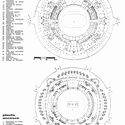
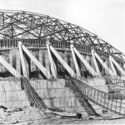
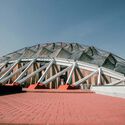
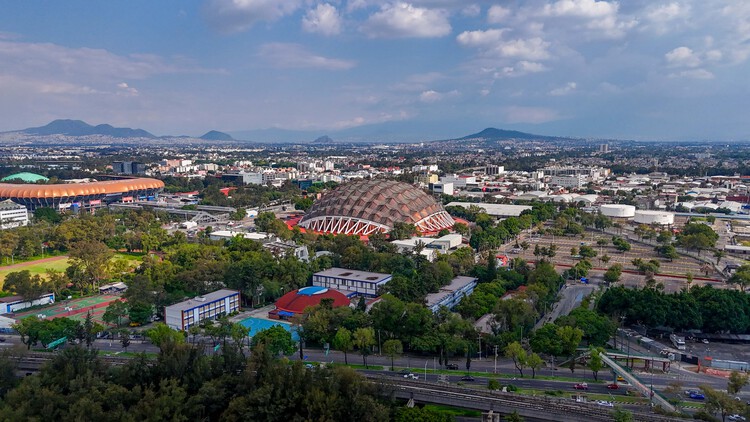
When Mexico City hosted the Olympics in 1968, it was the first time the Games had been awarded to a Latin American country as well as the first time for a Spanish-speaking nation to host them. This made the games a good opportunity to project Mexico and its culture internationally, thus prompting the government to constitute an organizing committee with prominent local talent. They appointed Pedro Ramírez Vázquez as its president, a Mexican architect who held significant influence over the state's mid-century building program. His approach was explicit: architecture as a synthesis of international modernist technique with Pre-Columbian references and local material culture. Under his direction, the committee would oversee the construction and adaptation of venues distributed across the southern districts of Mexico City, nearly all designed and built by local architects, engineers, and technicians.

Beyond the Shell: Félix Candela’s Palacio de los Deportes for the 1968 Mexico Olympics - Image 1 of 4Beyond the Shell: Félix Candela’s Palacio de los Deportes for the 1968 Mexico Olympics - Image 2 of 4Beyond the Shell: Félix Candela’s Palacio de los Deportes for the 1968 Mexico Olympics - Image 3 of 4Beyond the Shell: Félix Candela’s Palacio de los Deportes for the 1968 Mexico Olympics - Image 4 of 4Beyond the Shell: Félix Candela’s Palacio de los Deportes for the 1968 Mexico Olympics - More Images+ 7

Mobility Justice: Urban Equity in an Era of Innovation

Subscriber Access | 

Every city contains two transportation systems. One is the visible network of roads, rail lines, sidewalks, and bus routes mapped in planning documents. The other is the invisible geography of privilege and exclusion embedded within it: the neighborhoods that received highways instead of parks, the communities whose bus routes were cut, the sidewalks that abruptly end at the edge of a district. For many years, built-environment professionals have treated infrastructure as a technical challenge. Mobility justice insists it is, fundamentally, a political one.

Mobility Justice: Urban Equity in an Era of Innovation - Image 1 of 4Mobility Justice: Urban Equity in an Era of Innovation - Image 2 of 4Mobility Justice: Urban Equity in an Era of Innovation - Image 3 of 4Mobility Justice: Urban Equity in an Era of Innovation - Image 4 of 4Mobility Justice: Urban Equity in an Era of Innovation - More Images+ 25

Democratizing Access to Culture: The Past, Present, and Future of Cultural Centers

The cultural center is an architectural typology that has fascinated architects and urban planners for decades. Whether due to its multifaceted program, its often emblematic scale, or its potential to transform the urban context in which it is inserted, it is a building type that carries strong symbolic and conceptual value. The wide circulation of international references—many designed by renowned architects—reinforces the aura of prestige associated with this program, frequently seen as a privileged ground for formal and conceptual experimentation. Not by chance, cultural center designs are among the most recurring themes in competitions, exhibitions, and academic studios.

Yet behind this contemporary fascination lies a complex history in which the notion of space dedicated to culture has been redefined over time, gradually taking the form we recognize today. This ongoing evolution invites us to reflect not only on the historical path of these spaces but also on the possibilities that will shape their future.

Democratizing Access to Culture: The Past, Present, and Future of Cultural Centers - Image 1 of 4Democratizing Access to Culture: The Past, Present, and Future of Cultural Centers - Image 2 of 4Democratizing Access to Culture: The Past, Present, and Future of Cultural Centers - Image 3 of 4Democratizing Access to Culture: The Past, Present, and Future of Cultural Centers - Image 4 of 4Democratizing Access to Culture: The Past, Present, and Future of Cultural Centers - More Images+ 8

The Market Plaza as Civic Core: 5 Projects that Explore Contemporary Approaches to Market Design in Mexico

Subscriber Access | 

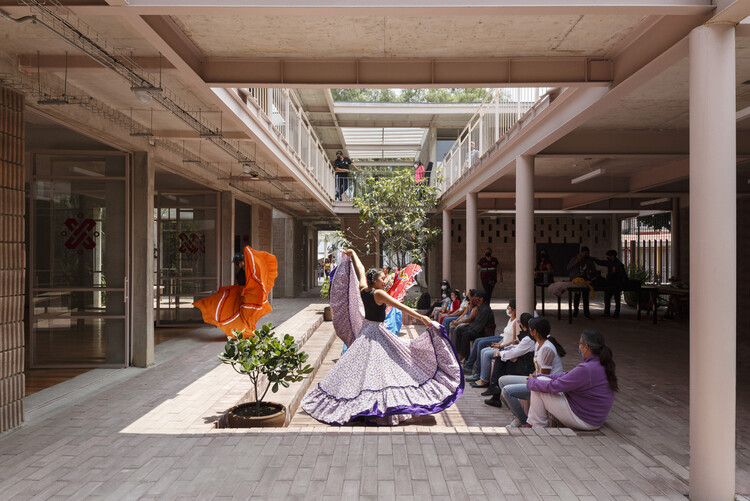
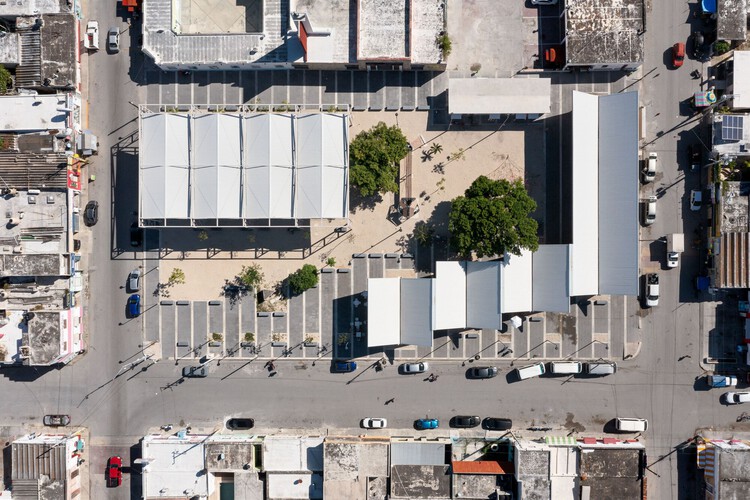
Contemporary Mexican market architecture frequently draws inspiration from its pre-Hispanic precedents. The Tlatelolco Market in ancient Tenochtitlan, for example, featured a large, stone-paved open square with designated "streets", which were divided into sections for specific goods, serving as a significant gathering point for social and economic exchange. Similarly, the tradition of the Tianguis, an ephemeral market typology within the broader Mesoamerican tradition, also arranged stalls in aisles within a public plaza, reflecting organizational principles seen in Tlatelolco. These historical models established a base for the tradition of marketplaces in Mexico and the countries in Central America, where they merge public space and structured layouts for commerce. Today, even though many of Mexico's commercial spaces, notably Mexico City's Central de Abasto and other markets such as the Jamaica, Merced, and San Juan Markets, have taken on a stationary approach to serving their communities, tianguis maintain their foothold in Mexican society.

The Market Plaza as Civic Core: 5 Projects that Explore Contemporary Approaches to Market Design in Mexico - Image 1 of 4The Market Plaza as Civic Core: 5 Projects that Explore Contemporary Approaches to Market Design in Mexico - Image 2 of 4The Market Plaza as Civic Core: 5 Projects that Explore Contemporary Approaches to Market Design in Mexico - Image 3 of 4The Market Plaza as Civic Core: 5 Projects that Explore Contemporary Approaches to Market Design in Mexico - Image 4 of 4The Market Plaza as Civic Core: 5 Projects that Explore Contemporary Approaches to Market Design in Mexico - More Images+ 7

The Mexican Pavilion at the Venice Architecture Biennale Explores the Ecological Potential of Ancestral Agricultural Systems

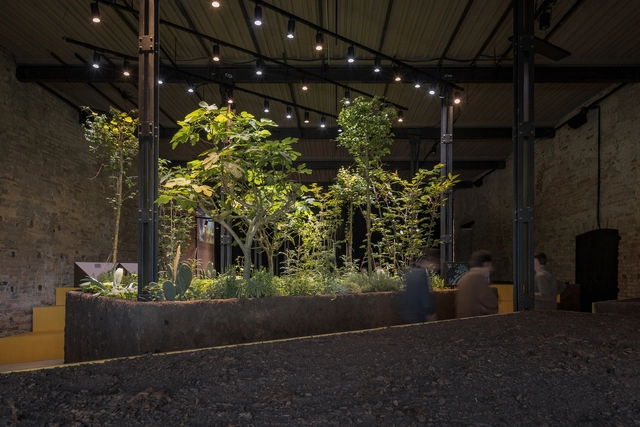
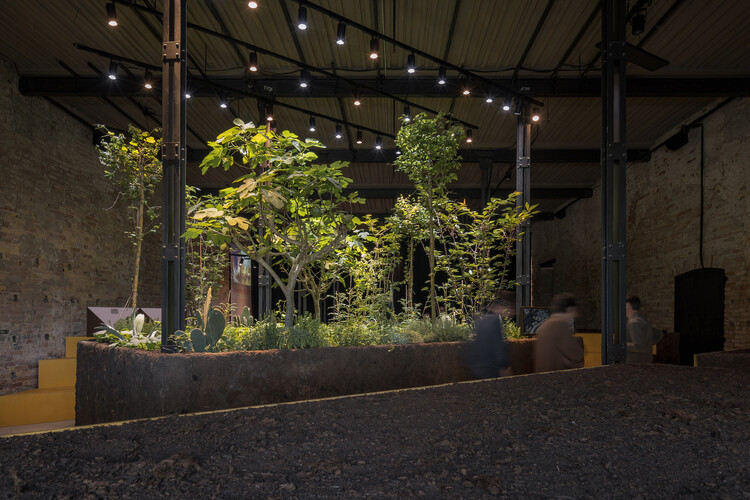
Titled "Chinampa Veneta", the Mexican exhibition for the 19th International Architecture Exhibition – La Biennale di Venezia seeks to promote reflection on how we inhabit, cultivate, and design the world we share. In the face of the global ecological crisis, the project draws attention to chinampas, an ancient Mesoamerican agricultural system with more than four thousand years of history. This ancestral knowledge, interweaving landscape, infrastructure, and technique, is reimagined in the context of the Biennale, activating a living environment within the city of Venice. The Mexican Pavilion consists of two "enactments," one located in the Arsenale and the other built on water.

The Mexican Pavilion at the Venice Architecture Biennale Explores the Ecological Potential of Ancestral Agricultural Systems - Image 1 of 4The Mexican Pavilion at the Venice Architecture Biennale Explores the Ecological Potential of Ancestral Agricultural Systems - Image 2 of 4The Mexican Pavilion at the Venice Architecture Biennale Explores the Ecological Potential of Ancestral Agricultural Systems - Image 3 of 4The Mexican Pavilion at the Venice Architecture Biennale Explores the Ecological Potential of Ancestral Agricultural Systems - Image 4 of 4The Mexican Pavilion at the Venice Architecture Biennale Explores the Ecological Potential of Ancestral Agricultural Systems - More Images+ 21

The World's Largest Cities in 2025 by Population

Every year, World Population Day is observed on July 11th, aiming to increase people's awareness of various population issues, such as the importance of urbanization, gender equality, poverty, health, and human rights. In 2025, under the theme "Empowering Youth to Build the Families They Want," the United Nations draws attention to the largest generation of young people in history, many of whom are coming of age in rapidly urbanizing contexts. Urban centers remain key to understanding these demographic patterns, as cities continue to attract populations seeking opportunity, stability, and access to essential services. Today, more than half of the global population resides in urban areas, a share projected to increase to 66% by 2050.

The World's Largest Cities in 2025 by Population - Image 1 of 4The World's Largest Cities in 2025 by Population - Image 2 of 4The World's Largest Cities in 2025 by Population - Image 3 of 4The World's Largest Cities in 2025 by Population - Image 4 of 4The World's Largest Cities in 2025 by Population - More Images+ 16

Creating Safe Spaces for Learning: Explore Solis Colomer Arquitectos' Educational Projects in Latin America

Subscriber Access | 

Founded in 2002, Solis Colomer Arquitectos has established a strong reputation over the past two decades, designing and constructing projects with both social and commercial impact across Latin America. With over 200 completed works, the firm specializes in institutional architecture with social impact and user-centered commercial architecture. Its mission is clear: to use architecture as a tool to dignify the human experience, especially for those in greatest need.

Creating Safe Spaces for Learning: Explore Solis Colomer Arquitectos' Educational Projects in Latin America - Image 1 of 4Creating Safe Spaces for Learning: Explore Solis Colomer Arquitectos' Educational Projects in Latin America - Image 2 of 4Creating Safe Spaces for Learning: Explore Solis Colomer Arquitectos' Educational Projects in Latin America - Image 3 of 4Creating Safe Spaces for Learning: Explore Solis Colomer Arquitectos' Educational Projects in Latin America - Image 4 of 4Creating Safe Spaces for Learning: Explore Solis Colomer Arquitectos' Educational Projects in Latin America - More Images+ 4

The Kitchen in the New Spatial Economy: 5 Contemporary Design Approaches

Subscriber Access | 

Space has become a luxury in many of the world's most densely populated cities—a growing reality that's hard to ignore. Megacities like Tokyo, Shanghai, Mumbai, Mexico City, and São Paulo already have populations exceeding 20 million, while other urban centers across Asia and Africa continue to expand rapidly. Among these, Delhi stands out: if current trends continue, it is projected to become the most populous city by 2028. As these cities expand, housing—especially new developments—follows a new logic: as square meters shrink, furniture adapts, and daily life learns to fit and thrive in high-density environments. This change isn't just about size; it reflects a new way of living. Where spaciousness once dominated, density now rules. Every corner gains spatial and commercial value, with the kitchen emerging as one of the biggest challenges in housing design today.

The Kitchen in the New Spatial Economy: 5 Contemporary Design Approaches - Image 1 of 4The Kitchen in the New Spatial Economy: 5 Contemporary Design Approaches - Image 2 of 4The Kitchen in the New Spatial Economy: 5 Contemporary Design Approaches - Image 3 of 4The Kitchen in the New Spatial Economy: 5 Contemporary Design Approaches - Image 4 of 4The Kitchen in the New Spatial Economy: 5 Contemporary Design Approaches - More Images+ 18

The 2025 Architectural League Prize for Young Architects + Designers Announces the Winners

The Architectural League of New York has announced the winners of its 44th cycle of the Architectural League Prize for Young Architects + Designers. Each year, the competition centers around a theme developed by a committee of past winners. This year's theme, Plot, invited participants to explore the role of plot in architecture, whether understood as land, drawing, or scheme, and consider how these frameworks shape design narratives and processes. Established in 1981, the annual competition recognizes early-career architects and designers in North America.

This year's programming follows a hybrid model. A virtual lecture series will launch on June 11 and feature presentations by the winners alongside moderated discussions. Installations by the winners will be presented either onsite or in digital formats and showcased in an online exhibition.

The 2025 Architectural League Prize for Young Architects + Designers Announces the Winners - Image 1 of 4The 2025 Architectural League Prize for Young Architects + Designers Announces the Winners - Image 2 of 4The 2025 Architectural League Prize for Young Architects + Designers Announces the Winners - Image 3 of 4The 2025 Architectural League Prize for Young Architects + Designers Announces the Winners - Image 4 of 4The 2025 Architectural League Prize for Young Architects + Designers Announces the Winners - More Images+ 7

Unveiling the 15 Most Significant Architectural Events of 2025

2025 promises to be a landmark in architecture, heralding a vibrant renaissance of creativity and exploration. As societies confront challenges such as climate change, rapid urbanization, and technological evolution, architecture is both a mirror to these dynamics and a compass pointing toward a sustainable and inclusive future. This year's architectural calendar offers abundant opportunities to celebrate the discipline's transformative power — from boundary-pushing festivals to thought-provoking exhibitions that explore pressing cultural and environmental narratives.

From well-established biennials to inaugural gatherings, including the World Architecture Festival 2025, Desert X Al Ula, and the COP Climate Conference, the 2025 calendar highlights themes such as sustainability, heritage, and community. These events underscore architecture's unique ability to shape a better future, addressing global challenges while honoring cultural diversity and design ingenuity.

Unveiling the 15 Most Significant Architectural Events of 2025 - Image 1 of 4Unveiling the 15 Most Significant Architectural Events of 2025 - Image 2 of 4Unveiling the 15 Most Significant Architectural Events of 2025 - Image 3 of 4Unveiling the 15 Most Significant Architectural Events of 2025 - Image 4 of 4Unveiling the 15 Most Significant Architectural Events of 2025 - More Images+ 14