1. ArchDaily
  2. climate responsive design

climate responsive design: The Latest Architecture and News

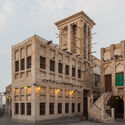
On Africa Day 2026: Revisiting Architecture’s Role in Identity and Collective Memory

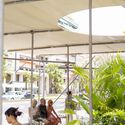
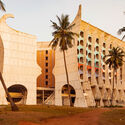
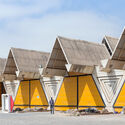
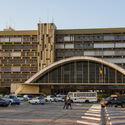
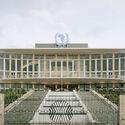
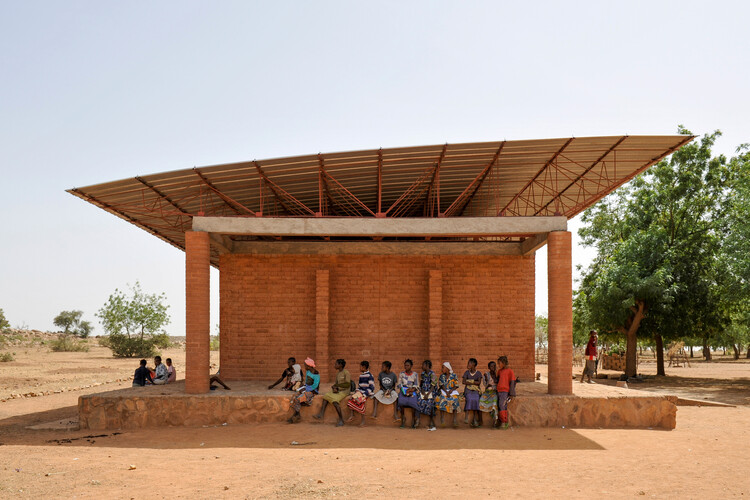
Observed annually on May 25, Africa Day commemorates the founding of the Organization of African Unity in 1963, now the African Union. Established during a period marked by independence movements across the continent, the day recognizes not only political solidarity but also the cultural, social, and intellectual histories that continue to shape African societies today. Within architecture and urbanism, these histories are reflected in evolving conversations around nation-building, heritage preservation, climate-responsive design, material innovation, and community-centered practice.

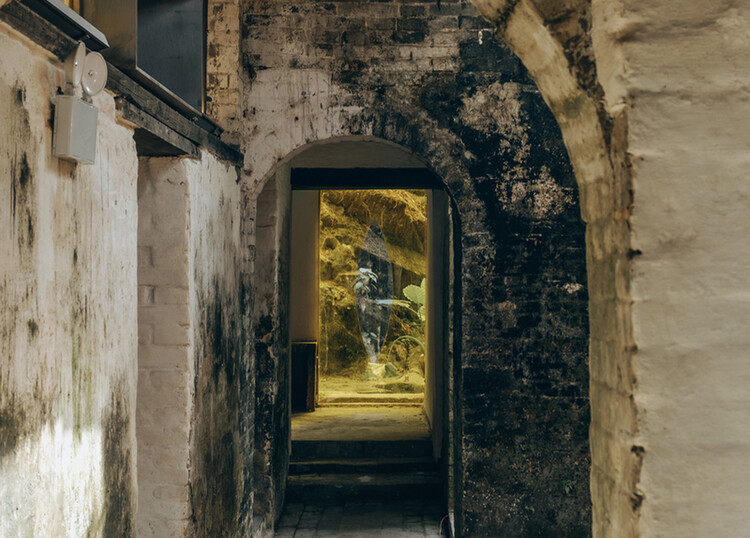
On Africa Day 2026: Revisiting Architecture’s Role in Identity and Collective Memory - Image 1 of 4On Africa Day 2026: Revisiting Architecture’s Role in Identity and Collective Memory - Image 2 of 4On Africa Day 2026: Revisiting Architecture’s Role in Identity and Collective Memory - Image 3 of 4On Africa Day 2026: Revisiting Architecture’s Role in Identity and Collective Memory - Image 4 of 4On Africa Day 2026: Revisiting Architecture’s Role in Identity and Collective Memory - More Images+ 6

The 2026 Edition of the UIA 2030 Award Honors Built Projects Advancing the UN Sustainable Development Goals

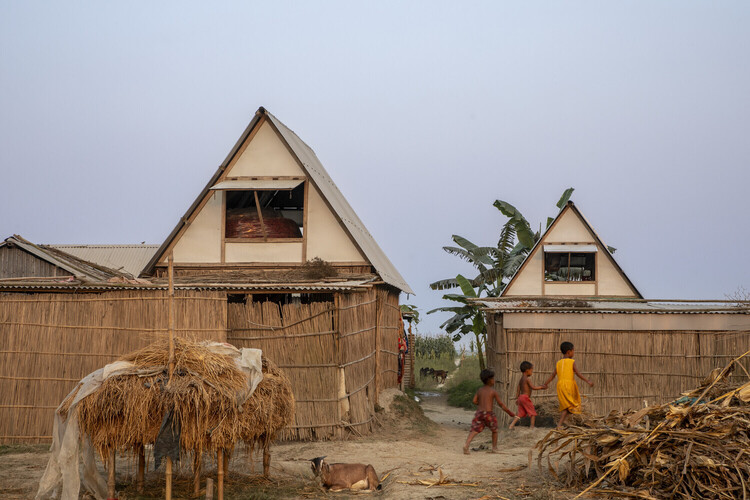
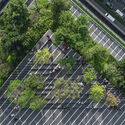
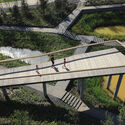
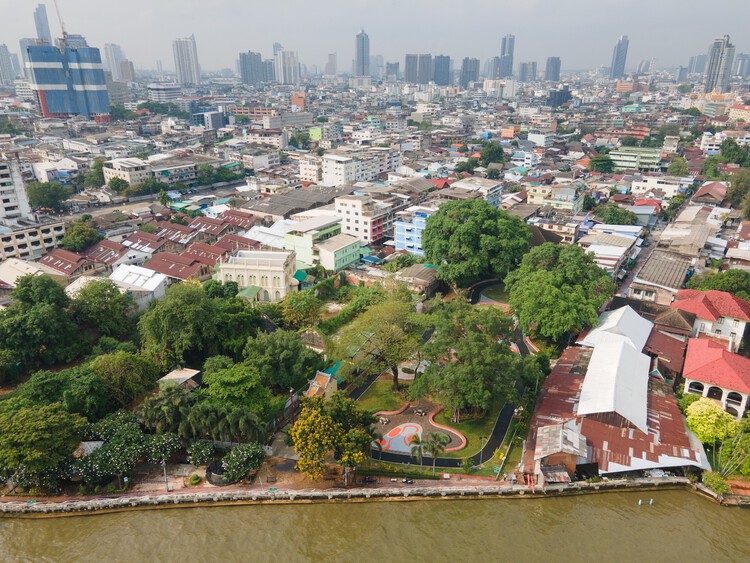
During a ceremony held at the World Urban Forum (WUF) in Baku, Azerbaijan, on May 20, 2026, the International Union of Architects (UIA) and UN-Habitat announced the winners of the third cycle of the UIA 2030 Award. The biennial award recognizes built projects that make meaningful contributions to achieving the United Nations Sustainable Development Goals (SDGs). Architects were invited to submit architecture, landscape, and urban design projects addressing pressing environmental, social, and economic challenges across six categories: sustainable water management, the promotion of safe working environments, adequate and affordable housing, efficient and inclusive planning, access to green and public space, and climate resilience.

The third cycle launched in July 2025, and regional finalists from the UIA's five global regions were announced in January. In the final stage, the jury selected winning, highly commended, and commended projects in each category, recognizing works in China, Bangladesh, India, Thailand, Mexico, Peru, Colombia, Spain, Kenya, Morocco, and the United States.
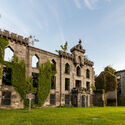
The 2026 Edition of the UIA 2030 Award Honors Built Projects Advancing the UN Sustainable Development Goals - Image 1 of 4The 2026 Edition of the UIA 2030 Award Honors Built Projects Advancing the UN Sustainable Development Goals - Image 2 of 4The 2026 Edition of the UIA 2030 Award Honors Built Projects Advancing the UN Sustainable Development Goals - Image 3 of 4The 2026 Edition of the UIA 2030 Award Honors Built Projects Advancing the UN Sustainable Development Goals - Image 4 of 4The 2026 Edition of the UIA 2030 Award Honors Built Projects Advancing the UN Sustainable Development Goals - More Images+ 119

Oil, Glass, and Identity: Gulf Modernism Between Global Image and Local Climate

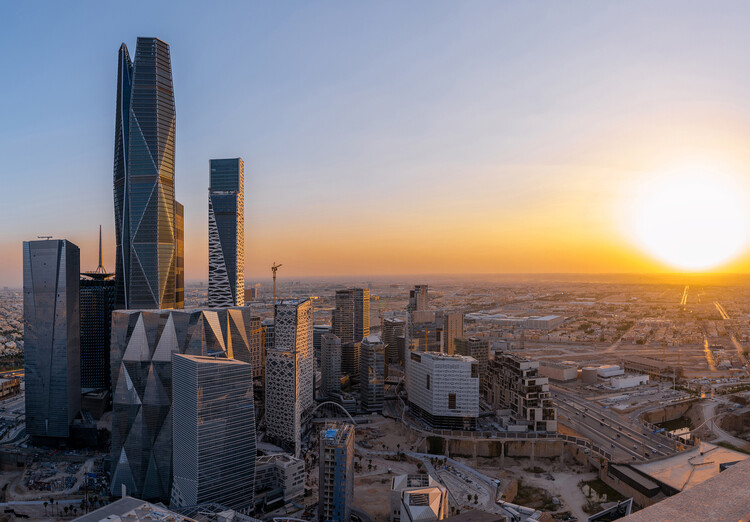
Step from the heat of Dubai into the lobby of a glass tower, and the desert seems to disappear. Outside, temperatures climb past 45 degrees Celsius; inside, the air is cold, sealed, and perfectly controlled. For decades, this contrast became the defining image of Gulf modernity. Architecture became less a negotiation with climate, and more a demonstration that climate could be overcome. Towers of reflective glass rose from the desert as symbols of arrival, projecting financial power, technological confidence, and global ambition. Beneath this urban image sat an infrastructure built on oil, cheap energy, and the continuous mechanical suppression of heat.

Oil, Glass, and Identity: Gulf Modernism Between Global Image and Local Climate - Image 1 of 4Oil, Glass, and Identity: Gulf Modernism Between Global Image and Local Climate - Image 2 of 4Oil, Glass, and Identity: Gulf Modernism Between Global Image and Local Climate - Image 3 of 4Oil, Glass, and Identity: Gulf Modernism Between Global Image and Local Climate - Image 4 of 4Oil, Glass, and Identity: Gulf Modernism Between Global Image and Local Climate - More Images+ 8

Dogtrot House: Vernacular Knowledge and Climate-Responsive Design

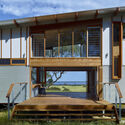
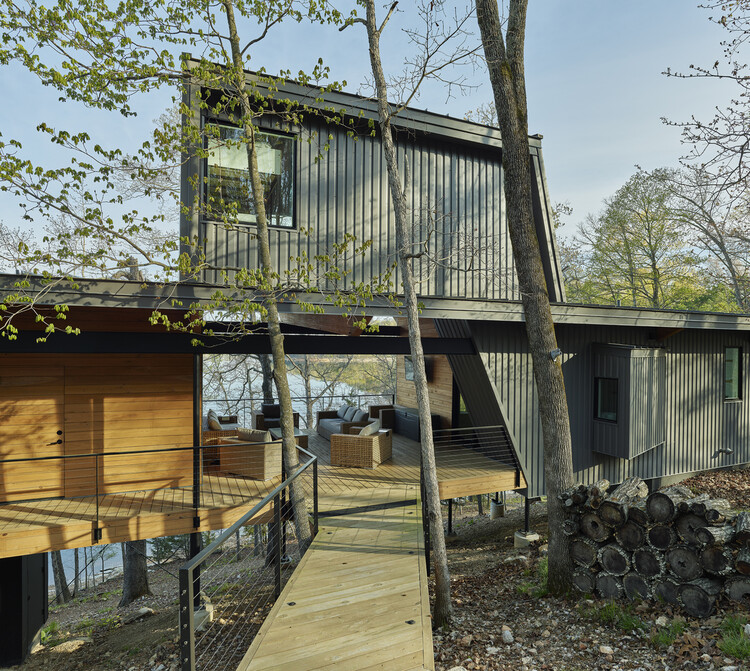
The dogtrot house emerged across the South of the United States during the late nineteenth century as a direct response to humid climates, material availability, and patterns of rural habitation. Found throughout the Appalachian Mountains, coastal Carolinas, and lowlands of Louisiana, the dogtrot house appeared in numerous regional variations, yet its fundamental spatial logic remained remarkably consistent. Two enclosed living masses are separated by an open central passage and unified beneath a continuous roof, creating a dwelling that is simultaneously economical and responsive to long, hot summers. Although architectural historians continue to debate the precise geographic origins of the dogtrot, the typology represents a broader vernacular intelligence that emerged through the convergence of environmental necessity, local construction practices, and rural living.

Dogtrot House: Vernacular Knowledge and Climate-Responsive Design - Image 1 of 4Dogtrot House: Vernacular Knowledge and Climate-Responsive Design - Image 2 of 4Dogtrot House: Vernacular Knowledge and Climate-Responsive Design - Image 3 of 4Dogtrot House: Vernacular Knowledge and Climate-Responsive Design - Image 4 of 4Dogtrot House: Vernacular Knowledge and Climate-Responsive Design - More Images+ 36

Above Water, Slope, and Forest: Elevated Architecture in Latin America

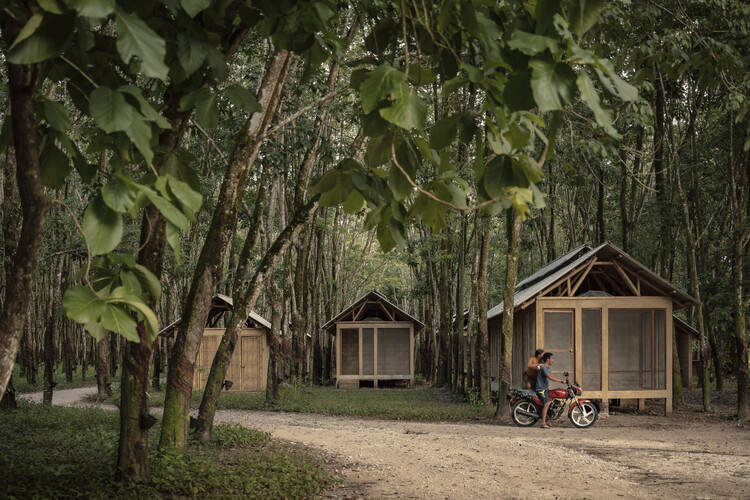
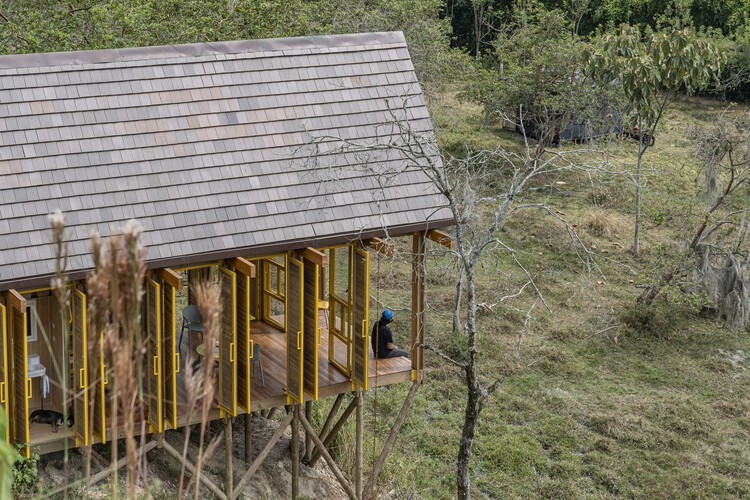
In Latin America, the ground is rarely just a surface to build on. It can be a river edge, a steep slope, a humid forest floor, a floodable landscape, or a territory under ecological pressure, and in many cases, it carries a history of communities that already knew how to respond to it, building on stilts, on platforms, over water, long before contemporary architecture asked the same questions.

These projects continue that conversation. They engage with conditions that move, absorb, erode, and grow, rather than treating the ground as something to level or control. Elevation allows architecture to adapt without fully taking over: water can pass below, vegetation can remain, and slopes can keep their original condition. In each case, the decision to rise is tied to something specific: water, humidity, topography, vegetation, or ecological recovery, and the knowledge of how to build within it and not against it.

Above Water, Slope, and Forest: Elevated Architecture in Latin America - Image 1 of 4Above Water, Slope, and Forest: Elevated Architecture in Latin America - Image 2 of 4Above Water, Slope, and Forest: Elevated Architecture in Latin America - Image 3 of 4Above Water, Slope, and Forest: Elevated Architecture in Latin America - Image 4 of 4Above Water, Slope, and Forest: Elevated Architecture in Latin America - More Images+ 12

Tropical Modernism Beyond Aesthetics: The Politics of Shade and Air

The image is familiar, a façade layered with brise-soleil, light softened into a patterned shadow, interiors kept cool without machines. It appears as intelligence made visible, architecture that understands the sun. This image is rarely examined closely. The same devices that temper heat also organize access, distribute comfort, and depend on particular forms of labor. What looks like a climatic response is also a decision about who gets relief from heat, and how. Tropical modernism, often reduced to a visual language of shade and porosity, emerges instead as a set of situated practices where climate, labor, and power are negotiated differently across contexts.

At the scale of the element, tropical modernism begins as a technical problem. In hot climates, solar radiation is not incidental but constant, requiring buildings to mediate light, heat, and air before they reach the interior. Architects like Maxwell Fry and Jane Drew approached this with a level of precision that resists any reading of these elements as decorative. Shading devices are calibrated according to solar angles, orientation, and seasonal variation. Brise-soleil are dimensioned to block high-angle sun while admitting diffuse light; overhangs extend just enough to prevent direct gain at peak hours; openings are aligned to encourage cross-ventilation. Mid-century research further tested these strategies, measuring temperature reductions and airflow improvements. In this sense, the language of tropical modernism is not symbolic. It is performative: each projection, void, and screen is part of an environmental system.

Tropical Modernism Beyond Aesthetics: The Politics of Shade and Air  - Image 1 of 4Tropical Modernism Beyond Aesthetics: The Politics of Shade and Air  - Image 2 of 4Tropical Modernism Beyond Aesthetics: The Politics of Shade and Air  - Image 3 of 4Tropical Modernism Beyond Aesthetics: The Politics of Shade and Air  - Image 4 of 4Tropical Modernism Beyond Aesthetics: The Politics of Shade and Air  - More Images+ 7

Designing with Air: Rethinking Architecture Beyond the Wall

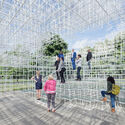
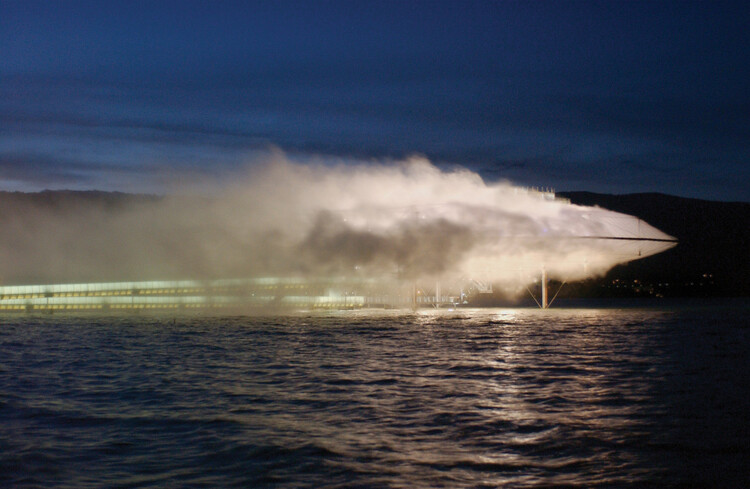
Architecture is traditionally chronicled through the persistence of the solid. We define the discipline by the weight of the lintel, the mass of the pier, and the resistance of the wall. Even when lightness is invoked, it is usually understood as a subtractive act, the thinning of a section or the precarious reduction of a load. Yet there is a parallel history, less visible and harder to isolate, in which the primary material of construction is not what occupies space, but what moves through it.

To treat air as a medium is to move past the binary of the envelope. The boundary between the interior and the world ceases to be a line of absolute separation and becomes, instead, a site of filtration and pressure. We begin to see the building as a thermal valve, a series of gradients where moisture, velocity, and heat are not merely background "conditions" to be mitigated by mechanical systems, but are the very substances being shaped.

Designing with Air: Rethinking Architecture Beyond the Wall - Image 1 of 4Designing with Air: Rethinking Architecture Beyond the Wall - Image 2 of 4Designing with Air: Rethinking Architecture Beyond the Wall - Image 3 of 4Designing with Air: Rethinking Architecture Beyond the Wall - Image 4 of 4Designing with Air: Rethinking Architecture Beyond the Wall - More Images+ 6