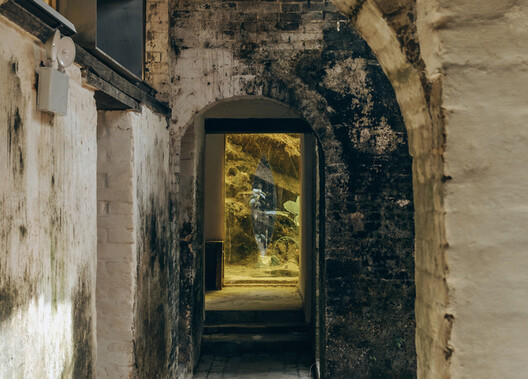
Contemporary architecture has learned to celebrate living matter. Mycelium panels, algae systems, living walls, life is now welcomed into buildings, framed as innovation. Yet the same discipline that celebrates these organisms treats mold as contamination. Both are biological. Both respond to moisture, temperature, and material conditions. The difference is not scientific. It is about which forms of life architecture is willing to accept, and which it prefers to remove.
Mold is not limited to abandoned buildings or poorly maintained interiors. It appears in homes, schools, offices, historic structures, and new construction, across different climates and contexts. This makes it harder to ignore as a minor or isolated problem. If mold keeps returning, what is it telling us about the environments buildings create?
David Gissen describes smoke, exhaust, dust, crowds, and mud as forms of nature that remain "undertheorized, underdiscussed, and undervisualized" in architecture. Mold falls into this category. It is highly visible, yet rarely discussed as anything other than a problem to solve.
Related Article
Designing for Time: Material Aging as a Design StrategyThis complicates one of architecture's most familiar assumptions: that buildings are meant to separate. Walls divide inside from outside. Roofs keep water away. Facades regulate heat, air, and moisture. The building becomes a barrier, protecting a controlled interior from the ever-changing world around it.
Yet buildings do not simply keep the outside world out. They are shaped by what moves through them, even when those changes remain hidden behind finished surfaces. This is where mold becomes more than a maintenance issue. It appears where those changes begin to leave a trace: on a cold wall, near a window frame, behind furniture, or in a room where air rarely moves. A stain does not explain everything, but it offers a clue. It shows where the building is no longer behaving as a sealed object.
Buildings continue to change after construction, shaped by weather, maintenance, occupation, and time. Air moves unevenly through rooms. Some surfaces remain colder than others. Some spaces are used more intensely, ventilated less frequently, or maintained with fewer resources. In these differences, mold begins to describe the building as it is lived, not only as it was designed.
The issue is not only that buildings change, but that architecture often represents them before that change begins. Drawings, renders, and photographs usually show the building at its most controlled moment: clean, complete, and finished. Mold appears later, through occupation, maintenance, weather, and time. It reminds us that architecture does not end when construction does.
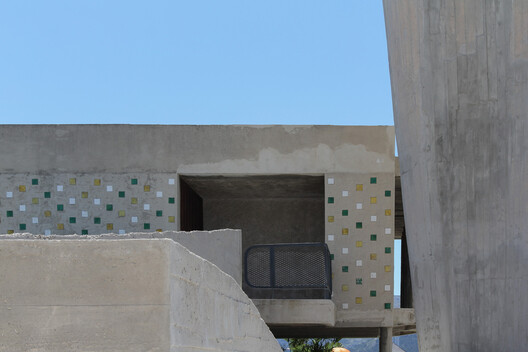
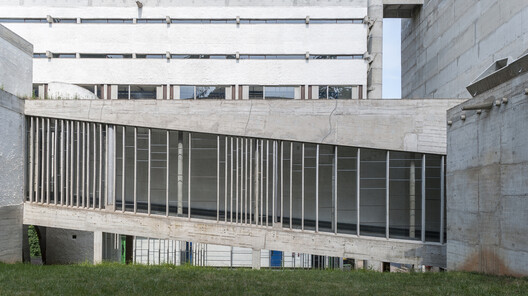
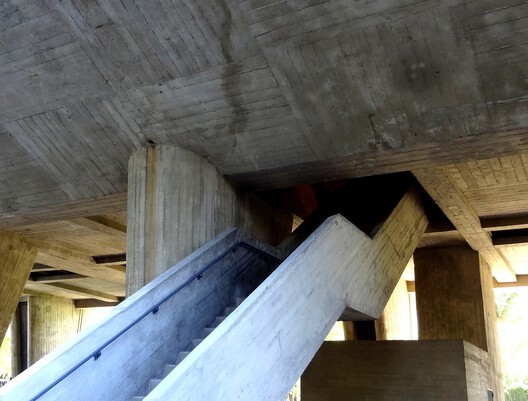
This tension is visible even in projects that circulate through architecture as carefully composed images. At Le Corbusier's Convent of La Tourette, the concrete surfaces no longer appear only as expressions of structure and mass. They carry stains, darkened areas, and traces of moisture that make the building feel exposed to climate and time.
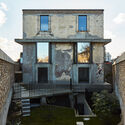
In Mole House by Adjaye Associates, these marks become part of the building's presence. The facade is not read only through its form or material palette, but through the exposed surfaces that have absorbed use, maintenance, moisture, and time. The architecture remains, but it is shaped visually by the conditions that continue to affect it.
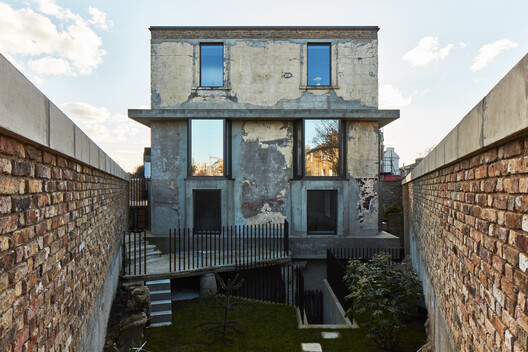
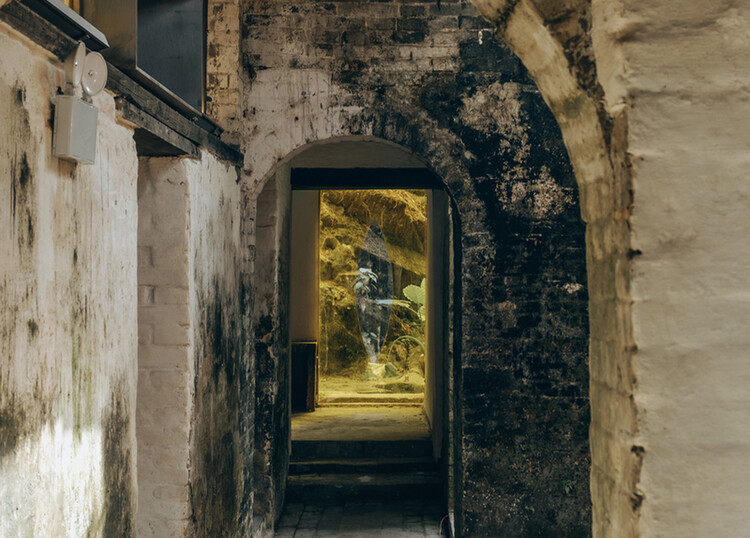
The Old Chapel by O-office Architects makes this relationship more explicit. Green growth and discoloration appear on the concrete surface, showing how material, moisture, and biological processes can overlap. The wall is no longer only a boundary or finish. It becomes a record of the environment forming around it.
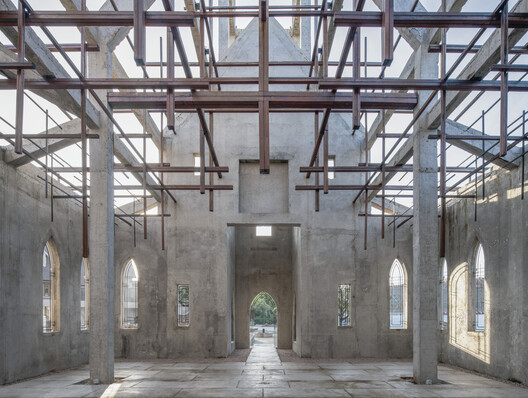
Mold makes this condition harder to ignore. Unlike staining or weathering alone, it is a living process. It grows according to its own conditions: moisture, temperature, material porosity, and air movement, not according to design intent. Its presence shifts attention away from the stain itself and toward the environment that made it possible.
The discomfort is not only technical, it is also cultural. Architectural representation has long favored images of cleanliness, order, and permanence. The spotless white wall became one of modern architecture's most enduring symbols, reinforcing the idea that successful buildings are those capable of keeping dirt, moisture, and biological growth under control.
This contradiction is visible in the way contemporary architecture approaches biological matter. Mycelium panels, algae systems, biobased composites, green roofs, and living walls are often celebrated as signs of environmental innovation, proof that architecture can work with life rather than against it. But this welcome has conditions. Life enters architecture through research, fabrication, specification, and maintenance. It is tested, controlled, and given a role within the design. It is invited because it can be managed.
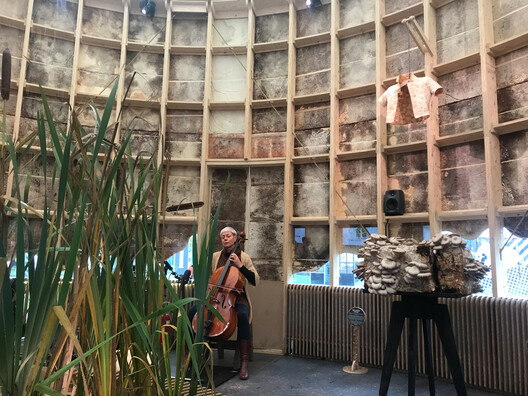
Mold occupies a different position. It is also biological, but it appears without being specified. It grows through the conditions a building produces rather than through the intentions of its design. This is why it is rarely discussed with the same language used for biomaterials or living systems. One is treated as innovation; the other as contamination.
This difference matters because it changes how architecture understands responsibility. Mold is often treated as something external to the project, as if it appeared outside the logic of design. But mold usually emerges from a combination of climate, material behavior, maintenance, occupation, and the way air and moisture move through a building. It is not separate from architecture; it grows through the conditions architecture helps create.
This makes mold useful as a way of thinking about building performance beyond its completion. A wall may have been detailed correctly, photographed cleanly, and finished according to specification, but still behave differently once it is occupied. Furniture can block airflow. A room can be used more intensely than expected. Maintenance can become irregular. A surface can remain colder than the air around it. Mold makes these relationships visible because it appears where those conditions meet. The question is not whether life belongs in architecture, but which forms of life architecture is willing to accept. Contemporary architecture often celebrates the forms of life it can cultivate, direct, and incorporate into design, while rejecting those that expose the limits of that control.
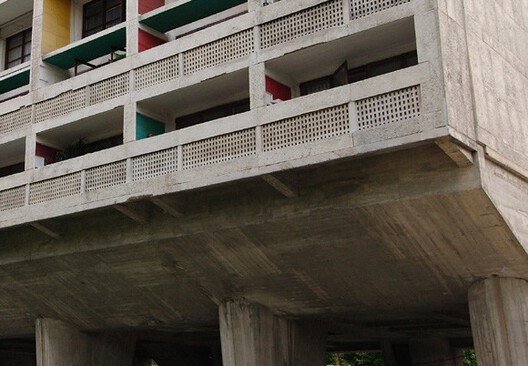
Mold is not only a living organism inside architecture. It is also a form of information. It does not invent the conditions that make it appear; it responds to them. A stain can register accumulated moisture, poor ventilation, temperature differences, patterns of occupation, or maintenance that has not kept pace with use. In that sense, mold produces a kind of knowledge about the building, one that plans, sections, and renders cannot.
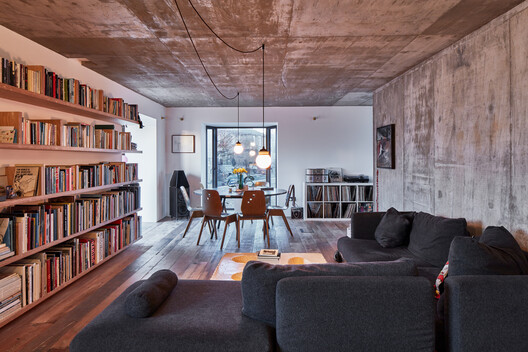
This is what makes it architecturally relevant. Drawings describe how a building is intended to perform. Mold reveals how it performs over time. It is a document produced by the building itself, written slowly through moisture, material, use, and climate.
The discomfort, then, is not only that mold is alive, but that it speaks from outside architecture's preferred systems of representation. It generates information that the discipline often treats as contamination because it does not fit the image of what a building should be: clean, complete, stable, and under control. Mold is not simply the failure of a surface. It is the return of everything architecture tried to separate from itself.
This article is part of the ArchDaily Topic: Transspecies Architecture: The Life of Materials, Ecological Alliances, and Nature's Agency. Every month we explore a topic in-depth through articles, interviews, news, and architecture projects. We invite you to learn more about our ArchDaily Topics. And, as always, at ArchDaily we welcome the contributions of our readers; if you want to submit an article or project, contact us.