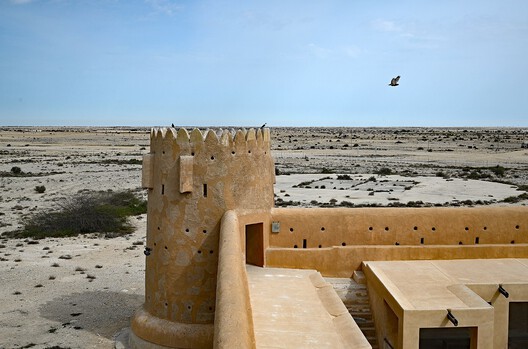
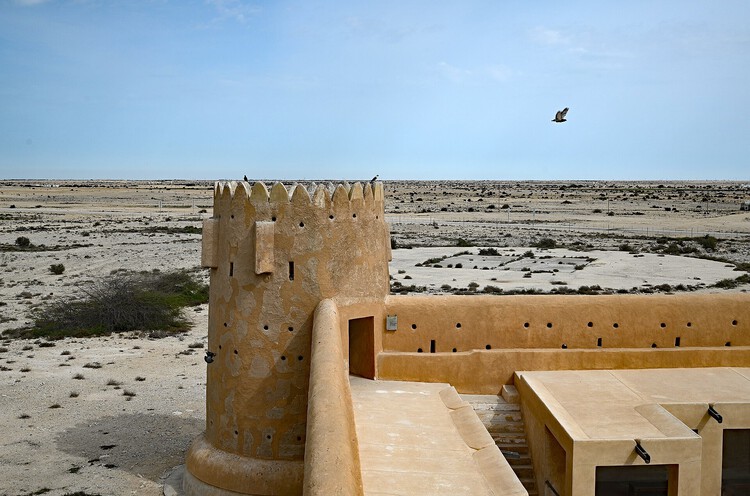
For many communities across the Gulf, leaving home once formed part of inhabiting it. Families moved between desert pastures, coastal settlements, wells, fishing grounds, and pearling ports according to season and livelihood, returning repeatedly to places already known through use. In Qatar, historical accounts describe autumn and winter movement through al-barr, the desert, followed by a return toward coastal settlements as the summer pearling season began. The National Museum of Qatar represents this history through a yearly calendar of movement between desert and sea.
Home could extend between several places occupied at different points in the year. It extended across a larger geography of places that were left and returned to through the year. Many contemporary Gulf developments now attempt to bring contrasting climatic and spatial conditions into the same permanent urban system.
Home Was Not a Point
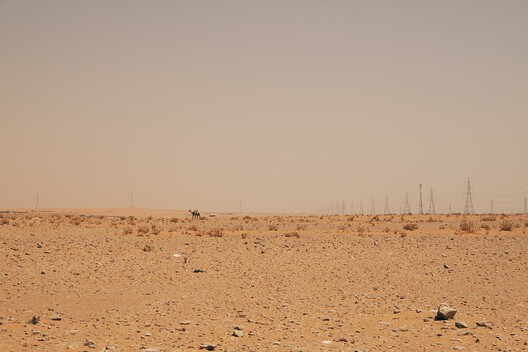
Seasonal movement across the Arabian Peninsula followed different routes according to pasture, water, trade, livestock, and maritime economies. Archaeological research in Qatar describes varied cycles among groups such as the Al Naim and Al Murrah, alongside urban populations that also moved into the desert during winter. Town, coast, desert, and grazing land formed parts of the same economic geography.
Pearling extended this territory toward the sea. From Doha and Manama to Dubai and Abu Dhabi, boats left Gulf ports during the summer pearl-diving season, linking communities to oyster banks and maritime trade routes. The summer movement was tied directly to the pearl-diving season. The landscape changed through the year, and patterns of occupation changed with it. No single settlement had to accommodate every seasonal condition. People moved between places suited to different seasons and livelihoods.
Repeated journeys made routes, wells, and temporary camps familiar even when they left little permanent construction behind. A route between winter pasture and summer settlement mattered because it was repeated. Wells became significant through return. Camps acquired continuity even after their structures disappeared.
An Architecture That Could Leave
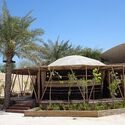
The Bayt al-Sha'ar, or house of hair, was built for this pattern of movement. Constructed from woven animal fibres supported on poles and tensioned with ropes, the Bedouin tent was light enough to dismantle and transport as communities moved. Kuwait's heritage inventory describes the structure as easy to carry and records its making, sewing, and erection as collective practices.
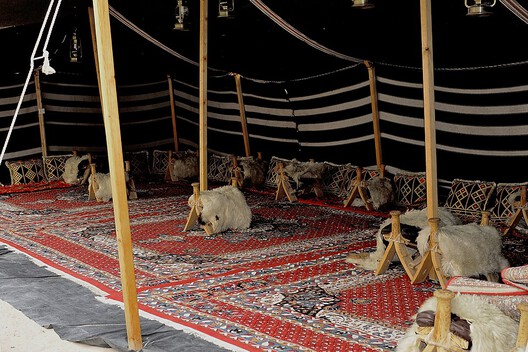
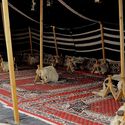
Its simple construction depended on precise environmental knowledge. Goat-hair panels provided enclosure while responding to changing weather, and individual sections of the textile structure could be repaired or replaced as needed. UNESCO documentation of Al Sadu weaving records goat-hair tent panels within the textile practices through which these structures were produced. The tent was internally organized. Textile partitions could distinguish spaces of reception, family life, and privacy without transforming the dwelling into a fixed series of rooms. That mobility depended on continued access to the territory beyond the tent.
When the Territory Became Fixed
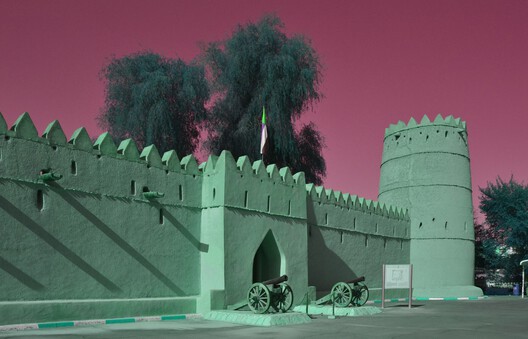
During the twentieth century, the territory through which communities moved was reorganized. Oil extraction, modern state formation, roads, national borders, employment, and permanent housing gradually reorganized the landscapes through which communities had moved. Research on Kuwait and Saudi Arabia traces this change through the sedentarization of the Badu between the 1940s and 1970s. Governments and international agencies encouraged settlement through housing, agricultural employment, and work within emerging oil economies. Modern architecture and experimental farms formed part of the sedentarization process.
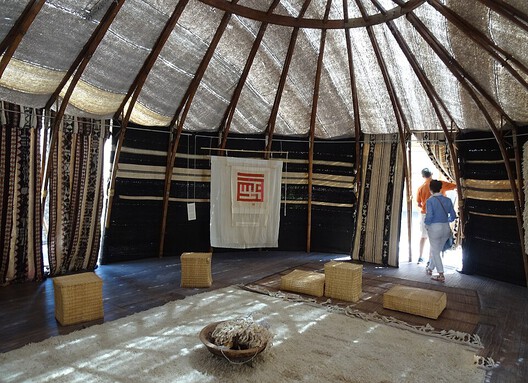
Permanent settlements reorganized access to services, employment, infrastructure, and land. Roads accelerated movement while directing it along increasingly formal networks. Borders transformed territorial crossings into administrated ones. Fixed housing concentrated everyday life around locations designed for continuous occupation. Seasonal movement continued, increasingly detached from the livelihoods that had once required it.
Returning Without Leaving Permanently
Winter camping continues as part of this seasonal pattern across the Gulf. Families still leave cities during cooler months to occupy desert camps, and the Bayt al-Sha'ar itself continues to appear within seasonal camping traditions. Kuwait's cultural inventory notes its continued use during the camping season, even after the dwelling ceased to function primarily as the everyday architecture of nomadic life.
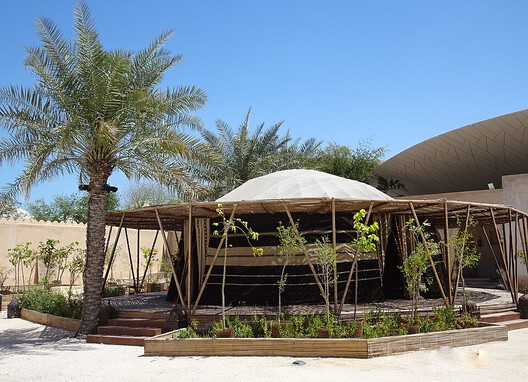
The purpose of that movement has changed. Earlier movements connected livelihoods spread across territory. Contemporary camping more often functions as a temporary departure from settled urban life. Infrastructure, vehicles, electricity, water supply, and recreational facilities increasingly accompany the camp. The desert remains the destination, but the city travels with its inhabitants. Seasonal movement increasingly shifted from livelihood toward recreation. Escape became something that could be scheduled before returning to permanent urban life.
Building the Elsewhere
Contemporary Gulf developments increasingly attempt to provide contrasting climates and landscapes without requiring departure from the city itself. Artificial islands, indoor landscapes, cooled public spaces, and resort districts create conditions markedly different from their surroundings. Conditions once reached through movement can increasingly be produced within permanent construction.
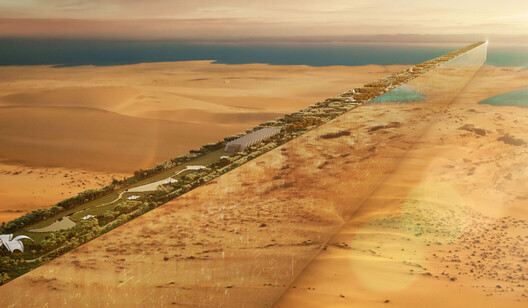
The LINE offers an unusually explicit example. NEOM described the project as a linear urban development extending through desert, mountain, and coastal landscapes, organized without conventional roads and intended to provide daily necessities within walking distance. Its proposal included designed microclimates balancing shade, sunlight, and ventilation, alongside what its official material called an "ideal climate all-year-round."
The proposal aimed at bringing several environmental conditions within a single urban system. Historically, inhabiting different environmental conditions required movement through territory. In The LINE, many of those conditions were intended to be produced within the architecture itself. Its environmental strategy used shade, ventilation, and controlled microclimates. High-speed mobility was intended to reduce travel time across the development, while access to surrounding landscapes was incorporated into the proposal.
There is no direct lineage between the Bayt al-Sha'ar and the LINE. The comparison instead lies in how differently they respond to environmental variation. The Bayt al-Sha'ar depended on movement through territory. The LINE proposed to bring multiple environmental conditions into permanent infrastructure.
When Escape Becomes Permanent
There is little value in romanticizing mobility. Seasonal pastoral life involved scarcity, labor, and environmental uncertainty alongside freedom of movement. Permanent settlement brought healthcare, education, infrastructure, employment, and forms of security that mobile landscapes could not always provide. The older pattern allowed inhabitants to respond to environmental change through movement. The Bayt al-Sha'ar could be dismantled, moved, repaired, and erected again. Routes, pastures, wells, and camping grounds remained familiar through repeated seasonal use. The same ambition appears at its largest scale in the Gulf's newest megaprojects. Their technical ambitions increasingly center on maintaining year-round occupation despite heat, distance, and seasonal change.
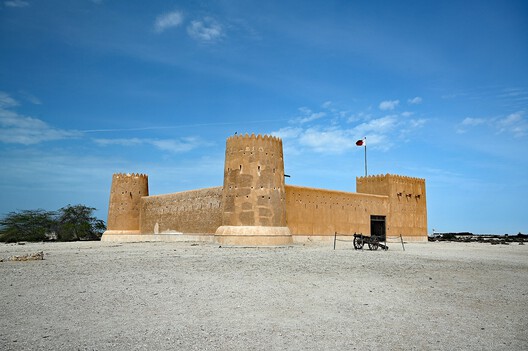
Leaving did not necessarily mean escaping home because home could survive absence. Routes were travelled again, seasonal places were revisited, and structures such as the Bayt al-Sha'ar could be erected again after moving. Contemporary architecture has become increasingly capable of sustaining occupation through changing conditions. The Bayt al-Sha'ar depended on a different capacity: it could be dismantled, carried elsewhere, and erected again when its occupants returned.
This article is part of the ArchDaily Topic: The Lure of Escapism in Architecture and Alternative Worlds. Every month we explore a topic in-depth through articles, interviews, news, and architecture projects. We invite you to learn more about our ArchDaily Topics. And, as always, at ArchDaily we welcome the contributions of our readers; if you want to submit an article or project, contact us.