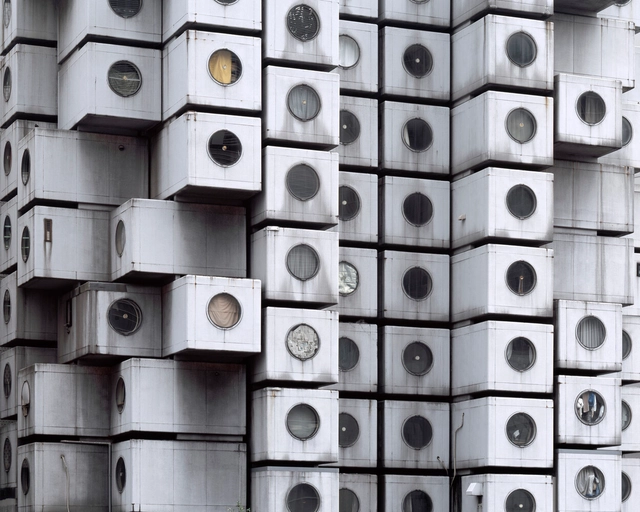
When Kisho Kurokawa designed his now iconic Nakagin Capsule Tower in 1972, the structure was meant to represent the core principles of Metabolism, experimenting with ideas of growth and change borrowed from biological processes. The emerging style in postwar Japan aimed to create buildings and megastructures that emulate living organisms that can evolve, expand, contract, and adapt to their changing conditions. Following this concept, the Nakagin tower was composed of 140 identical cell-like capsule units, each individually bolted to the two central shafts. The capsules were intended to be replaced and upgraded every 25 years, allowing for flexibility and mutation. The innovation proved to be impractical, however. Almost 50 years after its construction, the tower was demolished, but not in its entirety. A total of 23 capsules were saved and removed from the building to be given a new life. Now, the capsules are scattered around the world, continuing to represent Metabolist ideals in unexpected ways.
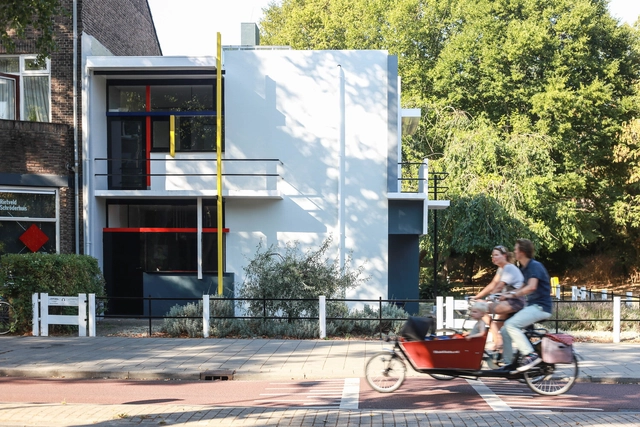
Given that the architects of modernity were in search of purity of form, it stands to reason that the image of this modern architecture is almost inevitably rendered in white in the collective imagination. Relieved of superfluous decorations, modern architecture became associated with the predominant use of white surfaces to highlight the volumetric composition. Combined with the concept of “material truth” first articulated by Victorian critic John Ruskin, white-colored architecture is often understood as straightforward, clear, and sincere.
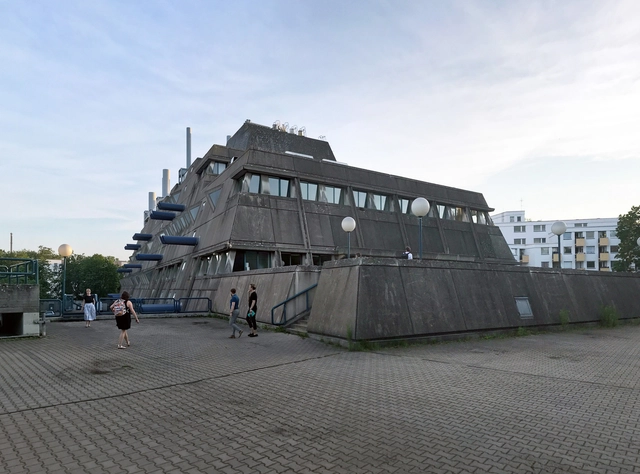
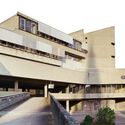
The former animal laboratories of the Charité in Lichterfelde, also known as the Mäusebunker building, have now been placed under monument protection, saving it from the threat of demolition that has been slated since 2010. The brutalist structure was designed by architects Gerd and Magdalena Hänska and built from 1971, and put into operation in 1982. While its strong image, combined with its function as a laboratory for animal tests, resulted in the general public’s distaste for it, the Brutalist building slowly gained acceptance and even a cult status among brutalist fans.
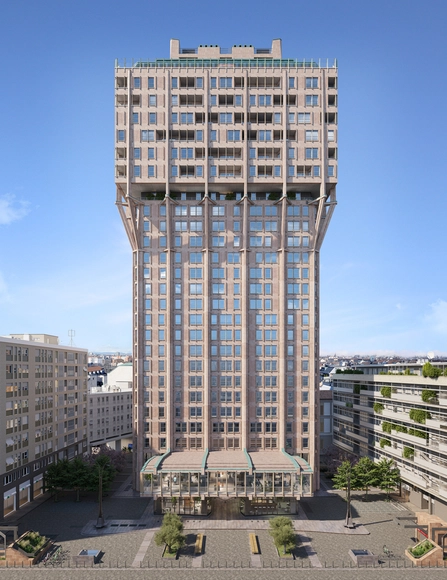
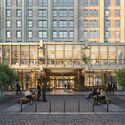
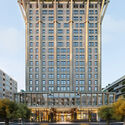
Torre Velasca, the renowned 1950s skyscraper by BBPR in Milan, Italy, is currently undergoing an extensive renovation process led by Asti Architetti and developed by Hines. After completing the work on the facades and with the extensive restoration of the interiors under way, the office has made public the project for the redesign of the Piazza Velasca, the square surrounding the tower. By turning it into a meeting and social gathering place, the architects hope to restore the status of the complex as a symbol of Milan’s architectural heritage. Pedestrian access to the building, and the renovation of previously disused adjacent spaces will open up the area for public access and will restore the original meaning of “piazza,” or square. The project is scheduled for completion by early 2024.
George Smart is an unlikely preservationist, almost an accidental one. The founder and executive director of USModernist, a nonprofit dedicated to the preservation and documentation of modern houses, Smart worked for 30 years as a management consultant. “I was doing strategic planning and organization training,” he says. “My wife refers to this whole other project as a 16-year seizure.” Recently I spoke with Smart about his two websites, the podcast, the house tours his organization conducts, and why documentation is such a power preservation tool.
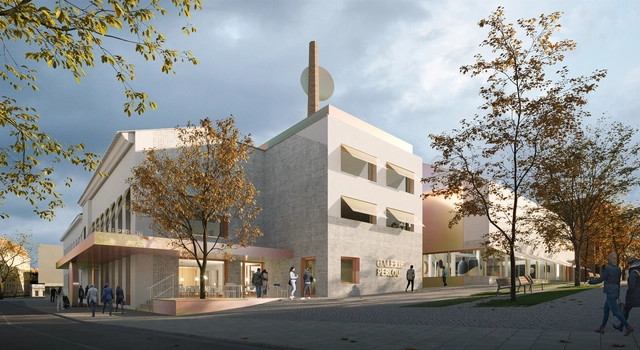
Pearl Gallery Renders. Image Courtesy of CHYBIK + KRISTOF
CHYBIK + KRISTOF architecture studio has been announced as the competition winners for a new cultural landmark that will transform and re-activate public space in Ústí nad Orlicí, Czech Republic. This former textile factory will be converted into a multifunctional cultural hub available to the public. The newly revitalized building will contribute to the existing cultural infrastructure, located near the main square of the city.
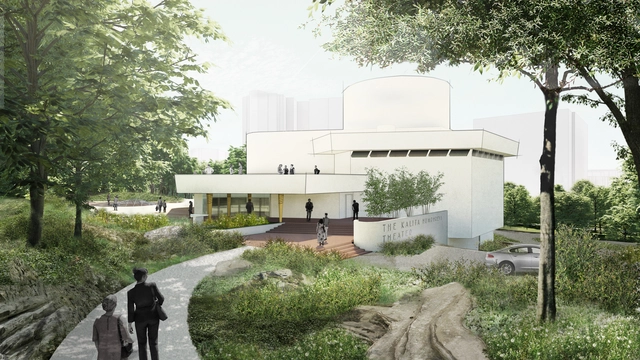
Kalita Humphreys Theater Restored, view from Katy Trail . Image Courtesy of Diller Scofidio + Renfro
Diller Scofidio + Renfro, in collaboration with Dallas Theater Center, unveiled the design proposal for the Kalita Humphreys Theater master plan, centered around one of Frank Lloyd Wright’s lesser-known buildings. Over the years, neglect and additions have compromised the building’s integrity. The project aims to restore the mid-century theater to its original state by applying a multifaceted approach. According to the architects, this includes surgical extraction, selective reconstruction, preservation, and a faithful reinterpretation of Wright’s design intent. The master plan also aims to transform the surrounding public green space into an active and attractive park connected to Turtle Creek and Katy Trail, some of the most visited destinations in Dallas.
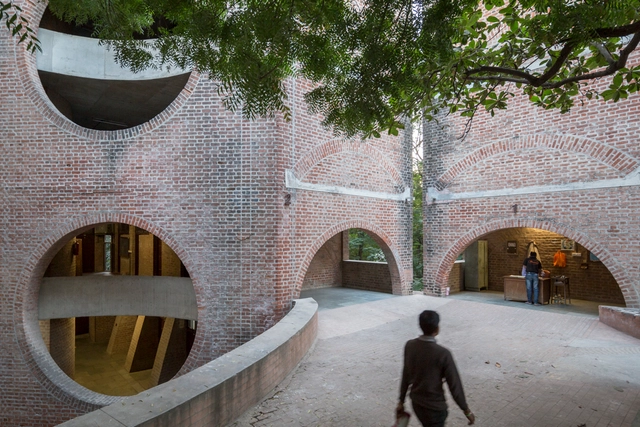
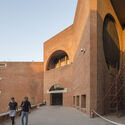
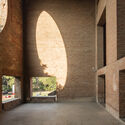
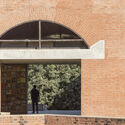
On November 3rd, 2022, the Indian Institute of Management Ahmedabad (IIMA) announced the decision to end the restoration works for elements of the campus designed by Louis Kahn with Indian architects Balkrishna V. Doshi and Anant Raje in 1962. The decision affects the faculty blocks, classroom complex, and dorms other than dorm D15. According to the statement, the institution plans to replace some of the buildings, as the complex is “facing structural damage, deterioration and have become uninhabitable, posing a safety concern for the campus's residents.” This represents a reversal of the decision to withdraw the first demolition plans following global protests, announced in January 2021.
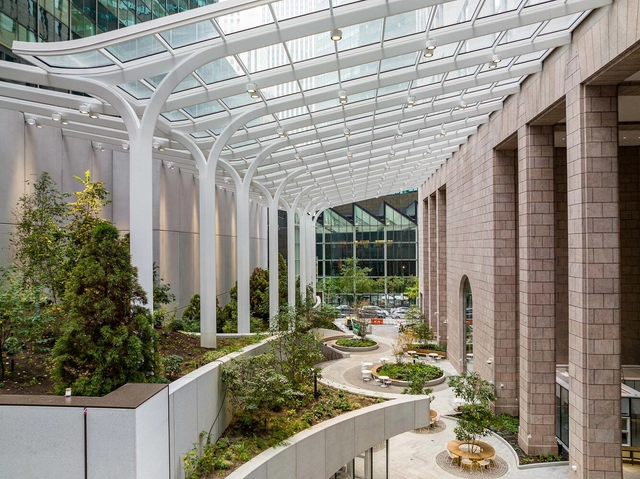
550 Madison Avenue (née the AT&T Building, more recently Sony Plaza) is among the more recognizable figures on New York’s skyline. Designed by architect-provocateur Philip Johnson, the 37-story skyscraper stands out thanks to its curious headgear: a classical pediment broken by a circular notch, inviting frequent comparisons to the top of a Chippendale grandfather clock. A singular, if largely inoffensive presence on today’s icon-heavy streetscape, the design was positively shocking on its debut in 1979, when Johnson himself appeared on the cover of Time holding a model of the project, then still four years from completion. The image heralded the arrival of something new in American architecture: the fading of the flat-crowned Modernist towers of the midcentury and the onset of the Postmodernist wave.
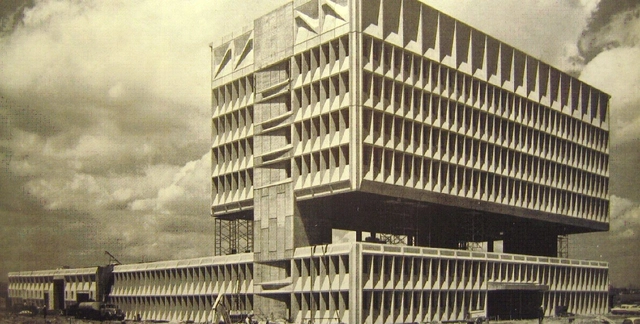
Theodore Prudon, the founding president of Docomomo US, recently stepped down as the organization’s head. (Robert Meckfessel is the new president.) “Docomomo” is shorthand for the group’s mission: the documentation and conservation of buildings, sites, and neighborhoods of the Modern movement. Prudon has had a storied career as a preservationist, architect, and educator, heading his own practice and teaching at Columbia University. In October, he was presented with the Connecticut Architecture Foundation’s Distinguished Leadership Award at the newly reborn Marcel Breuer building in New Haven, which began its life in 1970 as the Pirelli Tire Building and is now the Hotel Marcel (designed, planned, and developed by architect Bruce Redman Becker).
https://www.archdaily.com/992013/theodore-prudon-modernism-has-never-been-a-popular-movementMichael J. Crosbie
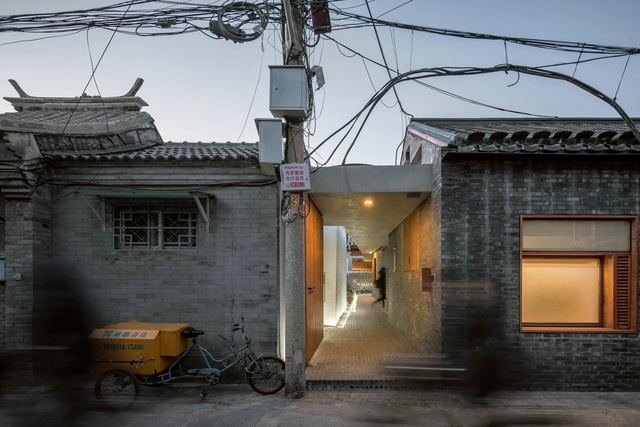
For centuries, Hutongs have been recognized as one of the most treasured types of vernacular housing in China. Witnessing the cultural and historical transformation in Beijing ever since the Yuan Dynasty (1271 – 1368), the name Hutong is derived from a Mongolian word that means ‘water well’. In fact, this term was given to small streets that originated during the Yuan Dynasty when the emperor attempted to organize the urban fabric in a grid-like pattern in order to manage properly property ownership and to form an efficient transit system.
In recent years, people started to regain interest in a movement that dates back to the last century; a movement, first introduced during the 1940s and 1950s, through the works of Le Corbusier and Alison and Peter Smithson. With monolithic structures, modular shapes, and impressive massing, Brutalism highlights architectural integrity. This movement is highly characterized by rough, raw, and pure surfaces that underline the essence of the substances in question. Spread across the globe, architects have adopted and developed their own vision of this modern movement, creating contextual variations.
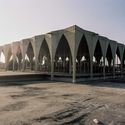
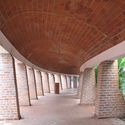
In the midst of all the chaos currently taking place in the city of Beirut, we look back on the Lebanese capital’s hidden Brutalist gems. To shed the light on a movement that's often neglected and forgotten, Architect Hadi Mroue created a series of images that highlight the Lebanese Brutalism movement as well as its evolution as an important part of the Lebanese modern heritage.
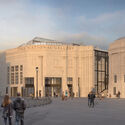
On the morning of April 24th, Delhi’s architecture community reacted in shock and disgust to the news that the city's Hall of Nations and the four Halls of Industries had been demolished. Bulldozers had worked through the previous night at the Pragati Maidan exhibition grounds in central Delhi, where the Indian Trade Promotion Organisation (ITPO) razed the iconic structures to the ground, ignoring pleas from several Indian and international institutions.
The Hall of Nations, the world’s first and largest-span space-frame structure built in reinforced concrete, holds special significance in India’s post-colonial history—it was inaugurated in 1972 to commemorate twenty-five years of the young country’s independence. The demolition was met with widespread condemnation by architects and historians alike, not just because of the loss of an important piece of Delhi's heritage, but also for the clandestine manner in which the demolition was conducted.
































.jpg?1573123210&format=webp&width=640&height=580)