Dornbracht's Coya series designed by Sieger Design. Image Courtesy of Dornbracht
When is a form still circular or rectangular? In twentieth-century modernism, this question was largely absent. Architecture was built on clarity, reduction, and formal purity. Influenced by architects such as Le Corbusier and Ludwig Mies van der Rohe, modernist design established a visual order based on rational geometry, industrial materials, and the rejection of ornament. Circle and square, function and expression, were kept strictly apart—a logic that dictated the rigid, modular layouts of traditional bathrooms for decades.
Architecture has never been confined to the act of building. It constantly negotiates between material practice and intellectual reflection, yet throughout the twentieth and twenty-first centuries, many architects felt that the built project alone was insufficient to address the full range of questions facing the discipline. Economic pressures, political contexts, and programmatic demands often narrowed the scope of practice.
Exhibitions and curatorial platforms, by contrast, created spaces of experimentation and critique, opening arenas where architecture could interrogate itself, where its past could be reinterpreted, its present challenged, and its future projected. In this tension, the figure of the architect-curator emerged, treating curating itself as a form of design — not of walls or facades, but of discourse, narratives, and frameworks of meaning.
The 2024 Beta Architecture Biennial, in Timișoara, Romania, marks the tenth anniversary of this influential event. Curated by Oana Stănescu, this year's biennial, titled "cover me softly," explores the nuanced relationship between originality and influence, challenging conventional notions of copying, imitation, and appropriation. In addition to the Beta Awards, aiming to highlight significant contributions to architecture from across Romania, Hungary, and Serbia, the main exhibition offers a distinctive interpretation of recurring themes of the architectural field.
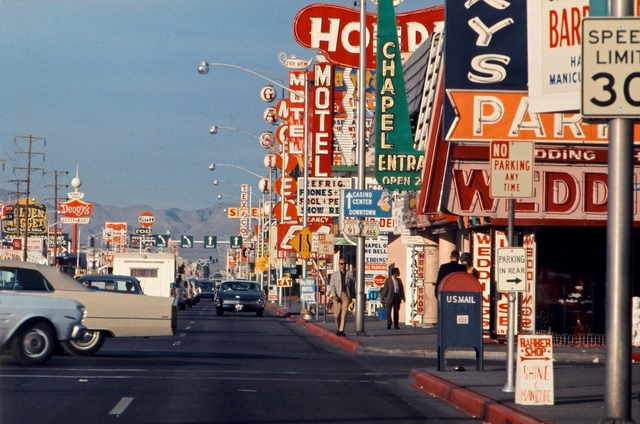
Las Vegas, sometimes known as Sin City, is perhaps the most famous desert metropolis where people gamble, and indulge in entertainment, and other vices. Each year, the city is visited by hundreds of millions of tourists who come to see its flashing lights and round-the-clock nightlife. Las Vegas has garnered so much attention that even Robert Venturi and Denise Scott Brownsought to study its urbanism, concluding with their theories on duck and decorated shed buildings in the early 1970s. But 50 years later, Vegas is still a city that constantly reinvents its architectural identity.
Architecture is never an accident. It is a carefully planned out scheme of patterns and styles that respond to natural surroundings, celebrate materiality, and/or are referential of stylistic movements throughout history- all a means of understanding why things are the way that they are. There are different ways to understand how to analyze architecture, through the use of diagrams, patterns, relationships, and proportions to name a few. To both architects and laypeople alike, there’s a subconscious desire for a decision-making structure in design. As a result, architecture has become an exercise in self-positioning- a microcosmic reflection of the world around us as seen in the designs we build.
Blur Building at the 2002 Swiss Expo. Image Courtesy of Diller Scofidio + Renfro
Scale is a term that has dominated the architectural profession for as long as built structures have existed. In the literal sense, scale defines the measurable standards that we have come to know and accept —the widths of door frames, a car turn radius, and of course, a means of producing measurable drawings. In a more abstract and figurative representation, scale describes a feeling of individual experiences when comparing themselves or a familiar object to something unfamiliar.
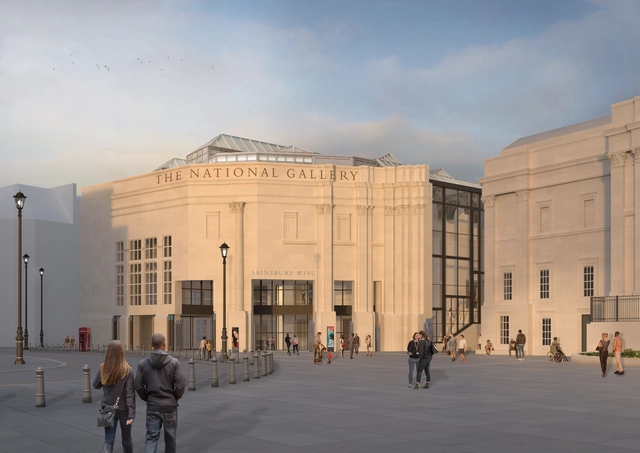
Updated exterior view. Image Courtesy of Selldorf Architects
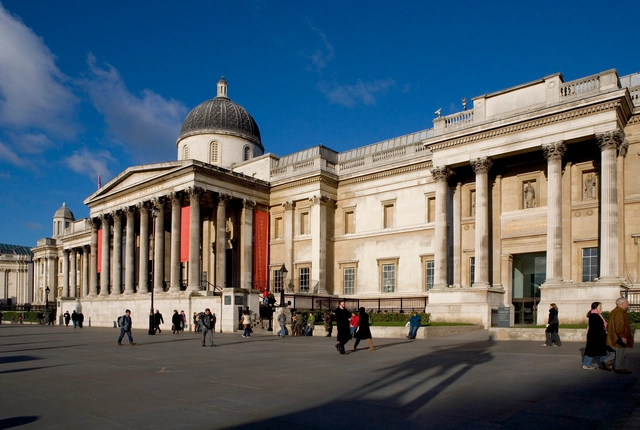
Selldorf Architects have released a revised version of the plans to remodel the National Gallery and the Sainsbury Wing, both classified as Grade-I-listed monuments. Sainsbury Wing is also the recipient of the 2019 AIA Twenty-five Year Award. The plans for the Sainsbury Wing, designed by Robert Venturi and Denise Scott Brown and opened in 1991, have faced intense criticism, with former RIBA Journal editor Hugh Pearman calling the remodeling plans “unnecessarily destructive”. The plans to remodel were first revealed earlier this year as part of the NG200 Project to celebrate the National Gallery’s bicentennial in 2024. The project proposes the remodeling of the Sainsbury Wing’s front gates, ground-floor entrance sequence, lobby, and first-floor spaces.
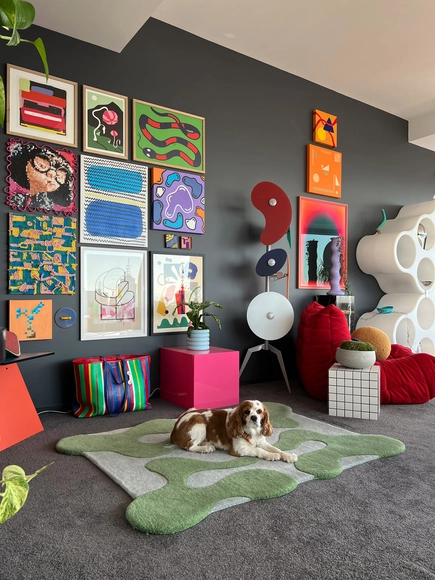
Josh and Matt's apartment embodies their "curated maximalism" style. Image Courtesy of Josh and Matt Design
With the onset of the 2020s, Gen Z is noticeably claiming their place in the world with bold perspectives and even bolder aesthetics. Gen Z proudly experiments with their identities, having grown up on an opinionated internet and through confusing lockdowns. They're bringing in a culture shift with organic shapes, colorful elements, and clashing patterns dominating art, media, fashion, and interior design. The trend is pushing away once-reigning minimalism, shouting Venturi's Less is a Bore.
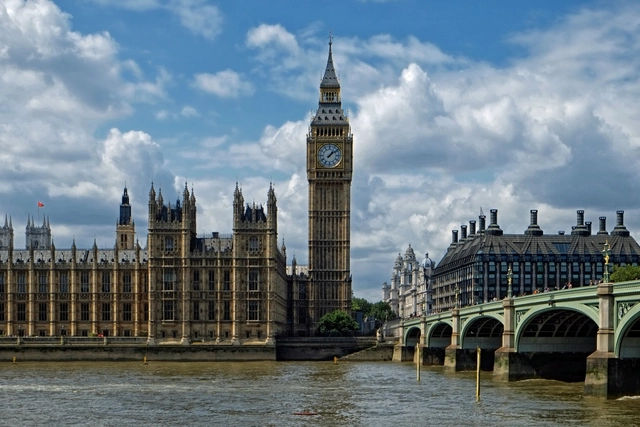
Elizabeth Tower (also known as "Big Ben"). Image Courtesy of Flickr user Eric Huybrechts
Her Majesty, Queen Elizabeth II, United Kingdom's longest-reigning monarch, has passed away at Balmoral Castle, aged 96. Earlier this year, Her Majesty became the first British Monarch to celebrate a Platinum Jubilee, marking 70 years since her ascension to the throne. During her coronation, the first ceremony of this type to be televised, newspapers and tv broadcasters talked about a “New Elizabethan Age” that would revive Britain from postwar gloom. Now, seven decades later, as the longest reign in British history has come to an end, people come together to honor The Queen and reflect upon her legacy in terms of culture, technology, and architecture.
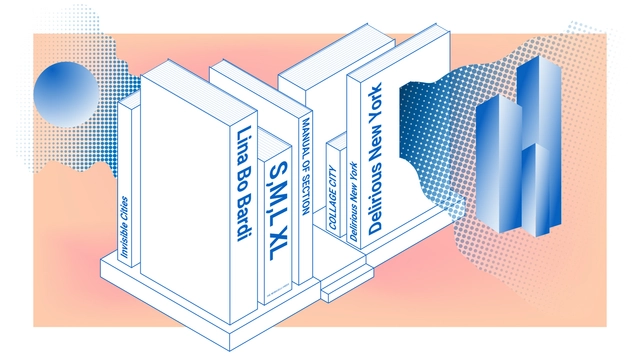
We are still at the dawn of the Metaverse, the next wave of the Internet. The current “mainstream” Metaverse platforms serve as experimental containers to host the wildest dreams of virtual worlds where we are supposed to unleash the imagination. However, from a spatial design perspective, they have so far been lame and ordinary. Without the constraints in the physical world, how do we draft the urban blueprints in the metaverse? I believe metaverse planners can find inspiration from Italo Calvino’s Invisible Cities, in which he revealed a poetic and mathematical approach to “urban planning” in the imaginary worlds.
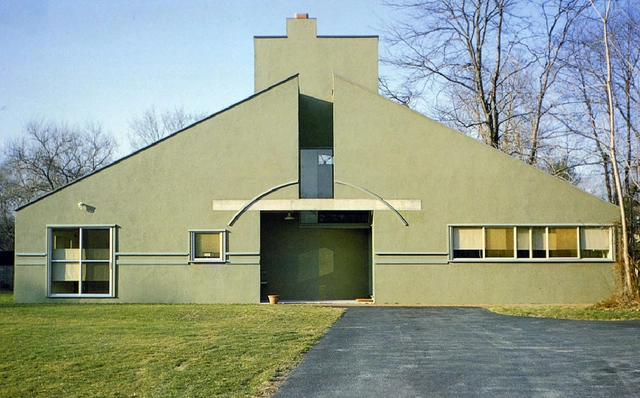
As the prefix already indicates, postmodernism is a turning point in history, thereby proving the willingness of scholars to define this new era based on the rejection of the previous movement. Postmodernism first emerged in the 1960s as a departure from modernism. As a reaction against the austerity, formality, and lack of variety of modern architecture, particularly in the international style advocated by Le Corbusier and Mies van der Rohe, postmodernism defends an architecture full of signs and symbols that can communicate cultural values. Postmodernism is a reaction to homogeneity and tediousness by praising difference and striving to produce buildings that are sensitive to the context within which they are built.
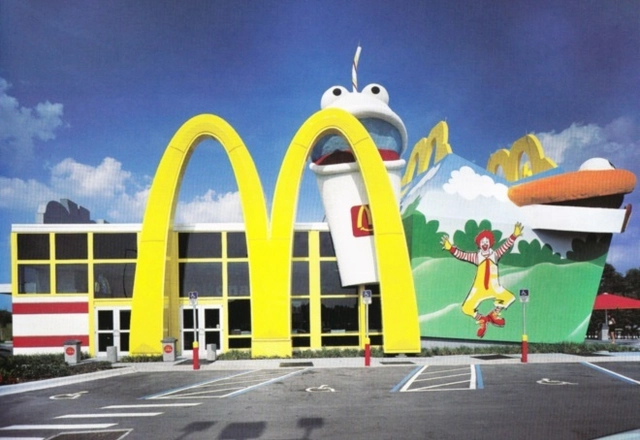
Design can sometimes be mundane- except when it’s novelty architecture. These buildings uniquely and identifiably break away from the abstract, metaphorical, and often monotonous buildings that have classified modern-day design. Instead of favoring the steel and glass skyscrapers that serve as landmarks in cities around the world, they aim to poke fun at architecture in a way that’s jovial, commercial, and perhaps slightly more functional and expressive. Unlike other buildings, they are the literal embodiment of a thing itself, putting its function widely on display instead of hiding it within four austere walls.
You might not think of McDonald’s as the pinnacle of architectural style, but even the world’s largest fast-food franchise has taken some bold design risks. While the literal “secret sauce” has largely remained the same since the inception of the iconic golden arches, McDonald’s has had its fair share of experimentation and has even hired some of the profession’s most prominent names to put their own spin on the design of these restaurants- turning the repetitive and mundane into one of a kind experiences.
The American Institute of Architects (AIA) has selected Venturi Scott Brown's Sainsbury Wing at the National Gallery of London as the recipient of the 2019 AIA Twenty-five Year Award. Designed by Robert Venturi and Denise Scott Brown in an international competition, AIA commended the project for its ability to “...make its context better than it found it” - a citation borrowed from Venturi himself.
The award is presented annually to a project that has "stood the test of time by embodying architectural excellence for 25 to 35 years."
https://www.archdaily.com/909184/venturi-scott-browns-sainsbury-wing-national-gallery-london-receives-aia-25-year-awardKatherine Allen
In this essay by the British architect and academic Dr. Timothy Brittain-Catlin, the very notion of British postmodernism—today often referred to as intimately tied to the work of James Stirling and the the thinking of Charles Jencks—is held to the light. Its true origins, he argues, are more historically rooted.
I grew up in a beautiful late Victorian terrace with ornamental brickwork, shaped ‘Dutch’ gables and pretty arts and crafts stained glass windows – and so I didn’t think then, and I don’t think now, that I had much to learn from Las Vegas. It turns out that I wasn’t the only one. Of British architects who made their names as postmodernists in the 1980s, not a single one would say now that they owed much to Robert Venturi, the American architect widely considered to be a grandfather of movement.