Regarding urban development, the choice between demolition and adaptive reuse holds far-reaching implications. From debates around the cultural and historical significance of structure to the environmental impact of the process of razing and rebuilding, compared to the cost of preserving and adapting, the matter of demolitions has ignited the architectural community to come together and ask for more responsible assessment strategies in hopes of rediscovering the value of existing structures. This article gathers some of the stories of buildings facing the threat of demolition and the processes that led to their rescue.
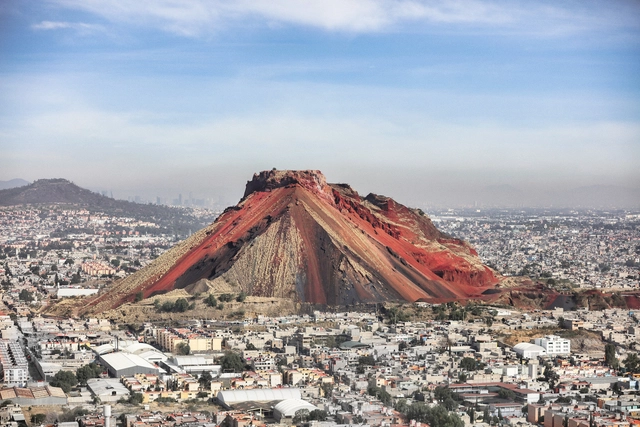
The heritage of Mexico City is extremely rich and diverse due to a long history that overlays like layers above the urban fabric since pre-Hispanic times. Currently, it is one of the largest cities in the world, and its heritage is reflected in its architecture, museums, historical sites, cultural traditions, protected sites, gastronomy, and much more. This chronology has been evidenced through various historical records. However, contemporary recording is essential in moments where we are writing history immediately with different digital tools.
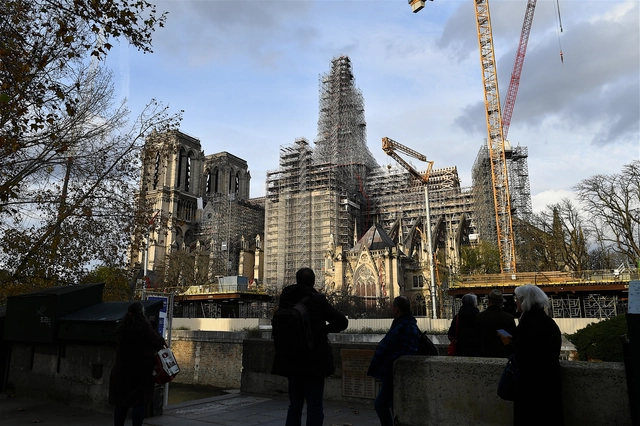
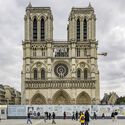
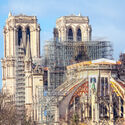
In April 2019, a devastating fire engulfed the 860-year-old Notre Dame Cathedral in Pars, severely damaging its wooden roof and leading to the collapse of the 19th-century spire, originally designed by Viollet-le-Duc. Immediately after, French President Emmanuel Macron promised that the iconic monument would be restored in just 5 years, an ambitious deadline. As the restoration of the roof structures nears completion, in February 2023, the scaffolding for the reconstruction of the spire has been assembled. The Spire is expected to be finished by the end of the month.
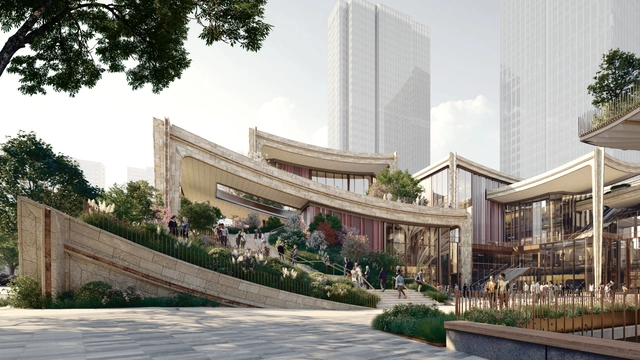
Heatherwick Studio has revealed the design of a new shopping district in the historic city of Xi’an in Shaanxi, China. The proposal aims to highlight the city’s rich heritage of ceramic-making and, through this, to create a sensory experience for visitors in opposition to the restricted act of online shopping. Spanning over 1115,000 square meters, the development features a mixture of functions, from offices, apartments, and a hotel, to a variety of green spaces, rooftop terraces, gardens, and a sunken terrace, all doubling as social spaces. The project is under construction and scheduled for completion in 2024.
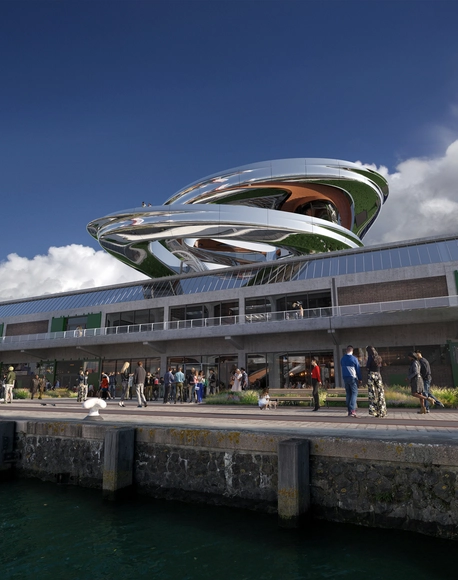
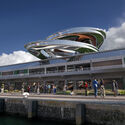
Designed by MAD Architects, the FENIX Museum of Migration is set to be inaugurated in 2025 in Rotterdam’s City Harbor. The purpose of the institution is to showcase and highlight the stories of global migration through encounters with art, architecture, photography, and history. The museum broke ground in 2020 when the first images of the proposal were also released. MAD Architects is working with Bureau Polderman for the restoration of the historic warehouse dating back to 1932, which now represents the base and starting point for the museum experience.
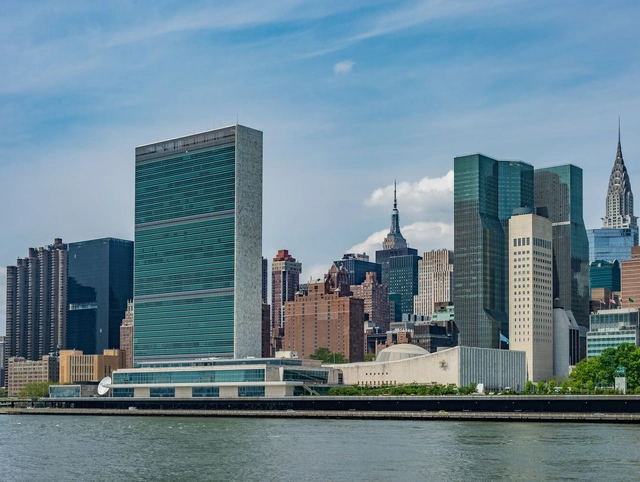
UN Headquarters in New York. Photo by the blowup, via Unsplash
In 1945, the declaration of the end of World War II brought a wave of euphoria to the streets, and optimism permeated the atmosphere with the promise of brighter days. Inspired by this newfound hope, the United Nations Organization (UN) was established in the same year. The vibrant city of New York was chosen as the headquarters location, and an international team of carefully selected and invited architects was tasked with conceiving the project.
For this ambitious and truly international project, eleven renowned architects were brought together from various corners of the world. These architects, often known for their inflated egos, a common trait in their profession, were accustomed to exercising full control over their architectural designs and even their respective countries. They had to coexist in the same space and collaborate on a single project. The successful collaboration on this project would be a compelling demonstration of the possibility of achieving world peace.
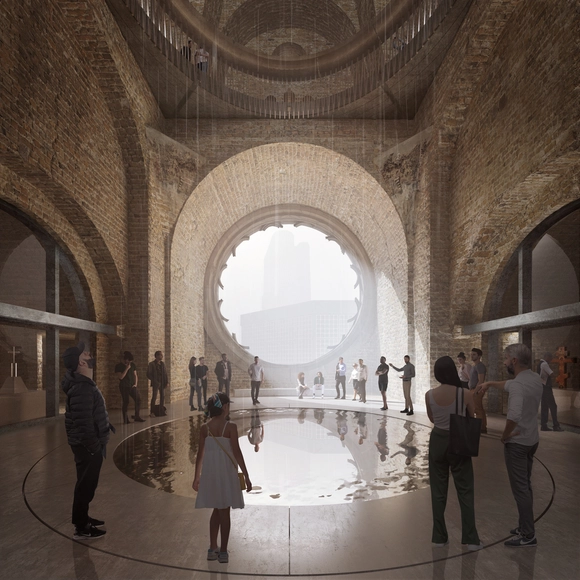
The design by heneghan peng architects, Dublin, with Ralph Appelbaum Associates, Berlin, was awarded 1st prize in the international competition for the replanning and expansion of the Old Tower of the Kaiser Wilhelm Memorial Church. The competition’s purpose was to redesign the original West Tower, which was partially destroyed during a bombing by the Allied Forces in 1943, and return it to the tourist circuit as a war memorial and exhibition space.
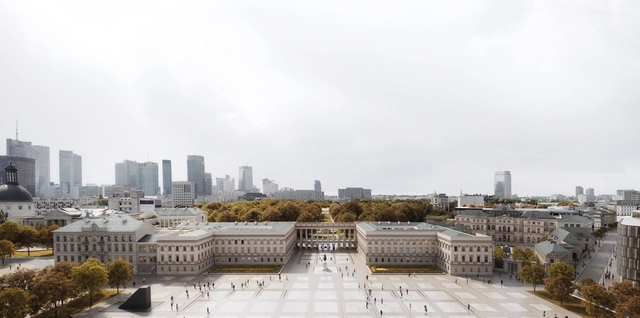
WXCA Architectural Design Studio has won the international competition for the reconstruction of the Saxon Palace, a heritage site located in the historical city center of Warsaw, Poland, that was significantly damaged during the Second World War. The competition, organized by the Polish Ministry of Culture and National Heritage in cooperation with the Association of Polish Architects, aimed to create a concept for the restoration of the monument, which is set to be rebuilt in its external Neoclassicist form of 1939.
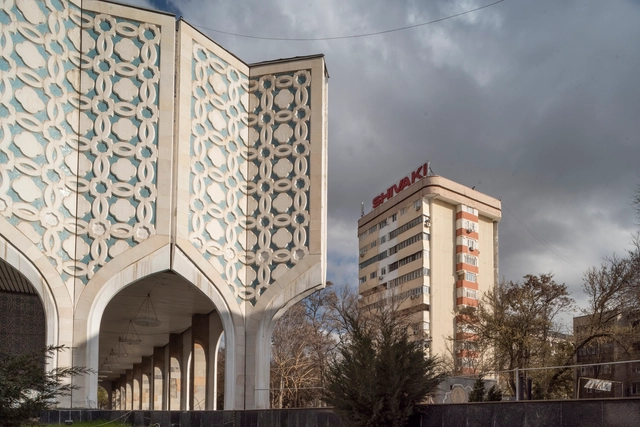
Exhibition Hall of the Union of Artists, Tashkent, Uzbekistan, 2022. Image Courtesy of Armin Linke
Tashkent, the capital city of Uzbekistan, stands as one of the most populous cities in Central Asia. Situated in the northeastern part of the country, near the border with Kazakhstan, Tashkent has been profoundly shaped and influenced by diverse cultures throughout its history. The most significant transformation of its urban landscape occurred during the Soviet era when the city was rebuilt as a model Soviet city, following the 1966 earthquake that caused substantial damage. During this reconstruction, architects from various regions of the Soviet Union collaborated with local experts, resulting in a unique form of architectural modernism that harmoniously integrated elements of Islamic architecture, indigenous creativity, and cutting-edge engineering achievements of that era. At that time, Tashkent held the esteemed status of a prominent international city in the East.
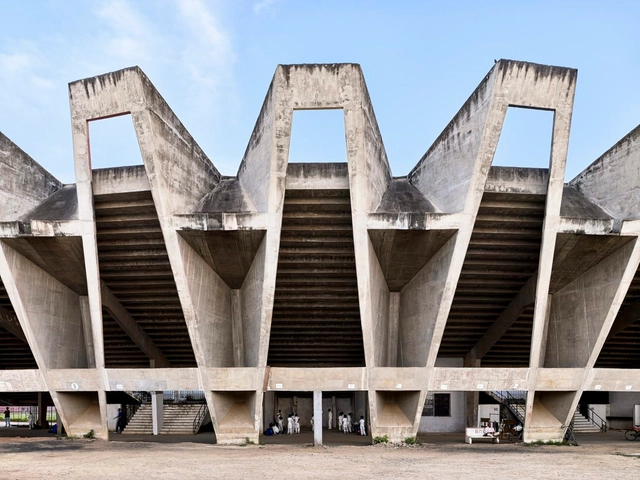
The structure was originally built to host international and domestic cricket matches. In the 1950s, the Cricket Club of Ahmedabad was granted 67,000 sqm of land to construct a Cricket Stadium. It was the country’s first “turf ground,” hosting the first cricket match in India. For the cricket community in the country, the SVP represents a venue that has nurtured and honed young cricketers from all over the state, and it has been graced by several of India's legendary players in both test and one-day cricket matches.
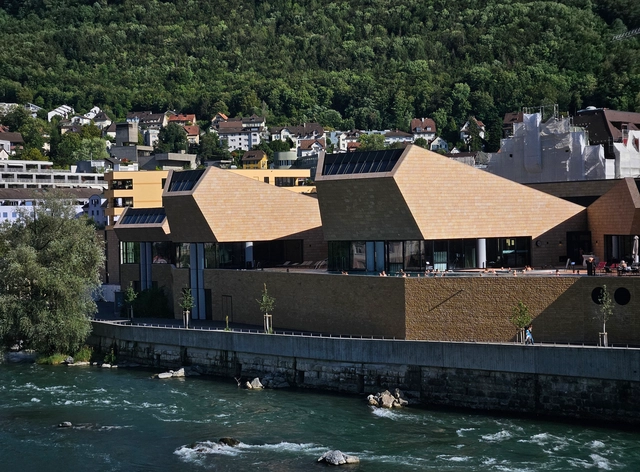
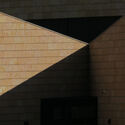
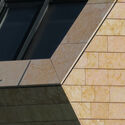
Fortyseven is a novel thermal wellness spa designed by the architect Mario Botta, nestled alongside the Limmat River in Baden, Switzerland. Baden, renowned for its rich cultural and wellness offerings, boasts a spa heritage that extends over thousands of years. The Fortyseven Thermal Wellness Spa has revitalized this historical legacy by presenting wellness culture through a modern lens. Designed by Mario Botta, this project offers an immersive encounter for the body, mind, and soul. The essence of the site and its design is captured by the lens of architectural photographer Paul Clemence, in his latest series.
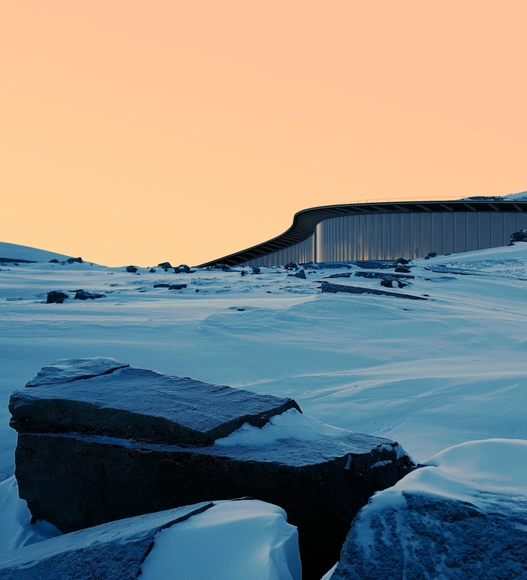
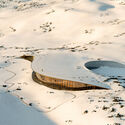
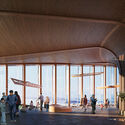
Following an international competition, Dorte Mandrup has been selected to design the new Inuit Heritage Centre in the territory of Nunavut in northern Canada. Designed together with Architect of Record Guy Architects, LEES+Associates, Adjeleian Allen Rubeli, EXP, Pageau Morel, Altus Group, and indigenous consultants Kirt Ejesiak and Alexander Flaherty, the new centre aims to become a sign of cultural conciliation and a symbol of the continuation of Inuit practices, traditions and values. By offering a place where Inuit can reconnect with their collective past through objects, stories, and activities, the centre will promote greater awareness of Inuit culture. The project is expected to be completed by 2027.
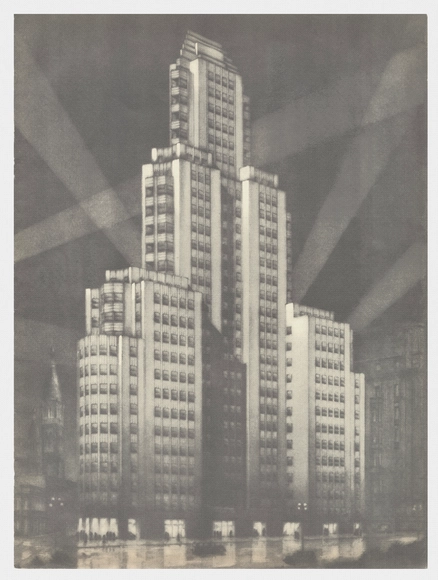
El croquis final en carbonilla del edificio Kavanagh, presentado a Cora Kavanagh en marzo de 1943. Foto: CdA. Image Cortesía de Díaz Ortiz Ediciones
Perhaps without even looking for it, Cora Kavanagh would leave one of the most emblematic buildings of rationalist architecture in Argentina. Inaugurated in January 1936, with its almost 120 meters of height, the Kavanagh Building stands in front of the ravine of Plaza San Martín, located in the central neighborhood of Retiro in the Autonomous City of Buenos Aires.
"Cora Kavanagh and her Building" is the title of Marcelo Nougués' new book that gathers the entire story, revealing everything from her building and her travels to her art collection and the different houses she lived in during a period of almost 50 years. In collaboration with Díaz Ortiz Ediciones, this 572-page printed volume compiles texts, photographs, and documents from the author's collection and also showcases selected images and illustrations from extensive research. Discover a part of this story below.
On June 1st, the ceremony for the VI European AHI Prize was held at the Sant Pau Hospital building in Barcelona. This recognition promoted by Architectural Heritage Intervention, in collaboration with the College of Architects of Catalonia and supported by the Department of Culture of the Generalitat de Cataluña, the City Council of Barcelona, and the Metropolitan Area of Barcelona, arises from the conviction that today, architectural heritage is not only an essential element of knowledge, but also a vital socio-economic resource for the sustainable development of territories.
Perspectiva exterior por Nicolás Belcic. Image Cortesía de Bruno Stagno
From Costa Rica, architect Bruno Stagno not only reflects on how responses to the environment can be the main basis for inspiration and identity in architecture but also proposes going a little further, with contemporary tropical architecture for an entire latitude.
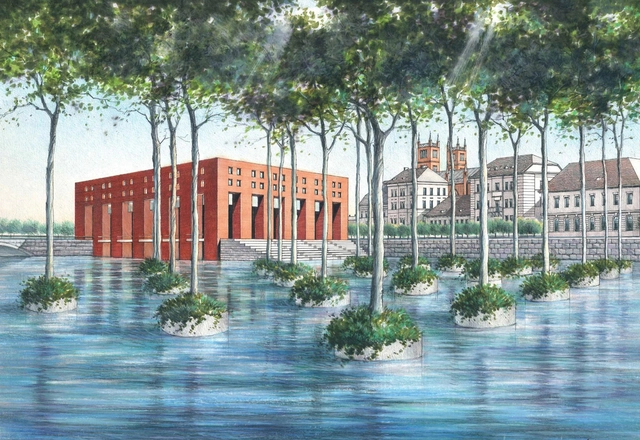
What happens when these limits are extended? What happens when these motivations escape outside of the tropical context? Bruno Stagno presents here the project "A Mangrove for Berlin", his participation in the 1995 competition for the Reconstruction of the Berlin Academy of Architecture, "Berliner Bauakademie", an emblematic work of the architect Friedrich Schinkel.
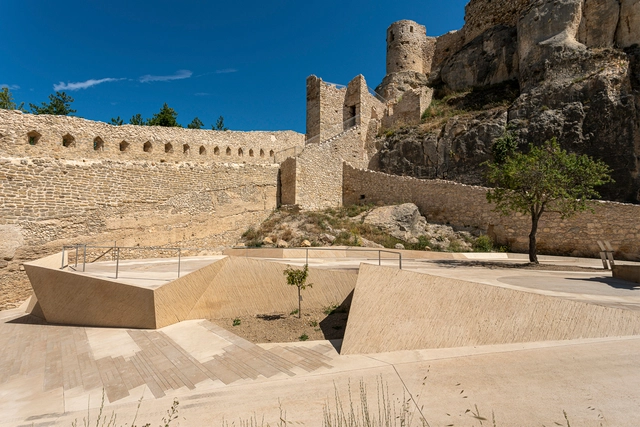
On the occasion of the sixth edition of the AHI European Heritage Intervention Award, the 26 selected projects within the categories of Built Heritage and Outdoor Spaces have been announced, among a total of 241 projects submitted from 28 different European countries.
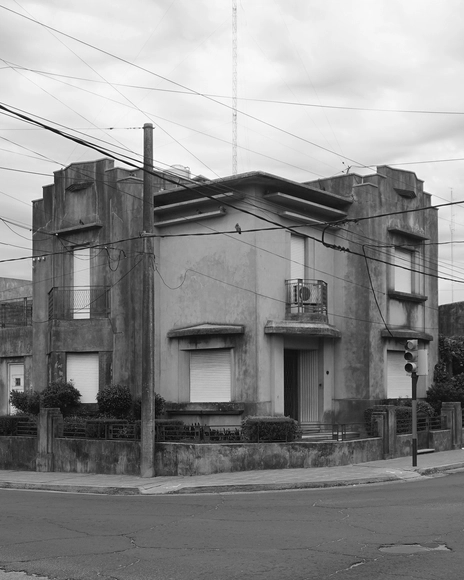
Alejo Martínez, one of the main builders of Argentine modernity, turned the city of Concordia into a reference of the South American modernist movement. His extensive work on houses, such as Casa Péndola Díaz from 1925, Casa Marcone from 1928, or Casa Camaño from 1930, "changed the typology of the 'chorizo' house to compact housing, where straight volumes stand out, staggered from each other, and with terraces".