A few days ago, the world gathered at Sharm El Sheik, Egypt, for its annual climate change summit: COP27. Like the rest of Africa, Nigeria is represented by its retinue of bureaucrats, climate advocates, and other interest groups. Since the last meeting in Scotland (COP26), Nigeria signed the Climate Change Act into law, setting a target of attaining net-zero greenhouse gas emissions between 2050 and 2070. In the interim, Nigeria has developed an ambitious energy plan that would see it transition from fossil fuels to renewable energy, using its vast reserve of natural gas as a hedge. The country is at the forefront of the African Carbon Markets Initiative and plans to raise at least $500 million from carbon crediting trading to offset emitted carbon.
https://www.archdaily.com/992422/nigerias-ambitious-climate-agenda-and-its-misplaced-fixation-on-carbon-footprintMathias Agbo, Jr.
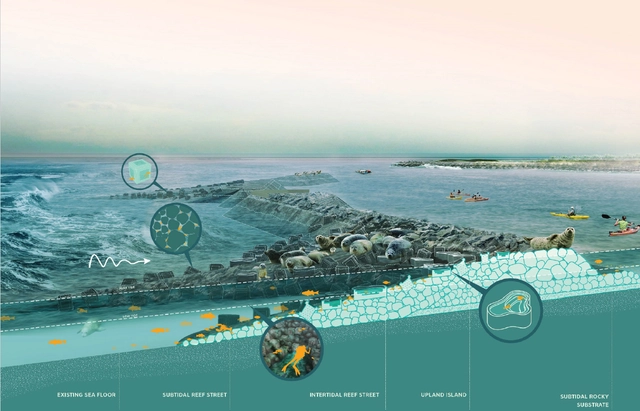
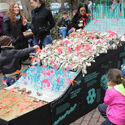
Living Breakwaters, Staten Island, NYC. Image Courtesy of SCRAPE
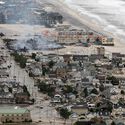
“Superstorm Sandy in 2012 was a wake-up call for NYC and made the city realize it needed to better prepare for climate change,” said Adrian Smith, FASLA, vice president at ASLA and team leader of Staten Island capital projects with NYC Parks. Due to storm surges from Sandy, “several people in Staten Island perished, and millions in property damage were sustained.”
On the 10th anniversary of Sandy, Smith, along with Pippa Brashear, ASLA, principal at SCAPE, and Donna Walcavage, FASLA, principal at Stantec, explained how designing with nature can lead to more resilient shoreline communities. During Climate Week NYC, they walked an online crowd of hundreds through two interconnected projects on the southwestern end of the island: Living Breakwaters and its companion on land — the Tottenville Shoreline Protection Project.
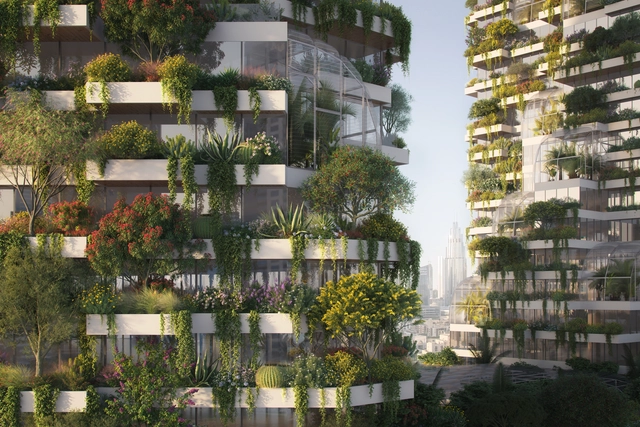
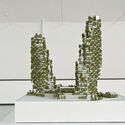
Stefano Boeri Architetti presented a new design for the Vertical Forest towers during COP27 in Sharm El-Sheikh, Egypt. The prototype would be in Dubai, the most populous city in the United Arab Emirates (UAE), and the next host of COP28 in 2023. The ambitious project would represent the first Vertical Forest prototype for the MENA (Middle East and North Africa), and it is the latest in an extended list of greenery-covered buildings by Boeri Architetti, including the Bosco Verticale in Milan, the Easyhome Huanggang in China, and a prototype of the First Dutch Vertical Forest.
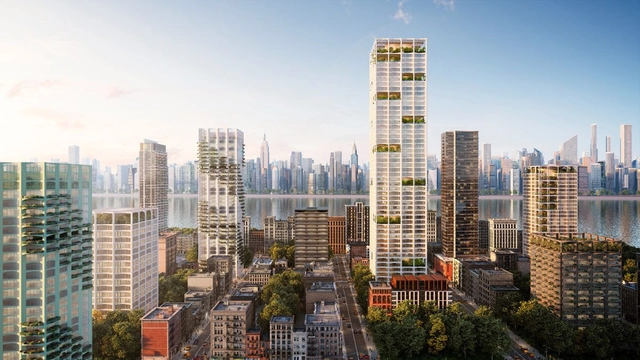
In a presentation at the Buildings Pavilion Auditorium during COP27, the UN Climate Change Conference in Sharm El-Sheikh, Egypt, Skidmore, Owings & Merrill (SOM) presented the Urban Sequoia NOW concept. The proposal, developed by an interdisciplinary team at SOM, represents a design that can sequester carbon from the atmosphere throughout its lifecycle. The design can be implemented with today’s technologies. This represents SOM’s concept of going beyond net zero carbon by combining multiple strategies: reducing embodied carbon, generating energy, absorbing carbon, and increasing the typical 60-year lifespan of the building.
Starting on November 6, world leaders are gathering in Sharm el Sheikh, Egypt, for COP27. The name stands for the 27th conference of parties, an almost annual event started under the 1992 UN framework convention on climate change (UNFCCC). The purpose of these conferences is to ensure that counties around the world are committed to taking action to avoid dangerous climate change and find ways to reduce greenhouse gas emissions globally in an equitable way. The effectiveness of these meetings varied throughout the years, with some successful initiatives, like the 2015 Paris Agreement, a legally binding international treaty adopted by 196 Parties with the goal of limiting global warming below 2, preferably 1.5 degrees Celsius, compared to pre-industrial levels.
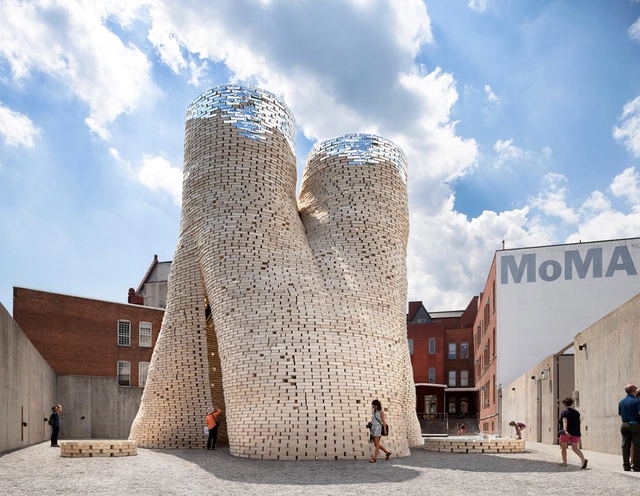
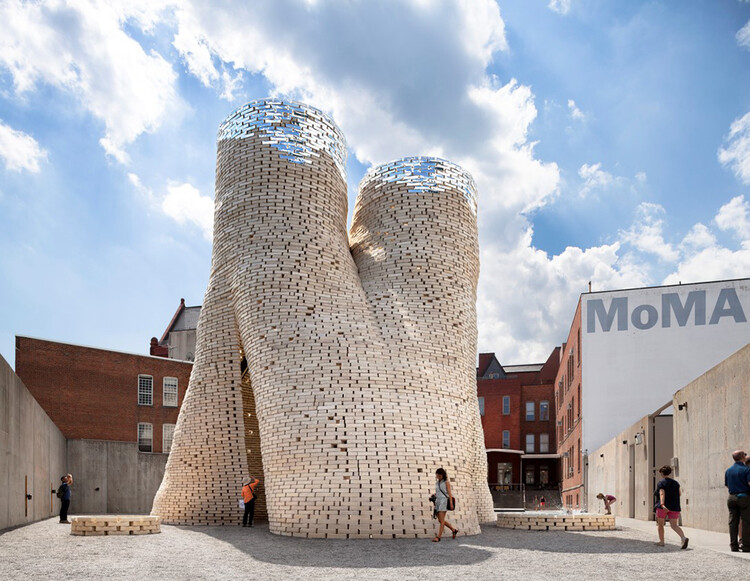
Mycelium-Grown Bio-Bricks / Evocative Design & The Living. Image Courtesy of The Living
The building industry is one of the biggest generators of carbon emissions, with some estimates suggesting that 38% percent of all CO2 emissions are linked to this field. As a response to the current crisis, architects, designers, and researchers are taking measures to reduce their carbon footprint during and after construction. Many initiatives and research teams are looking at building materials to find low-carbon solutions and reduce the impact of building materials during production.
One of the most prominent fields of research is concerned with biofacture, the type of process that involves using biological organisms to manufacture materials. By understanding the abilities of organisms such as algae of fungi, alternatives to widely used materials can become carbon neutral or even carbon negative. Other initiatives are researching novel ways to use untapped, yet readily available resources such as desert sand, soil, or waste from demolitions.
While the United Nations has been continuously urging architects, engineers, and city shapers to put the 2030 agenda and the SDGs into action, and the IPCC report revealed intensifying climate change, sparking widespread discussion over insufficient action, the 83rd ongoing session of The United Nations Economic Commission for Europe - UNECE Committee on Urban Development, Housing and Land Management taking place in San Marino, has just issued a special declaration on “how to build better, safer, more inclusive, and resilient" cities, ahead of COP27. This set of “Principles for Sustainable and Inclusive Urban Design and Architecture”, or the San Marino declaration has gathered the signatures of Norman Foster and Stefano Boeri.
The first Monday of October of every year marks World Architecture Day and World Habitat Day. Celebrated simultaneously, they both seek to shed light on the built environment and its challenges, taking on a different theme with each new edition. This year, through its World Architecture Day, the UIA is focusing on “Architecture for well-being”, in line with the designation of 2022 as the UIA Year of Design for Health in buildings and cities. In parallel, the UN’s World Habitat Day, is centered on “Mind the Gap. Leave No One and Place Behind”, looking at the problem of growing inequality and challenges in cities and human settlements, due to the triple ‘C’ crises – COVID-19, climate and conflict.
Introducing Urban October, 31 days to promote a better urban future, World Architecture Day and World Habitat Day push forward the debates on urban sustainability. Joining the conversation every year, ArchDaily takes part in this occasion by promoting content that tackles the main objectives of this day, raising awareness, presenting solutions, engaging the international community, and “empowering everyone who makes architecture happen to create a better quality of life”.
It’s About Time, the 10th edition of the RotterdamArchitecture Biennale, is a seven-week-long manifestation showing realistic courses toward a livable future at a time when the consequences of climate change are becoming increasingly apparent. Half a century ago, the consequences of climate change were predicted in The Limits of Growth report from 1972. This outlines the possible consequences of an exponential increase in population, agricultural production, and resource extraction. The report is viewed by many as the beginning of environmental awareness. The Rotterdam Architecture Biennale aims to bring these changes into perspective by looking both at the past and the possible future.
Climate change is becoming more and more real every day: all over the world, we are witnessing a clear increase in climate disasters. Moreover, the latest IPCC report warns us of possible “tipping points” from which the climate transition could become not gradual, but sudden and irrevocable.
As a response to global challenges such as climate change, discrimination, and physical vulnerability, designers and engineers from across the world have developed innovative construction materials that put the human wellbeing first in urban, architecture, and interior projects.
The passage of the Biden Administration’s climate change package, the so-called “Inflation Reduction Act,” has predictably split along partisan lines, with Republicans characterizing the bill as an act of reckless government spending, certain to raise taxes and fuel further inflation. But does this act really represent reckless spending? The legislation authorizes $430 billion in spending, the bulk of which—more than $300 billion—is earmarked for tax credits; other spending, and initiatives aimed at stimulating the clean energy economy; and reducing carbon emissions. (The bill also allows Medicare to negotiate prices with drug companies for certain expensive drugs.) The bill is funded in part by a 15% minimum tax on large corporations and an excise tax on companies that repurchase shares of their own stock. Given the scope of the problem, and the escalating future costs of climate inaction, this legislation is an exceedingly modest, but very necessary, first step.
https://www.archdaily.com/988604/its-time-to-be-honest-about-the-impending-costs-of-climate-changeMartin C. Pedersen, Steven Bingler
The Het Nieuwe Instituut in Rotterdam, The Netherlands, opens The Energy Show and the Solar Biennale on Friday, September 9, 2022. In collaboration with The Solar Biennale designer and curator Matylda Krzykowski and solar designers Marjan van Aubel and Pauline van Dongen, the exhibition presents a series of projects that explores the sun's meaning and possibilities in society, the environment, and design. With Europe in the midst of an energy crisis, The Energy Show and the Solar Biennale is an opportunity for designers and the general public to examine the transition to solar energy and technology as we move towards a post-carbon future.
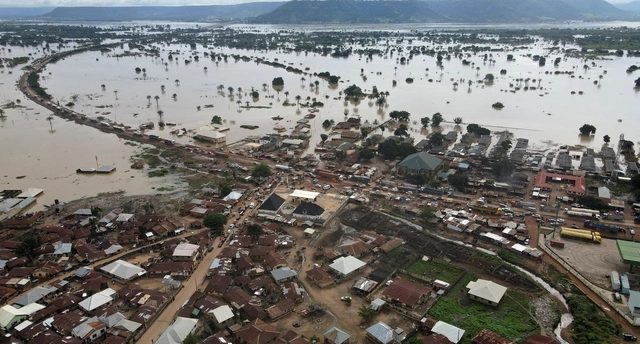
Record monsoon rains, in part due to melting glaciers in Pakistan’s northern mountains, have brought devastating floods that have covered over a third of the country’s surface. According to BBC and UN estimates, around 33 million Pakistani, one in seven people, have been affected by the floods, as more than 500,000 houses have been destroyed or severely damaged. Flood waters have also swept away an estimated 700,000 heads of livestock and damaged over 3.6 million acres of crops. The Sindh province is the hardest hit, receiving 464% more rain than the 30-year average.
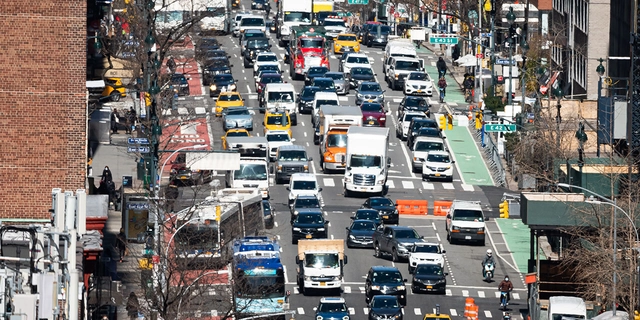
In 2007, New York City Mayor Michael Bloomberg proposed congestion pricing for Manhattan. The state legislature rejected the plan. Fifteen years later, we’re still debating the idea, fiddling while the planet burns.
The newest problem is that a new environmental study and traffic model from the MTA, The Central Business District Tolling Program Environmental Assessment, says that what’s good for 1.63 million residents of Manhattan and the planet, in general, will increase the pollution in the already unhealthy air in the Bronx. Yes, that’s a problem. Turning the perfect into the enemy of the good is also a problem. We need a plan that benefits all.
If you’ve been avoiding some of the latest news recently, here’s a quick update; European and North American countries have been facing one of the hottest recorded summers in modern history. Discussions over the climate crises have therefore been reignited and so has the role of the design and construction industry in providing solutions that would mitigate the experienced heat effects in our daily lives. While passive cooling solutions have always been used in some parts of the world, where local resources and vernacular builds are adapted to high temperatures, other regions are looking to technological and innovative manufacturing means that would maintain human comfort, aesthetic values, and energy efficiency/ cost.
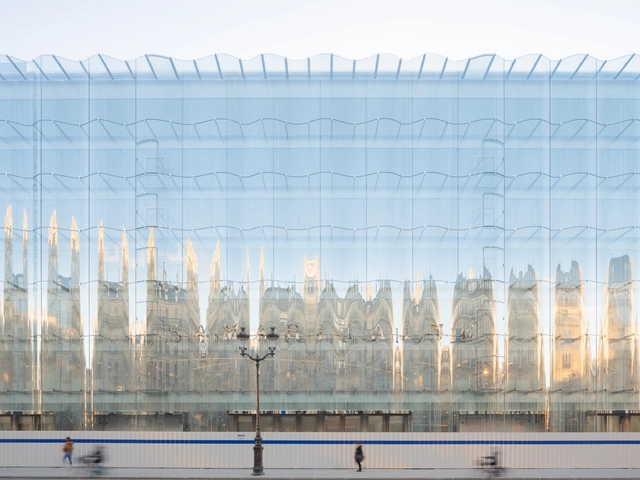
Although early modernism with its signature high-rises and glass houses had made us think that glass enveloped buildings are mostly uncomfortable, over-exposed, and overheating settings; nowadays glass manufacturers are proving that glass, if well treated and well-placed, can be as versatile and efficient a material as one could want without compromising the visual comfort or the dwellers.
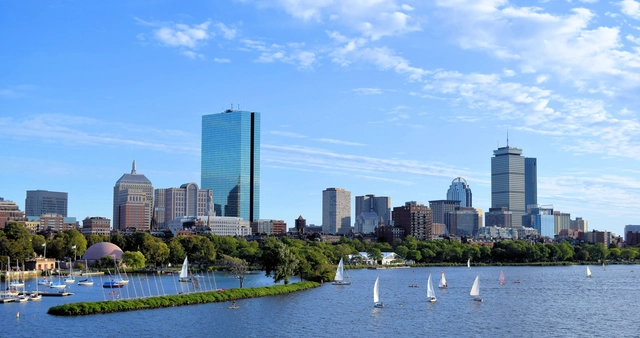
Boston is the latest city to announce a city-wide plan that, if passed, would eliminate the use of fossil fuels in new constructions and major renovation projects. This measure expands upon the commitment to enact climate action and make Boston a Green New Deal city. Other US cities like New York, Los Angeles, San Jose, Seattle, and Berkeley have all imposed similar measures in recent years. Seven European cities - Bilbao, Bratislava, Dublin, Munich, Rotterdam, Vienna, and Winterthur - have also developed a project to phase out fossil fuel from urban heating and cooling.
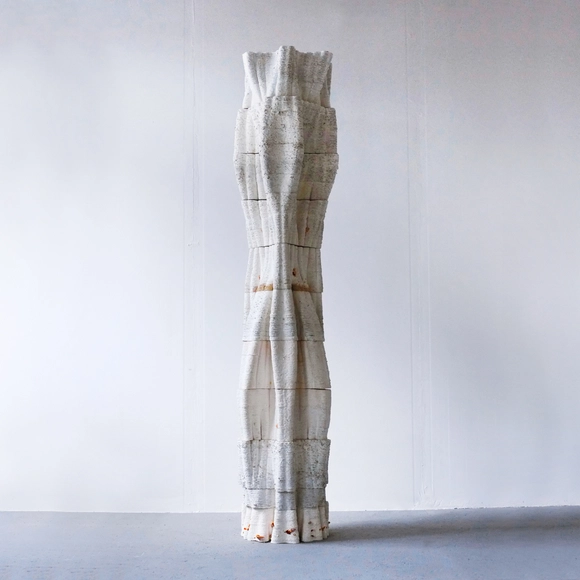
As researcher, designer and MIT professor Caitlin Mueller once said, “The greatest value you can give to a material is to give it a load-bearing role in a structure.” Load-bearing components – foundations, beams, columns, walls, etc. – are designed to resist permanent or variable forces and movements. Similar to the bones of a human body, these support, protect and hold everything together. To fulfill that indispensable function, they must be made from materials with outstanding mechanical properties, which explains the prominence of cement and steel in structures. However, their high performance comes at a high cost: together, they account for 15% of global CO2 emissions. This makes us wonder, is it possible for structural materials to be truly sustainable? We know solutions like greener versions of concrete already exist, but there are many other alternatives to explore. And sometimes, the answer is closer than we expect; in the earth beneath us and the nature that surrounds us.