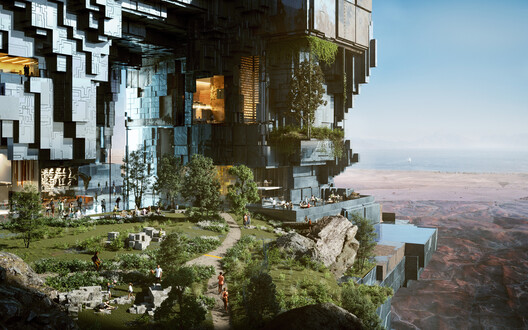
There is no shortage of ways to imagine what the world will look like after a climate catastrophe. Genres of movies and novels have been built around the question of what happens when contemporary safeguards fail, from dystopian fiction and post-apocalyptic literature to disaster films, graphic novels, and video games. Burning forests, submerged cities, abandoned infrastructure, resource scarcity, and mass displacement are a familiar visual and narrative vocabulary. We have become remarkably fluent in imagining the consequences of a world that fails to respond to climate change.
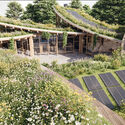
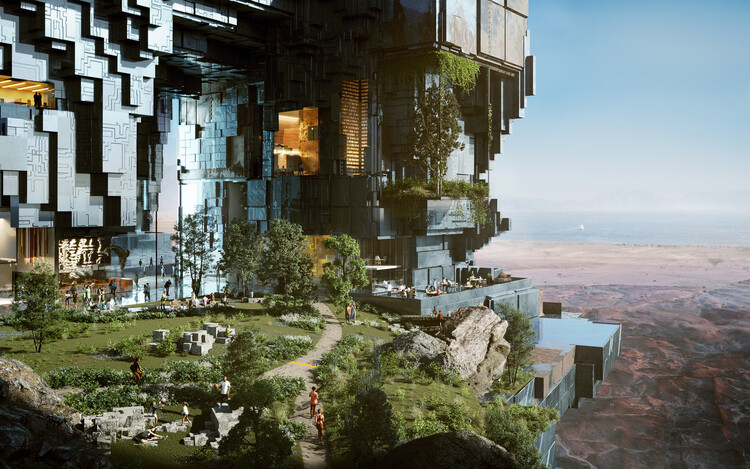
In parallel, an increasingly sophisticated vocabulary has emerged for imagining the world after total technological transformation. Smart cities promise to optimize energy, mobility, and resources through ubiquitous computation, and artificial intelligence is positioned as a tool for managing complex systems beyond human coordination. Geoengineering engages with the atmosphere, while floating settlements, underwater habitats, and extraterrestrial colonies extend the possibility of human habitation into new environments. These ideas draw from a longer history of technological futurism, populated by efficient cities, intelligent machines, and increasingly spectacular forms of infrastructure. Their stories often take place when the conflict has been resolved, and a new equilibrium has been established.
Far less developed is our vocabulary for what happens in between these extreme consequences and the world as we know it today. Climate denial avoids action by rejecting the necessity of transition, while climate doom shuts them down by treating transformation as an impossible outcome. Technological salvation offers a third escape, one particularly seductive to design, in which a sufficiently powerful innovation allows society to leap from crisis to resolution without dwelling on the shift between them. The climate transition will depend on this underappreciated, undervalued middle, through decades of decisions about repair, adaptations, and restorations. If designers possess the tools for imagining catastrophe and futuristic, saved worlds, will we be able to imagine the transition itself?
Related Article
What Are Architects Escaping From? Ambition and Avoidance in Designing for Remote SitesThe Appeal of Skipping to the End
Transformation is easier to imagine when there is a decisive moment. A breakthrough technology or a new form of infrastructure establishes a distance between the present and the future and creates a distinct before and after scenario. The climate transition cannot depend on a clear before scenario and a clear after scenario, but will be composed of decades of parallel work streams. Buildings will be retrofitted while others are demolished, energy systems will change at different speeds, landscapes will be restored while continuing to support activity or production, and new technologies will operate alongside older infrastructures. Adaptation, maintenance, and resilience unfold gradually and unevenly.
This makes the transition a difficult story to tell. Its agency is distributed across governments, communities, designers, engineers, utilities, industries, trades, and generations, rather than concentrated in a single invention or actor. Its achievements will be embedded in ordinary, often slow decisions. These processes contain their own forms of conflict, invention, innovation, and ambition, but they do not always provide the immediate resolution of a technological breakthrough. The challenge for designers and storytellers is an imaginative one. Will adaptation, maintenance, repair, and resilience become the material of compelling futures?
The Allure of a Technological Rescue
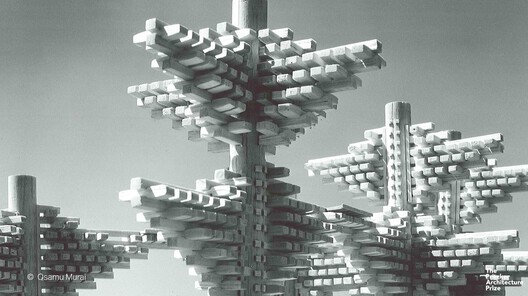
Technology will be indispensable to any viable climate transition. Renewable energy, electrification, new materials, carbon removal, computation, and other forms of innovation will shape how societies reduce emissions and adapt or mitigate the impact from global warming. A technological rescue is a fantasy that argues that sufficient innovation can resolve environmental constraints while leaving the systems and expectations of contemporary life intact. Of course, it is an appealing form of climate optimism because it offers a future that is radically transformed, safe, and reassuringly familiar.
The smart city offers one version of this promise. For decades, planners and technology companies have explored how sensors, data, automation, and interconnected infrastructure might make cities more efficient and responsive, with meaningful applications in energy, transportation, water, and resource management. At the same time, the smart city has produced an influential image of urban sustainability in which environmental problems become increasingly manageable through information and optimization. This framing can leave more difficult questions about consumption, mobility, land use, construction, and existing urban fabric outside the frame. Efficiency can transform how a city operates, but it does not determine what the city consumes, preserves, replaces, or relinquishes for long-term visions.
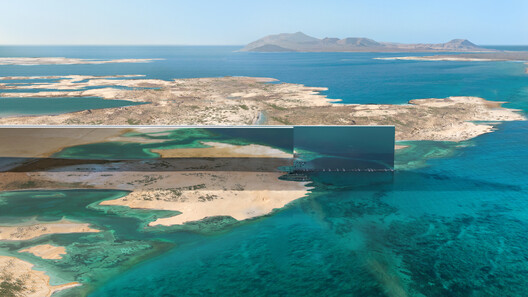
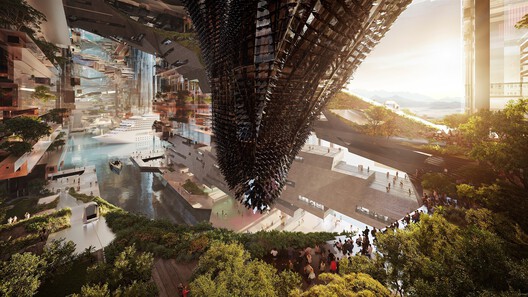
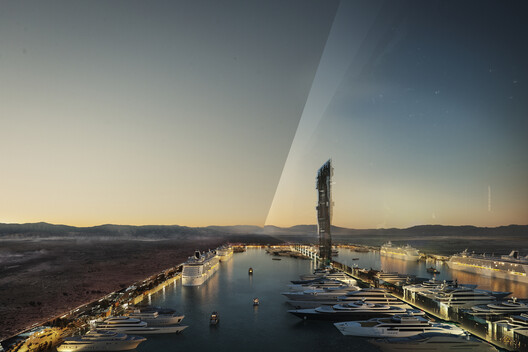
The ongoing construction of the Line at NEOM takes this proposition further by beginning with an entirely new urban condition. Its representations offer a city organized around density, renewable energy, automated mobility, and extensive technological infrastructure, largely free from the spatial patterns and physical constraints of existing cities. As an image of a climate future, the clean slate is enticing. It allows a radical urban change while removing any inherited remnants or residues from traditional cities or competing interests.
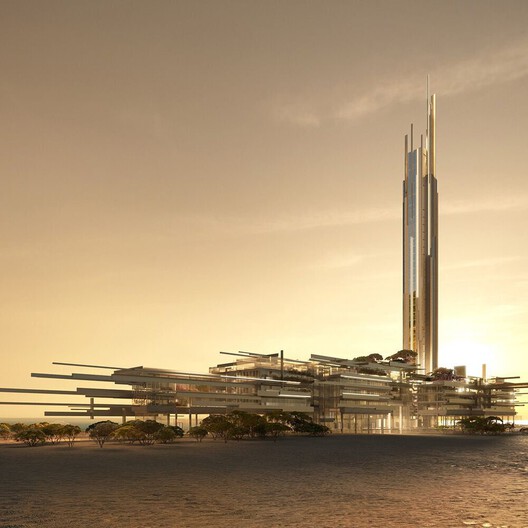
Similar narratives appear at multiple scales, from autonomous environments and vast carbon removal systems to geoengineering, floating settlements, and extraterrestrial habitation. Each expands the territory within which technology might overcome environmental limits or climate anxieties. Their speculative value lies in their capacity to make unfamiliar situations feel alluring, yet their prominence invites speculation around the futures that might emerge if the same creative attention is directed toward transformation. Designers are capable of visualizing the new and the unprecedented; the contemporary question is how to bring narratives and visuals of adaptation, reuse, restoration, and resilience into the collective imaginary.
The Ordinary Work
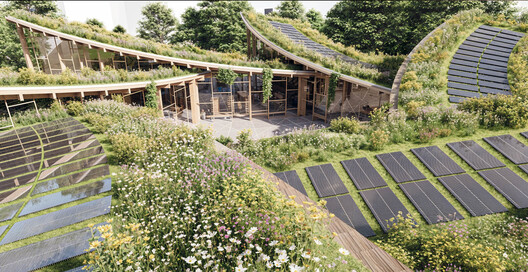
Much of the climate transition will take place within the physical world that already exists. Buildings need to be adapted, repaired, reused, and maintained, and neighborhoods will respond to changing environmental conditions. Its significance emerges through accumulation, not a single moment or project implementation, as thousands of projects alter how resources are used, the lifespan of materials and buildings, and how places respond to a changing climate. This transformation may be difficult to capture in a singular image of the future, but its incremental nature does not make it less ambitious. It values progress as a compounding series, constructed continuously across existing cities and sites.
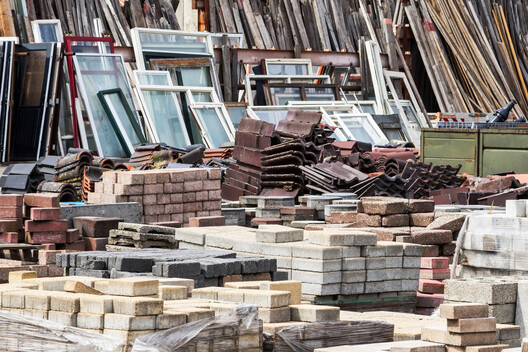
At larger scales, these individual interventions become part of systems that extend far beyond any single project. Cities, regions, states, and countries must coordinate changes across energy, transportation, materials, water, land, regulation, finance, and governance, often across different timelines and political boundaries. The climate transition depends on an understanding of how individual decisions interact, reinforce one another, and eventually produce systemic change. If this is the reinforced condition, how can designers visualize a future defined by relationships, dependencies, sequences, and decades of coordinated change?
Tools for Imagining the Transition
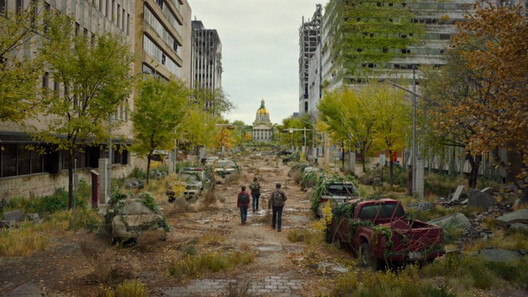
Architects and designers already possess sophisticated tools for projecting futures through drawings, models, simulations, scenarios, visualizations, films, games, and increasingly artificial intelligence. Images of completed environments can establish compelling destinations, while transition requires us to engage with time, sequence, uncertainty, and adaptation. The same creative capacity could be directed toward imagining how places change over five, twenty, or fifty years, what remains and what becomes obsolete, and how many interventions accumulate into a different way of living. The transition can become a subject of speculation rather than the exaggerated interval between the present and an imagined future.
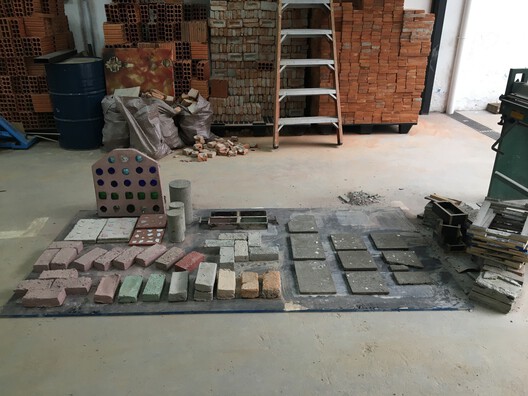
Beyond representation, lifecycle thinking, material inventories, post-occupancy research, ecological knowledge, maintenance practices, historical precedent, scenario planning, and systems thinking will make the capacity for change in existing built environments more informed. These archives of knowledge allow designers to locate agency within the present by revealing where transformation is already possible. They offer ways of imagining climate optimism that are grounded in the physical, ecological, and social conditions from which any future will have to emerge.
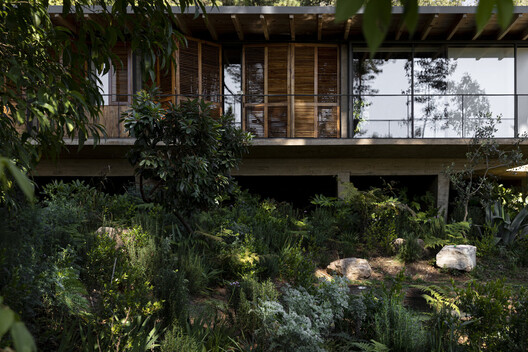
Writers, filmmakers, game designers, artists, journalists, and other world builders influence which futures become familiar enough to debate or desire. There is considerable creative territory in the processes that receive less attention in contemporary media. These undervalued stories have the capacity to coexist with technological speculation and ambitious visions of the future while giving equal attention to the long processes of urban and environmental transformation.
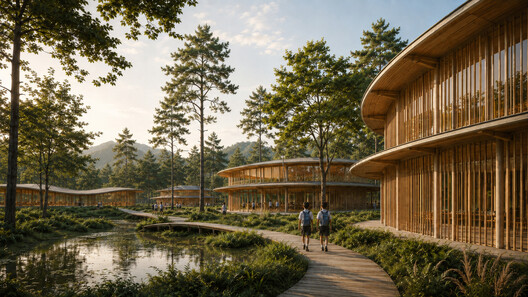
If climate denial removes the necessity for action, and climate doom narrows the possibility of meaningful action, then a technological salvation defers decisive agency to an anticipated breakthrough. Climate optimism should be grounded in the capacity to act within the world inherited and to imagine its processes towards change. Designers and storytellers do not need to become less ambitious about the futures they envision, but direct the same ambition and creativity to the transition itself. If we can imagine the end of the world, and the world after it has been saved, can we become equally ambitious in imagining the work required in between?
This article is part of the ArchDaily Topic: The Lure of Escapism in Architecture and Alternative Worlds. Every month we explore a topic in-depth through articles, interviews, news, and architecture projects. We invite you to learn more about our ArchDaily Topics. And, as always, at ArchDaily we welcome the contributions of our readers; if you want to submit an article or project, contact us.


