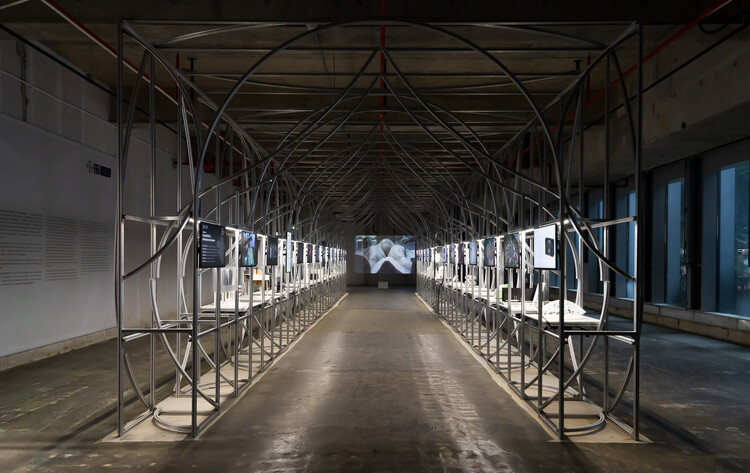
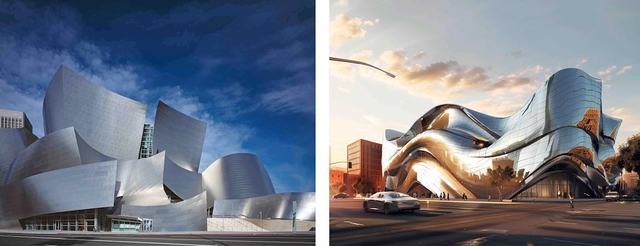
As artificial intelligence continues to disrupt sectors of the economy and reshape entire industries, institutions and individuals alike are bracing—and rapidly adapting—to the changes that machines seem to hold over our heads. Yet the more precise pressure is not simply AI altering the way people work and live, but the business models and investment logics of the companies developing these systems: the concentration of capital, the new requirements for compute, the race for compartmentalized talent, and the infrastructural footprint needed to sustain it. In the Greater Bay Area—anchored by Guangzhou, Shenzhen, and Hong Kong—this dynamic is especially pronounced. Government-led initiatives are actively accelerating the industry's growth, with policy and planning mechanisms beginning to translate an ostensibly intangible field into physical form: zoning updates, earmarked land, and the emergence of AI-oriented building types, from research laboratories to large-scale data centers.
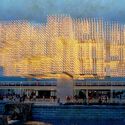
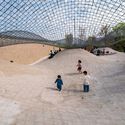
The 2025 Osaka Expo has captured widespread attention—not only for its architectural ambition and spectacle, but also for breaking records and generating controversy. Its most iconic feature, a monumental timber ring designed by Sou Fujimoto, has already made headlines as a Guinness World Record-breaking wooden structure. Built on the reclaimed island of Yumeshima, the site has attracted praise and critique in equal measure. Beyond its awe-inspiring 2-kilometer circumference—parts of which extend dramatically over the water—the structure has also drawn concerns, including questions about health & safety, extreme heat, and swarms of insects that may affect the visitor experience.
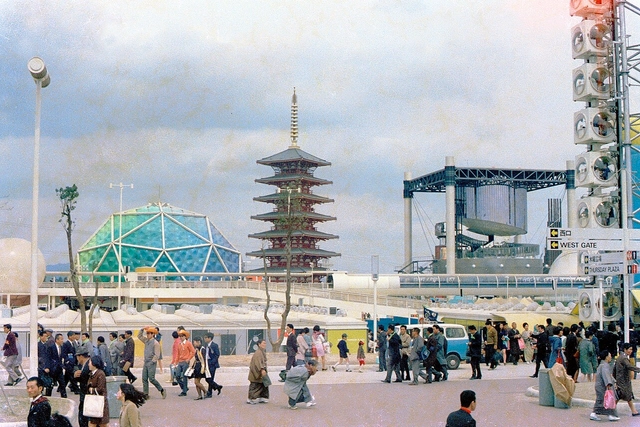
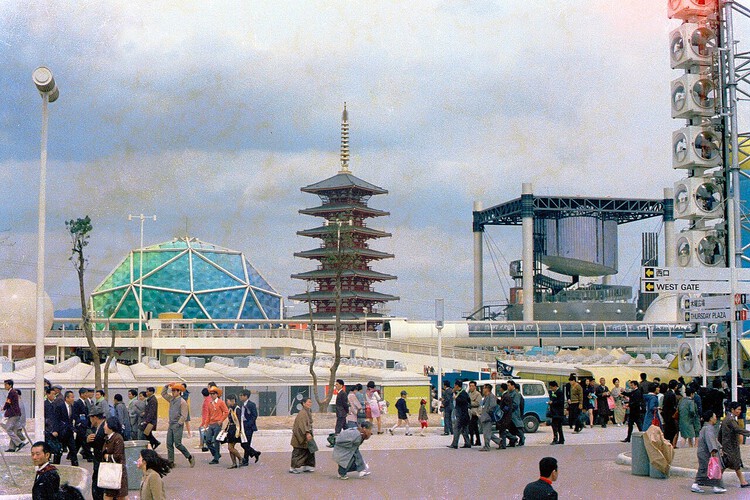
This year also marks a significant anniversary: the 55th year since the 1970 Osaka Expo, held under drastically different socio-economic conditions. Comparing these two expos—both hosted in the same city—offers a rare opportunity to reflect on how the rhetoric, curatorial themes, and architectural ambitions of world expos have evolved over time. From "Progress and Harmony for Mankind" in 1970 to "Designing Future Society for Our Lives" in 2025, the shift in thematic focus reveals changing global priorities. Meanwhile, the scale and nature of architectural involvement have also transformed, from the futuristic visions of Japanese Metabolism to a more internationally dispersed group of designers concerned with sustainability, technology, and civic engagement.
The Second Studio (formerly The Midnight Charette) is an explicit podcast about design, architecture, and the everyday. Hosted by Architects David Lee and Marina Bourderonnet, it features different creative professionals in unscripted conversations that allow for thoughtful takes and personal discussions.
A variety of subjects are covered with honesty and humor: some episodes are interviews, while others are tips for fellow designers, reviews of buildings and other projects, or casual explorations of everyday life and design. The Second Studio is also available on iTunes, Spotify, and YouTube.
This week David and Marina of FAME Architecture & Design are joined by Robert Gilligan, Senior Technology Advisor at Amplified Lifestyles to discuss his background in audio-visual technology; advancements in smart home technology; home audio-visual system management; the role of audio-visual engineers in architecture projects; home security systems; the future of audio-visual technology; and more.
https://www.archdaily.com/1020465/the-second-studio-podcast-av-design-in-architectureThe Second Studio Podcast
The rise of generative AI has given every design educator sufficient reason to reconsider both what to teach and how to teach it. Training an architect is a long process, and mapping it onto an uncertain future is a daunting task. Researchers at OpenAI, DeepMind, Meta, and similar companies seem constantly surprised by the rapid development and sometimes unforeseen capabilities of their AI creations. If even the creators don’t know how fast the future will arrive, it would be hubristic for any of us to claim that AI will do X or AI won’t be able to do Y in the next decade, which is about how long it takes to really train an architect.
https://www.archdaily.com/1014830/how-ai-can-help-us-end-design-education-anachronismsEric J. Cesal
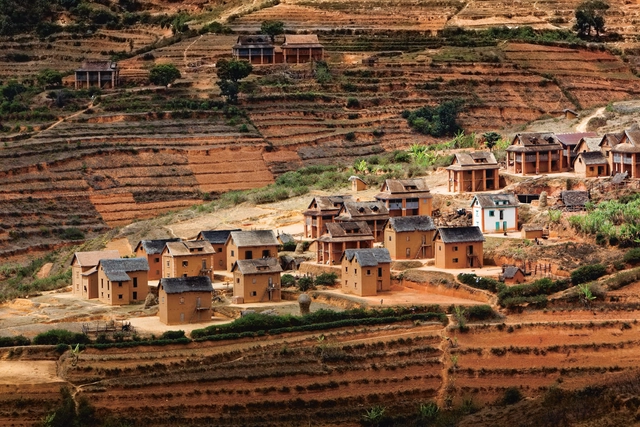
The architecture and construction industry has undergone a transformation with the integration of various digital tools, now indispensable to the design process. The welcoming of technologies has effectively streamlined operations, enhanced efficiency, and elevated design quality. This digital shift, however, has resulted in a digital divide that goes beyond accessibility to tools and software. It also encompasses the crucial aspect of integrating traditional and indigenous communities into the urban development landscape. Can advancing technology support the growth of vernacular architecture? Can indigenous building practices find a place in the vision for a digitalized future?
While it is undeniable that the surrounding environment is changing due to human activity, the effects can be difficult to perceive directly, as they are often illustrated with unrelatable pictures of far-away places or overused graphics and statistics. Danish office Tideland Studio aims to change this. Through their work, they aim to bring forth a new type of sensible understanding of the changes happening around us. They work across disciplines, melding research, art, and architecture while employing the newest survey and fabrication technologies to give presence to the abstract phenomena that shape our planet. Because of their practical approach to research and the new perspectives that they open toward extreme environments affected by climate change, ArchDaily has selected Tideland Studio as one of the 2023 New Practices. The annual survey highlights emerging offices that use innovation and forward-looking processes to rethink the ways in which we practice architecture.
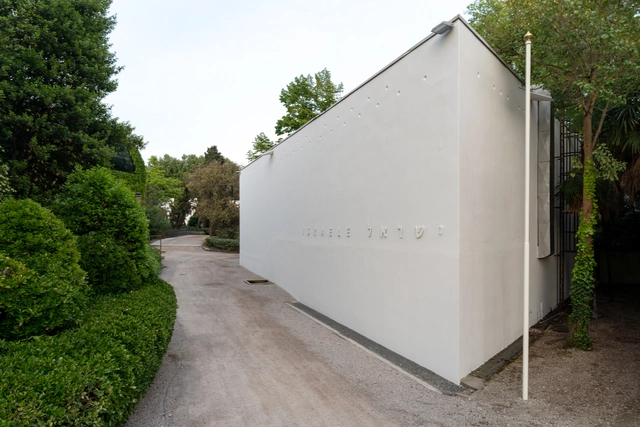
The National Pavilion of Israel presents “Cloud-to-ground,” an immersive installation exploring the nature of modern communication networks at the 18th International Architecture Exhibition of La Biennale di Venezia. The exhibition, curated by Arch. Oren Eldar, Arch. Edith Kofsky, and Hadas Maor, aims to initiate a multifaceted discussion regarding the physical aspects of virtual networks: the data centers and telephone exchanges commonly referred to as “black boxes.” The chosen theme is relevant for Israel due to its strategic location set at the intersection of continents and cultures. The pavilion in the Giardini will remain open for visitors until November 26, 2023.
Together with the African Wildlife Foundation (AWF), MASS Design Group is helping to build 15 conservation primary schools over the next 10 years in African landscapes, home to some of world's most important wildlife populations, including elephants, rhinos, great apes, and lions. They will design non-traditional educational campuses for primary school children that offer lessons and other services extending beyond the classroom walls.