1. ArchDaily
  2. Technology

Technology: The Latest Architecture and News

Designing with Sound: How Audio Shapes Residential Architecture

 | In Collaboration

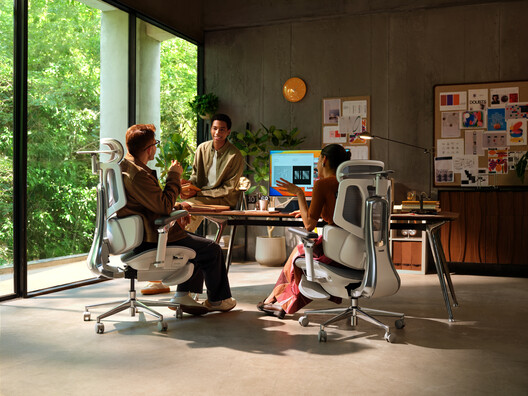
What defines the atmosphere of a home? Beyond material palettes and natural light, sound plays a defining role in how spaces are perceived and inhabited. The reverberation of footsteps across stone, the muted calm of a textile-lined room, or the way music carries through an open-plan interior all shape the sensory identity of domestic space. Architecture is experienced not only visually, but acoustically.

The concept of the "soundscape" describes this relationship between people, sound, and the built environment. In residential architecture, sound is more than background noise or technical performance; it influences privacy, concentration, rest, and emotional comfort. Geometry and materiality act as the primary acoustic conductors: while concrete, glass, and stone reflect and amplify, timber and upholstery soften and absorb. Ceiling heights, circulation paths, and room proportions further shape how sound travels and settles across a space.

Designing for Obsolescence in an Age of Perpetual Upgrades

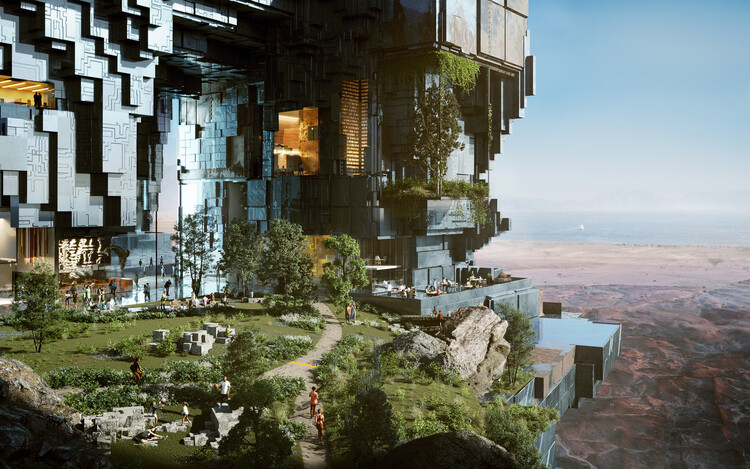
In the nineteenth century, entire railway networks became obsolete almost overnight, not due to physical deterioration, but because of changes in the technical standards that supported them. The expansion of railroads across Europe and North America adopted different track gauges (the transverse distance between rails), and as a dominant standard gradually emerged, these infrastructures became incompatible with one another. This required large-scale adaptations, conversions, or even complete reconstruction, in what became known as the "Gauge War."

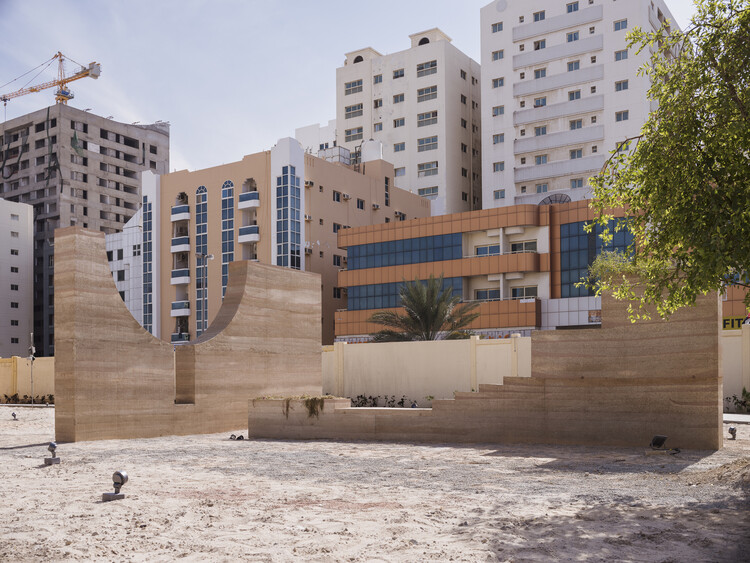
With the mass adoption of telecommunications networks in the twentieth century, cities around the world built large telephone exchange buildings filled with electromechanical equipment responsible for routing calls between regions. These structures were highly specialized pieces of infrastructure, often occupying entire city blocks and organized around large-scale technical machinery. With the transition to digital switching technologies and, later, the widespread adoption of mobile telephony, much of this equipment became obsolete within a few decades. The buildings themselves often remained structurally sound, but the systems they were designed to support had already evolved beyond them.

Designing for Obsolescence in an Age of Perpetual Upgrades - Imagen 1 de 4Designing for Obsolescence in an Age of Perpetual Upgrades - Imagen 2 de 4Designing for Obsolescence in an Age of Perpetual Upgrades - Imagen 3 de 4Designing for Obsolescence in an Age of Perpetual Upgrades - Imagen 4 de 4Designing for Obsolescence in an Age of Perpetual Upgrades - More Images+ 3

Architects Office Designs World Trade Center Biotic Mixed-Use Complex in Brasília’s Parque Tecnológico

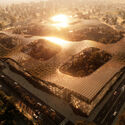
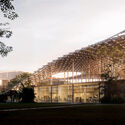
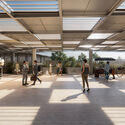
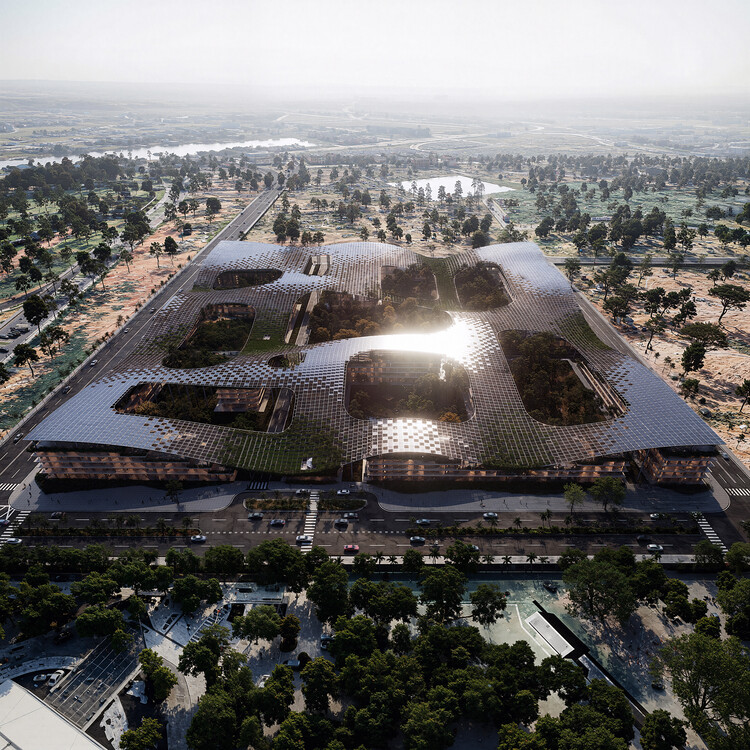
Located within the Parque Tecnológico de Brasília, the World Trade Center Biotic is a mixed-use development designed by Brazilian studio Architects Office as part of the district's broader urban expansion. The project is part of the master plan developed in 2020 by Carlo Ratti Associati and is currently being developed. Conceived as a multi-program complex, the proposal brings together offices, residential units, a hotel, retail spaces, and shared facilities within a single urban framework. The project occupies a site of approximately 70,000 square meters and is planned to reach about 180,000 square meters of built area, with an estimated 150,000 square meters expected to be completed by 2030.

Architects Office Designs World Trade Center Biotic Mixed-Use Complex in Brasília’s Parque Tecnológico - Image 1 of 4Architects Office Designs World Trade Center Biotic Mixed-Use Complex in Brasília’s Parque Tecnológico - Image 2 of 4Architects Office Designs World Trade Center Biotic Mixed-Use Complex in Brasília’s Parque Tecnológico - Image 3 of 4Architects Office Designs World Trade Center Biotic Mixed-Use Complex in Brasília’s Parque Tecnológico - Image 4 of 4Architects Office Designs World Trade Center Biotic Mixed-Use Complex in Brasília’s Parque Tecnológico - More Images+ 8

From Cloud to Coast: The Physical Cost of AI in Hong Kong’s Borderlands

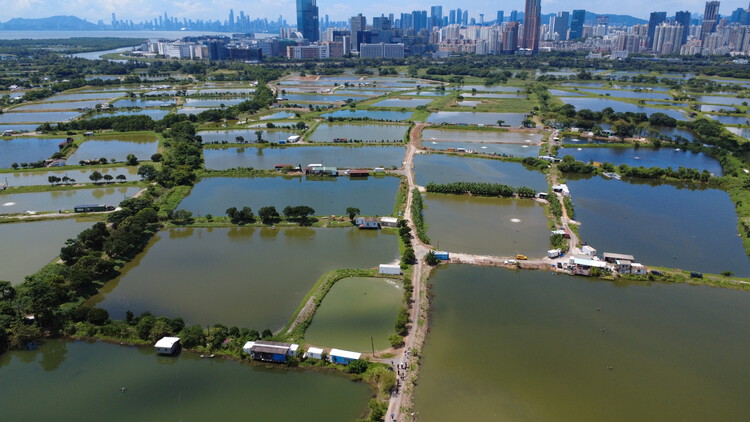
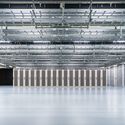
Amid the rapid build-out of data centres and AI economies across the Greater Bay Area—and alongside the celebration of AI as a tool and "author," as featured in 2025 Hong Kong–Shenzhen Bi-City Biennale of Urbanism\Architecture (Hong Kong)—a parallel question becomes unavoidable: how do the planning and construction of AI infrastructure actually begin to shape everyday life? Many of the facilities already built remain intentionally distant from daily experience. The "cloud" may be marketed as immaterial, but its architecture is profoundly physical: high-power, high-heat, service-heavy environments that are often sited in remote or low-density areas to take advantage of lower land costs and to minimize friction with nearby communities. Security and risk management further reinforce this logic. Data centres hold sensitive, privileged information—corporate assets, legal records, government and institutional data—and remoteness becomes part of their operating model, keeping the infrastructures of AI both spatially and socially out of sight.

From Cloud to Coast: The Physical Cost of AI in Hong Kong’s Borderlands - Image 2 of 4From Cloud to Coast: The Physical Cost of AI in Hong Kong’s Borderlands - Image 6 of 4From Cloud to Coast: The Physical Cost of AI in Hong Kong’s Borderlands - Image 3 of 4From Cloud to Coast: The Physical Cost of AI in Hong Kong’s Borderlands - Image 4 of 4From Cloud to Coast: The Physical Cost of AI in Hong Kong’s Borderlands - More Images+ 7

Gateway in Lunar Orbit: Extending Architecture Beyond Earth

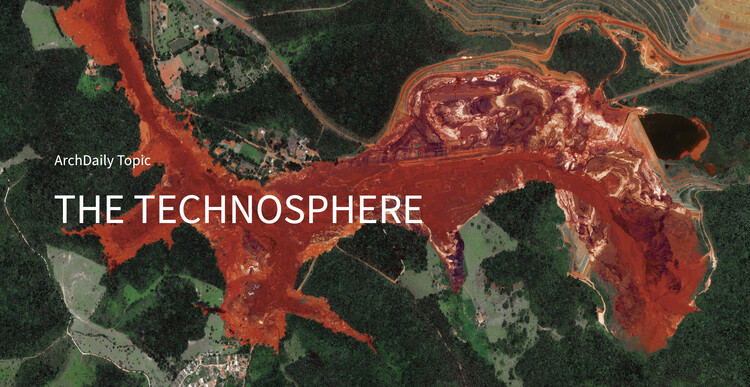
The concept of the technosphere provides a framework for understanding the scale of human impact on Earth. The term was coined by Peter K. Haff, and it is defined as the global network of human-made artifacts: a physical layer of infrastructure, buildings, vehicles, and machinery that functions alongside the biosphere and atmosphere. Currently estimated at 30 trillion tons, this human-constructed mass is dominated by the built environment. In this context, architecture serves as the primary interface, shaping how technology interacts with local ecologies. However, it seems that soon, the Technosphere will no longer be confined to the terrestrial surface. Through NASA's Artemis program, this network of human-made mass is expanding beyond Earth's atmosphere and is looking to establish new orbital infrastructure that represents the first permanent off-world extension of this man-made system.

Gateway in Lunar Orbit: Extending Architecture Beyond Earth - Imagen 1 de 4Gateway in Lunar Orbit: Extending Architecture Beyond Earth - Imagen 2 de 4Gateway in Lunar Orbit: Extending Architecture Beyond Earth - Imagen 3 de 4Gateway in Lunar Orbit: Extending Architecture Beyond Earth - Imagen 4 de 4Gateway in Lunar Orbit: Extending Architecture Beyond Earth - More Images+ 3

Facing the Age of Robots? Material Innovation in Architectural Structures

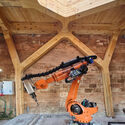
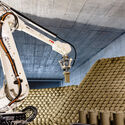
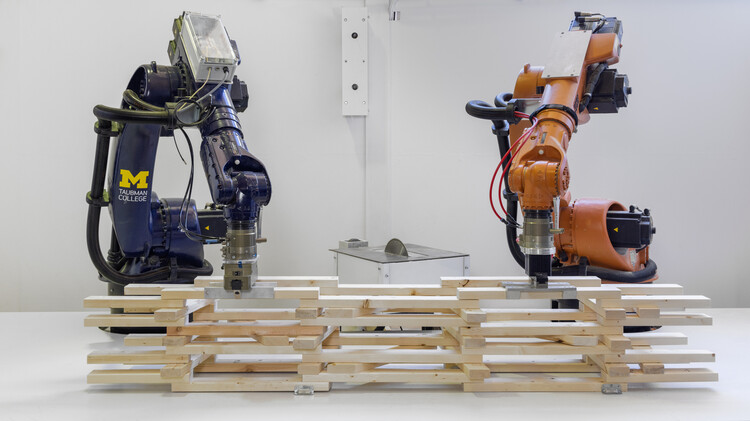
By exploring the art of robotics in construction, advances in architectural technologies are increasingly shaping multiple aspects of human life. From robotic arms and drones to robots that move across large surfaces and even 3D printing robots, their use in construction is accelerating research and the development of new working methods, as well as structural and material experimentation. In collaboration with multiple disciplines and spanning various facets of architecture, the role of robots in the contemporary landscape demonstrates a potential that extends beyond merely automating processes or reducing construction times and costs. This raises the question: Are we building architecture to serve technology, or technology to serve architecture?

Facing the Age of Robots? Material Innovation in Architectural Structures - Image 1 of 4Facing the Age of Robots? Material Innovation in Architectural Structures - Image 2 of 4Facing the Age of Robots? Material Innovation in Architectural Structures - Image 3 of 4Facing the Age of Robots? Material Innovation in Architectural Structures - Image 4 of 4Facing the Age of Robots? Material Innovation in Architectural Structures - More Images+ 17

Making Infrastructure Visible: When Systems Become Architecture

For centuries, large-scale infrastructure operated in the background. Ports, power plants, and energy facilities were positioned at the edges of cities, designed primarily for efficiency, and rarely considered part of civic life. Their function was indispensable, yet their architectural presence remained secondary. These structures supported urban growth and global exchange while maintaining a spatial distance from everyday urban experience.

Today, this condition is gradually shifting. As global trade intensifies and energy systems expand in complexity, the buildings that coordinate and house these networks are becoming more visible within the urban landscape. Rather than remaining neutral containers for technical operations, they begin to assert spatial identity. Infrastructure is no longer only operational; it is increasingly institutional, symbolic, and urban. The architecture that supports these systems now participates in how cities project themselves.
Making Infrastructure Visible: When Systems Become Architecture - Image 1 of 4Making Infrastructure Visible: When Systems Become Architecture - Image 2 of 4Making Infrastructure Visible: When Systems Become Architecture - Image 3 of 4Making Infrastructure Visible: When Systems Become Architecture - Image 4 of 4Making Infrastructure Visible: When Systems Become Architecture - More Images+ 6

Archiving the Technosphere: How Museum Architecture Mediates Human-Made Systems

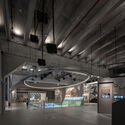
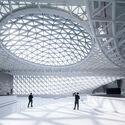
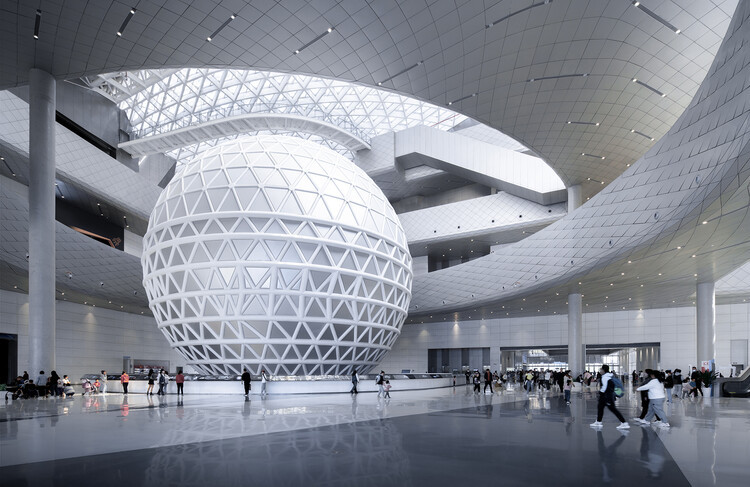
Far from the perception of the exhibition space as a sterile and untouchable, almost sacred place, the contemporary technology museum has emerged as a performative participant in the systems it seeks to document. The architecture of these institutions has become increasingly fluid and bold, often mirroring the velocity and complexity of the systems it houses. They operate as mediators between the human, the ecological, and the technological realms, transforming from encyclopedic warehouses into active educational engines. By spatializing complex scientific data through immersive rooms, these structures make the technological networks of our world accessible, engaging, and tangible.

Archiving the Technosphere: How Museum Architecture Mediates Human-Made Systems - Image 1 of 4Archiving the Technosphere: How Museum Architecture Mediates Human-Made Systems - Image 2 of 4Archiving the Technosphere: How Museum Architecture Mediates Human-Made Systems - Image 3 of 4Archiving the Technosphere: How Museum Architecture Mediates Human-Made Systems - Image 4 of 4Archiving the Technosphere: How Museum Architecture Mediates Human-Made Systems - More Images+ 4

The Technosphere: ArchDaily’s March Editorial Focus

How heavy is a house? In his 1965 essay A Home Is Not a House, Reyner Banham observed that modern American dwellings were becoming structurally lighter while growing heavier in mechanical services, such as plumbing, wiring, heating, and cooling. The true weight of architecture, he argued, was no longer in walls and roofs, but in the energy-intensive systems that sustained comfort.

Decades later, the question was updated at the 7th Lisbon Architecture Triennale. Curators Ann-Sofi Rönnskog and John Palmesino asked: How heavy is a city? The scale shifted from the domestic interior to the territory. The technosphere, materialized in the estimated 30 trillion tons of human-made matter on Earth, reframes the discussion entirely. Cities, data centers, oil fields, logistics hubs, satellites, cables, and waste streams form a planetary system in which architecture is neither object nor backdrop, but participant.

The Technosphere: ArchDaily’s March Editorial Focus - Image 1 of 4The Technosphere: ArchDaily’s March Editorial Focus - Image 2 of 4The Technosphere: ArchDaily’s March Editorial Focus - Image 3 of 4The Technosphere: ArchDaily’s March Editorial Focus - Image 4 of 4The Technosphere: ArchDaily’s March Editorial Focus - More Images+ 7

Architecture as a Platform: What Makes a Building Evolve?

Subscriber Access | 

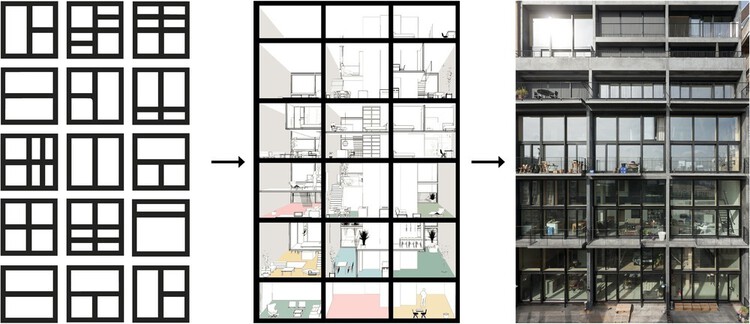
Not long ago, recent enough to feel current, architecture entered a moment in which buildings became legible as products. The framing offered discipline and a refreshed perspective to an industry that often deems novelty more precious than operational clarity. Nudging exercises of "form" towards repeatability, user experience, performance, and scalability prepared buildings to be a "product" that could now be evaluated. Architecture is more answerable to how well it works, how clearly it communicates its use, and how consistently it delivers its intended experience.

The discipline of product design refreshes the perspectives of architects designing for a changing future. Along with offering a new vocabulary and a rubric for design, the field brings in accountability: a product must perform reliably across time and context. It must hold together as a system of decisions rather than a collection of parts. Quality, therefore, is no longer measured solely by uniqueness, but by consistency and by the ability to produce a predictable experience for its occupants.

Architecture as a Platform: What Makes a Building Evolve? - Imagem 1 de 4Architecture as a Platform: What Makes a Building Evolve? - Imagem 2 de 4Architecture as a Platform: What Makes a Building Evolve? - Imagem 3 de 4Architecture as a Platform: What Makes a Building Evolve? - Imagem 4 de 4Architecture as a Platform: What Makes a Building Evolve? - More Images+ 2

MVRDV Begins Construction on the EU TUMO Convergence Center in Yerevan, Armenia

MVRDV has started construction on the EU TUMO Convergence Center, a new educational and research facility in Yerevan, Armenia. Located in Tumanyan Park, the five-story building will expand TUMO's campus, providing spaces for free technology and creative education for teenagers and adults, alongside research and co-working areas for technology and design companies. Positioned on a hilly outcrop above the Hrazdan River Gorge, the project responds to the surrounding topography while establishing visual connections with the city, the gorge, and Mount Ararat. Construction officially commenced on 24 February, with local and international representatives in attendance.

MVRDV Begins Construction on the EU TUMO Convergence Center in Yerevan, Armenia - Imagen 1 de 4MVRDV Begins Construction on the EU TUMO Convergence Center in Yerevan, Armenia - Imagen 2 de 4MVRDV Begins Construction on the EU TUMO Convergence Center in Yerevan, Armenia - Imagen 3 de 4MVRDV Begins Construction on the EU TUMO Convergence Center in Yerevan, Armenia - Imagen 4 de 4MVRDV Begins Construction on the EU TUMO Convergence Center in Yerevan, Armenia - More Images+ 4

ATN Summit 2026: From an Online Platform to a New Architecture and Technology Conference

 | Sponsored Content

Founded by Oliver Thomas, the ATN Summit is the first flagship conference of the Archi-Tech Network, marking five years since the platform began as a grassroots initiative to share real-world architectural knowledge. Taking place on March 18–19, 2026, in London, the ATN Summit brings together architects, technologists, and industry innovators to explore how emerging technologies are reshaping architectural practice. Designed as a high-production, ideas-driven event, the Summit reflects ATN's evolution from an informal online conversation into a global platform actively engaging with the future of the built environment.

ATN Summit 2026

The ATN Summit is a bold new conference at the intersection of architecture, technology, and entrepreneurship. Taking place in London on 18–19 March 2026, the summit brings together leading architects, technologists, innovators, and AEC influencers for two days of visionary talks, hands-on workshops, and meaningful networking.