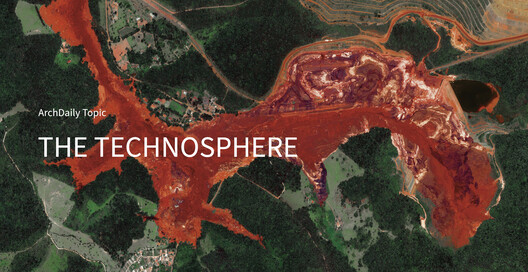
How heavy is a house? In his 1965 essay A Home Is Not a House, Reyner Banham observed that modern American dwellings were becoming structurally lighter while growing heavier in mechanical services, such as plumbing, wiring, heating, and cooling. The true weight of architecture, he argued, was no longer in walls and roofs, but in the energy-intensive systems that sustained comfort.
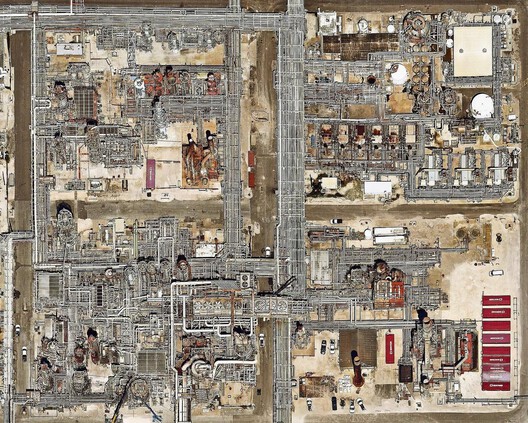
Decades later, the question was updated at the 7th Lisbon Architecture Triennale. Curators Ann-Sofi Rönnskog and John Palmesino asked: How heavy is a city? The scale shifted from the domestic interior to the territory. The technosphere, materialized in the estimated 30 trillion tons of human-made matter on Earth, reframes the discussion entirely. Cities, data centers, oil fields, logistics hubs, satellites, cables, and waste streams form a planetary system in which architecture is neither object nor backdrop, but participant.


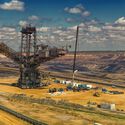

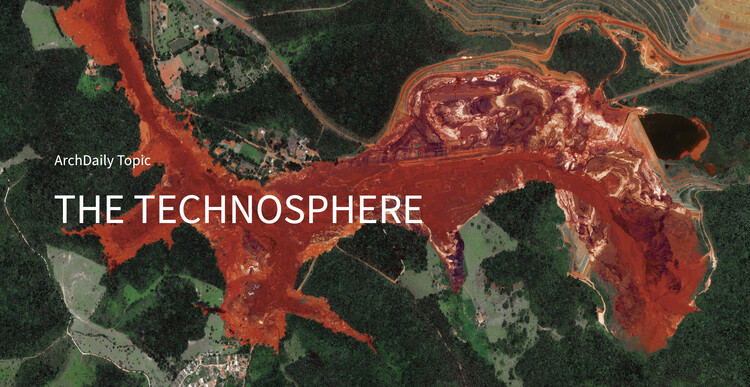

This month, ArchDaily explores The Technosphere: Architecture at the Intersection of Technology, Ecology, and Planetary Systems, examining how design operates within—and potentially shifts—this vast technological condition. Developed by geologist Peter Haff, the term "technosphere" describes a world in which human life is inseparable from machines, data, extraction, and energy networks. Buildings are embedded in digital infrastructures, dependent on global supply chains, and entangled with planetary cycles of carbon, water, and other natural systems.
Related Article
Lisbon Architecture Triennale 2025 Examines the Technosphere and Human Impact on EarthThe coverage approaches this condition from multiple angles. It looks at the hidden architectures of data, servers, cables, and cooling systems that give physical form to the so-called cloud. It examines extraction and energy politics, asking how oil, minerals, and material flows underpin architectural production. It also turns to sensory dimensions of the technosphere, from light and noise pollution to the invisible atmospheres shaped by emissions and filtration systems. At the same time, emerging tools such as AI, automation, and digital twins prompt new questions about authorship, responsibility, and the autonomy of technological systems that increasingly operate beyond direct human control.

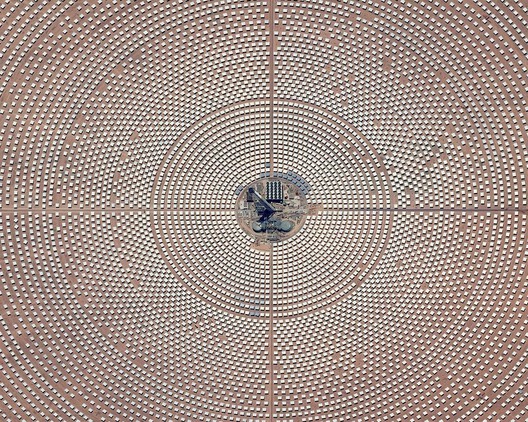
Across these investigations lies a shared concern: can architecture act not only as a component of the technosphere, but as a mediator between technological systems and ecological limits? As regenerative design, circular strategies, repair, and reuse gain traction, the discipline confronts the tension between participation in extractive cycles and the aspiration to shift them.
If Banham's essay makes us wonder how heavy a house might be, the challenge now is broader and more urgent. How can architecture intervene in the planetary systems it helps construct? Can design meaningfully counter the extractive logics embedded in technological networks? And what forms of coexistence might emerge between humans, machines, and the Earth system itself?
This article is part of the ArchDaily Topic: The Technosphere: Architecture at the Intersection of Technology, Ecology, and Planetary Systems. Every month we explore a topic in-depth through articles, interviews, news, and architecture projects. We invite you to learn more about our ArchDaily Topics. And, as always, at ArchDaily we welcome the contributions of our readers; if you want to submit an article or project, contact us.


