1. ArchDaily
  2. Environmental Impact

Environmental Impact: The Latest Architecture and News

Design as Repair: How Architecture Is Advancing Environmental Justice

Subscriber Access | 

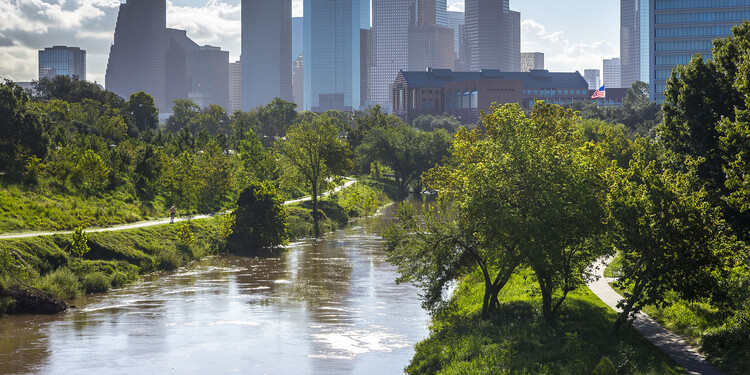
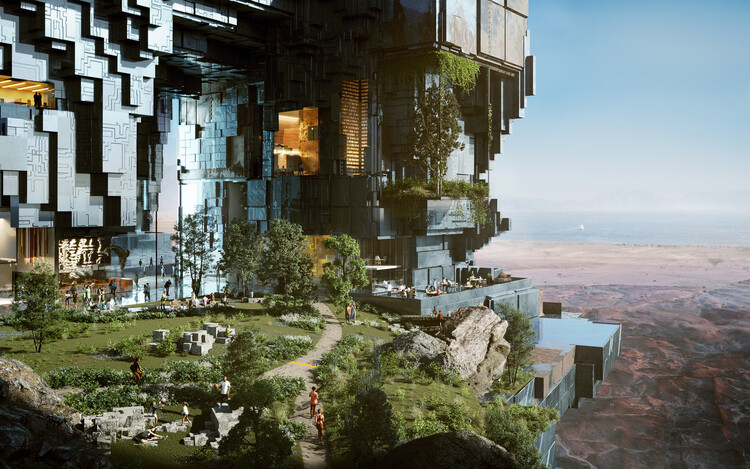
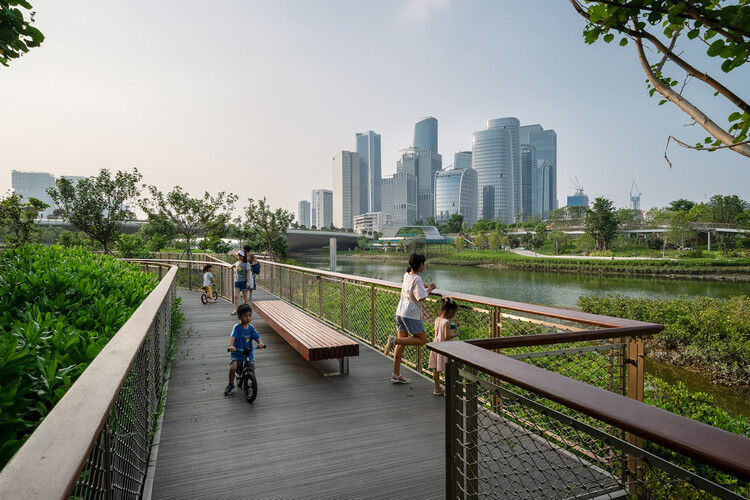
Environmental justice confronts a simple but uncomfortable truth: the benefits and burdens of the environment are not shared equally. Marginalized communities bear a disproportionate share of polluted air, unsafe water, toxic land uses, extreme heat, and the accelerating risks of climate change in cities around the world. These are the consequential products of decades of policy decisions, investment patterns, exclusionary planning practices, and planning choices that have consistently favored certain communities over others.

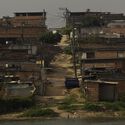
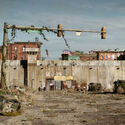
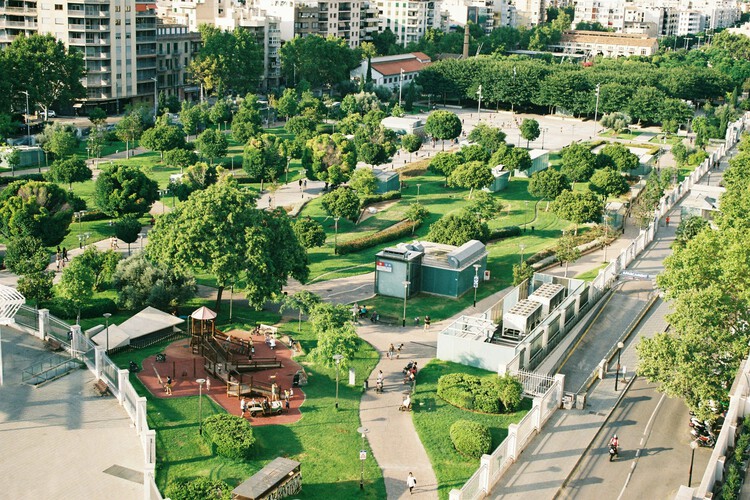
In cities and landscapes alike, these injustices are written into the physical fabric of places, even revealing extreme differences in environmental conditions between neighborhoods and districts. Dense neighborhoods with little tree canopy, for example, absorb and hold heat, exposing residents to higher rates of heat-related illness. Highways, industrial corridors, ports, and waste facilities cluster near low-income neighborhoods and communities of color, shaping conditions of health, air and soil quality, and long-term safety.

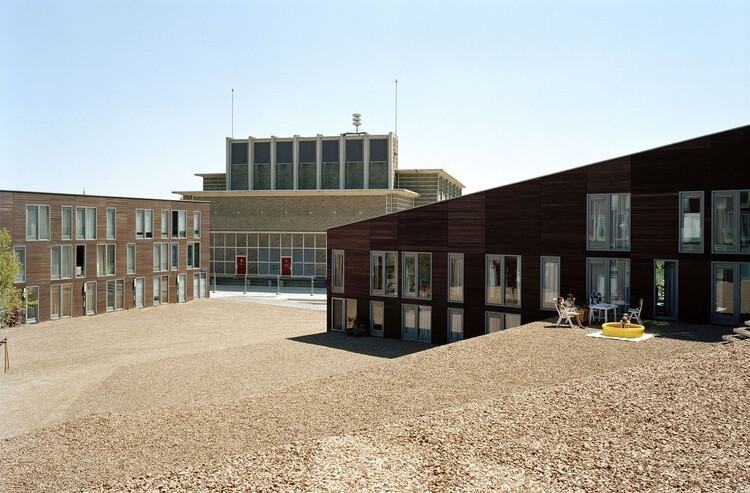
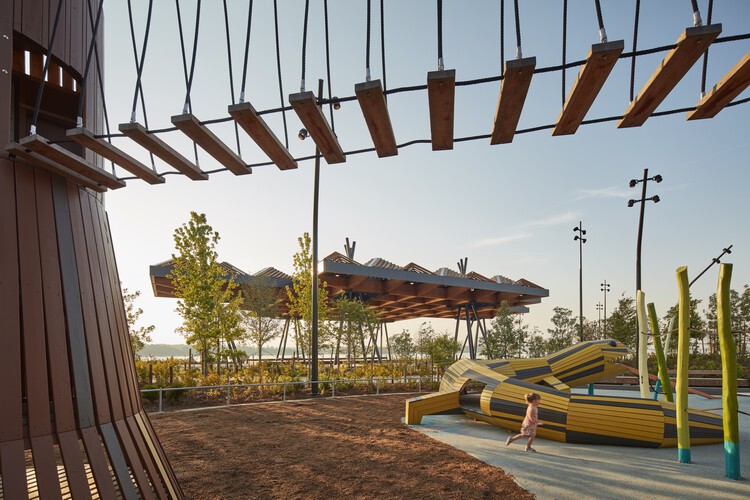
Design as Repair: How Architecture Is Advancing Environmental Justice - Image 1 of 4Design as Repair: How Architecture Is Advancing Environmental Justice - Image 2 of 4Design as Repair: How Architecture Is Advancing Environmental Justice - Image 3 of 4Design as Repair: How Architecture Is Advancing Environmental Justice - Image 4 of 4Design as Repair: How Architecture Is Advancing Environmental Justice - More Images+ 35

Ceramics Forged in Light: A Spatial Translation of Circular Material Processes

 | In Collaboration

Can one of architecture's oldest materials still inform how sustainability and manufacturing are approached today? What shifts when ceramic is viewed beyond its surface, as a process shaped by light, water, and clay? At Milan Design Week 2026, VitrA, a brand producing bathroom and ceramic surfaces and working across sanitaryware and tiles, and international design practice Snøhetta explore these questions through Ceramics Forged in Light, an immersive installation created for the INTERNI MATERIAE exhibition. Positioned within a broader discourse on material experimentation and circular production, the project treats ceramic as an architectural material defined by continuous transformation, shaped through light, water, heat, reflection, and reuse.

Fired clay has been used in construction for over 9,000 years, evolving from vernacular craft into one of the most widely applied materials in the built environment. Its durability, water resistance, thermal performance, and adaptability have made it a staple for facades, sanitaryware, flooring, architectural surfaces, and structural systems. Today, new manufacturing technologies are extending these possibilities as architects and manufacturers confront the environmental implications of material extraction and production.

From Warehouse to Innovation Hub: Renovation, Reuse and Human-Centered Design for Lower Environmental Impact

 | Sponsored Content

What happens when you choose reuse over demolition? In Østbirk, Denmark, a 30-year-old timber warehouse has been transformed into a 14,000-square-meter world-class innovation hub for nearly 500 VELUX employees. This article explores how the LKR Innovation House project challenges conventional building practices, preserves material legacy, and offers practical lessons for architects working with existing structures. A new book documents the process through essays, interviews, and photographs.

Transparent Lightness: When Pneumatic Architecture Connects with the Environment

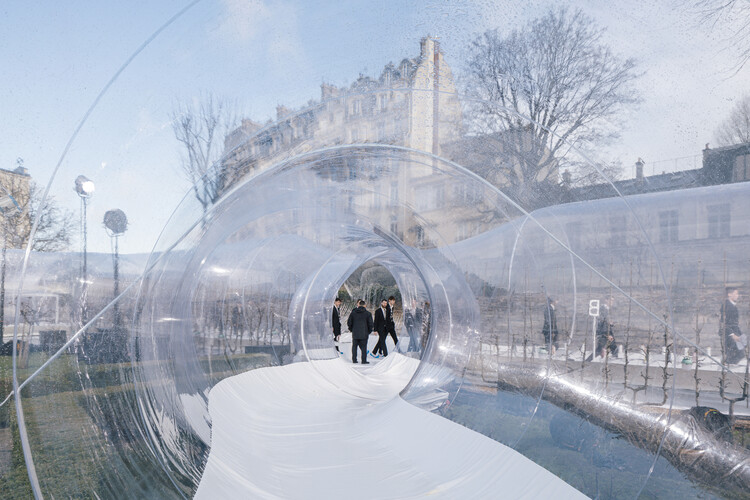
In Six Memos for the Next Millennium, Italo Calvino explores lightness from a literary perspective and argues, "Opposed to lightness is weight. Removing weight produces lightness; it is a value, not a defect." Drawing on Greek mythology, he reflects on one of Perseus's feats after severing the head of the terrible Gorgon Medusa without being turned to stone. Assisted by the gods Hades, Hermes, and Athena, Perseus flies with his winged sandals and uses a bronze shield as a mirror to reflect her image. Relying, like many architects, on what is lightest—the wind and the clouds—he also fixes his gaze on what is revealed through indirect vision: an image reflected in a mirror.

Historically, transparency has been naturalized as an inherent condition of modern architecture. With the shift from the heavy load-bearing wall to the lightweight glass envelope, glass was introduced into the discipline, blurring the boundaries between interior and exterior spaces. In connection with inflatable architecture, transparency is linked to lightness and impermanence, leaving temporary traces on the landscapes it inhabits. By using textiles or plastics as main materials and air as a structural system, the search for lightness in the built environment now recognizes more than a single atmosphere of application.

Transparent Lightness: When Pneumatic Architecture Connects with the Environment - Image 1 of 4Transparent Lightness: When Pneumatic Architecture Connects with the Environment - Image 2 of 4Transparent Lightness: When Pneumatic Architecture Connects with the Environment - Image 3 of 4Transparent Lightness: When Pneumatic Architecture Connects with the Environment - Image 4 of 4Transparent Lightness: When Pneumatic Architecture Connects with the Environment - More Images+ 15

Light Structures, Heavy Footprints? The Environmental Paradox of Lightweight Materials

Using massive s plates, often several centimeters thick and weighing tons, Richard Serra's sculptures convey an almost improbable sense of lightness. This effect does not result from a reduction of mass, but from how that mass is organized: large curved surfaces tilt, narrow passages compress the body, and seemingly unstable elements create a constant sense of imbalance. Serra transforms weight into a dynamic spatial experience.

In architecture, lightness has occupied a central role at least since the modern period. While earlier traditions, such as Greek and Roman architecture, were closely associated with stability, and large churches with monumentality, the twentieth century introduced a decisive shift in how matter is handled, particularly through the separation of structure and enclosure.

Reimagining the Complete Neighborhood through Urban Renaturing

Subscriber Access | 

The ReGreeneration project, a Horizon Europe project led by Inetum and supported by C40 Cities, ARUP, Placemaking Europe, and several others, operates as an active collaboration with local governments, private companies, academia, and civil society organizations at the intersection of urban regeneration, green public spaces, and neighborhood-scale design. Its premise addresses how European cities are built and maintained and how they experience a changing climate, arguing that cities must fundamentally change to remain livable under accelerating climate pressures.

Reimagining the Complete Neighborhood through Urban Renaturing - Image 1 of 4Reimagining the Complete Neighborhood through Urban Renaturing - Image 2 of 4Reimagining the Complete Neighborhood through Urban Renaturing - Image 3 of 4Reimagining the Complete Neighborhood through Urban Renaturing - Image 4 of 4Reimagining the Complete Neighborhood through Urban Renaturing - More Images+ 12

How Cities Design Public Life in the Shade

Cities are warming at roughly twice the global rate, a trend accelerated by rapid urbanization. While rising temperatures are reshaping daily life worldwide, some towns and neighborhoods, often the most vulnerable and least resourced, are warming more than others. The reason comes down to the urban environment. Built infrastructure, such as roads, buildings, sidewalks, and public spaces, determines how heat moves through a city, where it accumulates, and how long it remains trapped. No matter the climate zone or geographical location, shade remains the most effective and immediate way to cool pedestrians and relieve the built environment.

How Cities Design Public Life in the Shade - Image 1 of 4How Cities Design Public Life in the Shade - Image 2 of 4How Cities Design Public Life in the Shade - Image 3 of 4How Cities Design Public Life in the Shade - Image 4 of 4How Cities Design Public Life in the Shade - More Images+ 15

On the International Day for Clean Energy: How Local Initiatives Respond to the Spatial Impacts of Energy Production

January 26 marks the International Day for Clean Energy, an initiative aimed at raising awareness and mobilizing action for an inclusive transition from fossil fuels, such as coal, oil, and natural gas, to power generation systems with lower greenhouse gas emissions and fewer pollutants. The term "clean" signals a fundamental shift away from extractive, finite, and exhaustible energy sources toward systems based on renewable resources or on capturing energy embedded in natural processes. In a world grappling with climate change, clean energy plays an important role in reducing emissions and expanding access to reliable power. However, being labeled "clean" does not exempt these systems from the impacts associated with their production, deployment, and commercialization. In this context, architectural knowledge related to space, materiality, and habitation becomes relevant for supporting a transition toward energy systems that are sustainable over time. As stated by the United Nations, the science is clear: to limit climate change, reliance on fossil fuels must end, and buildings must be heated, lit, and electrified through clean, accessible, affordable, sustainable, and reliable power sources.
On the International Day for Clean Energy: How Local Initiatives Respond to the Spatial Impacts of Energy Production - Image 1 of 4On the International Day for Clean Energy: How Local Initiatives Respond to the Spatial Impacts of Energy Production - Image 2 of 4On the International Day for Clean Energy: How Local Initiatives Respond to the Spatial Impacts of Energy Production - Image 3 of 4On the International Day for Clean Energy: How Local Initiatives Respond to the Spatial Impacts of Energy Production - Image 4 of 4On the International Day for Clean Energy: How Local Initiatives Respond to the Spatial Impacts of Energy Production - More Images+ 7

How Environments Shape Outdoor Dining Spaces: 24 Architectural Approaches

Subscriber Access | 

Outdoor terraces occupy a familiar threshold in cities around the world, operating as social rooms that sit between interior space and open air to host rituals of daily life. People meet to share a drink, watch the street's movement, or pause before returning to their routines. These places serve as cultural settings as much as commercial ones, revealing how hospitality and public life intersect to shape the city's character.

Climate influences these spaces more directly than almost any other design force, shaping how terraces function and how people inhabit them. Sun, wind, rain, and humidity guide decisions about orientation, shading, openness, and material selection. Each terrace becomes a negotiated space between human comfort and environmental pressure, and this negotiation can be read in every enclosure, surface, and spatial boundary.

How Environments Shape Outdoor Dining Spaces: 24 Architectural Approaches - Image 1 of 4How Environments Shape Outdoor Dining Spaces: 24 Architectural Approaches - Image 2 of 4How Environments Shape Outdoor Dining Spaces: 24 Architectural Approaches - Image 3 of 4How Environments Shape Outdoor Dining Spaces: 24 Architectural Approaches - Image 4 of 4How Environments Shape Outdoor Dining Spaces: 24 Architectural Approaches - More Images+ 35

Commonwealth Association of Architects 2026 Awards: Environmental Impact, Social Impact & Lifetime Achievement Award

The Commonwealth Association of Architects (CAA) is pleased to launch its 2026 Awards Programme, inviting architects from across the Commonwealth to submit work that demonstrates significant contributions to addressing contemporary global challenges including climate change, rapid urbanisation, biodiversity loss, and social inequality. Aligned with the CAA's charter objectives to maximise the contribution by architects to the well-being of society, the awards programme recognises projects and individuals whose work advances the United Nations Sustainable Development Goals (SDGs) while demonstrating exceptional design quality and measurable impact.

Commonwealth Association of Architects 2026 Awards: Student & President's Prize

The Commonwealth Association of Architects (CAA) has launched its 2026 Awards Programme, with the Education Categories inviting students across the Commonwealth to submit work that demonstrates significant contributions to addressing contemporary global challenges including climate change, rapid urbanisation, biodiversity loss, and social inequality. Aligned with the CAA's charter objectives to maximise the contribution by architects to the well-being of society, the awards programme recognises projects and individuals whose work advances the United Nations Sustainable Development Goals (SDGs) while demonstrating exceptional design quality and measurable impact.

The Future of Cities: How Can We Build Differently to Promote Resilient and Low-Impact Environments?

 | In Collaboration

How does the construction sector shape the future of cities? What challenges does it face? At the crossroads of demographic, social, energy, and climate pressures, the construction sector is changing fast. Professionals, institutions, and citizens are working together to build environments that improve health and well-being, encourages durable and place-responsive solutions, cut carbon emissions, withstand climate risks, and provide affordable, high-quality housing.

The Future of Cities: How Can We Build Differently to Promote Resilient and Low-Impact Environments? - Image 2 of 4The Future of Cities: How Can We Build Differently to Promote Resilient and Low-Impact Environments? - Image 3 of 4The Future of Cities: How Can We Build Differently to Promote Resilient and Low-Impact Environments? - Image 1 of 4The Future of Cities: How Can We Build Differently to Promote Resilient and Low-Impact Environments? - Image 4 of 4The Future of Cities: How Can We Build Differently to Promote Resilient and Low-Impact Environments? - More Images+ 1

Shifting Sediments: Rivers as an Architectural and Cultural Catalyst

Subscriber Access | 

Rivers generate a distinct typology of architecture bound by design threads of material practice, environmental adaptation, cultural symbolism, and imagination. Each river system produces a unique ecosystem where water, soil, vegetation, and settlement converge to form a living network. Designing within this environment requires a capacity to read movement rather than resist it, to build on uncertain ground, and to understand permanence as a balance in motion. Unlike the fixed horizon of the sea, the river is never still. It teaches architects to think in gradients rather than boundaries, and to design as part of an evolving landscape.

Shifting Sediments: Rivers as an Architectural and Cultural Catalyst - Image 1 of 4Shifting Sediments: Rivers as an Architectural and Cultural Catalyst - Image 2 of 4Shifting Sediments: Rivers as an Architectural and Cultural Catalyst - Image 3 of 4Shifting Sediments: Rivers as an Architectural and Cultural Catalyst - Image 4 of 4Shifting Sediments: Rivers as an Architectural and Cultural Catalyst - More Images+ 8

CarbonSpace: Designing with Carbon from the First Sketch

Subscriber Access | 

Every act of building begins with the transformation of raw materials, energy, and land, and this inevitably entails environmental impact. This encompasses all the changes a process triggers in the natural world: from resource extraction to pollutant emissions, from energy consumption to biodiversity loss. Measuring this is complex, as it spans multiple dimensions. Carbon has emerged as the common metric, translating these effects into greenhouse gas emissions (CO₂ equivalent) directly linked to global warming. This standardization has made it omnipresent and comparable across materials, systems, and sectors. Reducing carbon emissions, therefore, means addressing the root of global warming, which is a particularly urgent task in the construction industry, responsible for about 39% of global emissions. In response to this challenge, MVRDV NEXT, the innovation and digital tools division of the Dutch architectural firm, launched CarbonSpace, a free, open platform that brings carbon accounting to the architect's desk, right at the napkin sketch stage.

CarbonSpace: Designing with Carbon from the First Sketch - Image 1 of 4CarbonSpace: Designing with Carbon from the First Sketch - Image 2 of 4CarbonSpace: Designing with Carbon from the First Sketch - Image 3 of 4CarbonSpace: Designing with Carbon from the First Sketch - Image 4 of 4CarbonSpace: Designing with Carbon from the First Sketch - More Images+ 19

Pylon of Permanence Showcases Water-Filled Glass at the Venice Architecture Biennale 2025

At the 2025 Venice Architecture Biennale, the installation Pylon of Permanence presents Water-Filled Glass (WFG), a glazing system developed to address the environmental impact of glass in the built environment. Although glass is one of the most widely used construction materials, its embodied and operational carbon footprint surpasses that of concrete, steel, and brick. Water-Filled Glass proposes an alternative approach by transforming glass from a passive enclosure into an active energy regulator.

Pylon of Permanence Showcases Water-Filled Glass at the Venice Architecture Biennale 2025 - Image 1 of 4Pylon of Permanence Showcases Water-Filled Glass at the Venice Architecture Biennale 2025 - Image 2 of 4Pylon of Permanence Showcases Water-Filled Glass at the Venice Architecture Biennale 2025 - Image 3 of 4Pylon of Permanence Showcases Water-Filled Glass at the Venice Architecture Biennale 2025 - Image 4 of 4Pylon of Permanence Showcases Water-Filled Glass at the Venice Architecture Biennale 2025 - More Images+ 10

“Architecture and Energy” at DAM Explores the Climate Impact of the Built Environment

The Deutsches Architekturmuseum (DAM) in Frankfurt has launched its new exhibition Architecture and Energy: Building in the Age of Climate Change on June 14, which will be open to visitors until October 5, 2025. Developed in collaboration with engineer and sustainability advocate Werner Sobek, the exhibition explores the intersections of architecture, energy, and climate, focusing on the environmental impact of the built environment and the role of architecture in mitigating climate change. By framing architecture as both a challenge and an opportunity in the context of the climate crisis, the exhibition seeks to contribute to a broader shift in thinking, one that positions design as a vital component of a sustainable future.

“Architecture and Energy” at DAM Explores the Climate Impact of the Built Environment - Image 1 of 4“Architecture and Energy” at DAM Explores the Climate Impact of the Built Environment - Image 2 of 4“Architecture and Energy” at DAM Explores the Climate Impact of the Built Environment - Image 3 of 4“Architecture and Energy” at DAM Explores the Climate Impact of the Built Environment - Image 4 of 4“Architecture and Energy” at DAM Explores the Climate Impact of the Built Environment - More Images+ 8

Pavilions in Urban Spaces: On the Experimentation, Recycling, and Reuse of Materials

Subscriber Access | 

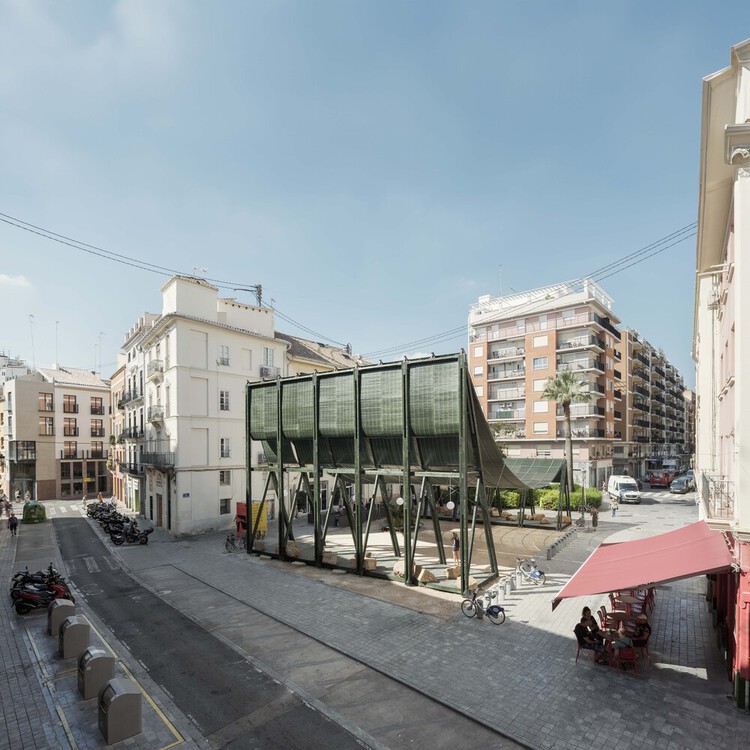
How do pavilions emerge in architecture? What role do they play in urban spaces? Beyond the multiple interpretations that exist around the world, the pavilion, as an architectural principle and typology, tends toward extroversion, often associated with a centrifugal nature and visual openness toward the horizon, which is linked to its origins as a tent offering shelter from the elements. Pavilions are usually identified as isolated and independent structures that can promote lateral openings in the urban space, panoramic or introspective views, technological reflections, and material experiments that are recognizable from the outside or once inside.

Pavilions in Urban Spaces: On the Experimentation, Recycling, and Reuse of Materials - Image 1 of 4Pavilions in Urban Spaces: On the Experimentation, Recycling, and Reuse of Materials - Image 2 of 4Pavilions in Urban Spaces: On the Experimentation, Recycling, and Reuse of Materials - Image 3 of 4Pavilions in Urban Spaces: On the Experimentation, Recycling, and Reuse of Materials - Image 4 of 4Pavilions in Urban Spaces: On the Experimentation, Recycling, and Reuse of Materials - More Images+ 26

Embracing Material Intelligence: How the Pacific Northwest is Promoting Timber Innovation

Material intelligence refers to how materials perform, adapt, and interact with ecological and cultural systems. It considers how stone, steel, or timber respond to intertangled forces, how those materials are sourced and assembled, and how they persist after demolition. Designers are centering material intelligence in constructing our cities in a generation of environmental uncertainty and strained supply chains.

Embracing Material Intelligence: How the Pacific Northwest is Promoting Timber Innovation - Image 1 of 4Embracing Material Intelligence: How the Pacific Northwest is Promoting Timber Innovation - Image 2 of 4Embracing Material Intelligence: How the Pacific Northwest is Promoting Timber Innovation - Image 3 of 4Embracing Material Intelligence: How the Pacific Northwest is Promoting Timber Innovation - Image 4 of 4Embracing Material Intelligence: How the Pacific Northwest is Promoting Timber Innovation - More Images+ 24