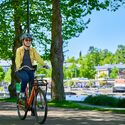
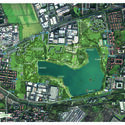
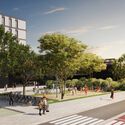
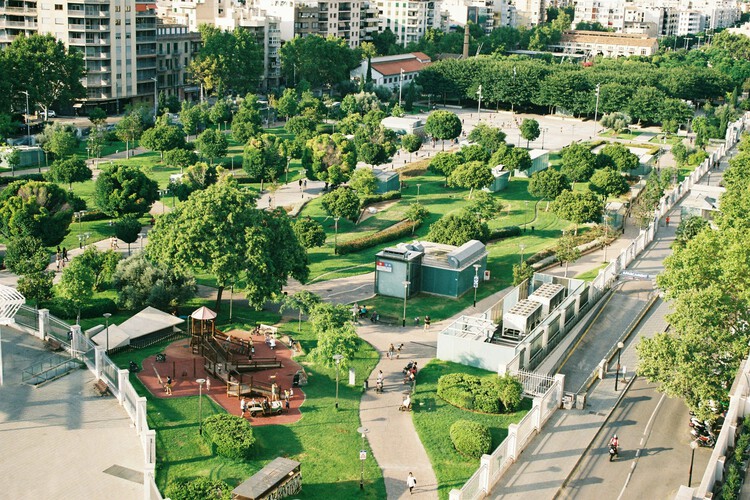
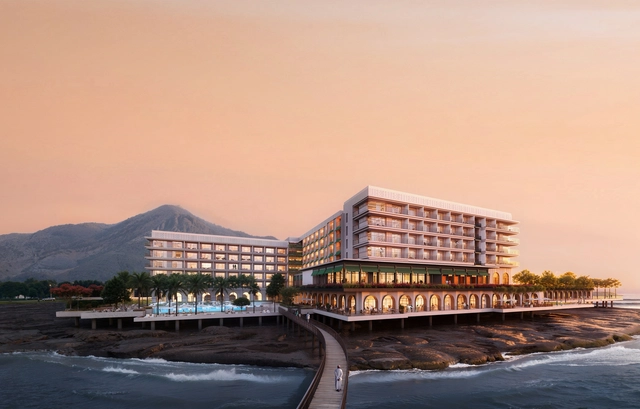
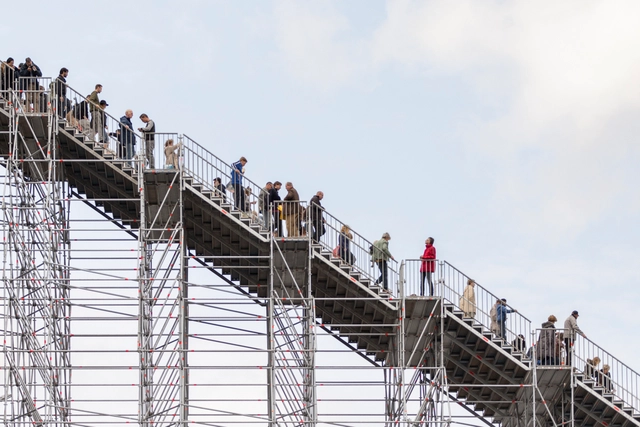
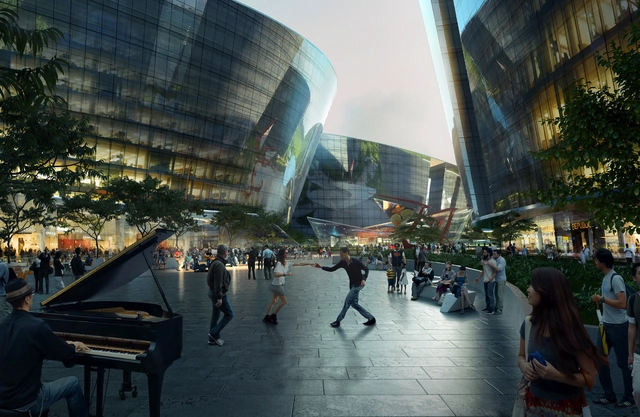
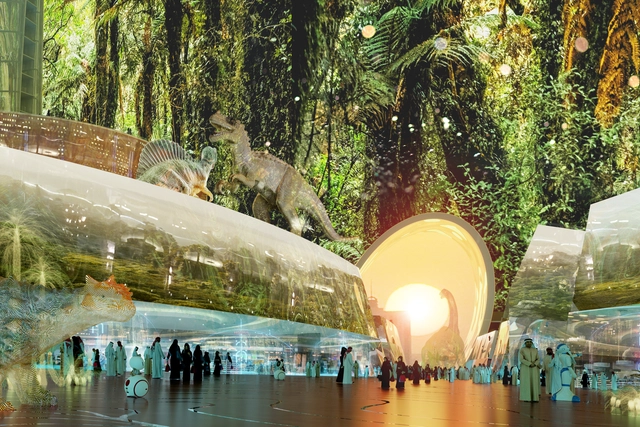
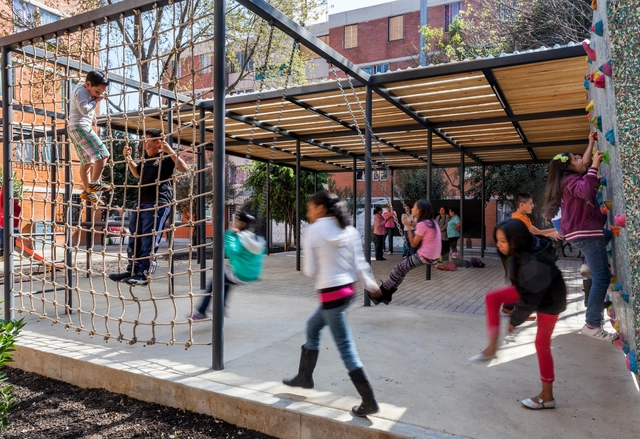
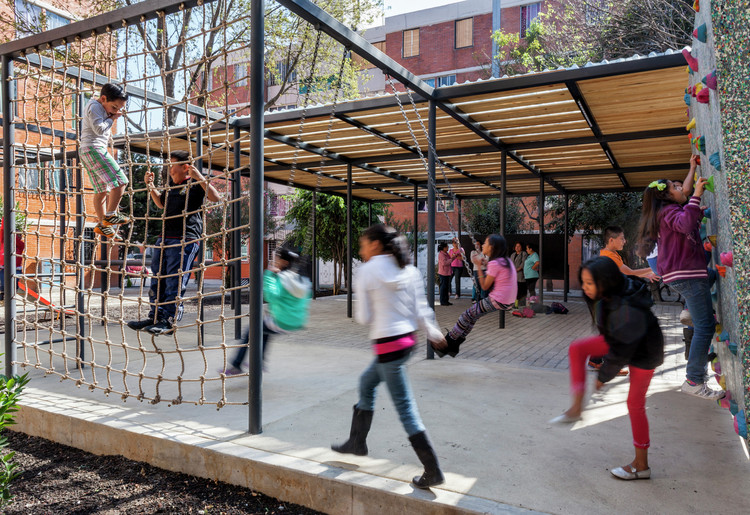
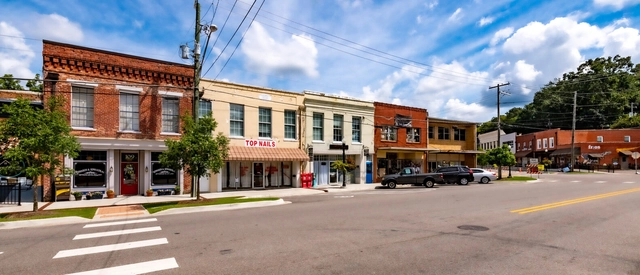
European City Context. Image Courtesy of ReGreeneration
The ReGreeneration project, a Horizon Europe project led by Inetum and supported by C40 Cities, ARUP, Placemaking Europe, and several others, operates as an active collaboration with local governments, private companies, academia, and civil society organizations at the intersection of urban regeneration, green public spaces, and neighborhood-scale design. Its premise addresses how European cities are built and maintained and how they experience a changing climate, arguing that cities must fundamentally change to remain livable under accelerating climate pressures.
What Placemakers Need to Unlearn — Why Regenerative Places Demand a Different Mindset
Regenerative placemaking is an approach to shaping places that prioritises long-term social, cultural and environmental health, not just short-term activation, footfall or commercial performance. It looks at how places can continue to give back to the people and communities who use them over time, rather than extracting value and moving on.
The architect's role has traditionally been relatively well-defined: design a building, direct the project, coordinate logistics, and guide construction through to completion. As specialised fields have proliferated, together with a rapidly changing social economy, the practice of architecture has diversified, opening multiple paths for how architects can contribute to society.
Since the 1980s, one of the most consistent shifts may have been the separation between the "design architect" and the "architect of record." Where a single office once carried a project from concept to completion, internationalisation—alongside cross-border work, licensure regimes, procurement models, and liability structures—has encouraged a split. Design teams increasingly set the conceptual and schematic direction, then hand over the design development to local record architects for technical detailing, approvals, and site execution. The model has clear advantages—sharper expertise, efficiency, and often profitability (or services offered at reduced fees)—but it also segments the profession and can distance authorship from delivery.
What, then, might the next shift be, and what new synergies could redefine the architect's role? How should architects adapt to the changing professional climate? One promising trajectory is a turn from singular, permanent objects toward ongoing placemaking—iterative, context-specific programmes that prototype, test, and refine spatial ideas in public. Rather than producing one large, iconic work that fixes a site for decades, this model privileges cycles of making, use, evaluation, and adjustment at the community scale.
Architectural competitions have long offered a space for experimentation: platforms where ideas can be tested, typologies reimagined, and critical questions addressed through design. Freed from some of the constraints of commercial commissions, competition entries often reflect ambitious visions for how architecture can respond to environmental, cultural, and social challenges. Whether focused on future habitats, public institutions, or small-scale community infrastructure, these proposals give shape to the values and priorities driving architectural thinking today.
This month's Unbuilt selection brings together eight competition-winning projects submitted by the ArchDaily community. Each received first, second, or third place in recent local and international competitions. The featured proposals span a wide range of programs and geographies: a sustainable library in Lima, a Martian habitat exploring closed-loop systems, an adult orphanage designed for empowerment in India, a new French school in Athens, and a placemaking initiative in Singapore rooted in local folklore. While varied in scale and scope, they all highlight architecture's capacity to engage context, foster inclusion, and propose new ways of inhabiting space.
I am by no means an expert on public-private partnerships. But for about 10 years, as the University of California Berkeley’s campus planner and then campus architect, I watched these developments play out in higher education—sometimes from a front-row seat, sometimes as a participant. During that time, this strategy, promoted with great enthusiasm and optimism, was touted as the answer to whatever problem arose. And yet the definition of a public-private partnership was slippery. The concept itself seemed to be all things for all people, depending on what was needed, who was recommending it, and what equivalents (if any) existed outside the university. The bandwagon continues to play today, making it ever more important to nail down the pros and cons of this development strategy, not only for colleges and universities, but for all public decision-making.
https://www.archdaily.com/1015830/are-for-profit-developments-consistent-with-the-values-of-a-public-universityEmily B. Marthinsen
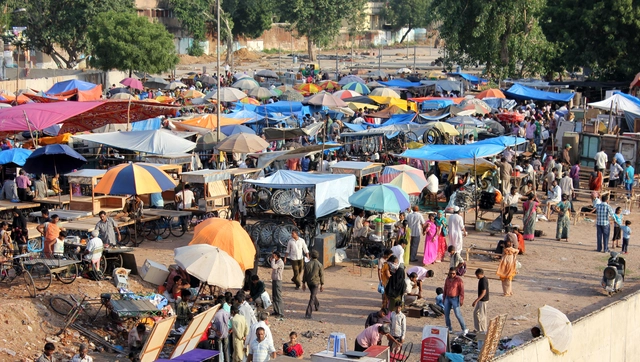
India's urbanscapes are characterized by a negotiation between the formal and the informal; permanence and impermanence. Structured amidst the concrete high-rises and planned neighborhoods, makeshift markets and bazaars form the core of city life. Often composed of sustainable structures, these transient commercial hubs exhibit a form of rudimentary architecture that spreads its roots deep in India's cultural and economic traditions.
The heart of India's informal urbanism lies in its public marketplaces and roadside bazaars that have existed for centuries. These urban zones have a history, believed to have originated from the era of traveling merchants and imperial trade relations. Today, these environments have evolved into dense labyrinths of impermanent shelters made from recycled tin sheets, tarpaulin canopies, and wooden poles. These bazaars organically transform neighborhoods into a choreographed chaos of vendors, goods, and the common public. Weekly markets are usually massive in scale and are set up every few days only to disappear again.
Cities are vibrant systems that hold meaning and move with the rhythm of the human life that powers it. In the fabric of urban landscapes, architects and urban designers collaborate to create spatial harmonies that extend beyond aesthetics and towards social justice and poetic expression. Citizens engage, becoming active participants in the ongoing narrative of the city - the metropolitan melody.
In 2023, ArchDaily wrote about the poetics of urbanism, exploring a future where cities meet its people’s social and emotional needs:
Project by Form4 Architecture investigating the opportunities for unsolicited participatory interaction in space, like street dancing, something that could be replicated in the Metaverse if its spatial quality had similar depth. Image Courtesy of Form4 Architecture
This article is the second in a series focusing on the Architecture of the Metaverse. ArchDaily has collaborated with John Marx, AIA, the founding design principal and Chief Artistic Officer of Form4 Architecture, to bring you monthly articles that seek to define the Metaverse, convey the potential of this new realm as well as understand its constraints.
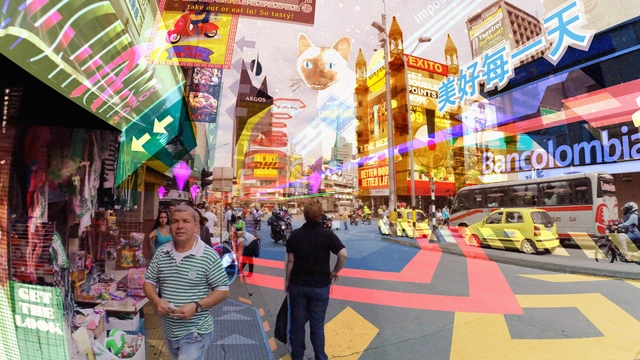
For architects, one of the most captivating aspects of AI and the Metaverse is that of placemaking. How do we create compelling places that bring people to this new world and enable them to enjoy their experience there, getting them to return once the novelty has worn off? How much of this digital world needs to connect back with our day-to-day physical environs for it to feel meaningful and how do these artificial cities, towns, and neighborhoods come to life?
Cantercel, France, 2022. Image Courtesy of forty five degrees
When talking about space-making practices, architects and urban planners are usually thinking about participatory planning and collaborative processes, often overlooking the ways in which the communities themselves can become their own agents of change. As the people poses an intimate knowledge of not only their environment, but also of social and cultural norms, the needs of their communities and latent opportunities within their surroundings, they are often the ones initiating actions, supporting their peers and contributing positively to their locality. Research-focused office forty five degrees set out to explore these grass-roots initiatives, to meet the locals and gather their stories in an effort to gain a better understanding of the complex and diverse cultural territories across Europe. Their journey, organized under the “Radical Rituals” project, follows the 45°N parallel line that transverses Europe from East to West. The office has been selected as part of ArchDaily's 2023 New Practices, an annual survey aimed at showcasing those who adress the ever-growing challanges of our times and take architecture to new directions.
Our daily lives involve constant communication with the city. As we move through different spaces, we ask ourselves questions like "Where am I now?", "Where am I headed?", "What am I looking for?", "What is this building for?", and "How do I experience this space?" While spatial encounters may feel intuitive, environmental graphic design (EGD) provides the answers by serving as an important interface between us and the built environment. It involves the design of graphic elements that merge with architectural, landscape, urban, and interior designs to make spaces more informative, easier to navigate, and memorable. EDG comprises three major elements: text, shape, and color. Text and shapes typically encapsulate the graphic information, but color projects it, amplifies it, and helps communicate it within the packed scenes of the city. In spatial experiences, we perceive colors first, since our senses mostly register visual sensations. Therefore, the strategic use of color is critical for environmental graphics to provide a layered experience of identity imagery, sense of place, and emotional connection.
This article is the first in a series focusing on the Architecture of the Metaverse. ArchDaily has collaborated with John Marx, AIA, the founding design principal and Chief Artistic Officer of Form4 Architecture, to bring you monthly articles that seek to define the Metaverse, convey the potential of this new realm as well as understand its constraints.
The Metaverse is currently hard to define. Try to think of it as the bringing together of the abundance of virtual communities we have created over the years on Facebook with the enormous range of leisure opportunities akin to shopping on Amazon. Yet, the Metaverse goes far beyond this and makes a new type of landscape possible by playing on the very qualities of placemaking we know from the cities, towns, and villages we inhabit worldwide. The Metaverse is a transactional space, and perhaps above all an experiential space where unexpected events take place and, importantly, shared events are enjoyed on an individual and communal basis.
The International Placemaking Week, presented by Project for Public Spaces (PPS) is an inspiring and engaging event designed as a global gathering of placemakers from different sectors to discuss thoughts and share strategies in order to push forward the concept of placemaking in the host city and on an international level. Previous editions took place in Vancouver in 2016, Amsterdam in 2017, and Chattanooga, Tennessee in 2019.
PPS, the nonprofit organization behind Placemaking Week, helps people create and sustain public spaces that build strong communities. In 1999, they elaborated “How to turn a place around”, a book that defined the placemaking movement, creating a guideline of 11 principles to follow in order to create vibrant community spaces.
There are countless good bones in American downtowns across the country, but they’re seldom connected to enough good tissue to be filled with life. This post is on the 10 things needed to make downtowns thrive. And none are the usual suspects. I’ve omitted stuff everyone else talks about because many of you already know those things.
The intense social and environmental fervor that arose in the 1960s and 1970s in response to assaults on the planet’s life support systems, degradation of communities, and socio-economic inequality unleashed revolutionary change at all levels of society. Out of the turmoil of that era, community-based ecological design emerged as a powerful creative force for reshaping the commons, bringing people together, and forming ecologically sustainable relationships with the environment.
Everyone’s experience of a city is unique. Whether one is visiting a place for the first time or has lived there all their life, their experiences are shaped by their personal interactions with the built environment. Buildings, landscapes, and streets come together to offer an opportunity for sensory stimulation, however, most of them are unable to provide inspiration. While a city’s infrastructure accounts for livability, equal importance isn’t given to enjoyability. Play and games embedded in the city’s fabric can help improve user engagement with urban spaces.
The 1970’s were a dark time for New York City. While the economy was down, crime rates were at an all-time high. The negative public image also kept tourists away, driving the city into a financial crisis. To change perceptions about The Big Apple, the New York State Department for Economic Development approached advertising firm Wells Rich Greene to create an inviting marketing operation. After 45 years, the resulting I Love NY campaign remains fresh in the minds of locals and tourists, successfully revamping New York City’s brand. Cities across the world like Paris, Amsterdam and Jerusalem have similarly invested heavily in constructing magnetic brands for themselves.
“Art aims to represent not the outward appearance of things, but their inward significance”, Greek polymath Aristotle remarked. Public art in cities worldwide seeks to pursue this aim by offering a sense of meaning and identification to its residents. Taking the form of murals, installations, sculptures, and statues, public art engages with audiences outside of museums and in the public realm. This art presents a democratic manner of collectively redefining concepts like community, identity, and social engagement.