Ask an architect what the hardest problem in the discipline is right now. The block of unmaintained postwar housing two streets from their office rarely comes up. What comes to their mind is the pressure differentials on Mars, or the tensile loads on a floating platform; because unclaimed ground has no one to negotiate with, no history to answer to, no tenant to remember the last renovation, which makes it considerably easier to design for.
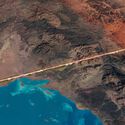
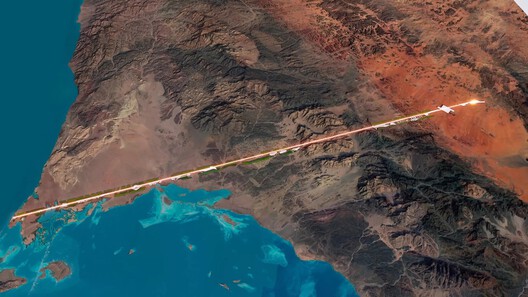
Architects think of themselves as solving a harder problem than the one next door. A project, like The Line, a 170-kilometer city meant to house nine million residents, with a site with no prior claimant, is not architecturally harder than a site with a hundred years of tenancy, contested ownership, and a planning department that remembers the last three developers who used the word "community" and meant something else. It is, considerably, easier. No one to persuade, no history to answer to, no argument to lose. Which raises the question of whether the harder problem is sitting two streets from the office, unsolved, and the easier one is the one getting the renderings and the funding rounds; then 'ambition' is the wrong word for what is happening. Something is being avoided, and we need to start thinking about what.
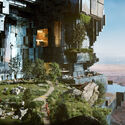
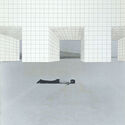
What is the discipline actually reaching for? And why does the reach keep landing, generation after generation, in roughly the same handful of places (the open ocean, the desert, the ice sheet, the orbit, anywhere the political weather stays calm on account of there being no polity yet to produce any)?
The Only Author
What the discipline is actually reaching for, on the open ocean or the empty quarter of a desert, is not the absence of a permitting process but the chance to be the only author. A city is authored by several hundred years of people, and the new architect inherits all of their decisions as constraints. An unclaimed site defers none of its decisions to anyone already dead or already living there. Infrastructure, governance, the shape of the street, the terms of citizenship itself in the more ambitious cases — all of it is available to be drawn from zero, a tabula rasa architecture rarely gets to work with.
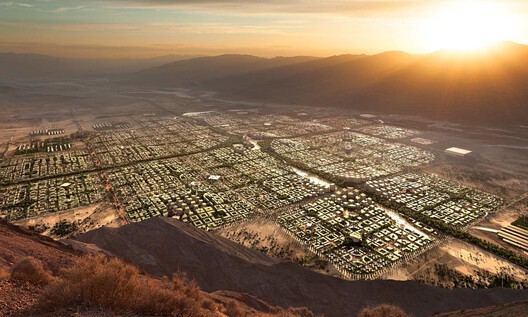
Telosa, a futuristic planned city in the American West conceived by billionaire Marc Lore and designed by Bjarke Ingels Group, is the clearest case of how far that zero is meant to extend. Its founder describes the project's land model, which he calls Equitism, as a way of having the city's residents own the ground collectively, a redesign not of the skyline but of property itself. Five years after the announcement, the project has no site. That is what happens when the zero being drawn from includes the legal category of ownership, which means the site being searched for cannot simply be empty of buildings; it has to be empty of a prior answer to the question of who owns land at all, and very little ground on Earth still qualifies.
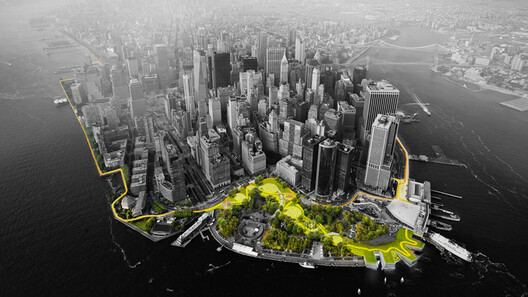
Or take Battery Park City, where a two-billion-dollar flood wall meant to protect Lower Manhattan from the kind of surge that arrived with Hurricane Sandy has spent more than a year stalled on two condominium buildings. The wall needs to cross private ground to work; the authority building it needed easements from five residential buildings along the water, and after twelve months of negotiation, two of them would not sign. The agency is now redesigning the route to avoid their property altogether, a change that will cost more, delay the work further, and leave part of the waterfront closed for longer than planned; all to route a public flood barrier around two buildings rather than through them. Mars, by comparison, has no easement to negotiate; there is nobody there yet to say no.
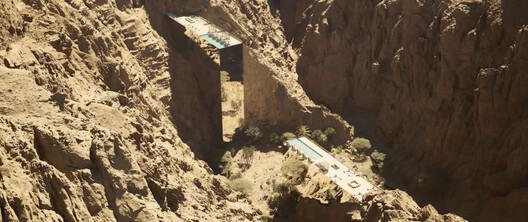
Wanting to skip that is not, by itself, a symptom of anything. Every discipline built around authorship will occasionally want to practice it, and there is nothing shameful in an architect wanting the credit, and the risk, of having drawn the whole thing. What is harder to defend is the version of that wanting currently financing itself at scale, in which starting over has quietly become the default, not because the fresh site poses the more interesting problem, but because it poses no problem at all. Confusing those two conditions, difficulty and mere size, is what lets a hundred-and-seventy-kilometer city read as ambition rather than an easier option. And underneath both sits the pressure to be first at something, to attach a name to an origin rather than to an improvement. None of these impulses are new; what is new is how rarely, lately, they get tested against the alternative sitting two streets away, still unsolved, while the fresh site gets the funding round instead.
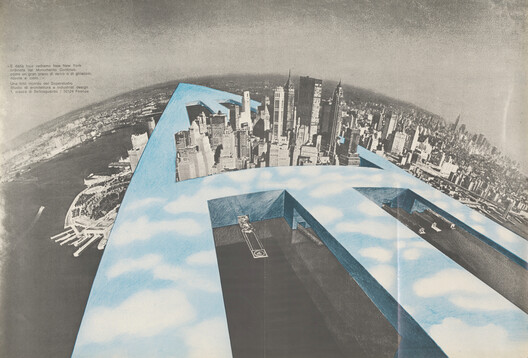
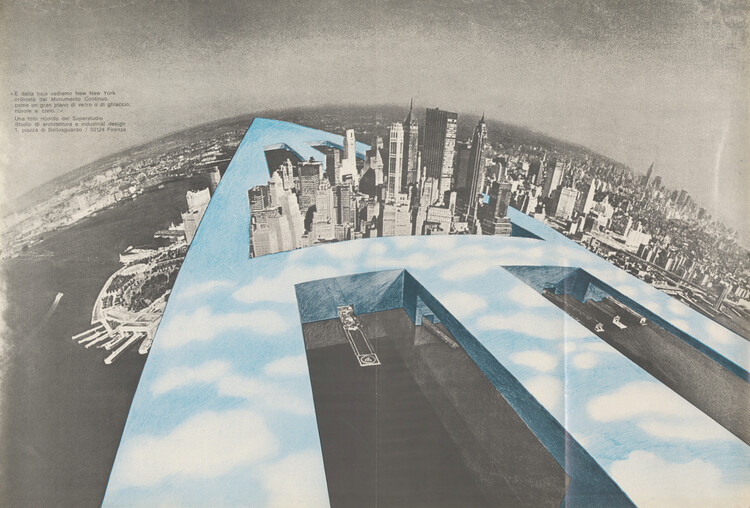
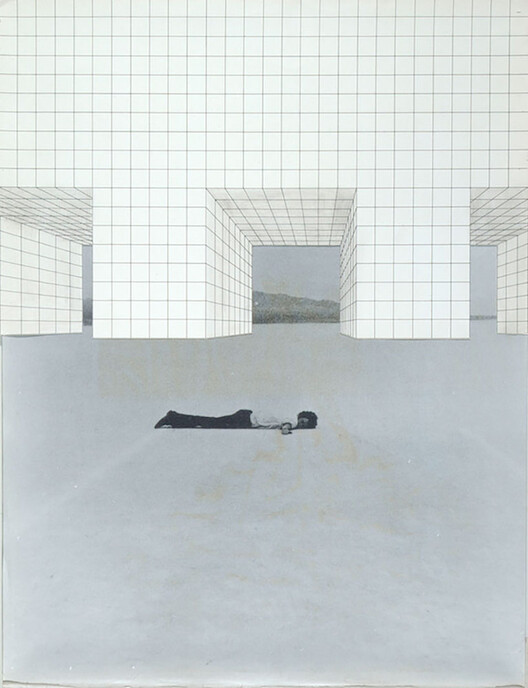
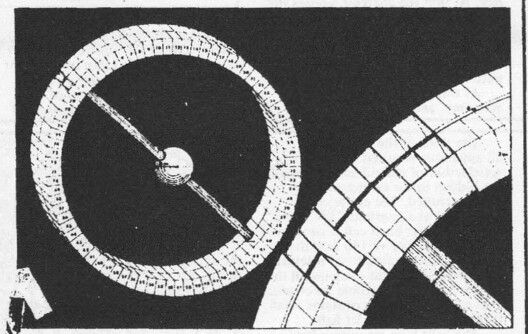
And none of this makes Superstudio's generation dishonest. The Continuous Monument was never meant to house anyone, and judging it as a failed housing scheme misses what it was built to do, which was to make an argument about Florence from a slab that would never touch Florentine ground. Wanting to be the only author, in other words, is not new, and it is not automatically a symptom. What has shifted is the direction the wanting points in. A project that borrows distance to argue about a place it never leaves is still, however obliquely, addressed to that place. A project that borrows distance to stop needing the place at all, financing round and citizenship tier included, is addressed to an exit instead, and its backers tend to be candid, more candid than the renderings, about which obligations — a shared court, a tax base, a resident with a vote — they are hoping the new address will not carry over.
The Costume of Critique
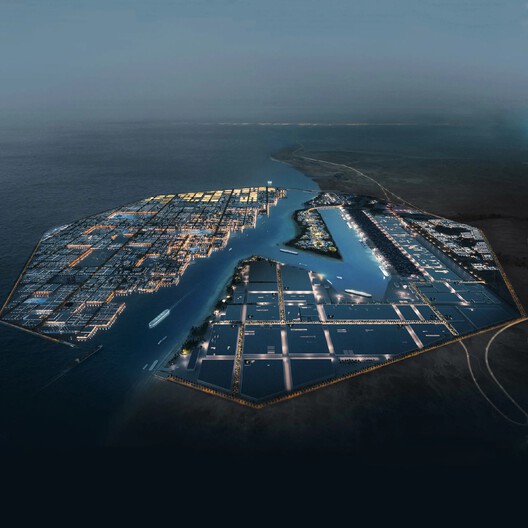
Telosa was designed by Bjarke Ingels Group, so was Oceanix Busan, so was Oxagon, the floating industrial port anchoring one corner of NEOM. The renderings for all three lean on the same handful of words: resilient, regenerative, adaptive, vocabulary that earned its value in climate justice and disaster response. The same Venice exhibition that unveiled Oxagon in 2023 credited Adjaye Associates, Coop Himmelbau, and Studio Fuksas for other pieces of NEOM under the same banner, Zero Gravity Urbanism. Whatever critique once organized around those words has become, in the process, the name of a product line.
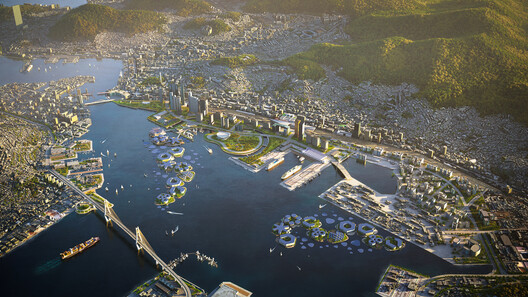
That drift matters because the words were not decorative to begin with. Resilient meant something precise after Hurricane Sandy: able to absorb a surge without catastrophic failure, for communities that had nowhere else to go. Attaching it to a floating platform in the Red Sea does not make the platform less interesting, but it does make the word do less work. And each time it does less work in one place, it has less credibility left in another. The towns that actually need what the word used to promise cannot commission the projects that are now borrowing it; they can only watch the vocabulary depart.
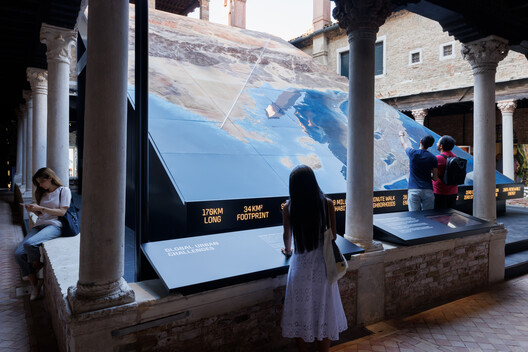
Wanting to be the only author was never the whole story. What lets that wanting read as ambition instead of avoidance is the borrowed language (critical, humanitarian, urgent) that travels with it into contexts where none of those conditions apply.
A Discipline Talking to Itself
Most of what gets built right now does not offer the kind of authorship this article has spent several thousand words describing as scarce. Most architects who choose repair over escape are not making a principled stand against, as an example, The Line. Instead, they are doing the job in front of them, which happens to be a rezoning application. But it would be dishonest to end without admitting it is also, in part, a distinction between careers, and that plenty of good architects have built entire practices out of the unglamorous half of that split without ever once reaching for Mars.
None of this settles into a position the discipline can simply adopt, and it would flatten the argument to pretend otherwise. Architecture will keep drawing Mars, floating platforms, and pollinator towers, because the impulse behind them, wanting to be the only author, is not a defect that can be trained out of a profession built on the idea. The more honest question, going into whatever comes after this cycle of renderings, is not whether to stop wanting that, but whether the wanting can be pointed back, occasionally, without the discipline losing interest the moment consent becomes part of the drawing.
Reaching for other horizons is also, in its way, how a discipline tests its own limits. What matters is whether the reach includes a way back, whether looking at Mars, the ocean, or a city with no history yet is a way of eventually seeing the place already occupied more clearly, or simply a way of not having to look at it at all. The line between ambition and avoidance was never about the destination; it was always about whether anyone plans on returning.
This article is part of the ArchDaily Topic: The Lure of Escapism in Architecture and Alternative Worlds. Every month we explore a topic in-depth through articles, interviews, news, and architecture projects. We invite you to learn more about our ArchDaily Topics. And, as always, at ArchDaily we welcome the contributions of our readers; if you want to submit an article or project, contact us.


