1. ArchDaily
  2. Superstudio

Superstudio: The Latest Architecture and News

The Architect as Writer: Expanding the Discipline Beyond Buildings

Architecture has always been more than bricks and mortar. It is equally constructed through words, ideas, and narratives. From ancient treatises to radical manifestos, from technical manuals to poetic essays, the written word has served as a spatial, pedagogical, and political tool within the field. Writing shapes how architecture is conceptualized, communicated, and critiqued — often long before, or even in the absence of, physical construction.

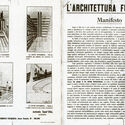
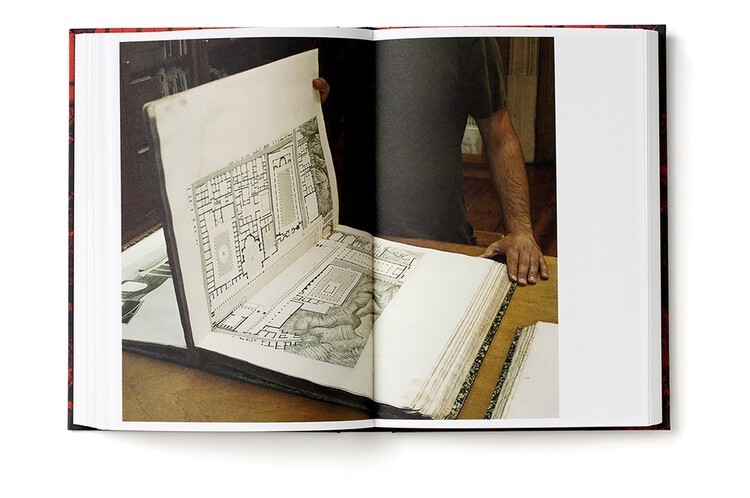
Historically, figures such as Vitruvius, Alberti, and Palladio employed writing to codify principles, project ideals, and legitimize architecture as a discipline. In the modern era, Le Corbusier, Adolf Loos, and Lina Bo Bardi wrote prolifically to expand the scope of architecture beyond form and function, often using publications as tools for persuasion and experimentation. The postwar period gave rise to new editorial strategies, as evident in the manifestos of Archizoom and Superstudio, and the polemical publications of Delirious New York and Oppositions, where writing served as both critique and project.
The Architect as Writer: Expanding the Discipline Beyond Buildings - Image 1 of 4The Architect as Writer: Expanding the Discipline Beyond Buildings - Image 2 of 4The Architect as Writer: Expanding the Discipline Beyond Buildings - Image 3 of 4The Architect as Writer: Expanding the Discipline Beyond Buildings - Image 4 of 4The Architect as Writer: Expanding the Discipline Beyond Buildings - More Images+ 31

Concéntrico 2025: The Politics of Urban Presence

Subscriber Access | 

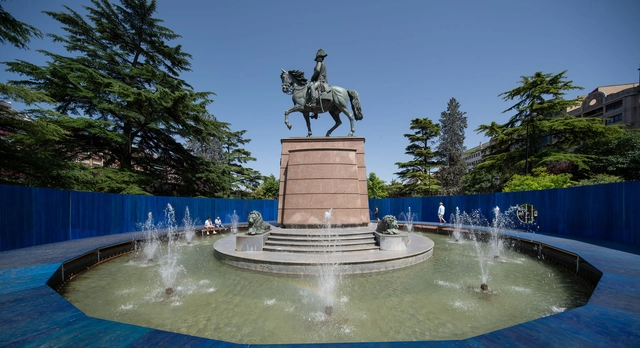
Every June, the Spanish city of Logroño transforms into a space of architectural dialogue, opening its streets, plazas, riverbanks, and traffic islands to temporary structures that redefine how cities are inhabited. For ten editions, Concéntrico has worked not as a specialized fair or an architecture biennale, but as a portable museum — a curatorial gesture that brings a dispersed collection of contemporary architecture into public space. Set in a city suspended between arid plains and distant mountains, far from the circuits of capital cities and cultural institutions, Concéntrico presents itself as a temporary promise. It's a reminder that even cities that are often overlooked can host architecture that is current, diverse, and speculative. In this sense, the festival is less about celebration and more about activation.
But beyond its curatorial logic, Concéntrico operates as a political structure. In the ancient sense of polis, it invites citizens, architects, and institutions to reassess what public space can be. The interventions offer speculative proposals for urban life that reveal what is missing, what is possible, and what should be questioned. A temporary pool over a fountain, a bathhouse in a roundabout, or a shared meal on a major avenue are not just spatial gestures — they are political statements, asking how urban infrastructure might be redirected from control to care, from efficiency to encounter. In that way, the festival becomes not just a reflection of the city, but an instrument for its transformation.

Concéntrico 2025: The Politics of Urban Presence - Image 1 of 4Concéntrico 2025: The Politics of Urban Presence - Image 2 of 4Concéntrico 2025: The Politics of Urban Presence - Image 3 of 4Concéntrico 2025: The Politics of Urban Presence - Image 4 of 4Concéntrico 2025: The Politics of Urban Presence - More Images+ 58

Framing Indeterminacy: The Incorporation of Uncertainty Into Architecture

Subscriber Access | 
Framing Indeterminacy: The Incorporation of Uncertainty Into Architecture - Featured Image
OMA's transformation of Post Houston. Image © Leonid Furmansky

By definition, architecture and urban planning operate within a certain degree of indeterminacy, using present context to find viable answers for an unknown future. As a result, design is a constant search for a balance between prescribing and taking a step back to make room for alternate yet unforeseeable scenarios. Uncertainty is an inherent condition in present-day society, and recent rapid social, economic, and even environmental changes prompt a closer look at how architecture can incorporate indeterminacy. The following reviews some precedents and contemporary examples that programmatically operate with indeterminacy, highlighting several strategies for designing for uncertainty and change.

Framing Indeterminacy: The Incorporation of Uncertainty Into Architecture - Image 1 of 4Framing Indeterminacy: The Incorporation of Uncertainty Into Architecture - Image 2 of 4Framing Indeterminacy: The Incorporation of Uncertainty Into Architecture - Image 3 of 4Framing Indeterminacy: The Incorporation of Uncertainty Into Architecture - Image 4 of 4Framing Indeterminacy: The Incorporation of Uncertainty Into Architecture - More Images

The Return of Superstudio and the Anti-Architecture Ideology

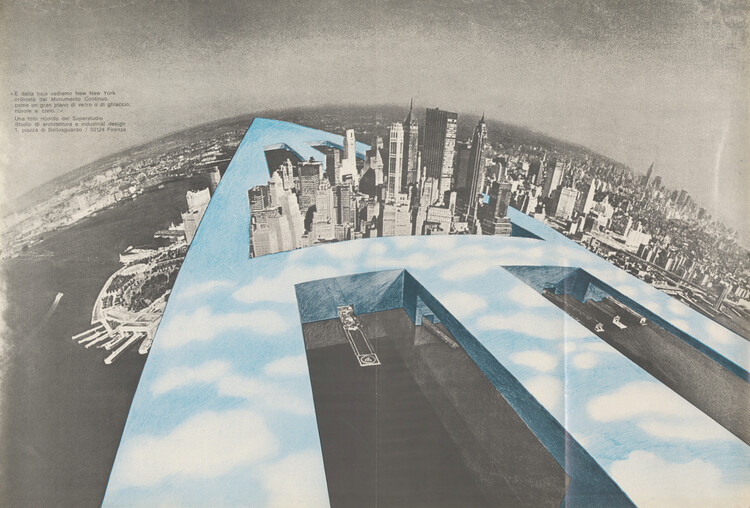
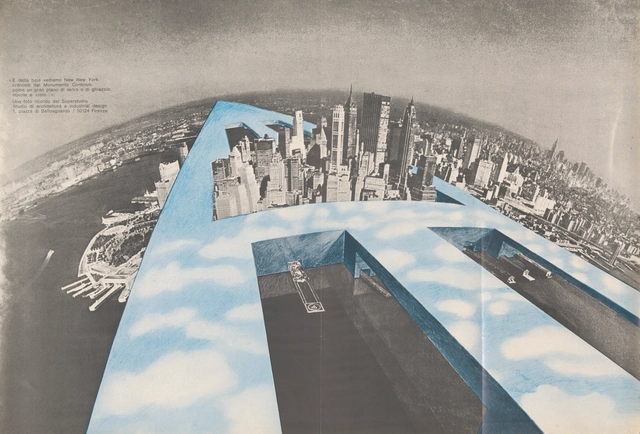
In the 1960s, Cristiano Toraldo di Francia and Adolfo Natalini, two Florence-based architecture students in their twenties, decided to undertake the substantial task of designing a new way for the citizens of the globe to inhabit the earth. Driven by the possibilities laid out in science fiction novels and the desire to prescribe design to solve the problems of their era, the duo, who dubbed themselves as Superstudio, sought to continuously reinvent their role in what it means to be an architect. Their solution was the creation of an “anti-design” culture as a means to provide commentary on politics, capitalism, and urbanism, by creating ideas in which everyone is given a functional space that frees itself of time, place, and the need for excessive objects.

Adolfo Natalini, Co-Founder of the Radical 'Superstudio', Dies at 78

On January 23, 2020, Adolfo Natalini has died at the age of 78. The Italian architect founded —together with Adolfo Natalini— one of the most important offices of radical post-war architecture in Italy, Superstudio, which, during the '60s and early '70s, focused on the form of a strong critique of the production methods of design and architecture.

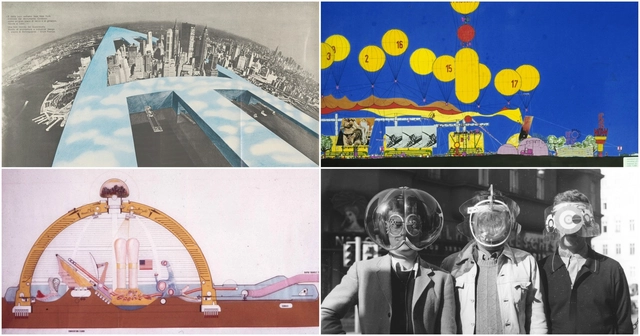
All this analysis was reflected in a very different way of representing architecture, collages, experiments, manifestos, furniture, stories, storyboards, etc. This approach has unleashed multiple discussions that remained valid to this day among the younger generations, which have resumed these modes of criticism to apply them to new ways of producing and thinking about architecture.

Architecture and Dystopia: Music Videos Based on Superstudio & Archigram's Criticisms

Architecture and Dystopia: Music Videos Based on Superstudio & Archigram's Criticisms - Image 1 of 4Architecture and Dystopia: Music Videos Based on Superstudio & Archigram's Criticisms - Image 2 of 4Architecture and Dystopia: Music Videos Based on Superstudio & Archigram's Criticisms - Image 3 of 4Architecture and Dystopia: Music Videos Based on Superstudio & Archigram's Criticisms - Image 4 of 4Architecture and Dystopia: Music Videos Based on Superstudio & Archigram's Criticisms - More Images+ 11

Superstudio and Archigram were the pioneers of the dystopia they had popularized in 1960, when they experienced a crisis that tore world economies, positioning Italy in a historic moment of boom and bust that harbored dreams and despair.

Cristiano Toraldo di Francia, Co-Founder of the Radical 'Superstudio', Dies at 78

Yesterday, July 30, 2019, Cristiano Toraldo di Francia died at 78 years of age —56 years ago the architect founded - together with Adolfo Natalini - one of the most important offices of radical post-war architecture in Italy, Superstudio, which, during the 60's and early 70's, focused on the form of a strong critique of the production methods of design and architecture. All this analysis was reflected in a very different way of representing architecture, collages, experiments, manifestos, furniture, stories, storyboards, etc. This approach has unleashed multiple discussions that remained valid to this day among the younger generations, which have resumed these modes of criticism to apply them to new ways of producing and thinking about architecture.

"We Dream of Instant Cities that Could Sprout like Spring Flowers": The Radical Architecture Collectives of the 60s and 70s

Subscriber Access | 

The first moon landing, widespread anti-war protests, Woodstock and the hippies, rural communes and environmentalism, the Berlin Wall, the women’s liberation movement and so much more—the tumultuous decades of the Sixties and Seventies occupy an unforgettable place in history. With injustices openly questioned and radical ideas that set out to unseat existing conventions and practices in various spheres of life, things weren’t any different in the architectural world. 

The grand visions dreamt up by the modernists were soon challenged by utopian experiments from the “anti-architecture” or “radical design” groups of the 1960–70s. Reestablishing architecture as an instrument of political, social, and cultural critique, they drafted bold manifestoes and designs, experimented with collage, music, performance art, furniture, graphic design, zines, installations, events, and exhibitions. While certain individuals from this era like Cedric Price, Hans Hollein, and Yona Friedman remain important to the realm of the radical and the unbuilt, the revolutionary spirit of these decades also saw the birth of various young collectives. For eccentricity at its very best, read on for a (by no means exhaustive) list of some groups who dared to question, poke, expand, rebel against, disrupt and redefine architecture in the 60s and 70s.

The Best Music Videos for Architecture Fans in 2017

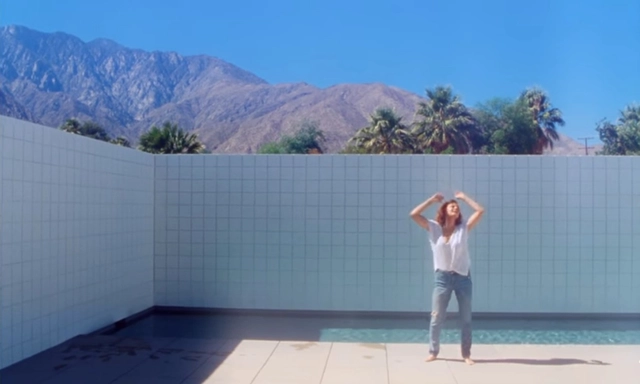
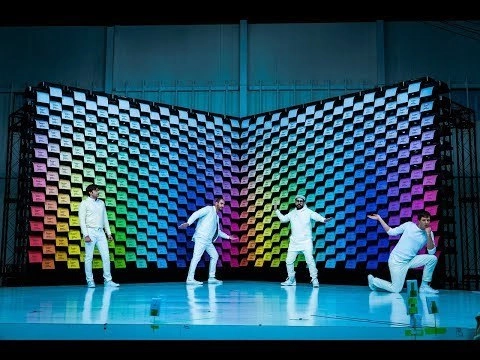
The old adage "writing about music is like dancing about architecture" (it's stupid etc.), loses some of its impact when architecture becomes the backdrop for both music, and dancing. Ever since video killed the radio star, famous houses, quirky spaces, and history's great buildings have provided beautiful, unique and dramatic settings for music videos of all types. So which of 2017s music videos have capitalized on the wonderful world of architecture? 

Thespaces.com have compiled a list of the best music videos for architecture lovers for 2017. Here are a few of our favorites and a few additional videos we think deserve a mention.