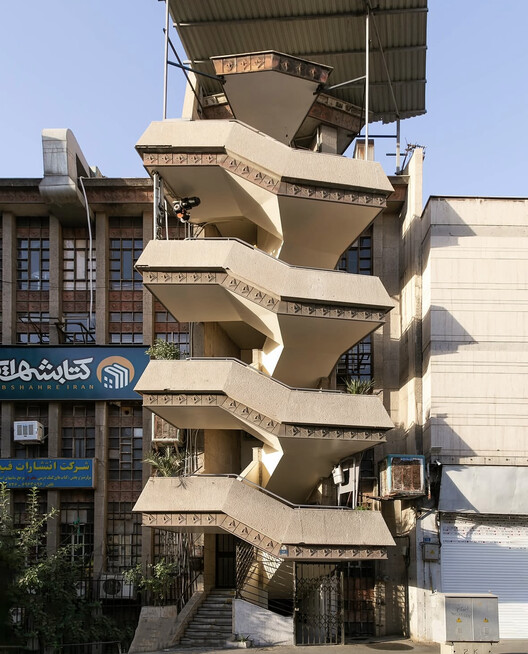
Nestled at the foot of the Alborz mountain range, Tehran grows beneath a ridge that protects and suffocates it at the same time. The same landscape that blocks the winds and traps pollution over the city also holds, along its slopes, centuries of disputes over this strategic territory. It is a capital built on unstable ground, both geologically and politically. Active seismic faults run beneath its avenues, while above them accumulate the traces of successive reconstructions, demolitions, and forced reinventions. Thus, the city continues to expand, a silent witness to a country that, for more than two centuries, has constantly negotiated between memory and erasure.
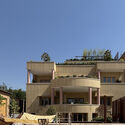
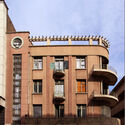
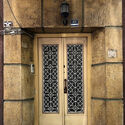
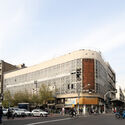
Within this particular context, Tehran's architecture moves through history in dialogue with different ideologies and styles. From traditional Persian masonry to European Neoclassicism and Baroque, diverse lines of thought have been built along its streets. Among them, however, the intense modernist production that shaped the city, particularly between 1930 and 1980, stands out.


