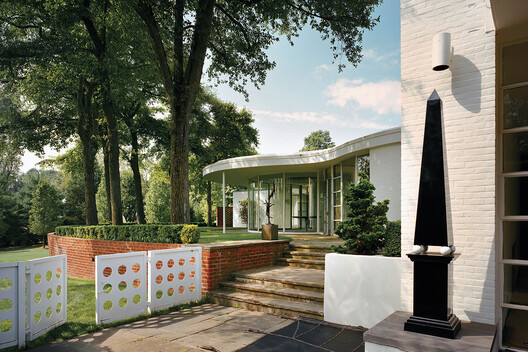
As pillars of our cultural landscape, many masterpieces of the Modern Movement are often demolished, abandoned, or altered regardless of the context in which they are located. Preserving this architectural legacy highlights the role of architecture and design professionals in shaping built environments where continuity between the past and the present reinforces communities' sense of place. On Long Island, a coalition of advocates came together to save the A. Conger Goodyear House, which dates to 1938 and was designed by Edward Durell Stone. Considered one of the notable examples of the International Style in the United States, the house attracted significant attention throughout the 1940s, appearing in specialized journals, books, and popular publications.
Significant works of modern architecture are threatened every day by physical deterioration, perceived functional or economic obsolescence, and public indifference. At the same time, the very qualities that distinguish them, such as innovative design features, materials, and experimental technologies, often present unique challenges for preservation. From maintaining material authenticity to respecting the original architectural intent, design professionals and students alike are taking the initiative to evaluate and develop interventions that can demonstrate and restore the relevance of these structures.
Drawing inspiration from works such as Mies van der Rohe's Barcelona Pavilion, American architect Edward Durell Stone designed the Goodyear House in Old Westbury, an affluent community on Long Island's North Shore in New York. Characterized by its flat roof, open plan, abstract geometry, and transparency, the single-story residence was commissioned by lumber businessman and art collector Anson Conger Goodyear, who was also the founder and first president of the Museum of Modern Art (MoMA).


