
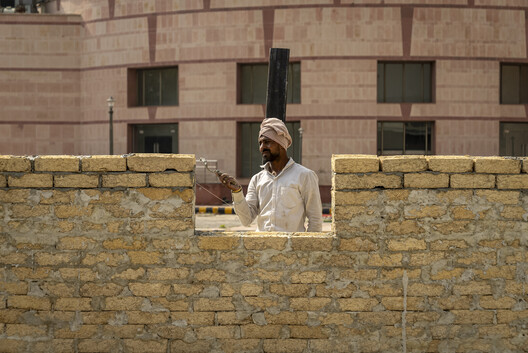
A building material rarely begins where architecture encounters it. By the time concrete reaches a construction site, its limestone has already been quarried, processed, and transformed. Timber arrives long after the forest. Glass appears detached from the sand from which it was made. By the time materials enter construction, much of the landscape and industry that produced them has already disappeared from view.
Across India and the SWANA region, another material supply chain is becoming visible. Rice husks, coconut fibres, sugarcane bagasse, and date palm residues, once treated as agricultural leftovers, are increasingly entering architecture as insulation, composite panels, fibreboards, and cement substitutes. Rice mills, coconut plantations, sugar factories, and date farms are increasingly becoming part of the architectural supply chain.

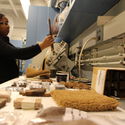

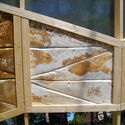
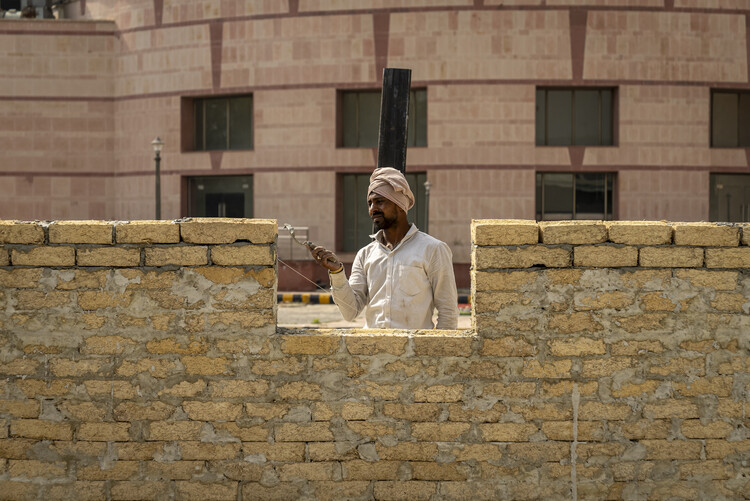
The scale of these resources is substantial. India generates hundreds of millions of tonnes of crop residue annually through cultivation, harvesting, and food processing. Rice milling produces husks that account for roughly one-fifth of harvested rice. Sugar production leaves behind bagasse, the fibrous residue remaining after juice extraction. Coconut cultivation generates coir fibre, pith, and shell waste, while date palm agriculture across the Gulf produces large quantities of fronds, fibres, and trunk material. Much of this biomass has traditionally been discarded, burned, or directed toward low-value applications. Increasingly, these materials are being redirected into manufacturing sectors far removed from agriculture itself.
Related Article
Designing with Living Matter: 5 Installations Using Bio-Based Materials and Digital Fabrication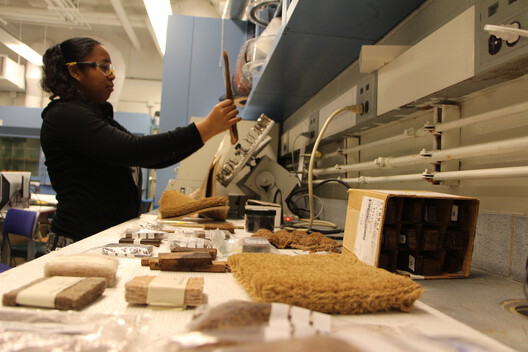
The shift becomes easiest to see in the products themselves. Rather than attempting to replace conventional structural systems, agricultural by-products are being incorporated into familiar assemblies and components. Rice husk ash is increasingly used as a supplementary cementitious material, reducing reliance on Portland cement while maintaining compatibility with existing concrete systems. Bagasse fibres are compressed into boards for interior applications, acoustic treatments, and partitions. Coconut fibres are processed into insulation products, composite panels, and geotextiles. Their adoption has been aided by the fact that most can be incorporated into existing construction systems without substantial changes to practice.
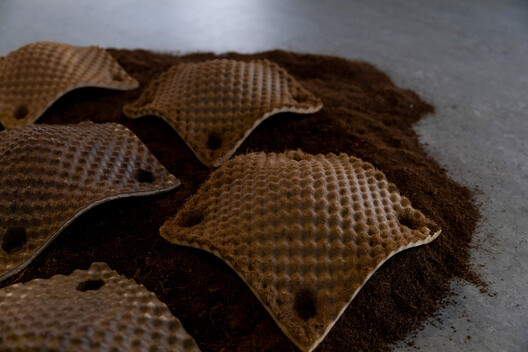
The coir sector in Kerala demonstrates how these materials can evolve beyond experimentation. Coconut cultivation along India's southwestern coast has supported a network of fibre extraction, processing, and manufacturing for decades. Today, coir is used in erosion-control systems, insulation products, boards, and geotextiles applied across infrastructure and landscape projects. What distinguishes coir is the maturity of the industry surrounding it. An agricultural by-product has become the basis of an established manufacturing ecosystem capable of producing construction materials at scale.
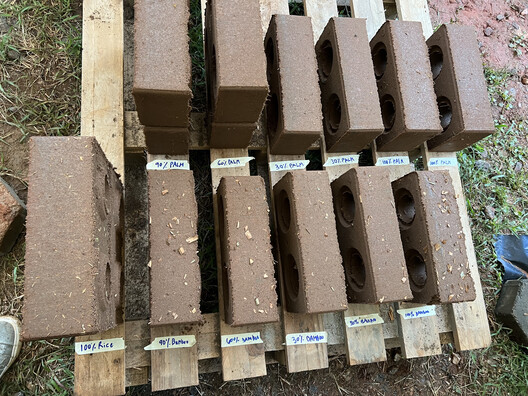
Similar developments are emerging across other agricultural sectors. Sugarcane bagasse has become a feedstock for fibreboard production, creating alternatives to timber-based panels while making use of material generated by the sugar industry. Research and industry applications involving rice husk ash continue to expand, particularly in concrete production, where agricultural waste can substitute for a portion of emissions-intensive cement. Materials once treated as disposal problems are increasingly entering mainstream construction products.
Performance alone does not explain their relevance. Unlike highly standardized industrial materials, agricultural materials retain a relationship with the environments that produce them. Soil conditions, climate, rainfall patterns, and cultivation methods all influence material characteristics. As a result, biological materials rarely achieve complete uniformity. Variation becomes part of their identity rather than a defect to be eliminated.
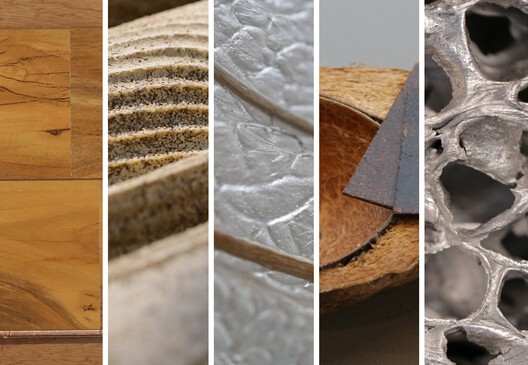
This condition is creating new forms of regional material culture. In Kerala, coconut cultivation supports coir manufacturing because the agricultural landscape makes such production possible. Across the Gulf, researchers and material laboratories are exploring date palm fibres and agricultural biomass as components in composite panels, insulation systems, and lightweight construction products. Resource availability begins to shape architectural context in a much more direct way. Regional identity becomes embedded in material supply chains as much as in architectural form.
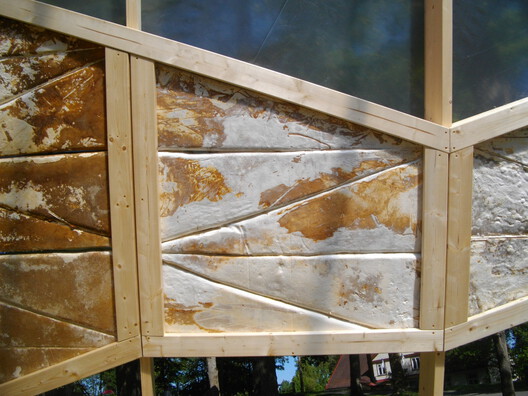
As these materials gain relevance, they are also influencing how production is organized. Conventional construction materials often depend on extensive extraction, centralized manufacturing, and long-distance distribution networks. Agricultural residues move through different production geographies. Because many are generated close to farms and processing facilities, manufacturing frequently develops near the source. This relationship encourages regional processing clusters and creates opportunities for value to remain within agricultural regions rather than moving elsewhere for industrial transformation.

The environmental implications of this model depend heavily on execution. Agricultural materials are not automatically sustainable simply because they originate from waste streams. Transportation distances, drying requirements, storage conditions, and processing methods all influence environmental performance. A poorly organized system can offset many of the benefits associated with waste utilization. The strongest examples tend to emerge where agricultural production and material manufacturing already sit close together.

Architect and scientist Mae-ling Lokko has argued that the life of a material begins while it is still growing. The observation directs attention toward the biological systems already embedded within construction. If material properties are shaped before manufacturing, then architectural responsibility extends beyond specification and performance. It includes understanding what happens after a material has served its purpose. Durability remains important, but so do recovery, reuse, decomposition, and return. For much of modern construction, success has been measured through permanence. Materials were expected to resist weathering, decay, and transformation for as long as possible.
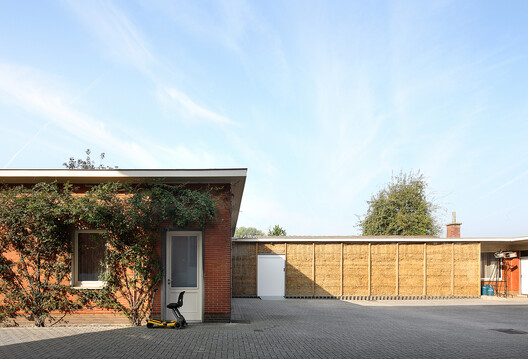
Agricultural materials place those assumptions under pressure. They remind us that buildings participate in larger ecological cycles whether architecture acknowledges them or not. Reducing waste and lowering emissions explain only part of their relevance. They also reveal that construction is inseparable from systems of growth, harvest, use, and renewal. As architects search for new material futures, the challenge may be less about finding alternatives to extraction and more about understanding how buildings can exist within these cycles rather than apart from them.
This article is sponsored by VELUX, a global leader in daylight and ventilation solutions, and official partner of both the UIA 2026 World Congress of Architects and Barcelona 2026 World Capital of Architecture. As part of ArchDaily's coverage of the UIA 2026 World Congress of Architects, this series explores topics related to the Congress's curatorial theme, 'Becoming. Architectures for a Planet in Transition.'
At the Congress, VELUX will introduce Re:Living, an approach initiative exploring how existing buildings can be transformed from degenerative structures into regenerative catalysts for human and planetary health, positioning renovation as a critical pathway for addressing the interconnected climate, housing, health, and affordability challenges facing Europe.