1. ArchDaily
  2. Biobased Materials

Biobased Materials: The Latest Architecture and News

ORGA Completes Carbon-Negative Biobased Housing Prototype in Marknesse, Netherlands

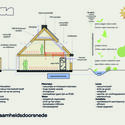
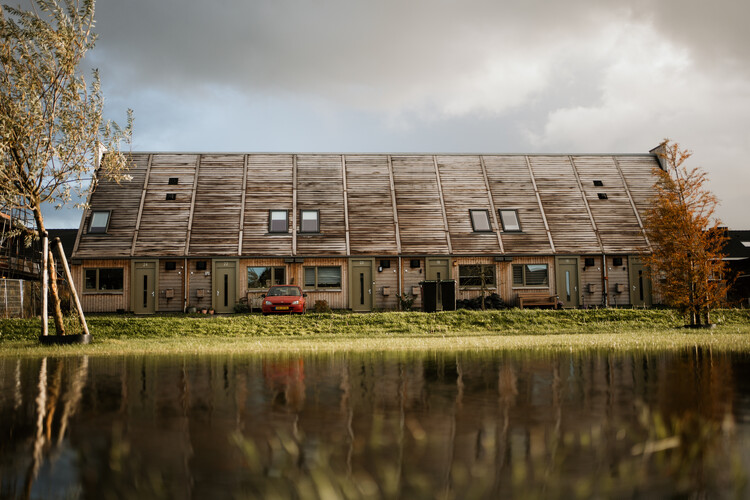
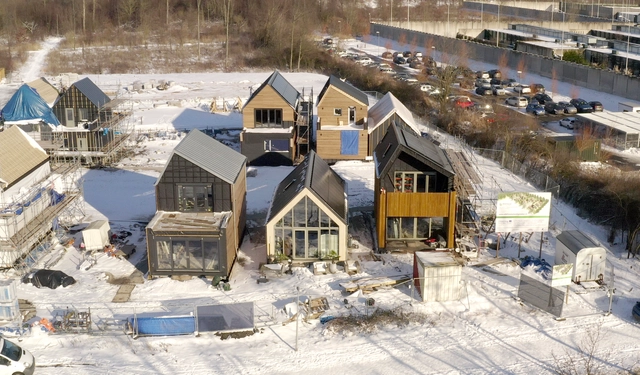
Netherlands-based, nature-inspired architecture practice ORGA has completed the design of a carbon-negative neighborhood in Marknesse, a village in the Dutch province of Flevoland. The project comprises 12 affordable rental homes built with a high percentage of biobased materials. Its main objective is to develop scalable housing solutions that minimize CO₂ emissions and reduce reliance on fossil resources. The design reinterprets the traditional Dutch brick house, known as the "Delft Red" typology, characterized by red brick facades and orange-red roof tiles, while introducing wooden chimneys that double as habitats for bats. Commissioned by housing association Mercatus, the prototype was built in the first half of 2025 and is intended for first-time buyers and low-income households.

ORGA Completes Carbon-Negative Biobased Housing Prototype in Marknesse, Netherlands - Image 1 of 4ORGA Completes Carbon-Negative Biobased Housing Prototype in Marknesse, Netherlands - Image 2 of 4ORGA Completes Carbon-Negative Biobased Housing Prototype in Marknesse, Netherlands - Image 3 of 4ORGA Completes Carbon-Negative Biobased Housing Prototype in Marknesse, Netherlands - Image 4 of 4ORGA Completes Carbon-Negative Biobased Housing Prototype in Marknesse, Netherlands - More Images+ 6

Designing with Living Matter: 5 Installations Using Bio-Based Materials and Digital Fabrication

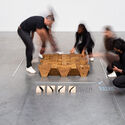
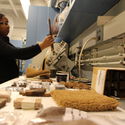
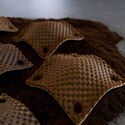
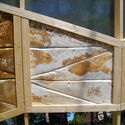
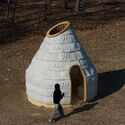
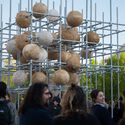
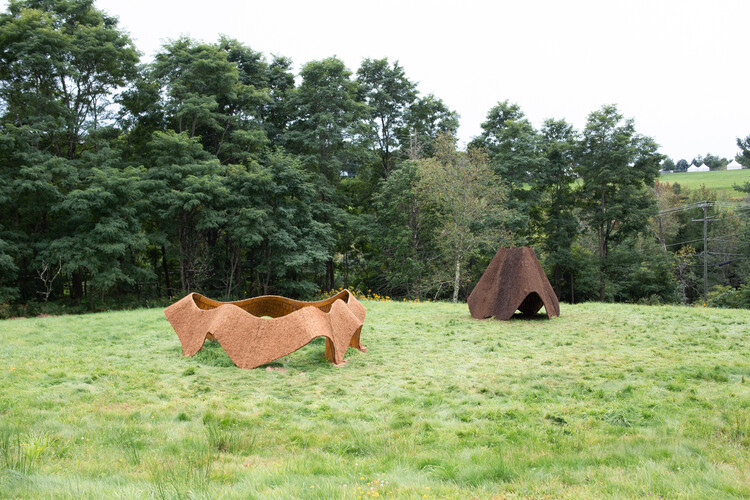
At a time of ecological emergency, architecture cannot be separated from the extractive systems on which it depends. As the technosphere expands, linking material flows, energy consumption, and digital infrastructures, design becomes increasingly entangled in these processes. How can design practice intervene in anthropocentric systems and transform the architectural process and aesthetics through an investigation of material intelligence? More broadly, how does architecture engage with the agency and intelligence of non-human entities to rebalance the environmental burden?

Designing with Living Matter: 5 Installations Using Bio-Based Materials and Digital Fabrication - Image 1 of 4Designing with Living Matter: 5 Installations Using Bio-Based Materials and Digital Fabrication - Image 2 of 4Designing with Living Matter: 5 Installations Using Bio-Based Materials and Digital Fabrication - Image 3 of 4Designing with Living Matter: 5 Installations Using Bio-Based Materials and Digital Fabrication - Image 4 of 4Designing with Living Matter: 5 Installations Using Bio-Based Materials and Digital Fabrication - More Images+ 11

From Material Intelligence to Circularity: Lessons from Architecture in 2025

Which materials have taken center stage in the architectural discourse of 2025? Which projects have rediscovered new construction practices and methods through material innovation? While the future of building materials still appears uncertain, year after year, experimentation and research continue to reveal diverse practices, initiatives, and efforts dedicated to understanding their value and responsibility within the built environment. From agricultural waste that reduces carbon footprints to recycled plastics given new life, and living materials that engage with emerging technologies while reconnecting with nature, 2025 has highlighted and strengthened the role of architects as mediators between materials, disciplines, knowledge, and interests from diverse origins.

From Material Intelligence to Circularity: Lessons from Architecture in 2025 - Image 1 of 4From Material Intelligence to Circularity: Lessons from Architecture in 2025 - Image 2 of 4From Material Intelligence to Circularity: Lessons from Architecture in 2025 - Image 3 of 4From Material Intelligence to Circularity: Lessons from Architecture in 2025 - Image 4 of 4From Material Intelligence to Circularity: Lessons from Architecture in 2025 - More Images+ 17

Extending the Lifespan of Materials: Circularity and Recyclability as Part of the Design

 | In Collaboration

What is the current global outlook on the recyclability of materials used in architecture? To what extent are contemporary societies truly committed to reducing environmental impact? In the effort to live in balance with nature, replacing fossil fuels with renewable energy sources is one of the key strategies for cutting greenhouse gas emissions and addressing global warming. Looking to nature for inspiration as a way to protect it means creating designs that incorporate sustainability, circularity, and recyclability from the very first sketch. From building systems to surface finishes, the use of biomaterials in architecture reflects a mindset rooted in long-term responsibility for a material's full life cycle.

Extending the Lifespan of Materials: Circularity and Recyclability as Part of the Design - Image 1 of 4Extending the Lifespan of Materials: Circularity and Recyclability as Part of the Design - Image 2 of 4Extending the Lifespan of Materials: Circularity and Recyclability as Part of the Design - Image 3 of 4Extending the Lifespan of Materials: Circularity and Recyclability as Part of the Design - Image 15 of 4Extending the Lifespan of Materials: Circularity and Recyclability as Part of the Design - More Images+ 25

Circular by Tradition: India’s Vernacular Building Practices for a Warming World

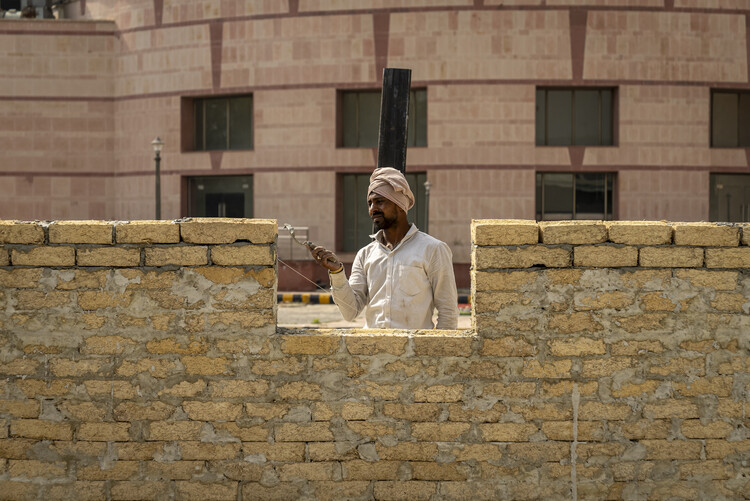
Across India's varied geographies, from coastal backwaters to desert fortress cities, architecture evolved with a deep, instinctive connection to climate. These were not isolated craft traditions but complete ecological systems in which material cycles, thermal comfort, and community knowledge were interdependent. As COP30 turns global attention toward the links between heritage and climate resilience, India's vernacular practices appear less as historical artifacts and more as climate technologies refined over centuries.

India's timber, lime, mud, and bamboo building traditions all share a common thread: they relied on local materials, passive cooling, and construction systems designed to be repaired, renewed, and reused. In an era dominated by cement, steel, and demolition-driven redevelopment, these earlier material cultures demonstrate a quiet circularity that feels radical again.

Circular by Tradition: India’s Vernacular Building Practices for a Warming World - Image 3 of 4Circular by Tradition: India’s Vernacular Building Practices for a Warming World - Image 5 of 4Circular by Tradition: India’s Vernacular Building Practices for a Warming World - Image 4 of 4Circular by Tradition: India’s Vernacular Building Practices for a Warming World - Image 1 of 4Circular by Tradition: India’s Vernacular Building Practices for a Warming World - More Images+ 4

From Concrete to Cultivation: How AI and Robotics Are Rewriting Architecture’s Material Logic

Subscriber Access | 

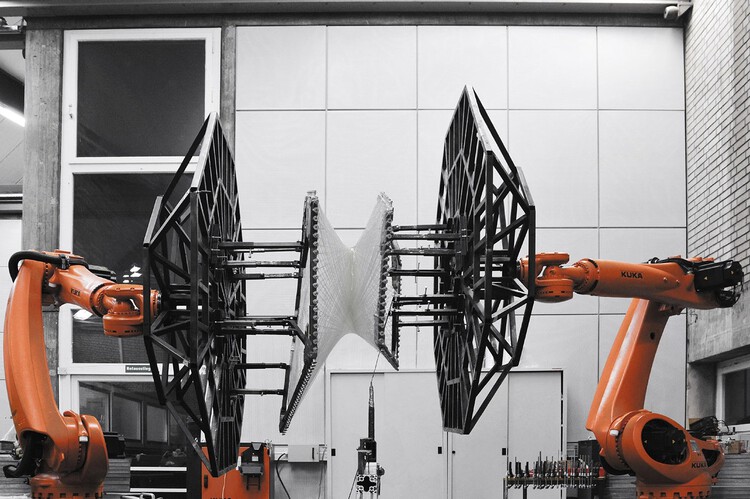
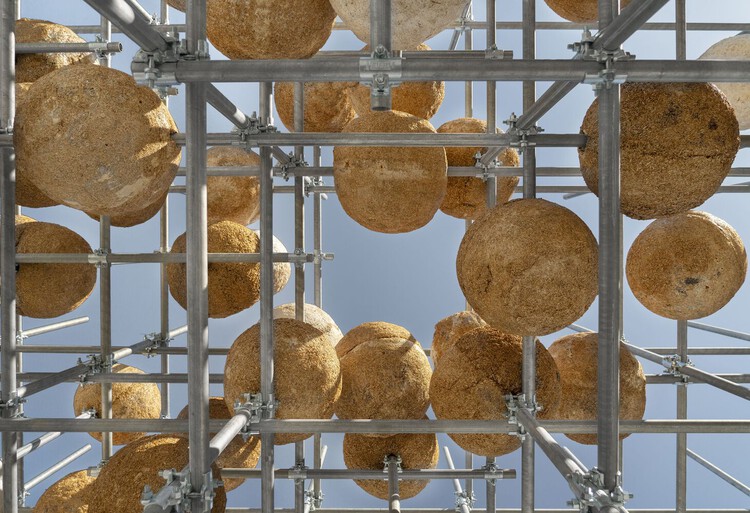
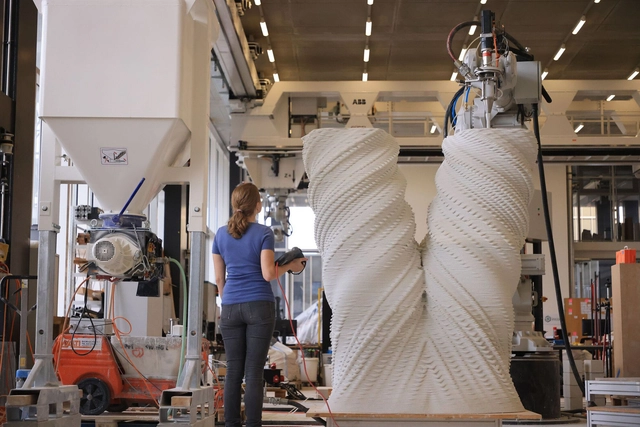
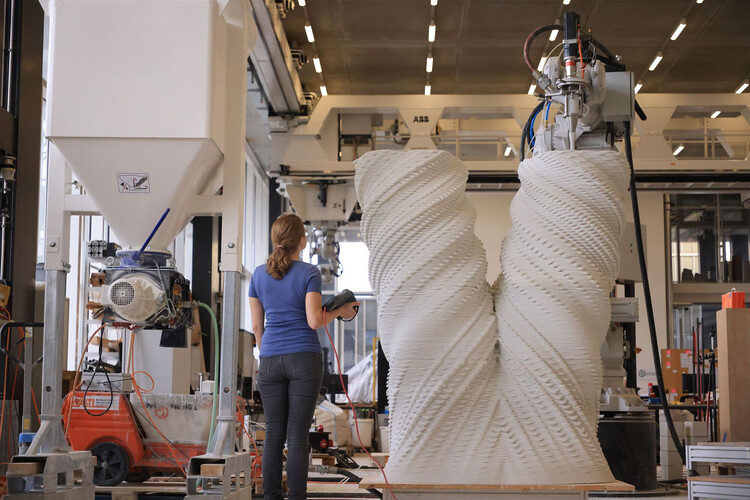
Architecture has entered a pivotal moment. As cities continue to grow under the weight of climatic and social pressures, the materials and systems that shape them are being redefined. Artificial intelligence and robotics, once used to accelerate construction processes, are now being rethought as tools for cultivation. Printed structures that grow, breathe, and decay. Cultivation, in this context, refers to designing with biological materials, where growth and decay are active parameters, merging digital precision with ecological intelligence. This evolution shows the shift from efficiency to empathy, where architecture becomes an agent of active repair. The introduction of mycelium and other natural materials into 3D printing presents a new paradigm in architecture: the logic of the living. A place where computation and fabrication meet biological adaptability.
AI and robotics, once associated with industrial efficiency, are now opening new ways of designing. Early examples, such as ICON's 3D-printed housing prototypes, focused on speed and automation but offered little response to their surroundings. Newer projects, such as the MycoMuseum at the 2025 Venice Architecture Biennale, reinterpret these tools through a biological lens. Instead of shaping concrete, they cultivate living materials, marking a shift from pure optimization toward regeneration.

From Concrete to Cultivation: How AI and Robotics Are Rewriting Architecture’s Material Logic - Image 1 of 4From Concrete to Cultivation: How AI and Robotics Are Rewriting Architecture’s Material Logic - Image 2 of 4From Concrete to Cultivation: How AI and Robotics Are Rewriting Architecture’s Material Logic - Image 3 of 4From Concrete to Cultivation: How AI and Robotics Are Rewriting Architecture’s Material Logic - Image 4 of 4From Concrete to Cultivation: How AI and Robotics Are Rewriting Architecture’s Material Logic - More Images+ 9

The Architect as a Scientist: New Materials Emerging Between Science and Design

What is architecture? For some, its traditional role is to bring together imagination, technical knowledge, and problem-solving, allowing architects to design and construct while balancing ideas with the means to realize them. From the stone and wood of early buildings to the steel and concrete of the 20th century, each era demanded not only an understanding of form but also of the properties and potential of the materials in use. This grasp of materials has always been a core part of the creative process, though its scope was limited by the know-how and technologies available.

Over time, that balance has begun to shift. Architects have moved from merely using materials to actively designing them, applying scientific principles and experimenting with biological, chemical, and computational processes. This evolution has expanded the possibilities of architecture, intersecting nature, technology, and art, while pushing the role of the architect into a more experimental, science-driven dimension, where the manipulation and creation of materials becomes central to the creative act rather than merely a means to achieve forms or structures.

The Architect as a Scientist: New Materials Emerging Between Science and Design - Image 1 of 4The Architect as a Scientist: New Materials Emerging Between Science and Design - Image 2 of 4The Architect as a Scientist: New Materials Emerging Between Science and Design - Image 3 of 4The Architect as a Scientist: New Materials Emerging Between Science and Design - Image 4 of 4The Architect as a Scientist: New Materials Emerging Between Science and Design - More Images+ 11

Crossing Hemispheres: Thatched Roofs from America to Asia

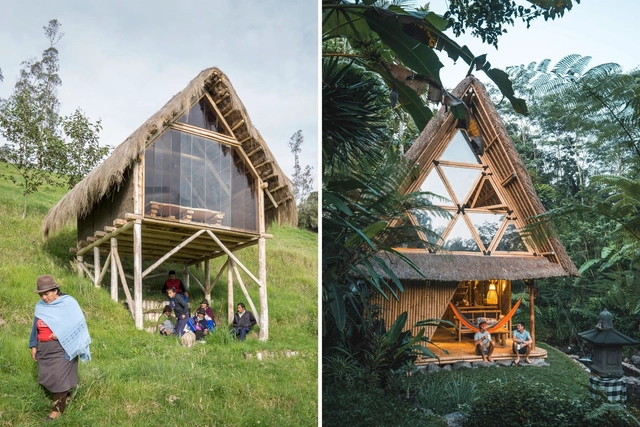
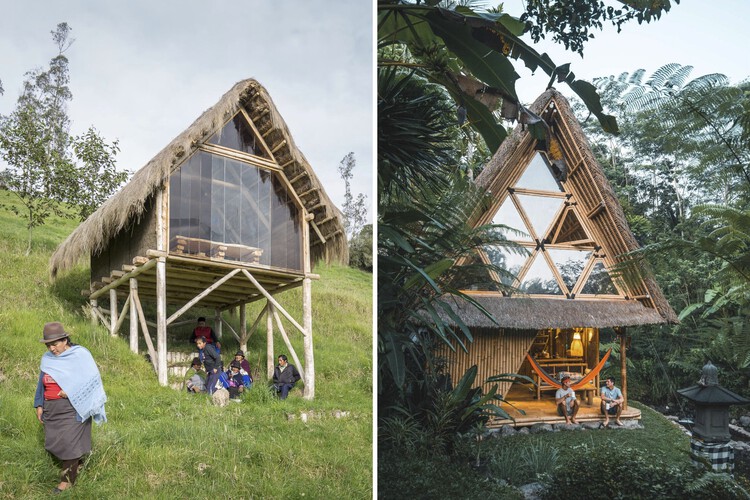
Thatching is a traditional building technique that has been reinterpreted in different ways in contemporary projects, allowing its value to continue to endure over time. As well as being a culturally and historically valuable technique, given its presence in humanity for centuries, it also has a number of other constructive advantages, such as its great environmental value, as it is an accessible renewable material.

The technique consists of grouping, intertwining, and overlapping dry vegetation, creating light surfaces with excellent thermal and sound insulation and which are cheap and relatively simple to build. In addition, flexibility is one of the technique's most prominent features, and it is particularly popular in roofing applications. 

Crossing Hemispheres: Thatched Roofs from America to Asia - Image 1 of 4Crossing Hemispheres: Thatched Roofs from America to Asia - Image 2 of 4Crossing Hemispheres: Thatched Roofs from America to Asia - Image 3 of 4Crossing Hemispheres: Thatched Roofs from America to Asia - Image 4 of 4Crossing Hemispheres: Thatched Roofs from America to Asia - More Images+ 16

Understanding Soft Architecture: The Shift from Monument to Moment

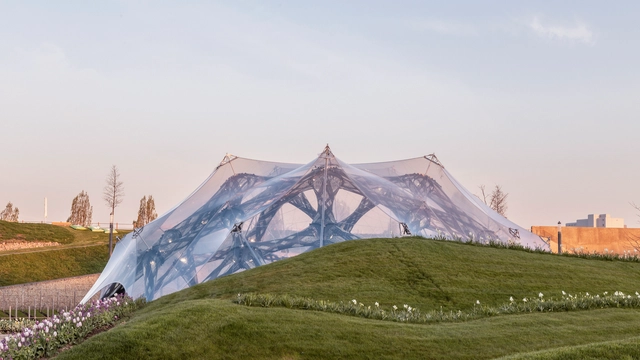
In recent years, architecture has increasingly embraced adaptability, flexibility, and responsiveness as core design principles. This evolution reflects a shift from traditional notions of static, permanent structures to dynamic environments that can adjust to changing needs and conditions. Central to this transformation is the concept of "soft architecture", which leverages pliable materials and innovative systems to create spaces that are functional, sustainable, and user-centric. Soft architecture takes shape through membranes that breathe, façades that move, structures that inflate or fold, and surfaces that bend rather than break. It involves designing for transformation — not only in how a building performs environmentally, but also in how it can accommodate shifting functions, user interactions, or temporary occupations. This approach to building challenges traditional notions of durability and control, proposing instead a more responsive and open-ended architecture. It reflects a growing awareness that buildings, like the societies they serve, must be able to evolve.

Understanding Soft Architecture: The Shift from Monument to Moment - Image 1 of 4Understanding Soft Architecture: The Shift from Monument to Moment - Image 2 of 4Understanding Soft Architecture: The Shift from Monument to Moment - Image 3 of 4Understanding Soft Architecture: The Shift from Monument to Moment - Image 4 of 4Understanding Soft Architecture: The Shift from Monument to Moment - More Images+ 53

"Helping the Existing to Reconfigure Itself": In Conversation with Søren Pihlmann, Curator of the Danish Pavilion

Søren Pihlmann is the curator of the Danish Pavilion at the 2025 Venice Architecture Biennale. The exhibition, commissioned by the Danish Architecture Center, is titled Build of Site, and focuses on exploring sustainable architectural practices through the lens of reuse and resourcefulness. Pihlmann's proposal transforms the existing Danish Pavilion, located within a historic building complex in the Biennale's Giardini, into an active exhibition space for material experimentation. The installation highlights techniques that incorporate recycled and bio-based elements. The Pavilion offers visitors the opportunity to observe ongoing experimental processes, witnessing how building resources are creatively reimagined for new uses. In this on-site interview, ArchDaily editors spoke with the curator about the ideas behind the project and the challenges its execution represents.

"Helping the Existing to Reconfigure Itself":  In Conversation with Søren Pihlmann, Curator of the Danish Pavilion - Image 1 of 4"Helping the Existing to Reconfigure Itself":  In Conversation with Søren Pihlmann, Curator of the Danish Pavilion - Image 2 of 4"Helping the Existing to Reconfigure Itself":  In Conversation with Søren Pihlmann, Curator of the Danish Pavilion - Image 3 of 4"Helping the Existing to Reconfigure Itself":  In Conversation with Søren Pihlmann, Curator of the Danish Pavilion - Image 4 of 4Helping the Existing to Reconfigure Itself:  In Conversation with Søren Pihlmann, Curator of the Danish Pavilion - More Images+ 2

Denmark Presents 'Build of Site' by Søren Pihlmann at the 2025 Venice Architecture Biennale

Denmark's contribution to the 19th International Architecture Exhibition – La Biennale di Venezia examines how rethinking and reusing existing buildings and materials can address critical architectural challenges. The exhibition was commissioned by the Danish Architecture Center and curated by architect Søren Pihlmann. Aligning with the Biennale's overarching theme, "Intelligens. Natural. Artificial. Collective.," the Danish pavilion features the exhibition Build of Site, which explores sustainable architectural practices through the lens of reuse and resourcefulness. Build of Site proposes a mindset that prioritizes resource awareness and the potential of existing structures, principles communicated during the opening in a film produced in collaboration with Louisiana Channel.

Denmark Presents 'Build of Site' by Søren Pihlmann at the 2025 Venice Architecture Biennale - Image 1 of 4Denmark Presents 'Build of Site' by Søren Pihlmann at the 2025 Venice Architecture Biennale - Image 2 of 4Denmark Presents 'Build of Site' by Søren Pihlmann at the 2025 Venice Architecture Biennale - Image 3 of 4Denmark Presents 'Build of Site' by Søren Pihlmann at the 2025 Venice Architecture Biennale - Image 4 of 4Denmark Presents 'Build of Site' by Søren Pihlmann at the 2025 Venice Architecture Biennale - More Images+ 25

"Architecture as an Interface That Must Adapt:" ecoLogicStudio on Nature-Inspired Urban Design in Louisiana Channel Interview

In a recent interview with Louisiana Channel, ecoLogic Studio discusses a new approach to architecture that explores the relationship between nature and urban design. Claudia Pasquero and Marco Poletto, the studio's lead architects, explain that modern architecture should be rethought to adapt to the changing environment and to serve as a connection between urban life and natural systems. The architects compare the current transformation in the field to the period of the Renaissance, when architecture evolved in response to the needs of society. Today, they argue, there is an opportunity for architects to learn from nature and design urban spaces that are both sustainable and functional.

"Architecture as an Interface That Must Adapt:" ecoLogicStudio  on Nature-Inspired Urban Design in Louisiana Channel Interview - Image 1 of 4"Architecture as an Interface That Must Adapt:" ecoLogicStudio  on Nature-Inspired Urban Design in Louisiana Channel Interview - Image 2 of 4"Architecture as an Interface That Must Adapt:" ecoLogicStudio  on Nature-Inspired Urban Design in Louisiana Channel Interview - Image 3 of 4"Architecture as an Interface That Must Adapt:" ecoLogicStudio  on Nature-Inspired Urban Design in Louisiana Channel Interview - Featured ImageArchitecture as an Interface That Must Adapt: ecoLogicStudio  on Nature-Inspired Urban Design in Louisiana Channel Interview - More Images

A Bio-Digital Exploration: ecoLogicStudio Opens Deep Forest Exhibition at the Louisiana Museum in Denmark

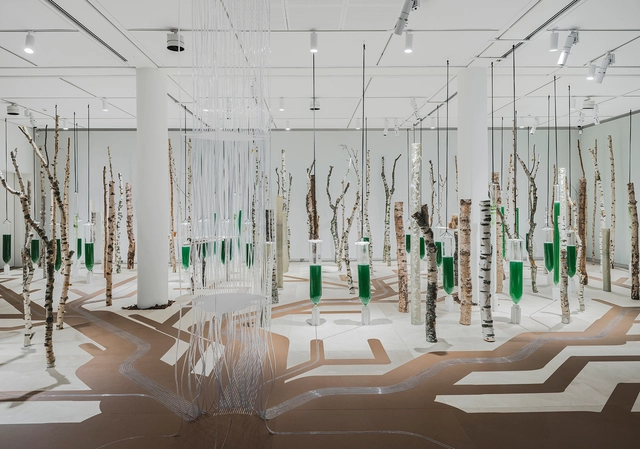
The Louisiana Museum of Modern Art's "Living Structures" exhibition, running from November 8th, 2024, to March 23rd, 2025, features Deep Forest, a new installation by Prof Claudia Pasquero and Dr. Marco Poletto founders of architecture and design innovation firm ecoLogicStudio, together with academic partner Innsbruck University. This immersive work challenges traditional architectural paradigms by embracing the naturalization of architecture and technology, a direct counterpoint to modernist attempts to mechanize nature. The exhibition represents the culmination of twenty years of research in bio-digital design, showcasing the potential of symbiotic relationships between technology and the natural world within built environments.

A Bio-Digital Exploration: ecoLogicStudio Opens Deep Forest Exhibition at the Louisiana Museum in Denmark - Image 1 of 4A Bio-Digital Exploration: ecoLogicStudio Opens Deep Forest Exhibition at the Louisiana Museum in Denmark - Image 2 of 4A Bio-Digital Exploration: ecoLogicStudio Opens Deep Forest Exhibition at the Louisiana Museum in Denmark - Image 3 of 4A Bio-Digital Exploration: ecoLogicStudio Opens Deep Forest Exhibition at the Louisiana Museum in Denmark - Image 4 of 4A Bio-Digital Exploration: ecoLogicStudio Opens Deep Forest Exhibition at the Louisiana Museum in Denmark - More Images+ 27

Designing for Two Worlds: How Space Exploration is Shaping the Future of Architecture on Earth

Subscriber Access | 

Space exploration isn’t merely a testament to human ambition or a quest for new territories and resources. Our ventures beyond Earth’s atmosphere are driven by a deeper purpose: to understand better our place in the cosmos and to pioneer innovations that can transform life on our home planet.

While venturing beyond our planet captures the imagination, the true impact of space exploration may be felt much closer to home. Public perception often frames space exploration as a distant endeavor with limited relevance to terrestrial challenges. However, this perspective overlooks the substantial contributions of space programs to our world. By driving technological innovation, expanding our scientific knowledge, and inspiring future generations, space exploration has proven to be an invaluable catalyst for addressing global issues.

Designing for Two Worlds: How Space Exploration is Shaping the Future of Architecture on Earth - Image 1 of 4Designing for Two Worlds: How Space Exploration is Shaping the Future of Architecture on Earth - Image 2 of 4Designing for Two Worlds: How Space Exploration is Shaping the Future of Architecture on Earth - Image 3 of 4Designing for Two Worlds: How Space Exploration is Shaping the Future of Architecture on Earth - Image 4 of 4Designing for Two Worlds: How Space Exploration is Shaping the Future of Architecture on Earth - More Images+ 30

Harvesting Architecture: A Glimpse Into 3 Plant-Based Materials

Subscriber Access | 

For decades, our society has predominantly embraced an extractivist approach when formulating models for material manufacturing across diverse industries. While we now know that this model is unsustainable, a major question remains: So, how do we do it? We may be a while away from offering a definitive answer to this challenge. Still, it is exciting to note that, in a context marked by a challenging global and ecological horizon, the architectural community maintains a positive approach by pushing for a re-evaluation of what we make and how we make it.

This momentum may be gaining relevance due to the emergence of new, more environmentally conscious generations, such as Gen Z and Alpha. What is certain is that we are witnessing the development of new production philosophies, such as plant-based materials, which adopt practices aimed at favoring the use of resources derived from plants, reducing dependence on extractive processes, and promoting conscious and sustainable alternatives in various aspects of the manufacture and production of materials in architecture.

Localize: Sourcing and Performance at Fabricate 2024

On April 4 – 6, the international conference FABRICATE 2024 will be held at the Royal Danish Academy in Copenhagen. Since its inception in 2011, FABRICATE has established itself as a global forum for new radical possibilities for architecture and welcomed thousands of participants from practice, industry, and research.

In this second article, we meet architect Indy Johar who is the director of WikiHouse Foundation and CEO and founder of Dark Matters Lab working with institutions around the world, from UNDP, the European Commission on Net Zero Cities, the European Environmental Agency, and various national agencies and cities. The text is an excerpt from the upcoming FABRICATE 2024 book and is based on an interview conversation led by Co-chair Phil Ayres between Indy Johar and Professor Philippe Block, Head of the Institute of Technology in Architecture (ITA), ETH Zürich. The book will be published on the opening night of the FABRICATE 2024 conference.

Localize: Sourcing and Performance at Fabricate 2024 - Image 1 of 4Localize: Sourcing and Performance at Fabricate 2024 - Image 2 of 4Localize: Sourcing and Performance at Fabricate 2024 - Image 3 of 4Localize: Sourcing and Performance at Fabricate 2024 - Image 4 of 4Localize: Sourcing and Performance at Fabricate 2024 - More Images+ 11

Imagining the Future of Construction: From Bio-Based Materials to Innovative Data

 | Sponsored Content

What insulation materials are needed to meet the challenges facing the modern built environment, including how to create a more sustainable future? What if some of them are already available? Kingspan’s dedicated innovation center, IKON, hosted a panel of experts to discuss some of the key issues and explore solutions. Michael Bol, an architect and Concepting Director at Buro Kade, Benjamin Constant, Director of Development and Partnerships at Neo-Eco Partner, and Sandra Del Bove, Kingspan Group Head of Innovation, each brought a different perspective and shared their experiences of these crucial issues.

How Might Buildings and Their Integrated Materials Systems Behave Like Organisms? In Conversation With Jenny E. Sabin

Subscriber Access | 

Why research and innovate in architecture? In a conversation with architectural designer Jenny E. Sabin, we delve into the critical link between research and practice in architecture. Seeking the development of a new model, her team incorporates an interdisciplinary approach that introduces connections between these areas, fostering collaboration with both scientists and engineers.

Observing nature’s behavior, the proposed method integrates biological and mathematical discoveries into the design process. After undergoing a systematic testing process, these insights are applied in the project’s generative design phase to create adaptive and responsive material solutions. Analyzing her research and design strategies, we showcase how she translates research into architectural practice.

How Might Buildings and Their Integrated Materials Systems Behave Like Organisms? In Conversation With Jenny E. Sabin - Image 1 of 4How Might Buildings and Their Integrated Materials Systems Behave Like Organisms? In Conversation With Jenny E. Sabin - Image 2 of 4How Might Buildings and Their Integrated Materials Systems Behave Like Organisms? In Conversation With Jenny E. Sabin - Image 3 of 4How Might Buildings and Their Integrated Materials Systems Behave Like Organisms? In Conversation With Jenny E. Sabin - Image 45 of 4How Might Buildings and Their Integrated Materials Systems Behave Like Organisms? In Conversation With Jenny E. Sabin - More Images+ 41