At a time of ecological emergency, architecture cannot be separated from the extractive systems on which it depends. As the technosphere expands, linking material flows, energy consumption, and digital infrastructures, design becomes increasingly entangled in these processes. How can design practice intervene in anthropocentric systems and transform the architectural process and aesthetics through an investigation of material intelligence? More broadly, how does architecture engage with the agency and intelligence of non-human entities to rebalance the environmental burden?
Building materials made from bio-based and biodegradable resources, including those derived from living or growing organisms, offer a potential alternative to the ecologically destructive cycles of conventional construction. They challenge the dominance of energy-intensive materials such as heavy concrete and steel, proposing a shift toward regenerative, low-impact systems. Yet, "bio-based" does not inherently equal ecological responsibility; for such approaches to be sustainable and impactful, the entire lifecycle—from sourcing and transport to fabrication and implementation—must operate within a circular framework. What does it mean to design with living materials whose temporalities are nonlinear and environmentally responsive, and how might this reshape conventional notions of durability, maintenance, and sustainability?
This article introduces small-scale installations that experiment with the potential implementation of bio-based, biodegradable resources as building materials, combined with digital techniques and automation. These experiments attempt to recalibrate technology with ecological questions, pointing toward an alternative architectural language emerging within the planetary practice.
Java and Jam Pavilions by i/thee
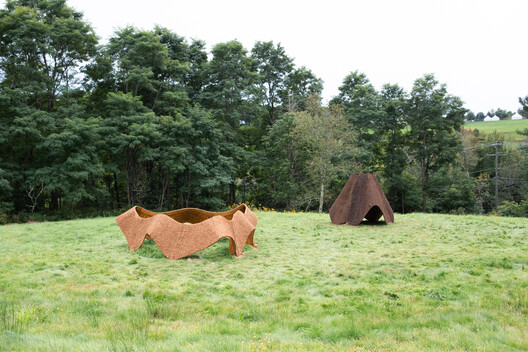
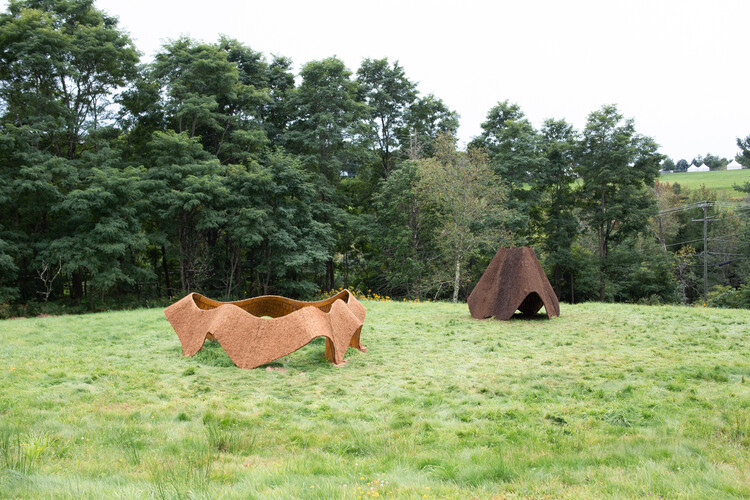
i/thee created two experimental pavilions that were constructed entirely from biodegradable materials through a hybrid of digital fabrication and manual craftsmanship. They were clad in a bio-composite material made from a mixture of used coffee grounds and white grape skins, respectively. Designed as a modern interpretation of the traditional technique of applying and hardening mud onto woven bamboo and branch walls, this installation used a computationally designed plywood lath and mud daub instead of wattle walls. The mud was applied and hardened with non-toxic adhesives made from bio-waste aggregates, sawdust, and cultivated straw.
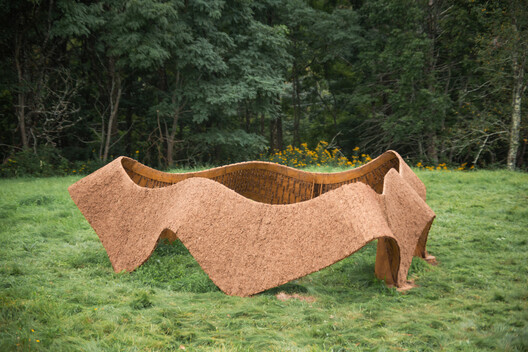
The installation began with a parametric design process, using custom code to generate flowing ruled surfaces. These were digitally unrolled and fabricated as flat plywood sheets, then cut with an adaptive kerf pattern that enabled bending while forming a porous lattice for the bio-composite cladding. After site-specific optimization, the materials were calibrated through digital fabrication. On site, the lattice was hand-cut, re-formed, and finished with layers of bio-composite slurry that hardened to stabilize the structure.
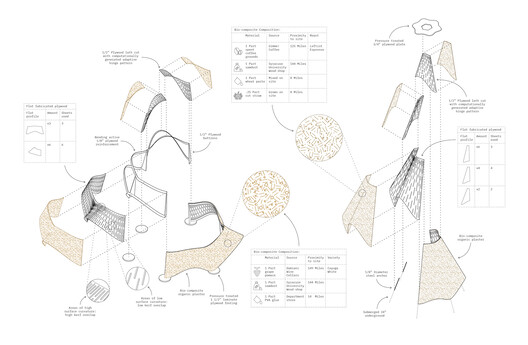
The project aims to merge computational design and digital fabrication methodologies with time-tested and place-based techniques and, ultimately, to demonstrate a more critical integration of emerging technologies within the construction ecosystem. — i/thee
Mycelial Hut by Yong Ju Lee Architecture
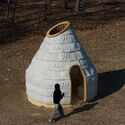
By experimenting with and presenting mycelium, Mycelial Hut by Yong Ju Lee Architecture reinterprets the notion of eco-conscious architecture and investigates bio-integrated fabrication methods that unify growth, decay, and design within a single process. It demonstrates the potential of mycelium as a building material through the use of customized molds produced via robotic 3D printing. For this bio-hybrid pavilion, bespoke mycelium tiles were developed as an external material, layered over a wooden frame that serves as the primary structural support. In the process, the team tested various kinds of mycelium substrates to evaluate their performance, such as workability, growth, and strength, and then created the 3D-printing molds.
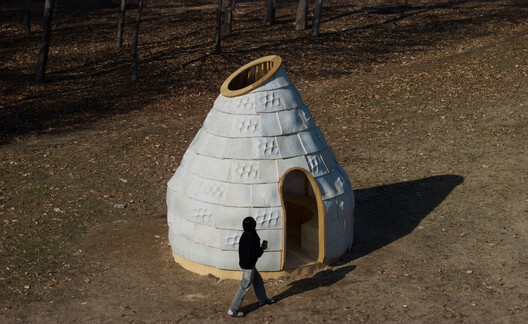
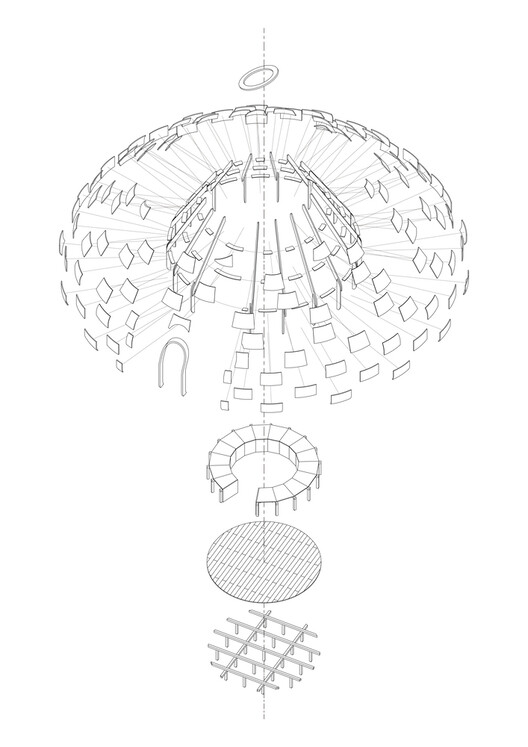
Ultimately, a new workflow combining industrial robotic arms was established to merge digital processes with natural growth systems, resulting in a large-scale structure that embodies the coexistence of computation and biology. The project addresses the challenges of fungal material application and demonstrates the feasibility of bio-composites for architectural construction. — Yong Ju Lee
Growing Matter(s) Pavilion by Henning Larsen Architects
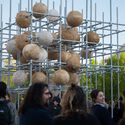
Designed by Henning Larsen Architects, the interactive installation consisted of 80 mycelium spheres, each uniquely shaped by the material's natural growth process, demonstrating its potential as a living, evolving building material. Mycelium resists uniformity; its form is defined by environmental conditions. As a result, its textures and imperfections invite people to reconsider conventional design standards and engage with the intelligence of living systems.
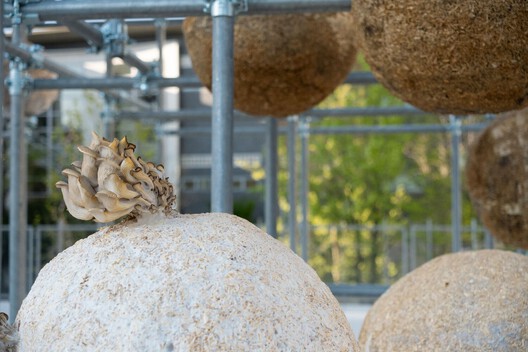
The spheres were grown using organic substrates, including hemp, flour, sugar, and beer dregs, and inoculated with two strains of mycelium. Over the course of several weeks, the mycelium gradually colonized wooden molds, taking on their form. One group of spheres was subsequently dried to ensure structural stability, while the other was kept alive, allowing the material to continue evolving naturally over time. The mycelium spheres are fully biodegradable and naturally decompose at the end of their lifecycle.
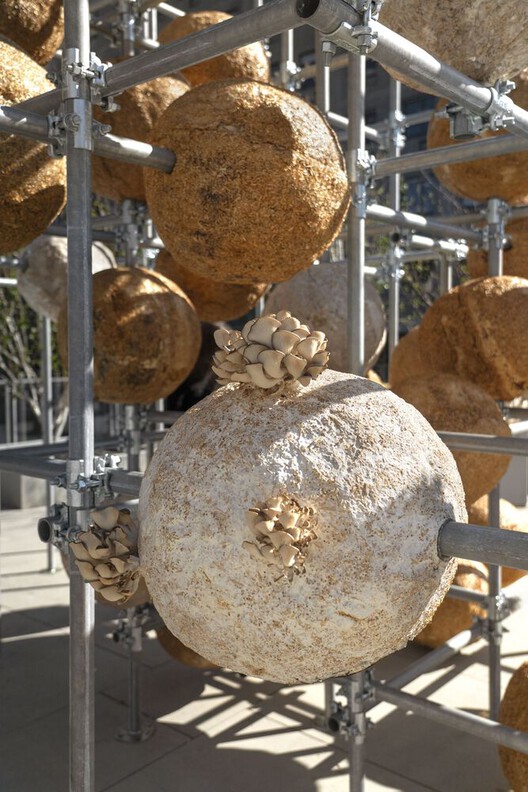
The Growing Matter(s) pavilion proposes a new perspective on architectural aesthetics: one that embraces variation, decay, and transformation. — Henning Larsen Architects
Moss Columns by Yong Ju Lee Architecture
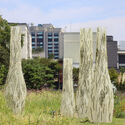
Exploring how to combine living organisms with architecture, another project by Yong Ju Lee Architecture, Moss Columns, is a prototype that presents a direct embedding approach of plants into artificial materials. The project experimented with mosses, due to their non-vascular nature. The forms are manipulated and generated through computational design tools in order to examine embedding patterns, and a large-scale 3D printer with an industrial robotic arm was utilized to create complex forms.
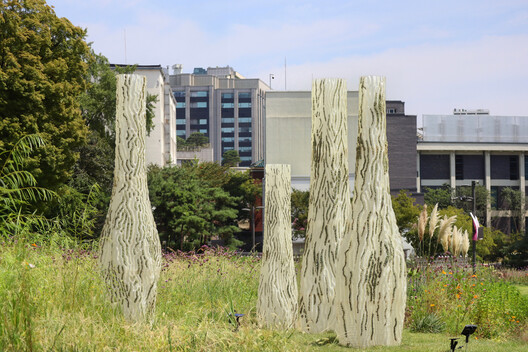
The experiment offers a contemporary approach to integrating living organisms with the built environment, creating a visual effect in which artificial forms appear to merge organically with natural elements, echoing the processes of natural decay and transformation. It proposes a bold, unified geometric system that brings together organic and inorganic matter, emphasizing the dynamic exchange of respiratory and photosynthetic byproducts between humans and the surrounding environment.
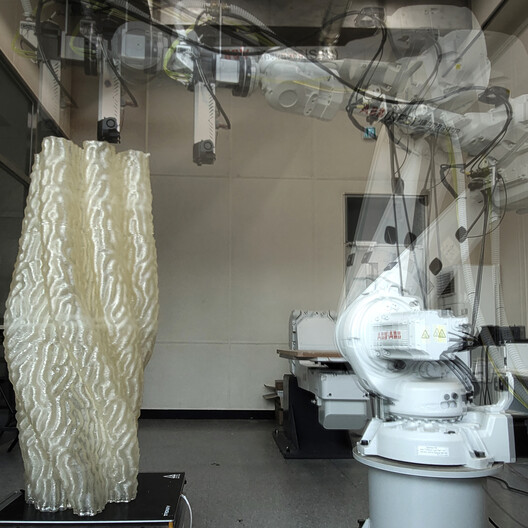
The utilization of eco-friendly architectural techniques in conjunction with moss is anticipated to bring significant transformations to the future construction industry. This presents the potential for sustainable implementation in the digital era by establishing new relationships among digital, physical, and, furthermore, natural elements. This paves the way for a harmonious coexistence between urban environments and the natural world. — Yong Ju Lee
AirBubble Restorative Space by ecoLogicStudio
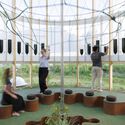
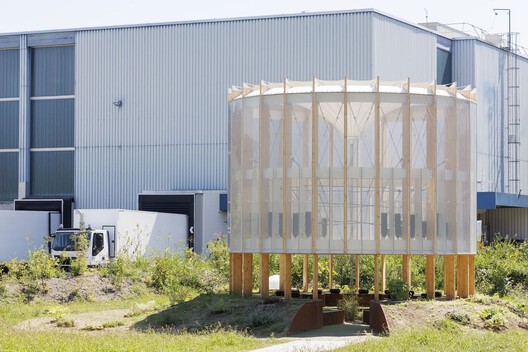
Since 2021, ecoLogicStudio has explored the integration of biotechnological systems into architecture and landscape design. The AirBubble Restorative Space exemplifies this approach as a biotechnological garden combining air-purifying algae with medicinal plants to support workplace health and well-being. It proposes a scalable model for integrating environmental performance with spatial experience across work environments.
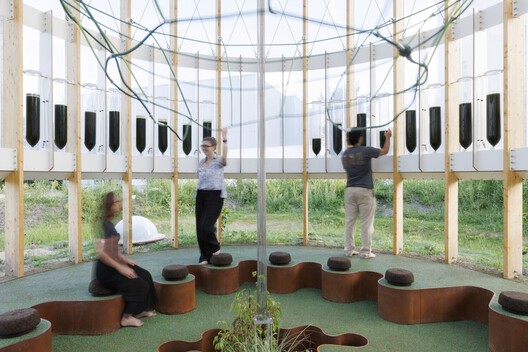
The structure consists of a cylindrical timber frame enclosed in an ETFE membrane, housing bioreactors filled with living algae that filter polluted air while producing oxygen. Its form enhances natural ventilation, while sensory elements—such as bubbling sounds and plant aromas—create a calming atmosphere. The system also supports circular practices, with harvested algae reused as food or fertilizer.
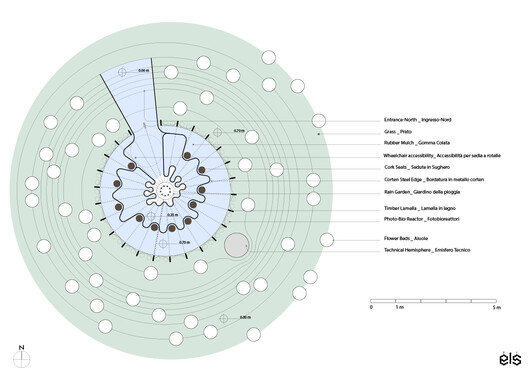
We researched the origins of pharmaceutical manufacturing by studying the medicinal garden of Padua in Italy, where medicinal essences and plants were grown as part of a community park. We then translated this concept into the bio-digital era, where substances can once again be cultivated in the public realm. — ecoLogicStudio
This article is part of the ArchDaily Topic: The Technosphere: Architecture at the Intersection of Technology, Ecology, and Planetary Systems. Every month we explore a topic in-depth through articles, interviews, news, and architecture projects. We invite you to learn more about our ArchDaily Topics. And, as always, at ArchDaily we welcome the contributions of our readers; if you want to submit an article or project, contact us.