1. ArchDaily
  2. Agrowaste

Agrowaste: The Latest Architecture and News

Transspecies Architecture: ArchDaily’s June Editorial Focus

Western philosophical tradition has long placed culture in opposition to nature. This dual thinking has shaped the canon of the sciences and humanities, and architecture was not left aside. Under that logic, everything that is not human exists to be exploited by them and is named "natural resource". This extractivist mindset has shaped the development of many parts of the world in the last centuries, leaving deep—sometimes irreparable—marks on the planet. Nevertheless, other ways of living have always existed. From West-African religious practices based on animism to the herbal sciences of the masters of the Sacred Jurema in Brazil; from indigenous communities in India whose life rhythm mirrors the monsoons, to the Arctic's Inuits who can see dozens of shades of white: humans and nature bear no distinction, what exists is life.

Contemporary authors bring this discussion to the realms of philosophy and, more specifically, architecture. Donna Haraway, Antônio Bispo dos Santos, Achille Mbembe, and Beatriz Colomina are only a few whose work has helped expand the narrow Western perspective, shedding light on alternative ways of living together—with other humans and more-than-humans—on this planet.

From Agro-Waste to Decarbonization: The Innovative Materials Featured in 2023

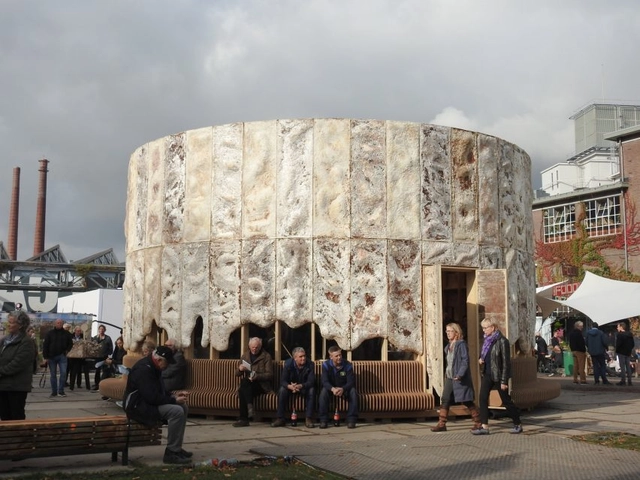
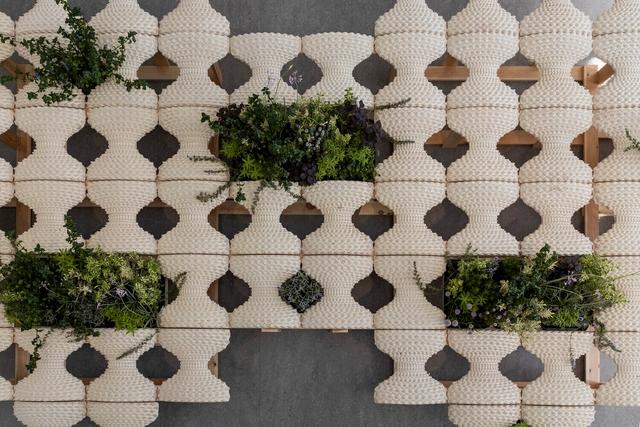
Innovative materials play a crucial role in shaping the future of architecture. They offer not only novel ways to craft buildings but also sustainable and efficient solutions to address pressing environmental challenges. Architects and designers are now more than ever exploring and integrating innovative materials into their projects. By harnessing the unique properties of these materials, they create structures with new visual languages while also being environmentally friendly.

As part of our year-in-review, we reflect on the innovative materials that were featured. These materials delved into the concepts of recycling agro-waste, adapting bio-based products, transforming local materials, and decarbonizing concrete. The objective was not only to offer alternatives to traditional construction practices but also to help reduce carbon emissions and promote a more sustainable built environment. In this dynamic field, these materials demonstrate the potential to revolutionize building design and construction in diverse contexts, paving the way for a more sustainable and resilient future.

From Agro-Waste to Decarbonization: The Innovative Materials Featured in 2023  - Image 1 of 4From Agro-Waste to Decarbonization: The Innovative Materials Featured in 2023  - Image 2 of 4From Agro-Waste to Decarbonization: The Innovative Materials Featured in 2023  - Image 3 of 4From Agro-Waste to Decarbonization: The Innovative Materials Featured in 2023  - Image 4 of 4From Agro-Waste to Decarbonization: The Innovative Materials Featured in 2023  - More Images+ 5

Willow Technologies Transforms Agricultural By-Products Into Building Materials in Ghana

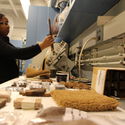
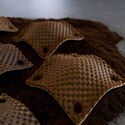
Willow Technologies is a material research and building technology practice that has been selected as part of ArchDaily's 2023 Best New Practices. Founded by Ghanaian-Filipino designer and architectural scientist Mae-Ling Lokko, it operates in the gap between research, development, and diffusion of bio-based building materials. Working with agro-waste and bio-based materials usually incurs technical questions regarding scalability, industrial production, standardization, fireproofing, and mechanical strength. Exploring this data is where Willow Technologies situates itself, but peculiarly through the lens of developing regions in West Africa. Through comprehensive works with coconuts, moringa, rice, and other indigenous crops, Lokko’s practice has been able to investigate and catalog the material character of various crops, their possible by-products, local transformation techniques, and the prospect and challenges of scalability as building materials.

Willow Technologies Transforms Agricultural By-Products Into Building Materials in Ghana - Image 1 of 4Willow Technologies Transforms Agricultural By-Products Into Building Materials in Ghana - Image 2 of 4Willow Technologies Transforms Agricultural By-Products Into Building Materials in Ghana - Image 3 of 4Willow Technologies Transforms Agricultural By-Products Into Building Materials in Ghana - Image 4 of 4Willow Technologies Transforms Agricultural By-Products Into Building Materials in Ghana - More Images+ 9

Returning the Building to the Soil: an Interview with the Architect and Scientist Mae-Ling Lokko

Agriculture and the food industry seem to have little in common with architecture, but it is precisely the overlap of these three areas that interests Ghanaian-Filipino scientist and architect Mae-ling Lokko, founder of Willow Technologies based in Accra, Ghana. Working with recycling agricultural waste and biopolymer materials, Lokko searches for ways to transform the so-called agrowaste into building materials.

Returning the Building to the Soil: an Interview with the Architect and Scientist Mae-Ling Lokko - Image 1 of 4Returning the Building to the Soil: an Interview with the Architect and Scientist Mae-Ling Lokko - Image 2 of 4Returning the Building to the Soil: an Interview with the Architect and Scientist Mae-Ling Lokko - Image 3 of 4Returning the Building to the Soil: an Interview with the Architect and Scientist Mae-Ling Lokko - Image 4 of 4Returning the Building to the Soil: an Interview with the Architect and Scientist Mae-Ling Lokko - More Images+ 5