
Architecture is traditionally chronicled through the persistence of the solid. We define the discipline by the weight of the lintel, the mass of the pier, and the resistance of the wall. Even when lightness is invoked, it is usually understood as a subtractive act, the thinning of a section or the precarious reduction of a load. Yet there is a parallel history, less visible and harder to isolate, in which the primary material of construction is not what occupies space, but what moves through it.
To treat air as a medium is to move past the binary of the envelope. The boundary between the interior and the world ceases to be a line of absolute separation and becomes, instead, a site of filtration and pressure. We begin to see the building as a thermal valve, a series of gradients where moisture, velocity, and heat are not merely background "conditions" to be mitigated by mechanical systems, but are the very substances being shaped.

This shift suggests an architecture that works through calibration. As the climate becomes increasingly erratic, the impulse to seal the interior behind an airtight skin feels less like a solution. A different logic emerges when we consider the building as a porous participant in its territory, a structure that organizes space through the manipulation of invisible flows.
Air as Infrastructure
Badgir Windcatchers Yazd
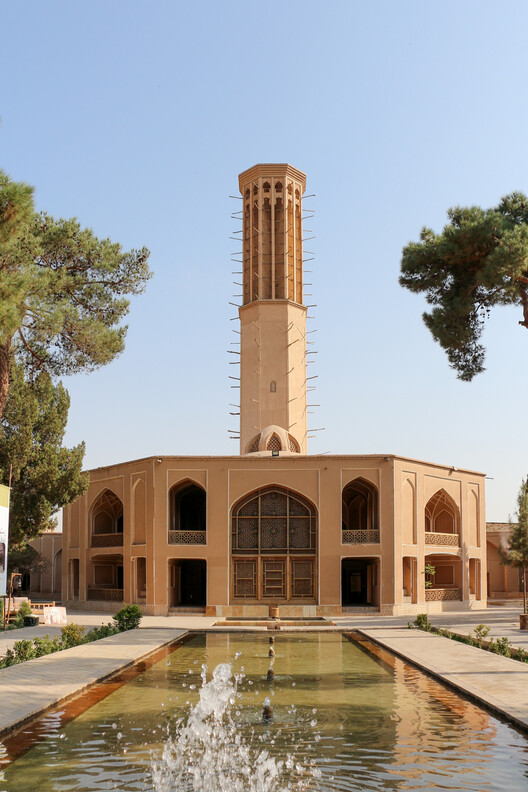
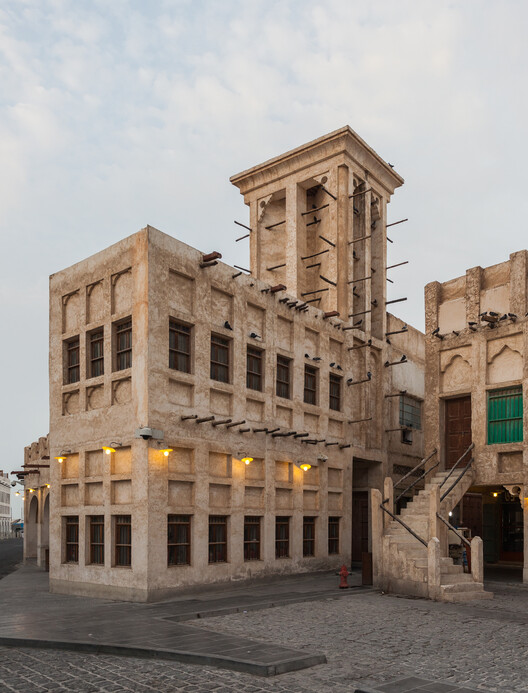
Across the earthen roofscape of Yazd, the windcatchers rise less as atmospheric extension of the city. Their tall shafts project above the still, overheated air of the streets to intercept currents moving at altitude, drawing them downward into houses, cisterns, and subterranean chambers. But, the windcatchers operate through a more subtle negotiation between pressure, shadow, evaporation, and the thermal inertia of thick masonry, where cooling is produced through the slow modulation of environmental forces rather than the abrupt intervention of machinery.
What gives these structures their architectural significance is the way form is organized around something invisible and unstable. The tower does not stand apart from the building as technical supplement, but folds atmosphere into its construction. Air is directed, slowed, and thickened through section, and the building takes shape in response to that movement.
Air as Microclimate
Alhambra
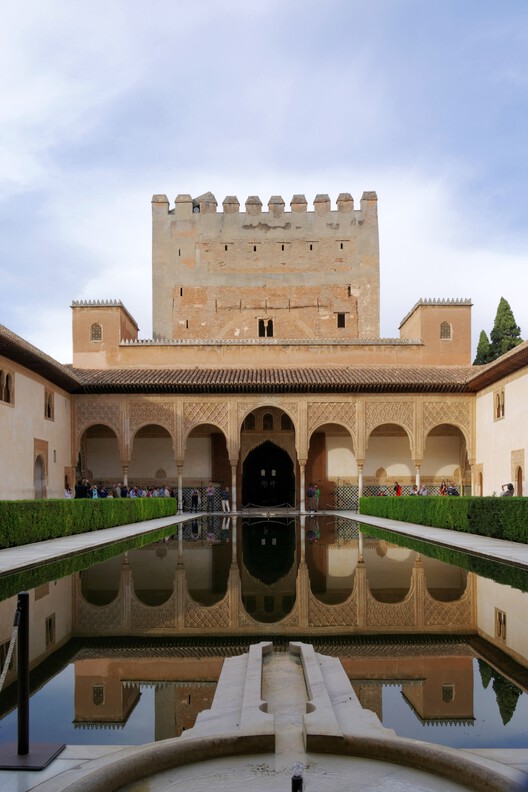
In the courts of the Alhambra, the heavy inertia of stone is constantly eroded by the presence of water. Instead, water is deployed as a thermal instrument, a thin sheet of liquid held in tension across marble basins to maximize the surface area exposed to the dry Iberian heat. This is an architecture of the micro-climate, where the transition from the sun-scorched exterior to the deep shade of the portico is mediated by a deliberate drop in temperature. The air is cooled as it passes over these reflective planes, gaining a humidity that softens the sharp geometry of the carved stucco.
The muqarnas vaulting overhead shatters the light and increases the surface area of the interior, acting as a structural sponge for the cool, damp air rising from the floor. There is a specific acoustic quality to this atmosphere, a dampening of sound that mirrors the cooling of the skin.
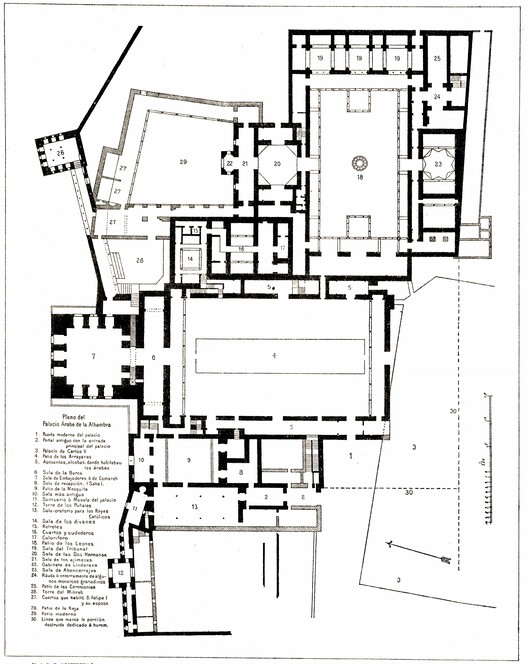
The building works through a series of thresholds where the breeze is filtered through screen-work and redirected by the mass of the walls, creating a sequence of pockets where the air feels distinct, weighted, and possessed of its own gravity. It is a spatiality of the invisible, where the most significant material in the room is the evaporation occurring just above the water's skin.
Air as Control
Palm House at Kew Gardens
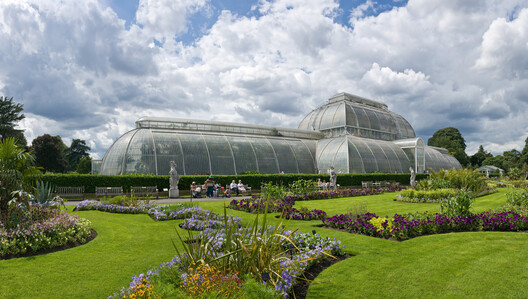
Decades before the curtain wall would standardize the interior, Decimus Burton and Richard Turner arrived at a structural thinness that nearly dissolves the boundary between the empire and its stolen flora. The wrought iron ribs, borrowed from the logic of shipbuilding, are pushed to a precarious limit, holding six-thousand panes of hand-blown glass in a tension that feels more like a taut membrane than a building.
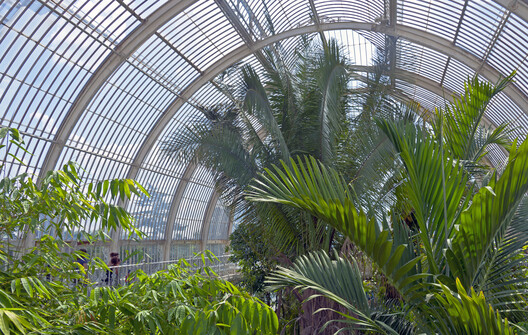
Here, the architecture functions as a thermodynamic valve. The heat is forced through a subterranean network of pipes and floor grilles, rising through the perforated cast-iron floor to meet the translucent skin. This upward migration of warmth creates a visible thickening of the air, a condensation that clings to the glass and the fronds, blurring the distinction between the mechanical and the biological. To walk along the gallery is to occupy the humid margins of a Victorian globalism, where the iron provides the skeleton for a space defined by the pressure of steam and the slow, heavy breath of the tropics. The building remains a fragile, rusted compromise between the desire for total transparency and the stubborn, corrosive reality of the atmosphere it was built to manufacture.
Air as Atmosphere
Blur Building
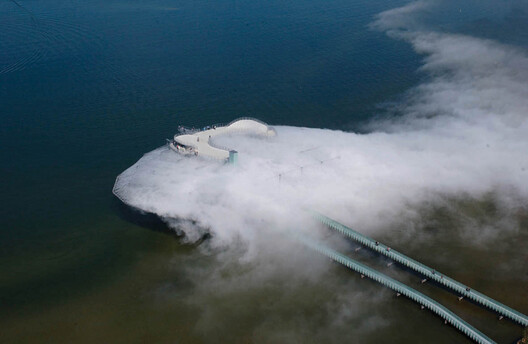
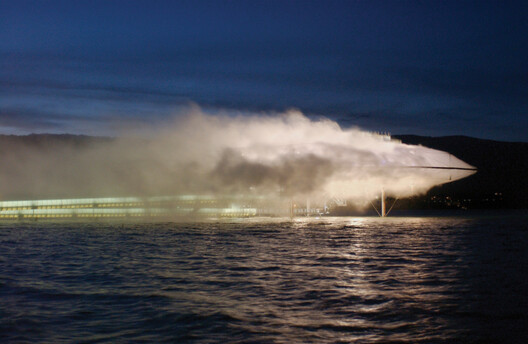
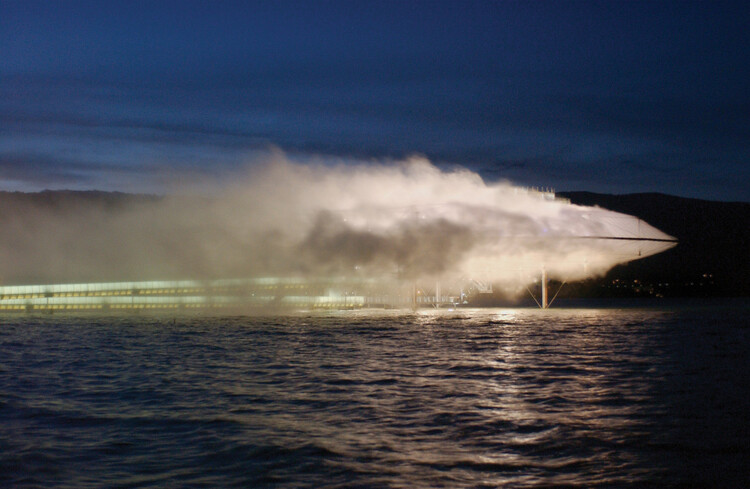
The Blur Building operates as an anti-monument; a structure that uses six hundred tons of steel only to disappear. Diller Scofidio + Renfro's "tensegrity" framework is not the destination but a delivery system for thirty-five thousand high-pressure fog nozzles.
Here, the traditional architectural intent of defining boundary is traded for the orchestration of a phase change. The lake water is pumped, filtered, and atomized, creating an artificial weather system that responds to the vagaries of the wind. To enter the cloud is to experience the total collapse of the visual regime; the horizon vanishes, and the building is felt as a haptic, thermal shift against the skin rather than a set of coordinates for the eye.
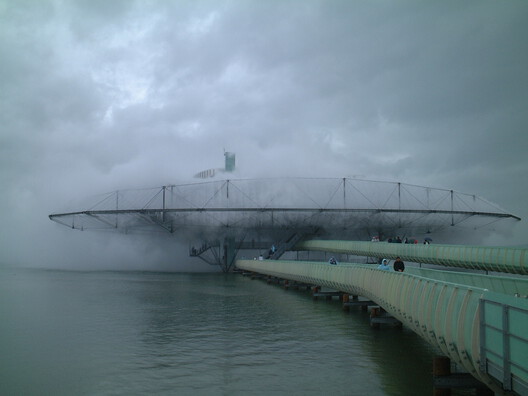
This is an architecture of mass without volume. The fog is a medium of radical instability, a thick, white noise that dampens sound and dissolves the body's relationship to the ground. Within the mist, the air becomes an opaque solid, a material that occupies the lungs and clings to the hair, rendering the act of navigation a sensory negotiation with the ephemeral. There is no facade to maintain, only a constant, mechanical effort to sustain an equilibrium between the water and the atmosphere. The "building" exists only in the tension of that struggle; a temporary thickening of the air that threatens to drift away the moment the pumps stop or the wind shifts toward the Alps.
Air as Space
Serpentine Pavilion 2013
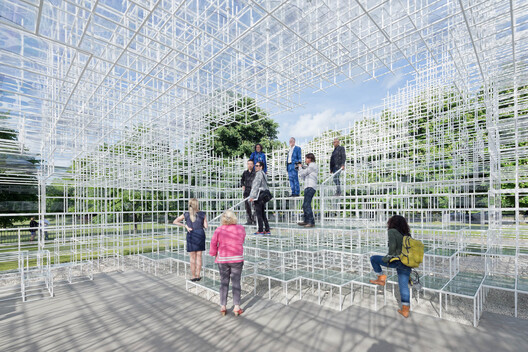
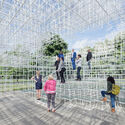
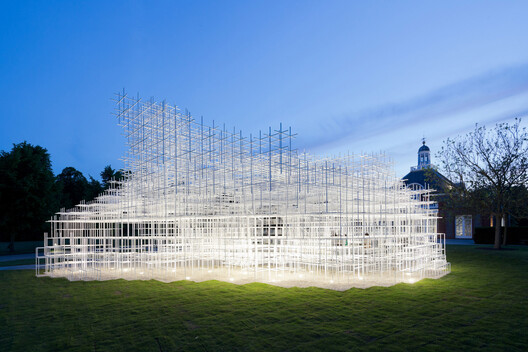
The 2013 pavilion designed by Sou Fujimoto is an exercise in the dissolution of the wall into a porous, three-dimensional grid. It occupies the lawn as a semi-transparent haze of white steel poles, a geometric fog that blurs the distinction between the manicured landscape and the sheltered interior. There is a strange, vibrating quality to the structure; the twenty-millimeter steel sections are thin enough to nearly vanish against the sky, yet they aggregate into a field that captures the light and holds the air. It is a skeleton that refuses to be covered, a cage that suggests enclosure without ever fully achieving it.
The experience of the pavilion is dictated by the movement of the body through this fractured volume. Because the "roof" and "walls" are composed of the same cellular logic, the air is never trapped. The structure acts as a cooling heat sink of sorts, casting a dappled, geometric shadow that mimics the canopy of the surrounding trees while allowing the breeze to pass through the entire depth of the plan.
This article is part of the ArchDaily Topic: Light, Lighter, Lightest: Redefining How Architecture Touches the Earth, proudly presented by Vitrocsa, the original minimalist windows since 1992.
Vitrocsa designed the original minimalist window systems, a unique range of solutions, dedicated to the frameless window boasting the narrowest sightline barriers in the world. Manufactured in line with the renowned Swiss Made tradition for 30 years, Vitrocsa's systems "are the product of unrivaled expertise and a constant quest for innovation, enabling us to meet the most ambitious architectural visions."
Every month we explore a topic in-depth through articles, interviews, news, and architecture projects. We invite you to learn more about our ArchDaily Topics. And, as always, at ArchDaily we welcome the contributions of our readers; if you want to submit an article or project, contact us.


