1. ArchDaily
  2. Diller Scofidio + Renfro

Diller Scofidio + Renfro: The Latest Architecture and News

Designing with Air: Rethinking Architecture Beyond the Wall

Architecture is traditionally chronicled through the persistence of the solid. We define the discipline by the weight of the lintel, the mass of the pier, and the resistance of the wall. Even when lightness is invoked, it is usually understood as a subtractive act, the thinning of a section or the precarious reduction of a load. Yet there is a parallel history, less visible and harder to isolate, in which the primary material of construction is not what occupies space, but what moves through it.

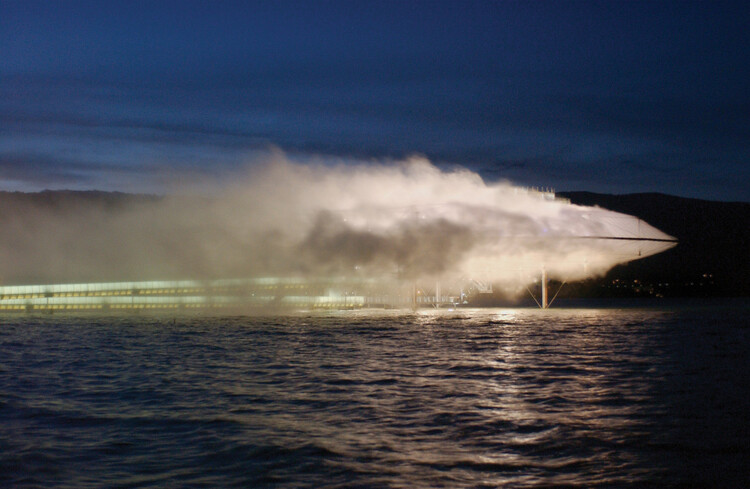
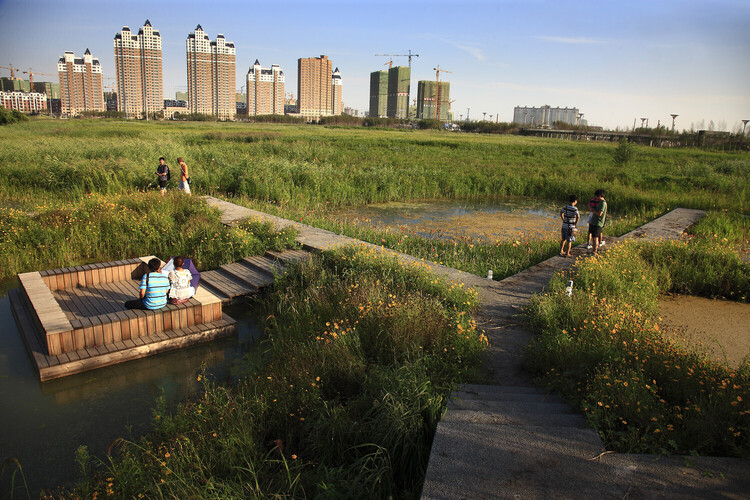
To treat air as a medium is to move past the binary of the envelope. The boundary between the interior and the world ceases to be a line of absolute separation and becomes, instead, a site of filtration and pressure. We begin to see the building as a thermal valve, a series of gradients where moisture, velocity, and heat are not merely background "conditions" to be mitigated by mechanical systems, but are the very substances being shaped.

Designing with Air: Rethinking Architecture Beyond the Wall - Image 1 of 4Designing with Air: Rethinking Architecture Beyond the Wall - Image 2 of 4Designing with Air: Rethinking Architecture Beyond the Wall - Image 3 of 4Designing with Air: Rethinking Architecture Beyond the Wall - Image 4 of 4Designing with Air: Rethinking Architecture Beyond the Wall - More Images+ 6

Why Do We Want to Float? The Psychology of Lightness in Architecture

In 1962, the architect Buckminster Fuller envisioned a floating city that would free humanity from its dependence on the Earth. The speculative project consisted of enormous geodesic spheres that would naturally levitate in air warmed by the sun and be anchored to mountaintops. Designed to house thousands of people, Fuller’s Cloud Nine aimed to ease land ownership pressures, address housing shortages, and contribute to environmental preservation.

More than half a century later, we remain far from realizing Fuller’s vision. Creating a truly floating structure on the Earth’s surface is still, for now, an unattainable ideal. While supports continue to be necessary, we manipulate their position, intensity, and number, developing structural “acrobatics” to at least approach the idea of overcoming gravity — a desire that has long fascinated humanity.

Why Do We Want to Float? The Psychology of Lightness in Architecture - Imagen 1 de 4Why Do We Want to Float? The Psychology of Lightness in Architecture - Imagen 2 de 4Why Do We Want to Float? The Psychology of Lightness in Architecture - Imagen 3 de 4Why Do We Want to Float? The Psychology of Lightness in Architecture - Imagen 4 de 4Why Do We Want to Float? The Psychology of Lightness in Architecture - More Images+ 17

ArchDaily’s Readers Select Who Should Win the 2026 Pritzker Prize

As the architecture community looks ahead to the announcement of the 2026 laureate of the Pritzker Architecture Prize, anticipation once again gathers around what is widely regarded as the profession's highest honor. Founded in 1979 by Jay Pritzker and administered by the Hyatt Foundation, the prize recognizes a living architect whose body of work demonstrates a consistent and significant contribution to humanity and the built environment.

ArchDaily’s Readers Select Who Should Win the 2026 Pritzker Prize - Image 1 of 4ArchDaily’s Readers Select Who Should Win the 2026 Pritzker Prize - Image 2 of 4ArchDaily’s Readers Select Who Should Win the 2026 Pritzker Prize - Image 3 of 4ArchDaily’s Readers Select Who Should Win the 2026 Pritzker Prize - Image 4 of 4ArchDaily’s Readers Select Who Should Win the 2026 Pritzker Prize - More Images+ 7

Building at the Edge: New York and Hong Kong’s Competing Waterfront Logics

Subscriber Access | 

Coastal development in major cities has long been a terrain of opportunity and contention—shaped at once by the pursuit of capital (premium views, scarce land, and the promise of reclamation), by civic demands for public access and collective waterfront life, and by contemporary aspirations for sustainability and place-defining urban identity. Precisely because these agendas rarely align, extracting the full potential of waterfront sites is never straightforward.

Yet in New York City and Hong Kong, we can trace each city's ambitions—despite differing strategies, priorities, and political logics—through a set of keystone projects that anchor their coastlines. Read together, these projects reveal not only what each city chooses to value, but also what it is willing to trade off in order to build at the edge.

Building at the Edge: New York and Hong Kong’s Competing Waterfront Logics - Image 1 of 4Building at the Edge: New York and Hong Kong’s Competing Waterfront Logics - Image 2 of 4Building at the Edge: New York and Hong Kong’s Competing Waterfront Logics - Image 3 of 4Building at the Edge: New York and Hong Kong’s Competing Waterfront Logics - Image 4 of 4Building at the Edge: New York and Hong Kong’s Competing Waterfront Logics - More Images+ 15

Farewell to Masters: Remembering the Architects We Lost in 2025

Every year brings new ideas, projects, and shifts in architectural culture, but it also marks the loss of voices that have shaped the discipline across decades. Architecture moves forward, but it also advances through absence. When figures who helped articulate its language and its ambitions disappear, they leave behind more than completed works or influential texts. Their absence becomes a threshold, a moment in which the discipline pauses to understand what remains, what evolves, and what continues to guide us. These moments of loss remind us that architecture is a long, collective construction, carried not only by those shaping the present but also by those whose visions continue to orient how we think about cities and landscapes.

The architects and thinkers we lost in 2025 came from remarkably different worlds, yet the questions that shaped their work often intersected. Some approached the city through identity, symbolism, and historical continuity, seeking to ground the built environment in cultural memory. Others interpreted it through engineering precision, ecological systems, or radical experimentation, expanding what architecture could be and how it could be experienced. Their work spans contexts as diverse as postwar Britain, rapidly urbanizing China, Central European avant-gardes, and the evolving cultural institutions of Berlin and New York. Together, they form a spectrum of responses that defined, and continue to define, architectural culture over the last half-century, revealing the multiplicity of ways in which architecture can engage with society, technology, and the environment.

Farewell to Masters: Remembering the Architects We Lost in 2025 - Image 1 of 4Farewell to Masters: Remembering the Architects We Lost in 2025 - Image 2 of 4Farewell to Masters: Remembering the Architects We Lost in 2025 - Image 3 of 4Farewell to Masters: Remembering the Architects We Lost in 2025 - Image 4 of 4Farewell to Masters: Remembering the Architects We Lost in 2025 - More Images+ 33

Cities Need Care, Not Perfection: Rethinking How We Build the Urban Future

Subscriber Access | 

What does optimism feel like in cities that can no longer rely on perfection as their ultimate ambition? Across the world, urban environments bear the weight of overlapping pressures: climate volatility, spatial inequality, political fragmentation, public distrust, and chronic infrastructural disinvestment. These realities render the idea of an ideal city increasingly detached from lived experience. Yet the hope for building better systems persists. While utopian visions may seem like an escape from the growing complexities of the modern world, the greater challenge for contemporary city-making is to confront those complexities rather than avoid them.

Cities Need Care, Not Perfection: Rethinking How We Build the Urban Future - Image 1 of 4Cities Need Care, Not Perfection: Rethinking How We Build the Urban Future - Image 2 of 4Cities Need Care, Not Perfection: Rethinking How We Build the Urban Future - Image 3 of 4Cities Need Care, Not Perfection: Rethinking How We Build the Urban Future - Image 4 of 4Cities Need Care, Not Perfection: Rethinking How We Build the Urban Future - More Images+ 16

Behind the Scenes, On Display: Self-Curated Journeys through the Museum Archive

The museum and gallery visit has long been a highly curated experience. Visitors are guided through a carefully orchestrated sequence of rooms, with hand-picked works arranged to tell a specific narrative, supported by signage, graphics, scenography, and calibrated lighting. Even the rarely changed exhibitions - the permanent collections, also typically rely on a strong curatorial voice— led by noted artists or curators—to set institutional stance and shape interpretation.

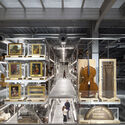
At the same time, storage areas for museums and galleries are typically kept separately—often within the same building but under tightly controlled access, and not infrequently off-site in dedicated facilities, such as the Louvre Conservation Centre. These zones have long been understood as highly controlled spaces not only in terms of access, but also in relation to climate, humidity, archival order, handling protocols, maintenance, and repair. For fear of thefts and that the spatial, environmental, and sequencing requirements of the archive could be disturbed, storage has traditionally been somewhat secretive and primarily serves academic researchers and art practitioners by request. Rarely does the general public gain a comprehensive picture of the works safeguarded by any given institution.

Behind the Scenes, On Display: Self-Curated Journeys through the Museum Archive - Image 1 of 4Behind the Scenes, On Display: Self-Curated Journeys through the Museum Archive - Image 2 of 4Behind the Scenes, On Display: Self-Curated Journeys through the Museum Archive - Image 3 of 4Behind the Scenes, On Display: Self-Curated Journeys through the Museum Archive - Image 4 of 4Behind the Scenes, On Display: Self-Curated Journeys through the Museum Archive - More Images+ 27

Choreographing Space: Architecture and Dance as Interdisciplinary Practices

"Dance, dance… otherwise we are lost." This oft-cited phrase by Pina Bausch encapsulates not only the urgency of movement, but its capacity to reveal space itself. In her choreographies, space is never a neutral backdrop, it becomes a partner, an obstacle, a memory. Floors tilt, chairs accumulate, walls oppress or liberate. These are architectural conditions, staged and contested through the body. What Bausch exposes — and what architecture often forgets — is that space is not simply built, it is performed. Her work invites architects to think not only in terms of materials and forms, but of gestures, relations, and rhythms. It suggests that architecture, like dance, is ultimately about how we inhabit, structure, and emotionally charge the spaces we move through.
Historically, architecture and dance have operated in parallel, shaping human experience through the body's orientation in space and time. From the choreographed rituals of classical temples to the axial logics of Baroque palaces, built space has always implied movement. The Bauhaus took this further, as Oskar Schlemmer's Triadic Ballet visualized space as a geometric extension of the body. This was not scenery, but spatial thinking made kinetic. In the 20th century, choreographers like William Forsythe and Anne Teresa De Keersmaeker integrated architectural constraints into their scores, while architects such as Steven Holl, Diller Scofidio + Renfro, and Toyo Ito designed buildings that unfold as spatial sequences, inviting movement, drift, and delay.

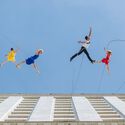
Choreographing Space: Architecture and Dance as Interdisciplinary Practices - Image 1 of 4Choreographing Space: Architecture and Dance as Interdisciplinary Practices - Image 2 of 4Choreographing Space: Architecture and Dance as Interdisciplinary Practices - Image 3 of 4Choreographing Space: Architecture and Dance as Interdisciplinary Practices - Image 4 of 4Choreographing Space: Architecture and Dance as Interdisciplinary Practices - More Images+ 35

Milano Cortina 2026: How the City Is Preparing for the Winter Olympics

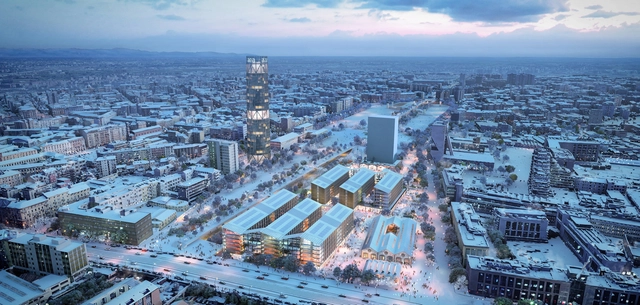
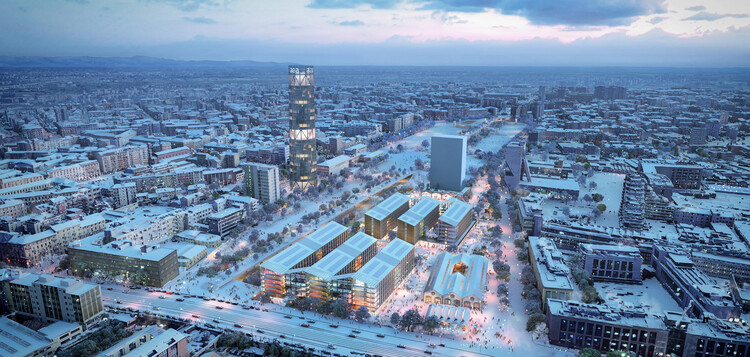
Italy is preparing to host its third Olympic Winter Games as Milan and Cortina d'Ampezzo welcome Milano Cortina 2026, seventy years after Cortina staged the 1956 edition and two decades after Torino 2006. The Games will take place from February 6 to 22, 2026, marking the first time the Winter Olympics are organized across two cities, two regions, Lombardy and Veneto, and two autonomous provinces, Trento and Bolzano. Covering a territory of 22,000 square kilometers, Milano Cortina 2026 will become the most geographically extensive Winter Games to date, with over 90% of venues already existing or designed as temporary facilities.

Milano Cortina 2026: How the City Is Preparing for the Winter Olympics - Imagen 1 de 4Milano Cortina 2026: How the City Is Preparing for the Winter Olympics - Imagen 2 de 4Milano Cortina 2026: How the City Is Preparing for the Winter Olympics - Imagen 3 de 4Milano Cortina 2026: How the City Is Preparing for the Winter Olympics - Imagen 4 de 4Milano Cortina 2026: How the City Is Preparing for the Winter Olympics - More Images+ 9

Learning from Artists: New Perspectives on Public Space

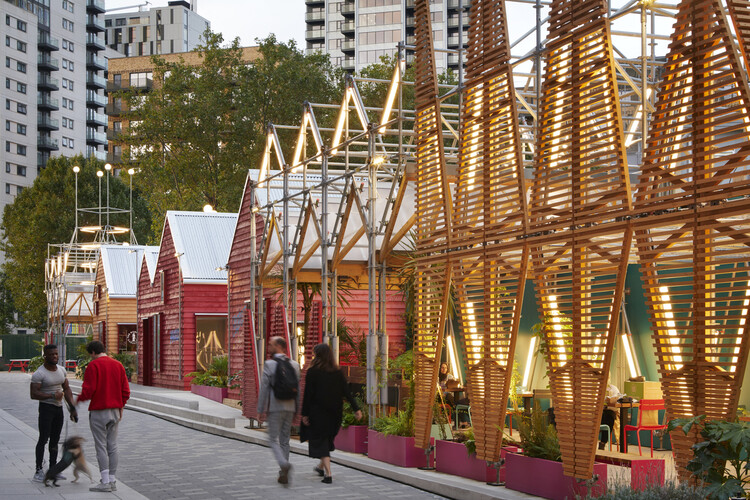
Public space has long been central to architectural thought, often framed in terms of planning, infrastructure, and regulation. From Haussmann's Paris to contemporary masterplans, architects have worked to define and formalise collective life through spatial tools. Yet, outside of these frameworks, artists have continuously offered alternative ways of understanding and inhabiting public space—ways that rely not on construction or permanence, but on presence, perception, and participation. Through actions, objects, or atmospheres, artists engage the city as a site of friction and imagination. These gestures challenge architectural conventions and invite artists to reconsider public space not as a solved form, but as a contingent and open process.

Learning from Artists: New Perspectives on Public Space - Image 1 of 4Learning from Artists: New Perspectives on Public Space - Image 2 of 4Learning from Artists: New Perspectives on Public Space - Image 3 of 4Learning from Artists: New Perspectives on Public Space - Image 4 of 4Learning from Artists: New Perspectives on Public Space - More Images+ 18

Diller Scofidio + Renfro Completes V&A East Storehouse in Queen Elizabeth Olympic Park

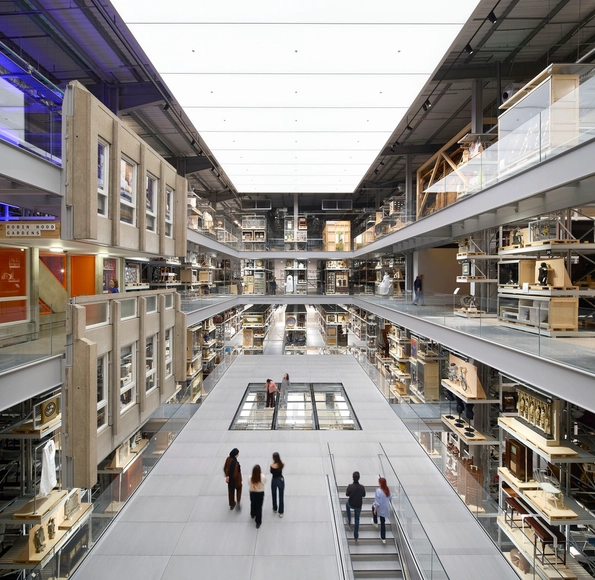
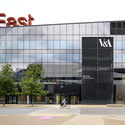
The V&A East Storehouse will open to the public for the first time on Saturday, 31 May 2025. Located in the Queen Elizabeth Olympic Park, the project is part of East Bank, a new cultural quarter supported by the Mayor of London. Designed by the internationally recognized architecture firm Diller, Scofidio + Renfro, the new facility serves as both a working store and a visitor destination. Following a decade of planning and extensive audience consultation, V&A East Storehouse is the first of V&A East's two new cultural destinations to open in East London. The second, V&A East Museum, is scheduled to open in spring 2026 and will explore the role of making and creativity as agents of change.

Diller Scofidio + Renfro Completes V&A East Storehouse in Queen Elizabeth Olympic Park - Image 1 of 4Diller Scofidio + Renfro Completes V&A East Storehouse in Queen Elizabeth Olympic Park - Image 2 of 4Diller Scofidio + Renfro Completes V&A East Storehouse in Queen Elizabeth Olympic Park - Image 3 of 4Diller Scofidio + Renfro Completes V&A East Storehouse in Queen Elizabeth Olympic Park - Image 4 of 4Diller Scofidio + Renfro Completes V&A East Storehouse in Queen Elizabeth Olympic Park - More Images+ 14

24th International Exhibition of Triennale Milano Announces Bee Award Winners

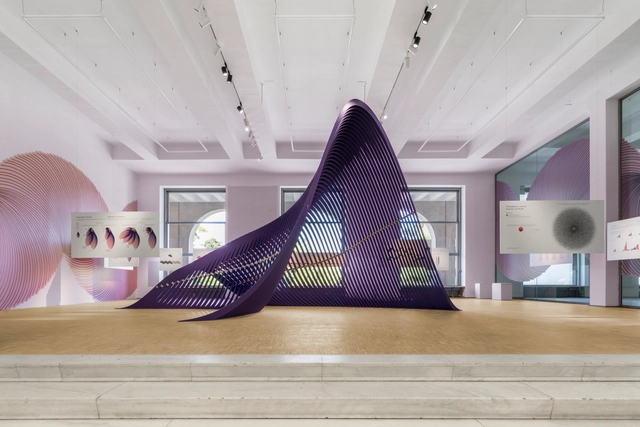
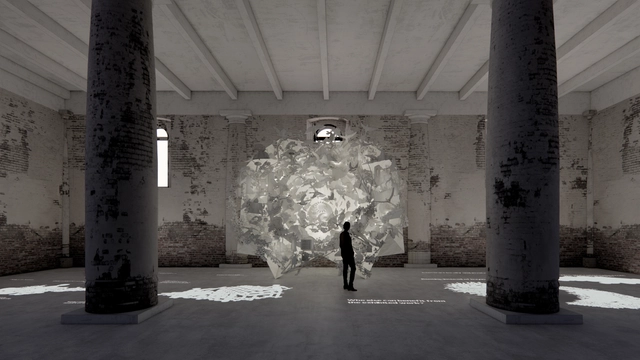
The 24th International Exhibition of Triennale Milano opened to the public on May 13, 2025, at the historic Palazzo dell'Arte. Running until November 9, this edition explores the theme of "Inequalities", continuing Triennale Milano's tradition of addressing urgent global issues through the lenses of art, architecture, and design. The exhibition is formed by two main sections: one that presents a curated selection of exhibitions and installations by individual artists and teams, and another that features international participations, including national pavilions and their contributions. At the opening ceremony on May 12th, the Bee Awards were presented to recognize selected contributions across the exhibition. From both the exhibitions and the international participations, the jury awarded one winner and one honorable mention each.

24th International Exhibition of Triennale Milano Announces Bee Award Winners - 1 的图像 424th International Exhibition of Triennale Milano Announces Bee Award Winners - 2 的图像 424th International Exhibition of Triennale Milano Announces Bee Award Winners - 3 的图像 424th International Exhibition of Triennale Milano Announces Bee Award Winners - 4 的图像 424th International Exhibition of Triennale Milano Announces Bee Award Winners - More Images+ 4

Discover the Full List of Special Projects and Participants of the 2025 Venice Architecture Biennale

The 19th International Architecture Exhibition, organised by La Biennale di Venezia under Carlo Ratti's curatorship and the theme "Intelligens. Natural. Artificial. Collective," is set to transform Venice into a "Living Laboratory" of experimentation and collaboration. This year's special projects extend beyond the exhibition grounds, integrating into various city locations and Forte Marghera in Mestre, providing an alternative perspective that expands the reach of architectural discourse.

The Biennale promises to be a dynamic platform uniting over 750 participants from diverse backgrounds, including architects, engineers, mathematicians, climate scientists, and artists. Such a broad coalition of over 280 projects underlines the Exhibition's focus on inclusivity and interdisciplinary collaboration, an essential aspect for adaptation. The selection process proposed a bottom-up, open call approach through the Space for Ideas initiative, which ran between May and June 2024. It encouraged participation from global teams, from Pritzker Prize winners and Nobel laureates to emerging architects and scientists.

Discover the Full List of Special Projects and Participants of the 2025 Venice Architecture Biennale - Image 1 of 4Discover the Full List of Special Projects and Participants of the 2025 Venice Architecture Biennale - Image 2 of 4Discover the Full List of Special Projects and Participants of the 2025 Venice Architecture Biennale - Image 3 of 4Discover the Full List of Special Projects and Participants of the 2025 Venice Architecture Biennale - Image 4 of 4Discover the Full List of Special Projects and Participants of the 2025 Venice Architecture Biennale - More Images+ 16

Designing for the Performing Arts: Architecture as a Stage for Experience

Subscriber Access | 

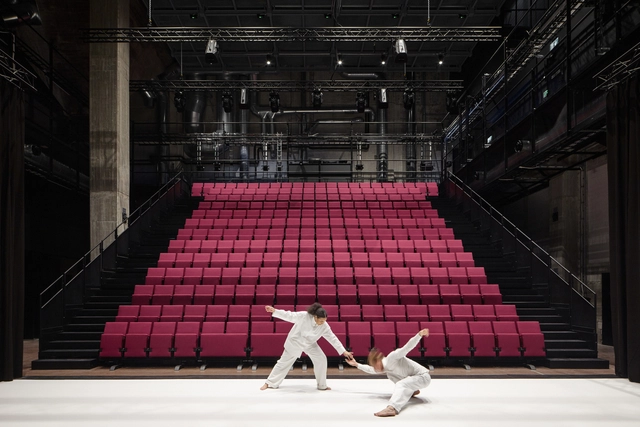
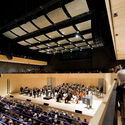
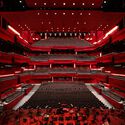
Theaters, concert halls, and opera houses are more than just venues — they are meticulously orchestrated environments where architecture, technology, and human emotion converge. Unlike conventional buildings, these spaces must accommodate a dynamic interplay between acoustics, sightlines, stage mechanics, and audience engagement, all while maintaining an architectural identity that resonates with performers and spectators alike. Whether it is the immersive embrace of a vineyard-style concert hall or the grandeur of a proscenium theater, every design decision shapes how performances are experienced and remembered.

The recently published SET PIECES: Architecture for the Performing Arts in Fifteen Fragments by Diamond Schmitt Architects explores these complexities through case studies and reflections. Inspired by its insights, this article examines essential design considerations for performance spaces, from acoustic engineering to the evolving role of theaters in urban life.

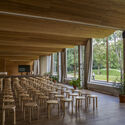
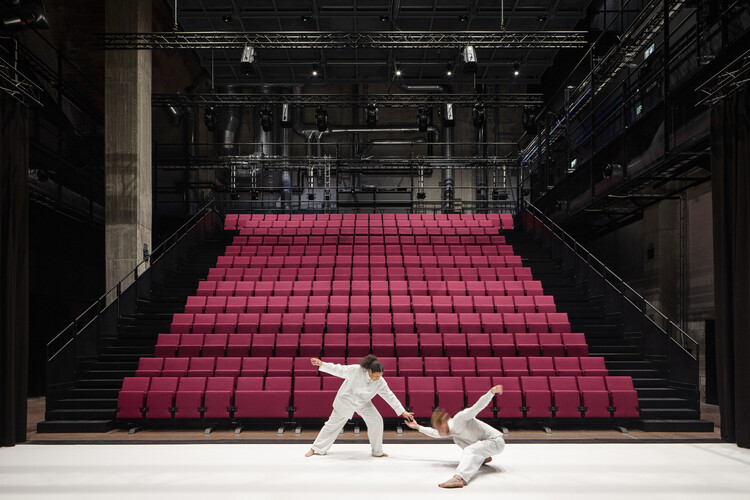
Designing for the Performing Arts: Architecture as a Stage for Experience - Imagem 1 de 4Designing for the Performing Arts: Architecture as a Stage for Experience - Imagem 2 de 4Designing for the Performing Arts: Architecture as a Stage for Experience - Imagem 3 de 4Designing for the Performing Arts: Architecture as a Stage for Experience - Imagem 4 de 4Designing for the Performing Arts: Architecture as a Stage for Experience - More Images+ 60

"We Were Always Critiquing, We Were Always Throwing Grenades at Things:" In Conversation with Elizabeth Diller

I love putting together lists of original manifesto-like statements by architects perpetually searching for breaking new ground. They provoke us to imagine possibilities we haven't dared to consider before. Questioning conventions should be a critic's primary objective to engage in a conversation with a creative. Otherwise, what is there to discuss, really? That's why speaking with Elizabeth Diller about her studio's work and intentions is like a breath of fresh air, especially nowadays when so many architects are happy to align themselves in pursuing what's expected. In one of our previous conversations, Diller put it bluntly: "We don't take professional boundaries seriously. Every time we are handed a program, we tear it apart and continuously ask new questions. Nothing is fixed." This time, we spoke about Diller Scofidio + Renfro's new monograph, "Architecture, Not Architecture." The book, a project in itself, aims to rethink the very limits of architecture. It reinvents what a book can be in the process. During our 1-1/2-hour discussion over Zoom, which I prefer for its frontal dual recording, she said eagerly, "We were always critiquing; we were always throwing grenades at things."

"We Were Always Critiquing, We Were Always Throwing Grenades at Things:" In Conversation with Elizabeth Diller - Image 1 of 4"We Were Always Critiquing, We Were Always Throwing Grenades at Things:" In Conversation with Elizabeth Diller - Image 2 of 4"We Were Always Critiquing, We Were Always Throwing Grenades at Things:" In Conversation with Elizabeth Diller - Image 3 of 4"We Were Always Critiquing, We Were Always Throwing Grenades at Things:" In Conversation with Elizabeth Diller - Image 4 of 4We Were Always Critiquing, We Were Always Throwing Grenades at Things: In Conversation with Elizabeth Diller - More Images+ 4

Diller Scofidio + Renfro Unveils Mass Timber Tower for Boston University’s Pardee School in United States

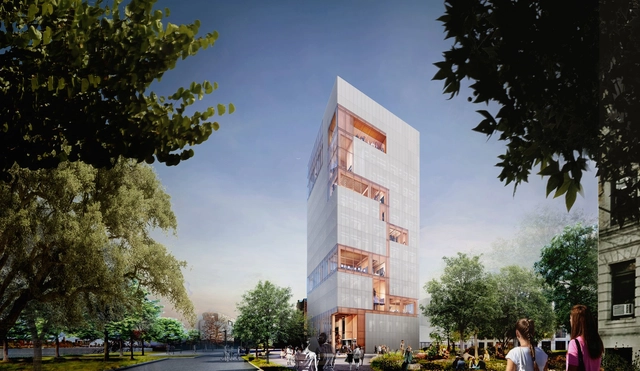
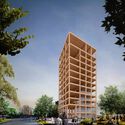
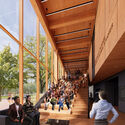
Diller Scofidio + Renfro has unveiled the design for the new Frederick S. Pardee School for Global Studies at Boston University, a project aiming to integrate sustainability, urban density, and interdisciplinary collaboration. The 70,000-square-foot building will rise 186 feet, making it the tallest mass timber tower in the Northeast United States. Situated on a former parking lot at the heart of the university's campus, the structure will occupy just 10% of the site, allowing for the creation of a central green space in the future.

Diller Scofidio + Renfro Unveils Mass Timber Tower for Boston University’s Pardee School in United States - Image 1 of 4Diller Scofidio + Renfro Unveils Mass Timber Tower for Boston University’s Pardee School in United States - Image 2 of 4Diller Scofidio + Renfro Unveils Mass Timber Tower for Boston University’s Pardee School in United States - Image 3 of 4Diller Scofidio + Renfro Unveils Mass Timber Tower for Boston University’s Pardee School in United States - Image 4 of 4Diller Scofidio + Renfro Unveils Mass Timber Tower for Boston University’s Pardee School in United States - More Images+ 8

Ricardo Scofidio, Co-Founder of Diller Scofidio + Renfro, Passes Away at 89

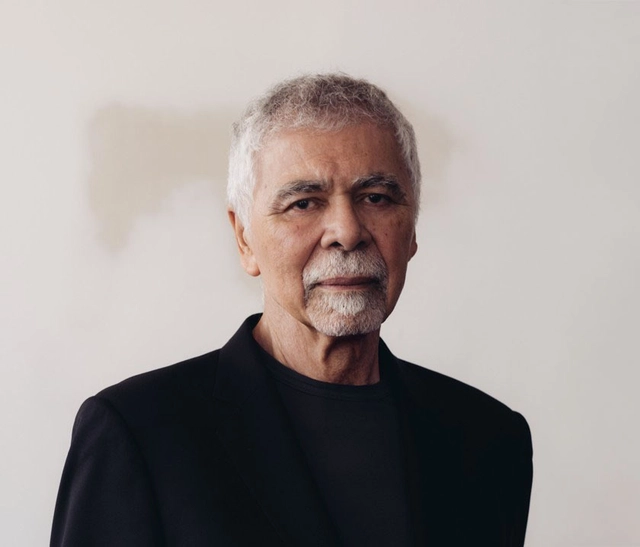
Ricardo Scofidio, a distinguished figure in the world of architecture, passed away on March 6, 2025, at the age of 89. Born in New York City in 1935, Scofidio co-founded the influential architecture firm Diller Scofidio + Renfro (DS+R) with his partner Elizabeth Diller in 1979. Together, they brought to the profession a conceptual art sensibility, influencing the design of globally recognized cultural landmarks and public spaces. Among their most notable projects are the High Line in Manhattan and the transformation of Lincoln Center, each reflecting the studio's ambition of challenging conventional architectural premises.

Ricardo Scofidio, Co-Founder of Diller Scofidio + Renfro, Passes Away at 89 - Imagem 1 de 4Ricardo Scofidio, Co-Founder of Diller Scofidio + Renfro, Passes Away at 89 - Imagem 2 de 4Ricardo Scofidio, Co-Founder of Diller Scofidio + Renfro, Passes Away at 89 - Imagem 3 de 4Ricardo Scofidio, Co-Founder of Diller Scofidio + Renfro, Passes Away at 89 - Imagem 4 de 4Ricardo Scofidio, Co-Founder of Diller Scofidio + Renfro, Passes Away at 89 - More Images+ 2

Diller Scofidio + Renfro Unveils 100-Meter Wellness Tower in Dubai, UAE

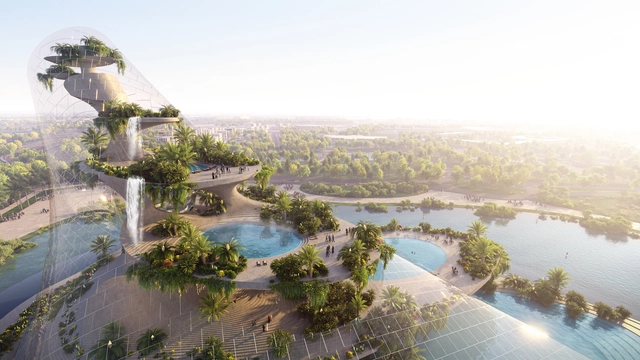
Diller Scofidio + Renfro has unveiled the design for Therme Dubai – Islands in the Sky, a new urban wellbeing destination set to be developed in Zabeel Park, United Arab Emirates. The project, created in collaboration with Therme Group and Dubai Municipality, has been approved as part of Dubai's Quality of Life Strategy 2033, which aims to enhance the city's landscape through innovative and sustainable infrastructure.