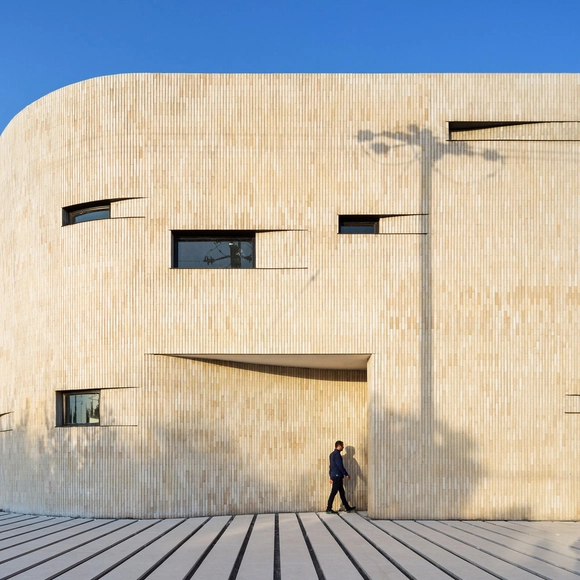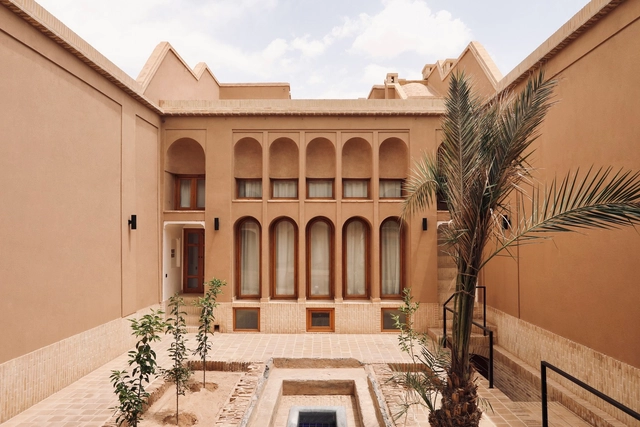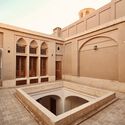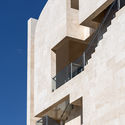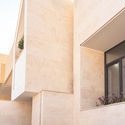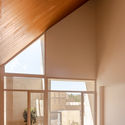



-
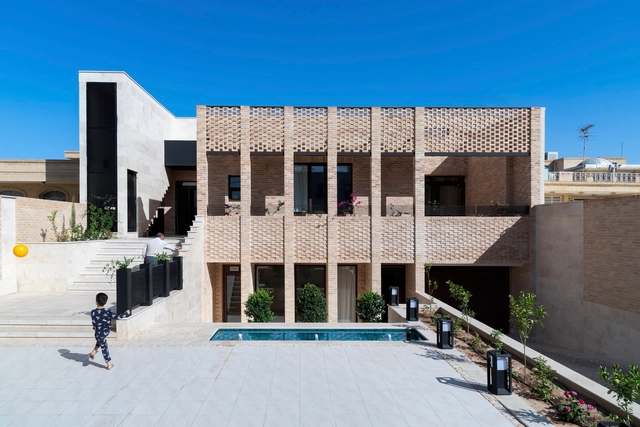
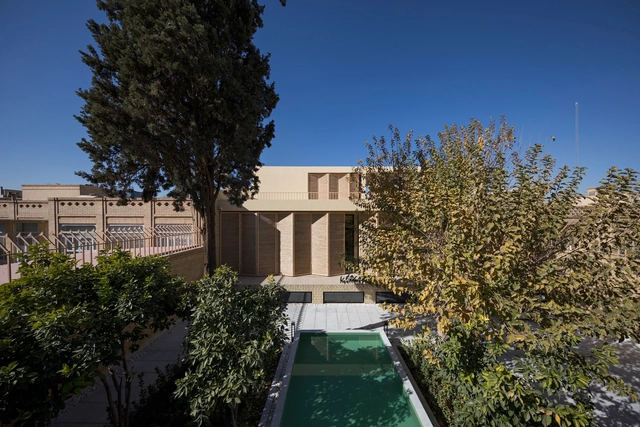
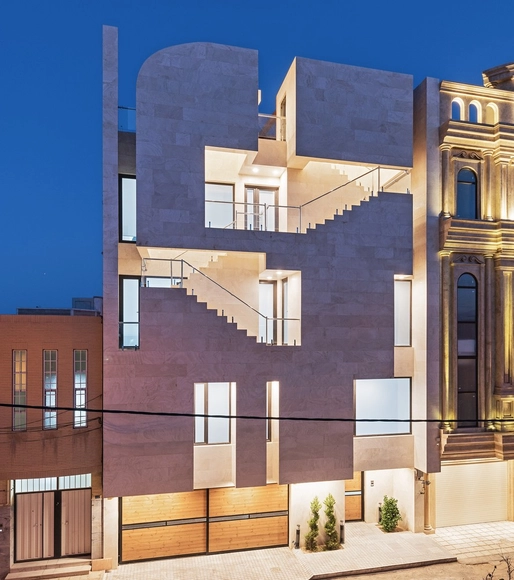
Architects: harandi & harandi architects
- Area: 145 m²
- Year: 2021
-
Manufacturers: Arman Safavi, Dimehspiral, Jotun Paint, Neshiman

Architecture is traditionally chronicled through the persistence of the solid. We define the discipline by the weight of the lintel, the mass of the pier, and the resistance of the wall. Even when lightness is invoked, it is usually understood as a subtractive act, the thinning of a section or the precarious reduction of a load. Yet there is a parallel history, less visible and harder to isolate, in which the primary material of construction is not what occupies space, but what moves through it.
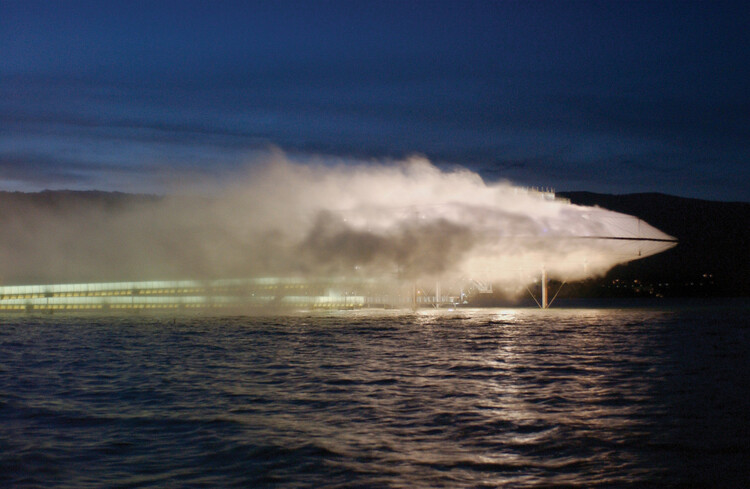
To treat air as a medium is to move past the binary of the envelope. The boundary between the interior and the world ceases to be a line of absolute separation and becomes, instead, a site of filtration and pressure. We begin to see the building as a thermal valve, a series of gradients where moisture, velocity, and heat are not merely background "conditions" to be mitigated by mechanical systems, but are the very substances being shaped.



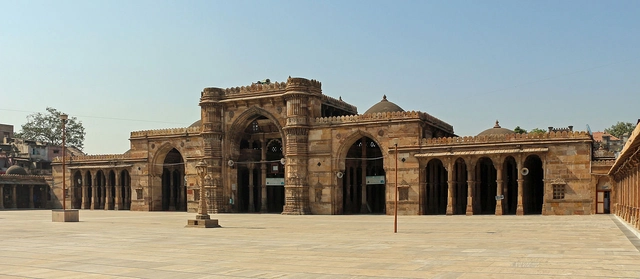
UNESCO’s World Heritage Committee, currently holding its forty-first annual session in the Polish city of Krakow, inscribed twenty new cultural sites on its World Heritage List, including the historic city of Ahmedabad in India, archaeological sites in Cambodia and Brazil, and a “cultural landscape” in South Africa. The Committee also added extensions to two sites already on the list: Strasbourg in France, and the Bauhaus in Germany. On the other hand, the historic center of Vienna was inscribed on the List of World Heritage in Danger as the Committee examined the state of conservation of one-hundred-and-fifty-four of its listed sites.