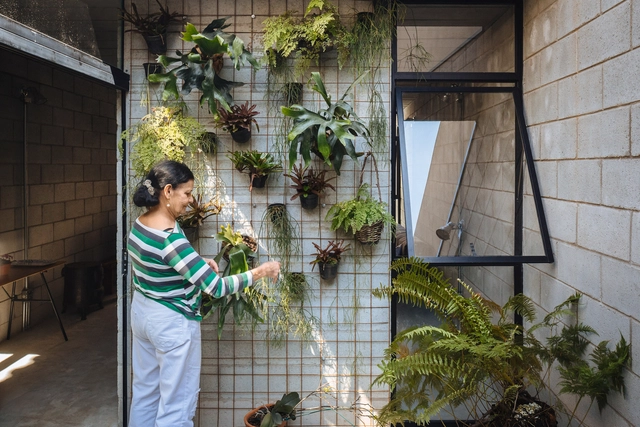
Choice of building materials and the inherent continuous reflection about the reach and capabilities of architecture are an interesting alternative way to approach this issue. The materials used in social housing should address local and economic possibilities and the real needs for access to housing in the contemporary context.
In this article, we analyze different projects published on our site to identify some of the predominant materials used in social housing, both for the formation of structures or enclosures. The intentions of this are two-fold: firstly, to create a worldwide panorama of different case studies with different construction styles from a range of geographical locations, and secondly, to provide inspiration and tools to architects to make better social housing.
Below we present 15 social housing projects and their diverse materials and construction styles.
Case Study House 22. Image via Flickr user: mbtrama Licensed under CC BY 2.0
Between 1945 and 1966, the Case Study Houses program, following the Weißenhof-siedlung exposition, commissioned a study of economic, easy-to-build houses. The study included the creation of 36 prototypes that were to be built leading up to post-war residential development. The initiative by John Entenza, editor of Arts & Architecture magazine, brought a team to Los Angeles that featured some of the biggest names in architecture at the time, including Richard Neutra, Charles & Ray Eames, Pierre Koenig, and Eero Saarinen, among others.
The program's experiment not only defined the modern home and set it apart from its predecessors, but it also pioneered new construction materials and methods in residential development that continue to influence international architecture to this day. Take a detailed look at some of the program's most emblematic work together with recommendations for facing contemporary challenges.
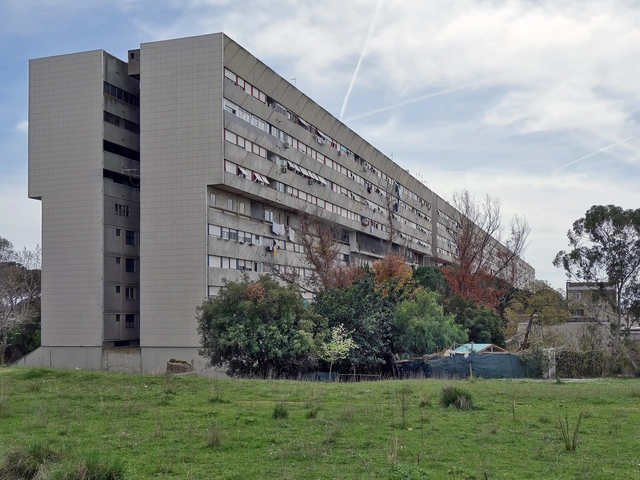
The Corviale housing complex, located in the south-western periphery of Rome, was designed in the 1970s as a solution to the growing number of dormitory districts in the Roman suburbs, caused by the significant population increase between the 1950s and 1970s - when the population grew from approximately 1.6 million to 2.7 million inhabitants - followed by suburban sprawl.
The project, also known as Serpentone because of its huge proportions, was developed by a team of architects under the leadership of Mario Fiorentino between 1972 and 1974. Construction took place between 1973 and 1982, but the original plan to use the fourth floor of the main building for commercial uses, services, and common areas, was dropped because the contractor went bankrupt. The floor was eventually taken over by informal settlements, and this event is considered to be the root of the problems with this emblematic project in the history of housing in Italy.
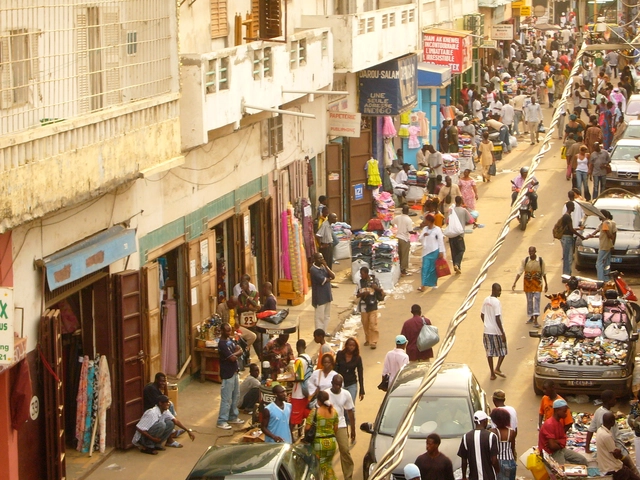
Launched by the Goethe Institut, Habiter Dakar (Living in Dakar) is a virtual exhibition tackling Housing in the Senegalese capital. The study was led by Nzinga Mboup and Caroline Geffriaud, both Architects based in Dakar. They noticed that the current housing offer in the city was particularly far off the needs of its inhabitants, whether on the cultural, societal or environmental level.
The architects analyzed the progression through which the Senegalese capital's Urban Landscape and Housing development had passed, starting from the traditional compound living type to today’s international housing models which seem to be disconnected from the daily reality of most of the city’s inhabitants. The study is concentrated on Housing which is an essential part of the formation and evolution of Dakar and suggests important theoretical and concrete reflections for the future development of the African metropolis.
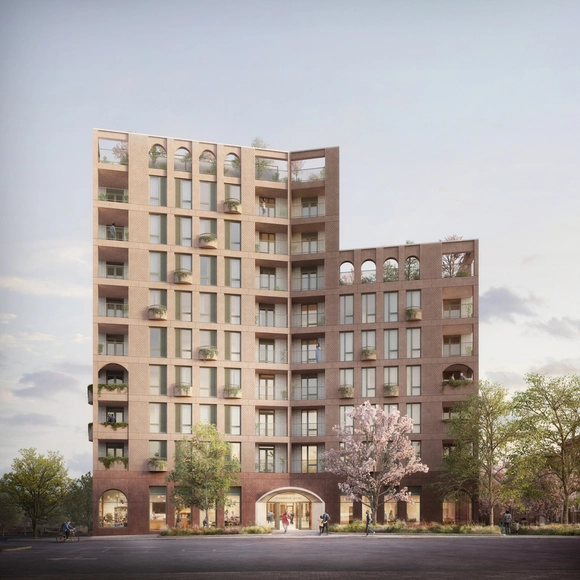
Curl la Tourelle Head Architecture received the green light to move forward with its latest “socially focused mixed-use scheme” that includes council homes, an adult education center, and affordable workspaces. Entitled Morland Gardens, the new project located in the London Borough of Brent, one of the district’s most deprived areas, is scheduled to start in the fall of 2020.
When considering “How Will We Live Together”, it is important to note the projective and future tense of the phrase. The idea not only encompasses ways we already share our built environment but targets the anticipated issues that are to be tackled to facilitate communal and mutually beneficial ways of living.
Imagen editada por Fabian Dejtiar. Image Cortesía de Mi Parque
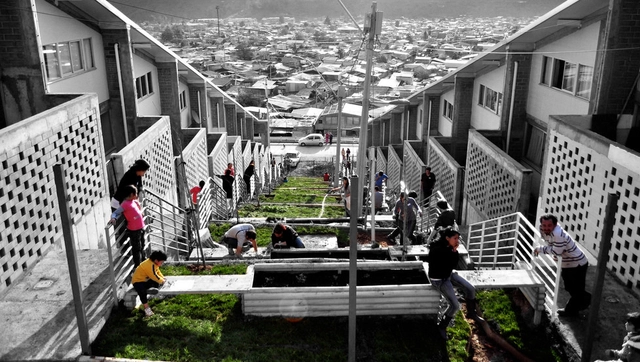
The series of articles developed by Nikos A. Salingaros, David Brain, Andrés M. Duany, Michael W. Mehaffy and Ernesto Philibert-Petit researches the peculiarities of social housing in Latin America. This time, examples of strategies and planning in their construction are reviewed, such as the importance of collaborative social processes and the specific sequences of stages.
https://www.archdaily.com/944295/examples-of-patterns-and-generative-codes-on-socially-organized-housing-in-latin-americaNikos A. Salingaros, David Brain, Andrés M. Duany, Michael W. Mehaffy & Ernesto Philibert-Petit
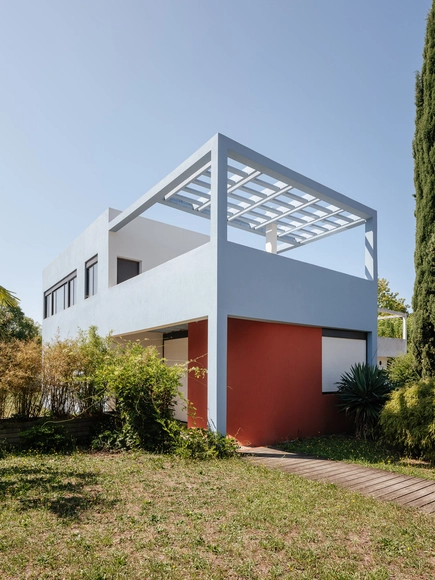
In the 1920s, work was completed on the Cité Frugès housing complex in Pessac, France. The project, meant to house Pessac's industrial workers, would be one of seventeen Le Corbusier works on UNESCO's list of World Heritage Sites.
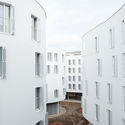
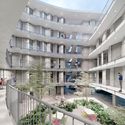
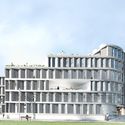
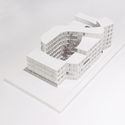
SANAA’s recently completed social housing complex in Paris was captured by the Architecture and Photography studio of Vincent Hecht. Part of Paris habitat, France’s largest public utility social housing company, the project comprises four buildings accommodating more than 100 social housing units in total.
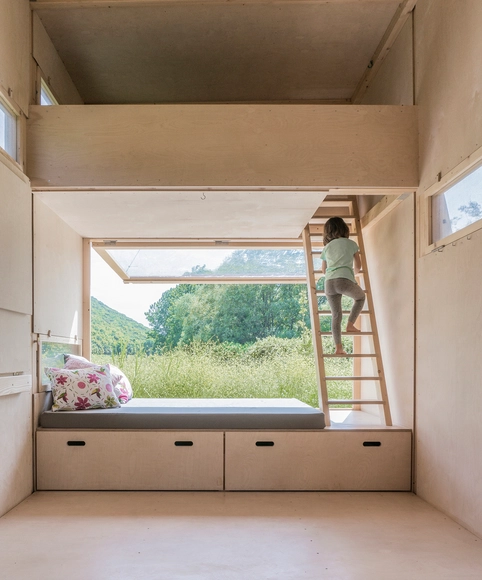
Cabin on the Border / SO? Architecture&Ideas. Image Cortesía de SO?
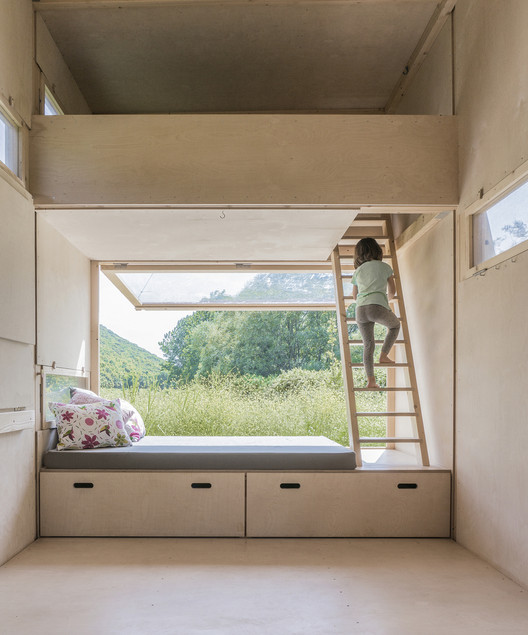
Dense cities mean small homes. With more and more frequency we are forced to adapt to spaces within which some elements simply do not fit. As architects, these restrictions actually provide us with opportunities and remind us that our goal is to give precise solutions to specific problems. Designing with infinite number square meters and/or an unlimited budget is practically unheard of.
What's the key to accommodating everything? Let's review some effective storage solutions for minimum, tight spaces.
Espacios de Paz / PICO Estudio & Movimiento Por la Paz y la Vida. . Image Cortesía de ASF International Awards
The series of articles developed by Nikos A. Salingaros, David Brain, Andrés M. Duany, Michael W. Mehaffy and Ernesto Philibert-Petit researches the peculiarities of social housing in Latin America.
This time, the proposal focuses on how human health and well-being depend on the geometry of the environment. Check the previously published pieces and the new article, below.
https://www.archdaily.com/922149/socially-organized-housing-biophilia-connectivity-and-spiritualityNikos A. Salingaros, David Brain, Andrés M. Duany, Michael W. Mehaffy & Ernesto Philibert-Petit
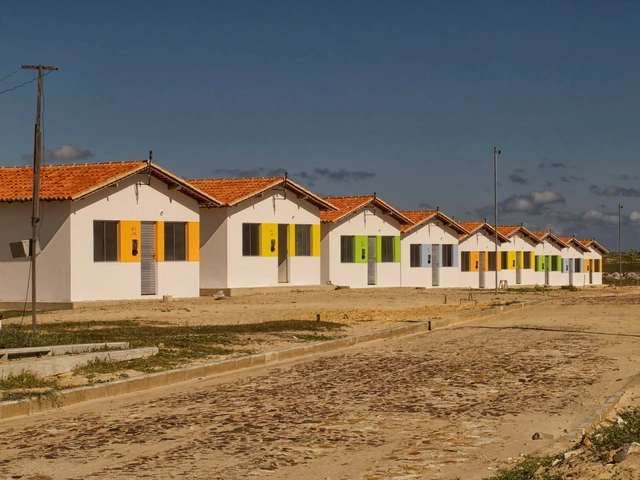
Program Minha Casa Minha Vida - Luís Correia/PI. Foto: Otávio Nogueira, via Flickr. Licencia CC BY 2.0
Having explored the design that establishes 'emotional ownership' and the antipatrons of social housing, Nikos A. Salingaros, David Brain, Andrés M. Duany, Michael W. Mehaffy and Ernesto Philibert-Petit continue their series of articles on social housing in Latin America. This time, the proposal studies how control influences the urban form and the form of housing.
https://www.archdaily.com/917182/socially-organized-housing-the-geometry-of-controlNikos A. Salingaros, David Brain, Andrés M. Duany, Michael W. Mehaffy & Ernesto Philibert-Petit
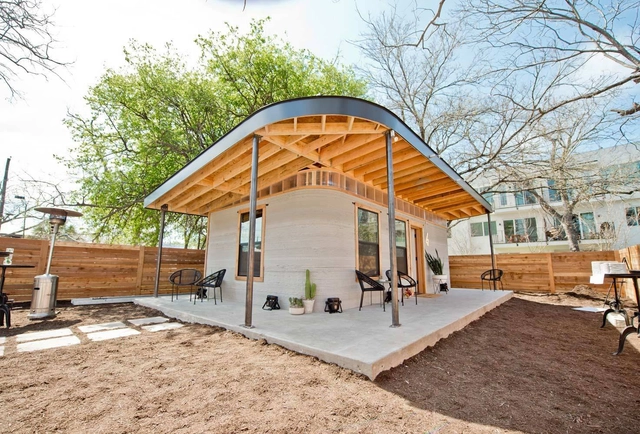
This is all quite recent: less than a year ago, a French family became the first in the world to live in a 3D printed house. Short of 20 years, this seemed like a distant dream, this new technology has developed quickly, and it arises as a possible contribution to the housing crisis around the world.
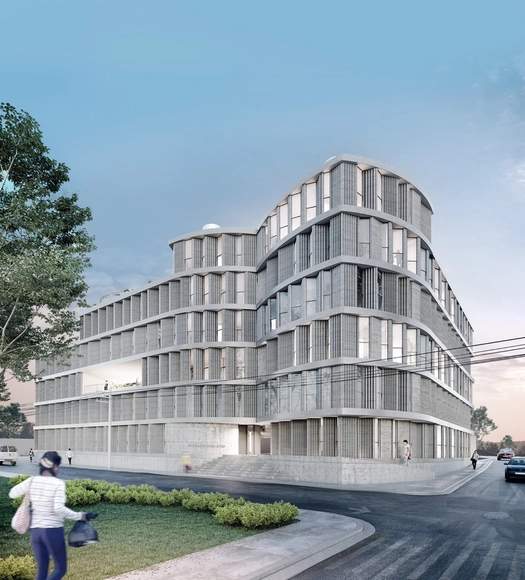
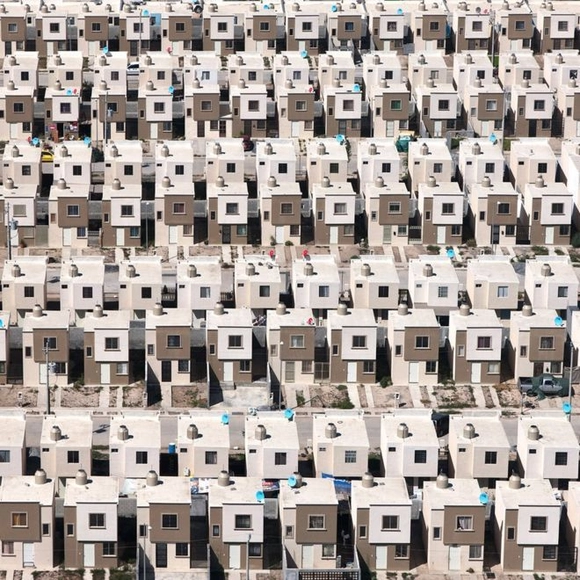
SO-IL has released details of their Las Americas social housing project in León, one of Mexico’s fastest-growing cities. Seeking to establish a solution to the nation’s housing crisis, SO-IL collaborated with the Instituto Municipal de Vivienda de León (IMUVI) in the development of the prototype development.
Continuing the series of articles developed by Nikos A. Salingaros, David Brain, Andres M. Duany, Michael W. Mehaffy, and Ernesto Philibert-Petit, in this article we'll be exploring how observations on social housing in Latin American have been approached from an outdated and antagonistic point of view. Notions and errors committed in previous studies - in some cases simply by inertia - are discussed in the Latin American context, and propose adaptable solutions focused on the long-term, urban roots of residents.
https://www.archdaily.com/914752/anti-patterns-of-social-housing-in-latin-americaNikos A. Salingaros, David Brain, Andrés M. Duany, Michael W. Mehaffy & Ernesto Philibert-Petit
Home. Our shelter. Our private space. In an urbanized world with dense megalopolises like Tokyo, Shanghai, and São Paulo, homes are getting smaller and more expensive than ever. If you are claustrophobic, Marie Kondo is your best ally in the quest to earn some extra space. And even though private backyards have become a luxury for most, our data shows that single-family houses are still the most popular project type on ArchDaily. Why is this? (Especially when it seems incongruous given the reality of today’s crowded cities.) Why do some universities still insist on designing and building houses as academic exercises? Wouldn’t it be more creative—and more useful—to develop architecture in small-scale spaces? Would it be more rewarding to develop solutions on bigger scales?
Developed by Nikos A. Salingaros, David Brain, Andrés M. Duany, Michael W. Mehaffy, and Ernesto Philibert-Petit, this series of articles offers here a set of evidence-based optimal practices for social housing, applicable in general situations. Varying examples are discussed in a Latin American context. Adaptive solutions work towards long-term sustainability and help to attach residents to their built environment.
They propose, then, new insights in complexity science, and in particular the work of Christopher Alexander on how to successfully evolve urban form. By applying the conceptual tools of “Pattern Languages” and “Generative Codes”, these principles support previous solutions derived by others, which were never taken forward in a viable form.
https://www.archdaily.com/913586/socially-organized-housing-design-that-establishes-emotional-ownershipNikos A. Salingaros, David Brain, Andrés M. Duany, Michael W. Mehaffy & Ernesto Philibert-Petit


.jpg?1626079817&format=webp&width=640&height=580)
.jpg?1553197408&format=webp&width=640&height=580)
.jpg?1615817314&format=webp&width=640&height=580)
.jpg?1615817428 "© Laurian Ghinitoiu")
.jpg?1615817448 "© Laurian Ghinitoiu")
.jpg?1615817463 "© Laurian Ghinitoiu")
.jpg?1615817414 "© Laurian Ghinitoiu")
.jpg?1615817314)










.jpg?1584528528&format=webp&width=640&height=580)
.jpg?1584528322 "© Vincent Hecht")
.jpg?1584528452 "© Vincent Hecht")
.jpg?1584528126 "© Vincent Hecht")
.jpg?1584528246 "© Vincent Hecht")
.jpg?1584528528)

.jpg?1552337492 "Bazillion / YCL Studio. Image © Leonas Garbačauskas")




.jpg?1553267060&format=webp&width=640&height=580)