1. ArchDaily
  2. Social Housing

Social Housing: The Latest Architecture and News

Why Moscow's Massacre of Mass Housing Is a Huge Mistake

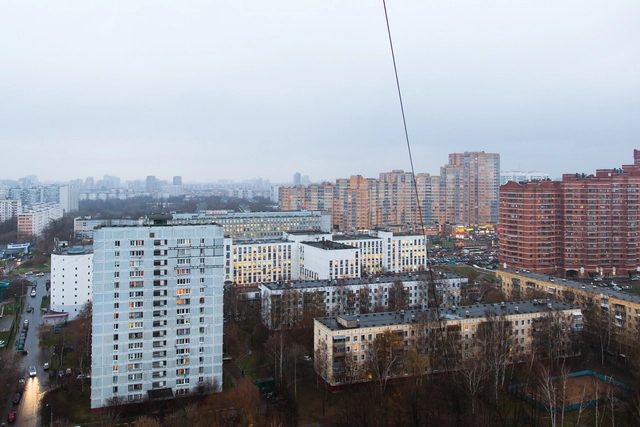
The Moscow government has just launched the biggest demolition program in the city’s history. Its goal is to get rid of 8,000 5-story residential buildings constructed in the Soviet era—it is probably the biggest program of erasure of modernist architectural heritage in world history. The main assumptions of the plan, as well as the press comments following it, show that we have forgotten what modernism was about, and what the real values of this architecture are.

A few years ago I published an essay titled Belyayevo Forever, dedicated to the preservation of generic modernist architecture. I focused on Moscow’s microrayons—vast, state-funded housing estates built in the Soviet era. In the essay, I explained the spatial and cultural values these prefabricated landscapes had. I also speculated about how one would go about preserving architecture that completely lacks uniqueness. The essay ended with a provocative statement: we should put Belyayevo—the most generic of all Soviet estates—on the UNESCO heritage list.

Why Moscow's Massacre of Mass Housing Is a Huge Mistake - Image 1 of 4Why Moscow's Massacre of Mass Housing Is a Huge Mistake - Image 2 of 4Why Moscow's Massacre of Mass Housing Is a Huge Mistake - Image 3 of 4Why Moscow's Massacre of Mass Housing Is a Huge Mistake - Image 4 of 4Why Moscow's Massacre of Mass Housing Is a Huge Mistake - More Images+ 8

WE Architecture’s Winning Proposal Combines Green Space with Social Housing in Aarhus

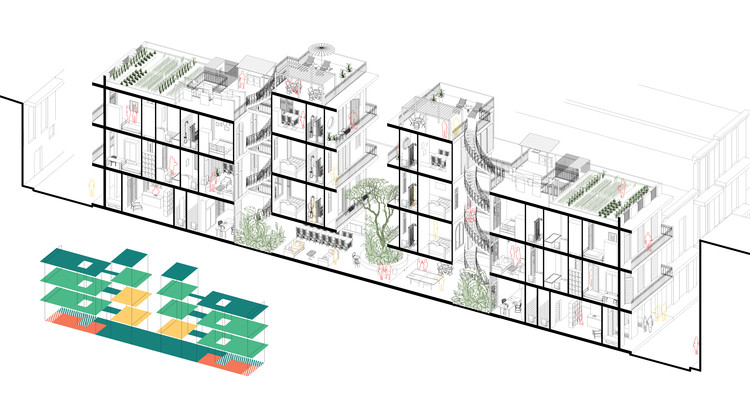
A competition for a new social housing complex in Aarhus, Denmark, has been won by WE Architecture, in collaboration with local practice JWH Arkitekter and commissioned by Ringgaarden, a Danish housing organization.

Titled “Saltholmsgade”, the winning proposal is a reinterpretation of Aarhus’ historical housing typologies along Hjortensgade, creating modern and green communal spaces. The complex consists of 38 individual apartments, offering tenants views of the city through the inclusion of rooftop gardens.

WE Architecture’s Winning Proposal Combines Green Space with Social Housing in Aarhus - Image 1 of 4WE Architecture’s Winning Proposal Combines Green Space with Social Housing in Aarhus - Image 2 of 4WE Architecture’s Winning Proposal Combines Green Space with Social Housing in Aarhus - Garden, FenceWE Architecture’s Winning Proposal Combines Green Space with Social Housing in Aarhus - FacadeWE Architecture’s Winning Proposal Combines Green Space with Social Housing in Aarhus - More Images+ 9

LOHA’s Latest Supportive Housing Complex Curbs LA’s Increasing Homelessness

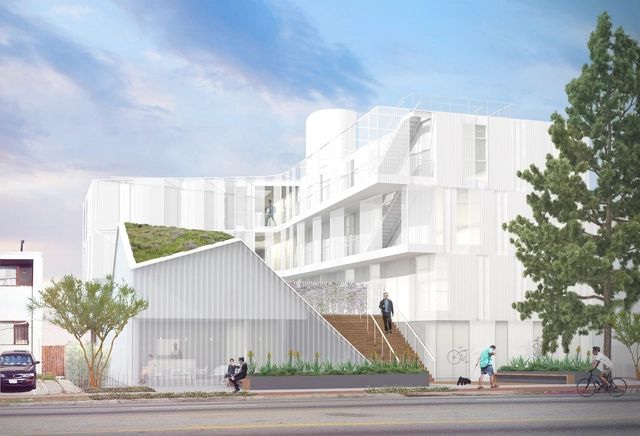
With ever-increasing rates of chronic and veteran homelessness amongst low-income households, Los Angeles’ pressing demand for affordable social housing is being addressed by Lorcan O’Herlihy Architects, with their design of MLK1101 Supportive Housing, which has just begun construction.

Working in collaboration with non-profit Clifford Beers Housing, LOHA’s intention is to focus on health and community within a comfortable environment. This is achieved through a number of strategies, including exposing the building towards the street to integrate the building into the neighborhood creating strong community ties.

LOHA’s Latest Supportive Housing Complex Curbs LA’s Increasing Homelessness - Sustainability & Green DesignLOHA’s Latest Supportive Housing Complex Curbs LA’s Increasing Homelessness - Sustainability & Green Design, FacadeLOHA’s Latest Supportive Housing Complex Curbs LA’s Increasing Homelessness - Sustainability & Green Design, FacadeLOHA’s Latest Supportive Housing Complex Curbs LA’s Increasing Homelessness - Sustainability & Green Design, FacadeLOHA’s Latest Supportive Housing Complex Curbs LA’s Increasing Homelessness - More Images+ 8

Curry Stone Design Prize Recognizes 7 Practices for Strides in Social Housing

In honour of its 10th anniversary, the Curry Stone Design Prize will recognize a large group of the world’s most socially conscious and active design practices, in what the Foundation has coined as the Social Design Circle.

Over the course of the year, 100 firms will be added to the Circle for their sustainable, socially inclusive and impactful design work, under twelve specific themes. Each month, select firms’ work will be highlighted individually on the Prize’s website, while also featuring on the Curry Stone Foundation’s new podcast, Social Design Insights.

The following seven practices were selected for the month of February, in response to the theme “Is The Right to Housing Real?”:

How Combining Social Housing with Tourism Could Help Solve Havana’s Housing Crisis

The largest of the Caribbean islands, Cuba is a cultural melting pot of over 11 million people, combining native Taíno and Ciboney people with descendants of Spanish colonists and African slaves. Since the 1959 revolution led by Fidel Castro, the country has been the only stable communist regime in the Western hemisphere, with close ties to the Soviet Union during the Cold War and frosty relationship with its nearby neighbor, the United States, that has only recently begun to thaw. While the architecture in the capital city of Havana reflects the dynamic and rich history of the area, after the revolution Havana lost its priority status and government focus shifted to rural areas, and the buildings of Havana have been left to ruin ever since. Iwo Borkowicz, one of three winners of the 2016 Young Talent Architecture Award, has developed a plan that could bring some vibrancy, and most importantly some sustainability, back to Havana, the historic core of the city.

How Combining Social Housing with Tourism Could Help Solve Havana’s Housing Crisis - Image 35 of 4How Combining Social Housing with Tourism Could Help Solve Havana’s Housing Crisis - Image 43 of 4How Combining Social Housing with Tourism Could Help Solve Havana’s Housing Crisis - Image 49 of 4How Combining Social Housing with Tourism Could Help Solve Havana’s Housing Crisis - Image 58 of 4How Combining Social Housing with Tourism Could Help Solve Havana’s Housing Crisis - More Images+ 58

Half A House Builds A Whole Community: Elemental’s Controversial Social Housing

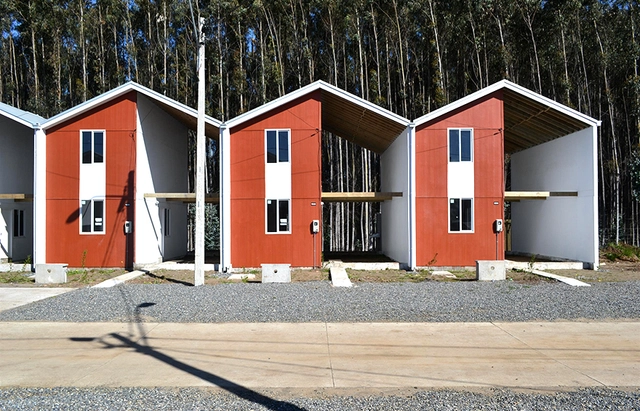
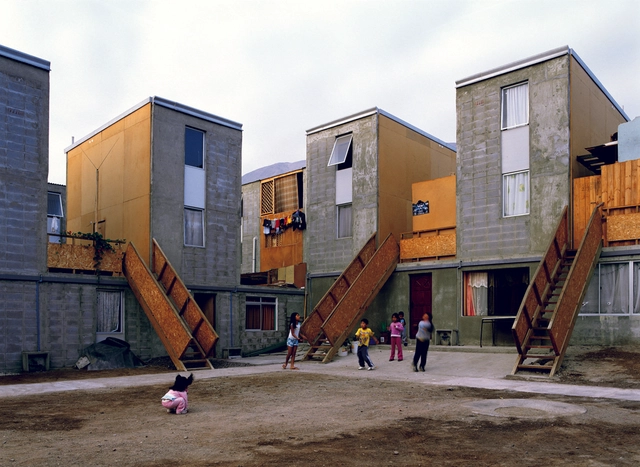
In Chile, a middle-class family may inhabit a house of around 80 square meters, whereas a low-income family might be lucky enough to inhabit 40 square meters. They can’t afford a large “good” house, and are henceforth often left with smaller homes or building blocks; but why not give them half a “good” house, instead of a finished small house? In the 1970s a professor by the name John F.C. Turner, teaching at a new masters program at MIT called “Urban Settlement Design In Developing Countries”, developed an idea surrounding the concept that people can build for themselves. 99% Invisible has covered a story, produced by Sam Greenspan, on how this idea has evolved, and what it has turned into: Half A House.

Half A House Builds A Whole Community: Elemental’s Controversial Social Housing - Image 1 of 4Half A House Builds A Whole Community: Elemental’s Controversial Social Housing - Image 2 of 4Half A House Builds A Whole Community: Elemental’s Controversial Social Housing - Image 3 of 4Half A House Builds A Whole Community: Elemental’s Controversial Social Housing - Image 4 of 4Half A House Builds A Whole Community: Elemental’s Controversial Social Housing - More Images

White Arkitekter Blurs the Line Between Built and Natural in Housing Project Design

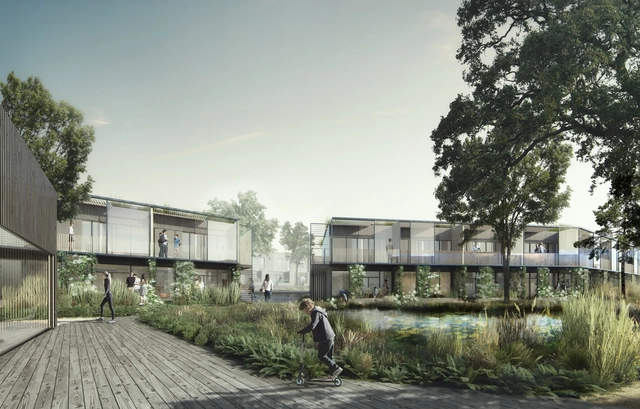
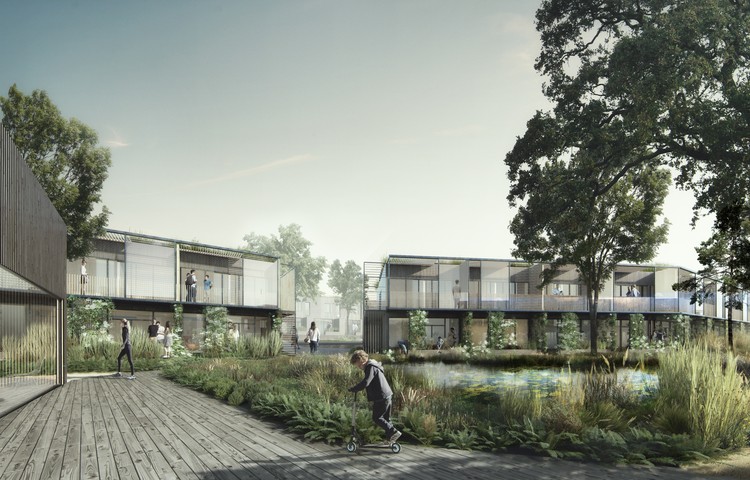
White Arkitekter’s Copenhagen studio has been selected as winners of a competition to design 115 individual homes as part of a social housing project in Denmark’s Allerød Municipality. Located north of the capital city of Copenhagen, the new neighborhood will be bordered by forest and a lake, inviting the nature in to complement and screen individual buildings. The project, titled “By the Woods,” will attempt to subvert typical preconceptions about social housing through the blurring of public and private space.

White Arkitekter Blurs the Line Between Built and Natural in Housing Project Design - Image 1 of 4White Arkitekter Blurs the Line Between Built and Natural in Housing Project Design - ForestWhite Arkitekter Blurs the Line Between Built and Natural in Housing Project Design - Image 3 of 4White Arkitekter Blurs the Line Between Built and Natural in Housing Project Design - FacadeWhite Arkitekter Blurs the Line Between Built and Natural in Housing Project Design - More Images+ 2

A Look Back: 8 Years of Social and Urban Projects

In the past eight years the world has seen important changes – stemming from natural catastrophes, global warming, war, diseases, political and economic crisis among other things – all of which have a direct impact on the way we inhabit our planet and therefore how architects and planners are managing context-related designs for community living.

The importance of socially engaged architecture was highlighted by this year's Pritzker Prize winner Alejandro Aravena, whose work appeals to the idea of an active, committed architect who seeks for a democratic urban environment. This development also resonates strongly with ArchDaily's mission statement "to improve the quality of life of the next 3 billion people that will move into cities in the next 40 years, by providing inspiration, knowledge and tools to the architects who will have the challenge to design for them."

Therefore, in celebration of ArchDaily's 8th birthday, our Projects Team curated a selection of 24 exemplary projects divided into 3 categories. Each of these projects published over the past 8 years dedicate their design to find greater social, community, civil and humanitarian needs.

5468796 Architecture's Social Housing in Winnipeg: Do We Expect Too Much of Design?

5468796 Architecture's Social Housing in Winnipeg: Do We Expect Too Much of Design? - Featured Image
© James Brittain Photography

Architecture serves many essential functions in the fabric of the built environment, but it is the perpetual deficit of housing that some might argue is the field’s ultimate clarion call. In virtually every global city, growing populations and limited supplies of affordable dwellings are the major issues of twenty-first century life—and therefore are indications of the continued relevance of architecture in solving vexing urban predicaments. The last century offered early promise in addressing such issues with proposals to house the masses in immense slabs and box buildings, structures almost as large as their social ambition. But what became an asset of scale overlooked, or more probably misunderstood, the social degradation that such largeness elicited.

Aware of the fact that a one-size-fits-all approach to social housing rarely brings the desired outcomes of sociability, accountability, and community, Winnipeg’s 5468796 Architecture sought to reinvent the typology on a smaller scale. The outcome, a project in Winnipeg’s Central Park neighborhood known as Centre Village, is a 25-unit housing complex that prioritizes windows for observation and public spaces for socializing. Initially heralded as a beacon for public housing done right, the project was recently the target of vitriol in a Guardian article, claiming its secluded courtyard makes it "a magnet for drinking and drug-taking" and that its architectural vanity is to the detriment of apartment sizes and layouts. Subsequently, the Winnipeg Free Press published a response piece, "Building a better neighbourhood," and more recently on ArchDaily, 5468796 published a “letter-to-the-editor” to share their side of story and to dispel some of the negativity surrounding Centre Village. The myriad of perspectives can make you wonder: who’s right?

5468796 Architecture's Response to The Guardian Over their "Failed" Social Housing Project

Early this month, The Guardian published a widely shared and debated article titled "Crime in the community: when 'designer' social housing goes wrong." The article told the story of Centre Village, a social housing project in Winnipeg designed by 5468796 Architecture and Cohlmeyer Architecture Limited, examining how noble intentions resulted in what they describe as "apartments poorly suited to family life, and a building structure that seems to act as a magnet for drinking and drug-taking at all hours."

Unsurprisingly 5468796 Architecture, who disagreed with much of the article's conclusions, wrote a response to the editor of Guardian Cities in the hope that their "letter to the editor" would provide some balance to the story. After The Guardian declined to publish the letter, the firm reached out to ArchDaily to ensure that their side of the debate was heard. Here is that letter in full.

We are writing to you in response to the Guardian article concerning Centre Village and many of the comments and re-posts over the last week. We believe the story that was published was inaccurate and provide the following for your information:

5468796 Architecture's Response to The Guardian Over their "Failed" Social Housing Project - Image 1 of 45468796 Architecture's Response to The Guardian Over their "Failed" Social Housing Project - Image 2 of 45468796 Architecture's Response to The Guardian Over their "Failed" Social Housing Project - Image 3 of 45468796 Architecture's Response to The Guardian Over their "Failed" Social Housing Project - Image 4 of 45468796 Architecture's Response to The Guardian Over their Failed Social Housing Project - More Images+ 2

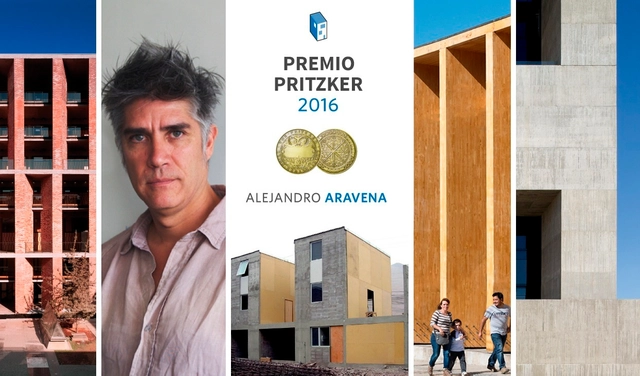
Alejandro Aravena Wins 2016 Pritzker Prize

Alejandro Aravena has been named as the winner of the 2016 Pritzker Prize. Highlighting his dedication to improve urban environments and to address the global housing crisis, the Pritzker Prize jury praised the way in which the Chilean architect has "risen to the demands of practicing architecture as an artful endeavor, as well as meeting today's social and economic challenges." Aravena is the 41st Pritzker Prize laureate and the first Chilean to receive the award.

At 48 years of age, Aravena has a large portfolio of private, public and educational projects in Chile, the USA, Mexico, China and Switzerland. But perhaps more notably, through his “Do Tank” firm ELEMENTAL he has managed to build 2,500 units of social housing, engaging in the public housing policies of governments where he works and taking an opportunistic approach to market forces to generate a powerful impact on lower-income communities.

"Alejandro Aravena epitomizes the revival of a more socially engaged architect, especially in his long-term commitment to tackling the global housing crisis and fighting for a better urban environment for all,” explained the Jury in their citation. “He has a deep understanding of both architecture and civil society, as is reflected in his writing, his activism and his designs. The role of the architect is now being challenged to serve greater social and humanitarian needs, and Alejandro Aravena has clearly, generously and fully responded to this challenge."

Alejandro Aravena Wins 2016 Pritzker Prize - Image 1 of 4Alejandro Aravena Wins 2016 Pritzker Prize - Image 2 of 4Alejandro Aravena Wins 2016 Pritzker Prize - Image 3 of 4Alejandro Aravena Wins 2016 Pritzker Prize - Image 4 of 4Alejandro Aravena Wins 2016 Pritzker Prize - More Images+ 18

When "Designer" Social Housing Goes Wrong: The Failures of Winnipeg's Center Village Project

The challenges of designing social housing are complex. As Martha Thorne recently told the Guardian, "It’s not enough to make community space and say, ‘People are going to see each other’... Architects really have to understand the context from the client – the cultural context, to the bigger context, to the economics, to the future of the residents who’ll live there.” Speaking about Winnipeg's well intentioned Centre Village project designed by 5468796 Architecture, Thorne believes many of these challenges are new to architects.

Just five years old, Center Village was designed as a community-oriented micro village for 25 families in one of Canada's poorest urban areas. Since its establishment, the complex has become a hot bed for crime; courtyards are being used by vagrants as shelter from police, while large families try to make a life within the cramp quarters of each home.

Tatiana Bilbao’s $8,000 House Could Solve Mexico’s Social Housing Shortage

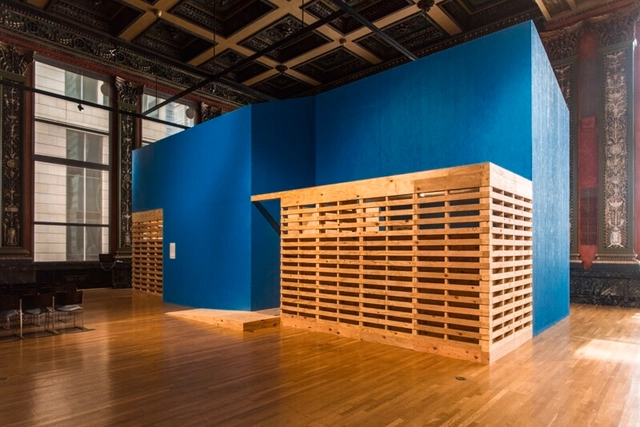
Centered on the theme “The State of the Art of Architecture,” the Chicago Architecture Biennial offers a look at the issues surrounding contemporary architecture around the globe. Featuring interventions from over 100 different architects from more than 30 different countries, the Biennial seeks to “demonstrate that architecture matters at any scale.”

Tatiana Bilbao’s project for the Chicago Biennial offers a solution to Mexico's affordable housing shortage. Her full-scale, Sustainable Housing prototype offers a flexible design that can respond to the different needs of each family. The house can be constructed for as little as $8,000 and up to $14,000 depending on a variety of factors including the location, the construction phase selected, and local regulations.

View images and learn more about her prototype after the break. 

Tatiana Bilbao’s $8,000 House Could Solve Mexico’s Social Housing Shortage - Image 1 of 4Tatiana Bilbao’s $8,000 House Could Solve Mexico’s Social Housing Shortage - Image 2 of 4Tatiana Bilbao’s $8,000 House Could Solve Mexico’s Social Housing Shortage - Image 3 of 4Tatiana Bilbao’s $8,000 House Could Solve Mexico’s Social Housing Shortage - Image 4 of 4Tatiana Bilbao’s $8,000 House Could Solve Mexico’s Social Housing Shortage - More Images+ 15

REGENERATION! Book Launch

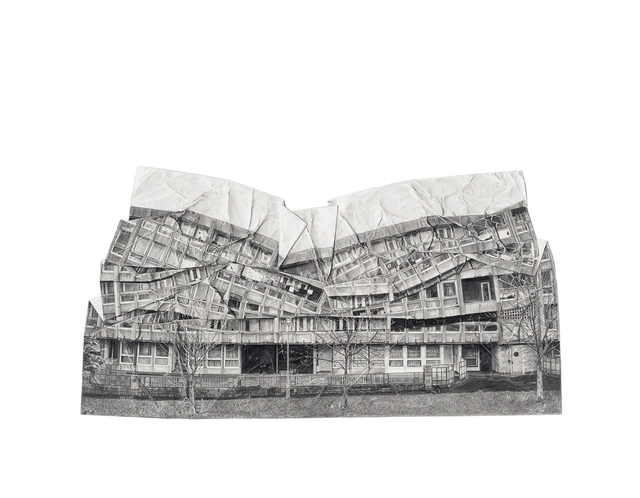
RIBA Bookshop presents the book launch of 'REGENERATION! Conversations, Drawings, Archives & Photographs from Robin Hood Gardens' by Jessie Brennan.

3 Experimental Homes Address Hyper-Urbanization in Africa

By the year 2025, the urban population in Sub-Saharan Africa is predicated to increase by almost 70% -- a rapid urbanization that will inevitably affect the construction sector.

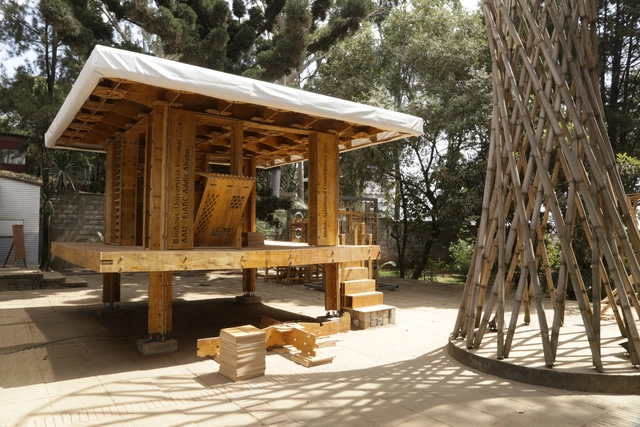
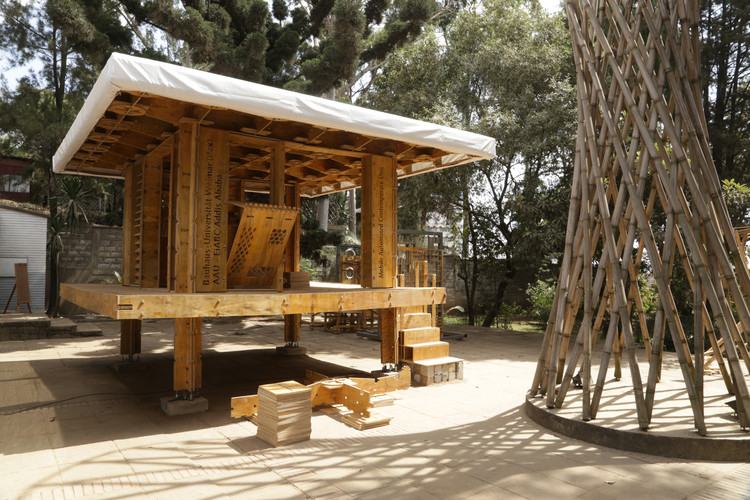
To address this expected growth and to help lay the foundations for a sustainable urban and social development, students from the Institute of Experimental Architecture at Bauhaus-Universität Weimar and EiABC (Ethiopian Institute of Architecture Building Construction and City Development) worked together to build three residential prototypes at a 1:1 scale for Addis Ababa: the capital of Ethiopia and the heart of hyper-urbanization. See all of the project details, below.

3 Experimental Homes Address Hyper-Urbanization in Africa - Sustainability3 Experimental Homes Address Hyper-Urbanization in Africa - Sustainability3 Experimental Homes Address Hyper-Urbanization in Africa - Sustainability3 Experimental Homes Address Hyper-Urbanization in Africa - Sustainability3 Experimental Homes Address Hyper-Urbanization in Africa - More Images+ 57

How Walter Segal's 1970s DIY Community Could Help Solve Today's Housing Crisis

In recent years, DIY approaches to building houses have become increasingly popular, as increasing cost and decreasing availability have caused some prospective house-buyers to embrace simple methods of fabrication and the sweat of their own brow, as discussed in this recent article. However, this trend has much earlier precedents: in 1979, self-build pioneer Walter Segal had already embraced these progressive concepts in a development known as "Walter's Way," an enclave of self-built social housing in southeast London. According to Dave Dayes, a Walter's Way resident and an original builder on the project, Segal believed that "anybody can build a house. All you need to do is cut a straight line and drill a straight hole." The houses were built entirely of standard wood units assembled onsite in Lewisham.

In this video, London based non-profit The Architecture Foundation steps into the utopia of Walter's Way, a micro-neighborhood founded on principals of communal living for people of all backgrounds. The film has been released in connection with Doughnut: The Outer London Festival taking place September 5th, which will bring together writers, historians, architects and economists for "an adventurous celebration of all things Outer London and a critical reflection on the rapid transformation that the city's periphery is currently experiencing." The Architecture Foundation aims to introduce central Londoners (and the world) to the radically functional housing concepts in practice at Walter's way.

Radical Cities, Radical Solutions: Justin McGuirk's Book Finds Opportunities In Unexpected Places

Justin McGuirk's book Radical Cities: Across Latin America in Search of a New Architecture is fast becoming a seminal text in the architecture world. Coming off the back of his Golden-Lion-winning entry to the 2012 Venice Biennale, created with Urban Think Tank and Iwan Baan, McGuirk's work has become a touchstone for the architecture world's recent interest in both low-cost housing solutions and in Latin America. This review of Radical Cities by Joshua K Leon was originally published by Metropolis Magazine as "Finding Radical Alternatives in Slums, Exurbs, and Enclaves."

Justin McGuirk’s Radical Cities: Across Latin America in Search of a New Architecture should be required reading for anyone looking for ways out of the bleak social inequality we’re stuck in. There were 40 million more slum dwellers worldwide in 2012 than there were in 2010, according to the UN. Private markets clearly can’t provide universal housing in any way approaching efficiency, and governments are often hostile to the poor. The only alternative is collective action at the grassroots level, and I’ve never read more vivid reporting on the subject.

Radical Cities, Radical Solutions: Justin McGuirk's Book Finds Opportunities In Unexpected Places - Image 1 of 4

Video: Leibar&Seigneurin on their "Sculptural" Social Housing Project in Anglet

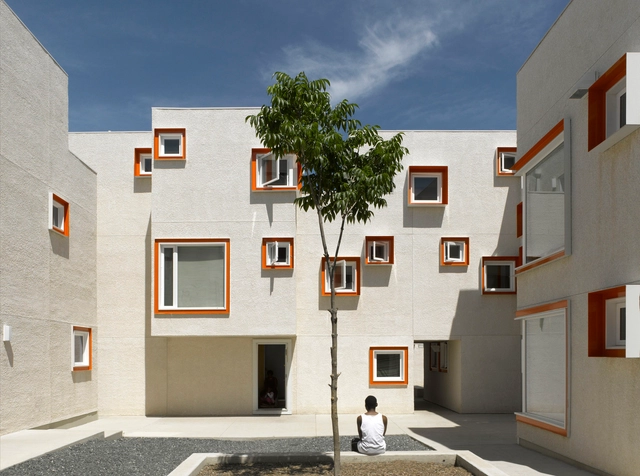
Based in Bordeaux and Bayonne, architecture studio Leibar&Seigneurin has created a new video to introduce their social housing project in Anglet. Last week we brought you their video on their project in Bordeaux in which they revealed the ways in which film can represent the fabric of architecture better than photography alone. In this video, they discuss the ways in which the white monolithic form of their project in Anglet takes on a sculptural quality, with various elements animating the façade and looking out onto a courtyard.