1. ArchDaily
  2. Experimental Architecture

Experimental Architecture: The Latest Architecture and News

How Buildner’s Concrete Pavilion Winners Are Rethinking Architecture's Most Common Material

 | Sponsored Content

Buildner has announced the results of its competition, the Concrete Pavilion. Part of Buildner's Material Studies series, the competition invited architects and designers to explore the architectural potential of concrete through the design of an experimental pavilion. Participants were challenged to reconsider the material beyond its conventional use, investigating its spatial, structural, and sensory possibilities.

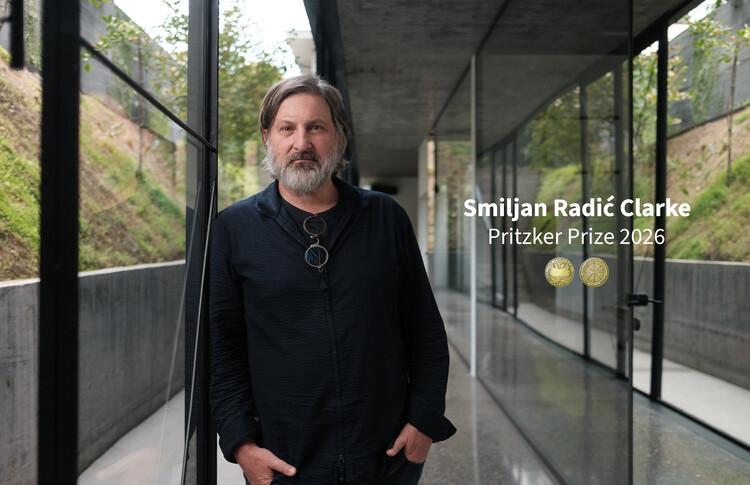
Distraction in Architecture: In Conversation with 2026 Pritzker Laureate Smiljan Radić

Subscriber Access | 

"I want to start by thanking architecture itself." With these words, Chilean architect Smiljan Radić, the 55th laureate of the Pritzker Architecture Prize, opened his acceptance speech in Mexico City. Reflecting on what he calls "distractions," he thanked the many encounters that have accompanied him throughout his life and practice: from art, cities, materials, structures, and compositions to landscapes, poetry, nature, forms, stories, and memories. He spoke about what, within them, provoked him and the marks they left on his architectural imagination.

From the black light in Chandigarh and the interior of San Salvatore in Rialto, to the heaps of stone on the Croatian island of Brač; from the fallen columns of the Temple of Poseidon and the abandoned shires scattered across Chile, to People Meet in Architecture, Kazuyo Sejima's 2010 Venice Architecture Biennale, the traveling Chilean circus, and the silence of the water within the cisterns of Hagia Sophia, his speech unfolded as a tribute to moments, encounters, and distractions. A collage of memories and impressions that, together, shaped the architect he became.

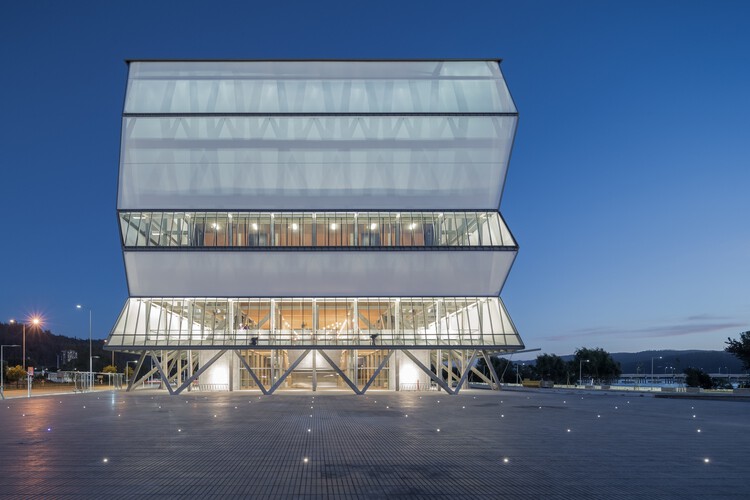
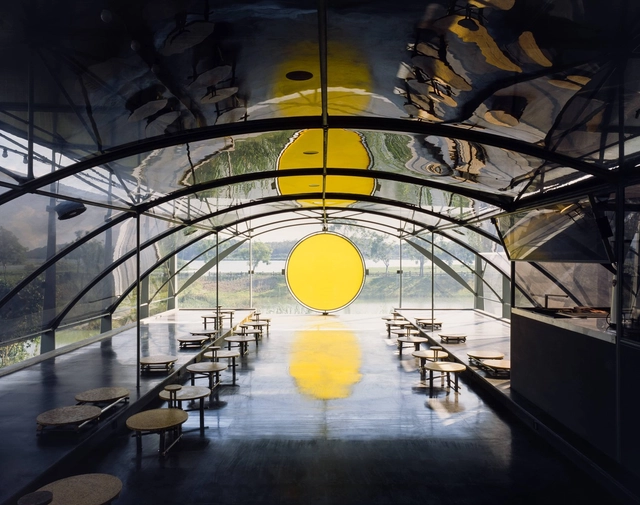
Distraction in Architecture: In Conversation with 2026 Pritzker Laureate Smiljan Radić - Image 1 of 4Distraction in Architecture: In Conversation with 2026 Pritzker Laureate Smiljan Radić - Image 2 of 4Distraction in Architecture: In Conversation with 2026 Pritzker Laureate Smiljan Radić - Image 3 of 4Distraction in Architecture: In Conversation with 2026 Pritzker Laureate Smiljan Radić - Image 4 of 4Distraction in Architecture: In Conversation with 2026 Pritzker Laureate Smiljan Radić - More Images+ 5

Smiljan Radić Clarke Receives the 2026 Pritzker Prize, The Artist of Unspoken Architecture

Chilean architect Smiljan Radić Clarke has been announced as the laureate of the 2026 Pritzker Architecture Prize, regarded as one of the highest honors in the field of architecture. The award recognizes Radić for a body of work that explores architecture through material experimentation, spatial perception, and a careful engagement with landscape and context. Born in Santiago, Chile, where he continues to live and work, Radić leads the practice Smiljan Radić Clarke, established in 1995. As the second Chilean to receive the prize, after Alejandro Aravena in 2016, he joins a distinguished list of previous laureates, including Liu Jiakun in 2025, Riken Yamamoto in 2024, David Chipperfield in 2023, and Diébédo Francis Kéré in 2022.

Radić's architecture operates within a territory where the phenomenological experience of space precedes explanation. His buildings often appear quiet, elemental, and resistant to easy verbal interpretation, encouraging visitors to experience them through movement, atmosphere, and perception rather than through formal expression. 

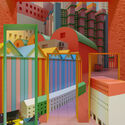
Smiljan Radić Clarke Receives the 2026 Pritzker Prize, The Artist of Unspoken Architecture - Image 32 of 4Smiljan Radić Clarke Receives the 2026 Pritzker Prize, The Artist of Unspoken Architecture - Image 3 of 4Smiljan Radić Clarke Receives the 2026 Pritzker Prize, The Artist of Unspoken Architecture - Image 33 of 4Smiljan Radić Clarke Receives the 2026 Pritzker Prize, The Artist of Unspoken Architecture - Image 5 of 4Smiljan Radić Clarke Receives the 2026 Pritzker Prize, The Artist of Unspoken Architecture - More Images+ 32

EDGE Awards 2026 - Call for Application

EDGE Awards 2026 - CALL FOR APPLICATION

EDGE Awards 2026 - Call for Application / Student Award

EDGE Awards launches with a new Student Award category

Recasting Cultural Infrastructure: On AAU Anastas’s Aga Khan Award–Winning Wonder Cabinet

Subscriber Access | 

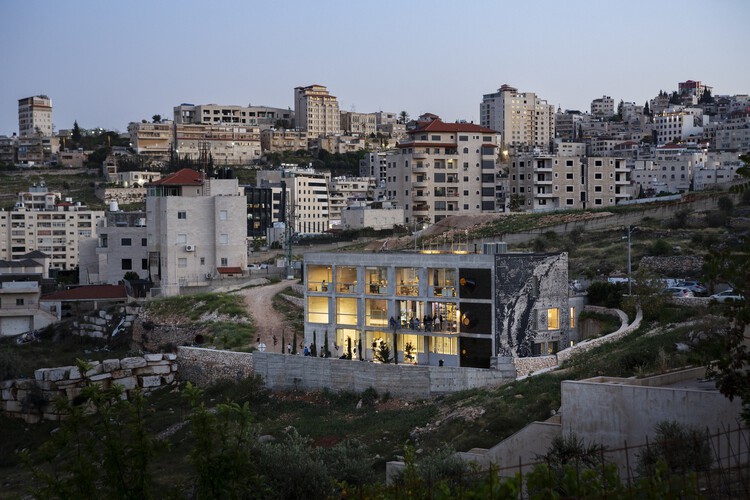
Among the 2025 Aga Khan Award winners is AAU Anastas and their project, Wonder Cabinet in Palestine, whose central aim is to serve as a haven for culture and creativity and a bridge between design and production. Beyond this meaningful project, AAU Anastas—working from offices in Bethlehem, Palestine, and Paris, France—has built a broad portfolio since 2015. Notable works include Dar Al Majous, a restoration in Bethlehem that challenges the boundary between domestic and public realms; the Tulkarm Courthouse (2015), one of their first projects that redefined civicness and social gathering on a prominent corner site in Tulkarm; and The Flat Vault, a commercial intervention that adds a juxtaposed stone vault to an existing monastery shop associated with a church built in the 12th century by the Crusaders.

Among these compelling works, Wonder Cabinet likely drew the jury's attention not only for its refined execution and layered spatial complexity, but also for how it operates as a socially generative platform—dissolving the boundary between social infrastructure and architecture. Conceived to support culture, creativity, design, and production, the building aspires to host architects, designers, chefs, artisans, and sound and visual artists, among others. In no small way, it advances the spirit articulated by the 2025 judges, who characterized this cycle as a year of fostering resilience and optimism through design, by demonstrating how architecture can catalyze community and enterprise simultaneously.

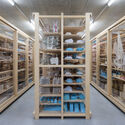
Recasting Cultural Infrastructure: On AAU Anastas’s Aga Khan Award–Winning Wonder Cabinet - Image 5 of 4Recasting Cultural Infrastructure: On AAU Anastas’s Aga Khan Award–Winning Wonder Cabinet - Image 2 of 4Recasting Cultural Infrastructure: On AAU Anastas’s Aga Khan Award–Winning Wonder Cabinet - Image 21 of 4Recasting Cultural Infrastructure: On AAU Anastas’s Aga Khan Award–Winning Wonder Cabinet - Image 3 of 4Recasting Cultural Infrastructure: On AAU Anastas’s Aga Khan Award–Winning Wonder Cabinet - More Images+ 17

Architecture in Rhythm with Time: Designing Through Solar, Lunar, and Biological Cycles

Subscriber Access | 

As the solstice marks the shortest day of the year in the Northern Hemisphere, it also draws attention to something architecture has long negotiated but often overlooked: time. Beyond form or function, buildings and spaces are continuously shaped by cycles of light and darkness, seasonal shifts, and environmental rhythms that affect how they are inhabited.

In recent years, a growing number of architectural projects have begun to work explicitly with these cycles. Rather than designing spaces to function in a single, fixed way, architects are creating environments that change throughout the day, across seasons, or in response to natural phenomena such as the sun's path, lunar phases, wind patterns, or circadian rhythms. These projects operate in dialogue with time, appearing, transforming, and activating differently depending on environmental conditions.

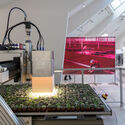
Architecture in Rhythm with Time: Designing Through Solar, Lunar, and Biological Cycles - Image 1 of 4Architecture in Rhythm with Time: Designing Through Solar, Lunar, and Biological Cycles - Image 2 of 4Architecture in Rhythm with Time: Designing Through Solar, Lunar, and Biological Cycles - Image 3 of 4Architecture in Rhythm with Time: Designing Through Solar, Lunar, and Biological Cycles - Image 4 of 4Architecture in Rhythm with Time: Designing Through Solar, Lunar, and Biological Cycles - More Images+ 11

Expanding Practice: Architecture Think Tanks at the Intersection of Research and Design

In architecture, most practices revolve around delivering projects to clients. Offices are shaped by deadlines, budgets, and clear briefs. While this structure produces buildings, it rarely leaves space for architects to question broader issues — about how we live, how cities are changing, or what the future demands of design. But alongside this production-focused system, a quieter movement has emerged: studios, collectives, and foundations that prioritize research, experimentation, and reflection. These are the architecture think tanks — spaces designed not to build immediately, but to think first.

The idea of a think tank is not new. Traditionally found in politics, economics, or science, think tanks bring together experts to study complex problems and propose solutions. In architecture, their rise reveals a tension at the heart of the discipline. If architecture is to remain socially and environmentally relevant, can it continue to rely only on client-driven practice? Or must it carve out space for slower, deeper inquiry?

Expanding Practice: Architecture Think Tanks at the Intersection of Research and Design - Image 1 of 4Expanding Practice: Architecture Think Tanks at the Intersection of Research and Design - Image 2 of 4Expanding Practice: Architecture Think Tanks at the Intersection of Research and Design - Image 3 of 4Expanding Practice: Architecture Think Tanks at the Intersection of Research and Design - Image 4 of 4Expanding Practice: Architecture Think Tanks at the Intersection of Research and Design - More Images+ 48

Farewell to Masters: Remembering the Architects We Lost in 2025

Every year brings new ideas, projects, and shifts in architectural culture, but it also marks the loss of voices that have shaped the discipline across decades. Architecture moves forward, but it also advances through absence. When figures who helped articulate its language and its ambitions disappear, they leave behind more than completed works or influential texts. Their absence becomes a threshold, a moment in which the discipline pauses to understand what remains, what evolves, and what continues to guide us. These moments of loss remind us that architecture is a long, collective construction, carried not only by those shaping the present but also by those whose visions continue to orient how we think about cities and landscapes.

The architects and thinkers we lost in 2025 came from remarkably different worlds, yet the questions that shaped their work often intersected. Some approached the city through identity, symbolism, and historical continuity, seeking to ground the built environment in cultural memory. Others interpreted it through engineering precision, ecological systems, or radical experimentation, expanding what architecture could be and how it could be experienced. Their work spans contexts as diverse as postwar Britain, rapidly urbanizing China, Central European avant-gardes, and the evolving cultural institutions of Berlin and New York. Together, they form a spectrum of responses that defined, and continue to define, architectural culture over the last half-century, revealing the multiplicity of ways in which architecture can engage with society, technology, and the environment.

Farewell to Masters: Remembering the Architects We Lost in 2025 - Image 1 of 4Farewell to Masters: Remembering the Architects We Lost in 2025 - Image 2 of 4Farewell to Masters: Remembering the Architects We Lost in 2025 - Image 3 of 4Farewell to Masters: Remembering the Architects We Lost in 2025 - Image 4 of 4Farewell to Masters: Remembering the Architects We Lost in 2025 - More Images+ 33

Interdisciplinary Design: SCI-Arc Graduates Merging Architecture and Art

 | Sponsored Content

SCI-Arc alumni continue to make an indelible mark on the global design landscape, pioneering new approaches in architecture, technology, and interdisciplinary practices. With a reputation for fostering radical experimentation, the school has produced graduates whose work challenges conventions and redefines spatial possibilities. Recent alumni achievements underscore SCI-Arc's role in shaping the next generation of architects and creative thinkers.

The Architect as a Scientist: New Materials Emerging Between Science and Design

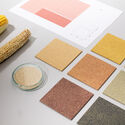
What is architecture? For some, its traditional role is to bring together imagination, technical knowledge, and problem-solving, allowing architects to design and construct while balancing ideas with the means to realize them. From the stone and wood of early buildings to the steel and concrete of the 20th century, each era demanded not only an understanding of form but also of the properties and potential of the materials in use. This grasp of materials has always been a core part of the creative process, though its scope was limited by the know-how and technologies available.
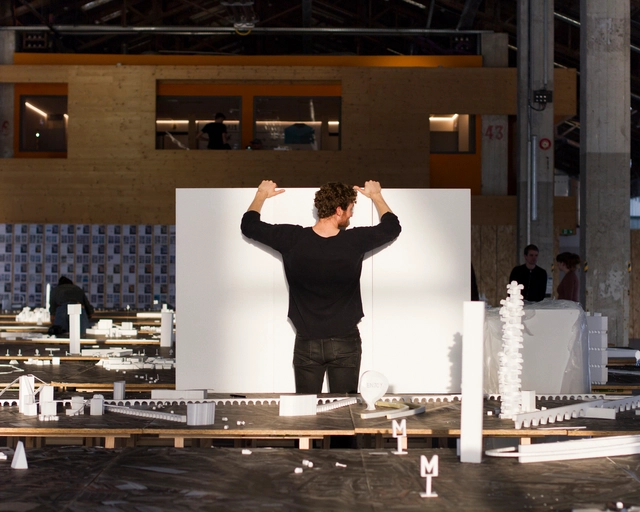
Over time, that balance has begun to shift. Architects have moved from merely using materials to actively designing them, applying scientific principles and experimenting with biological, chemical, and computational processes. This evolution has expanded the possibilities of architecture, intersecting nature, technology, and art, while pushing the role of the architect into a more experimental, science-driven dimension, where the manipulation and creation of materials becomes central to the creative act rather than merely a means to achieve forms or structures.

The Architect as a Scientist: New Materials Emerging Between Science and Design - Image 1 of 4The Architect as a Scientist: New Materials Emerging Between Science and Design - Image 2 of 4The Architect as a Scientist: New Materials Emerging Between Science and Design - Image 3 of 4The Architect as a Scientist: New Materials Emerging Between Science and Design - Image 4 of 4The Architect as a Scientist: New Materials Emerging Between Science and Design - More Images+ 11

The City as a Laboratory of Processes: A Decade of Urban Experimentation with Concéntrico

Subscriber Access | 

As cities continue to develop, we are seeing ever more well-planned, thoroughly executed, and tightly regulated approaches to shaping urban centres and their surrounding spaces—for better and for worse. As codes, restrictions, and guidelines improve and tighten, urban environments become safer, more balanced, and less prone to surprise. Yet the flip side is that highly managed districts can drift toward over-order and sanitisation, shedding the messy, accretive character that once produced alleyways, residual spaces, and unexpected sequences of movement—conditions often born from ongoing community improvisation in the grey zones of regulation.

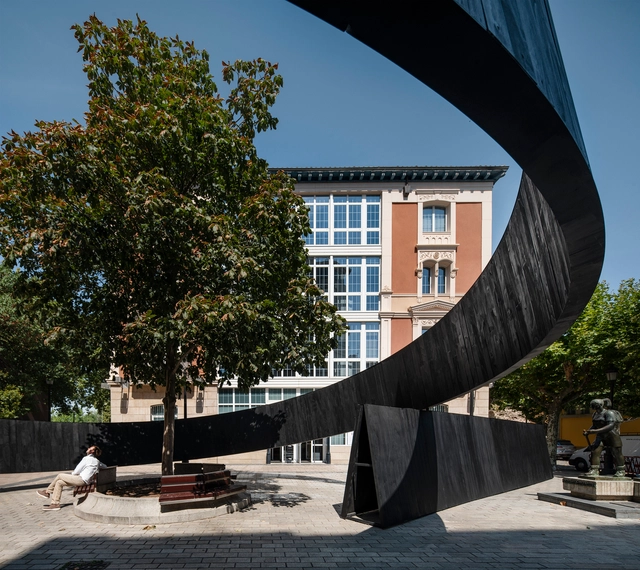
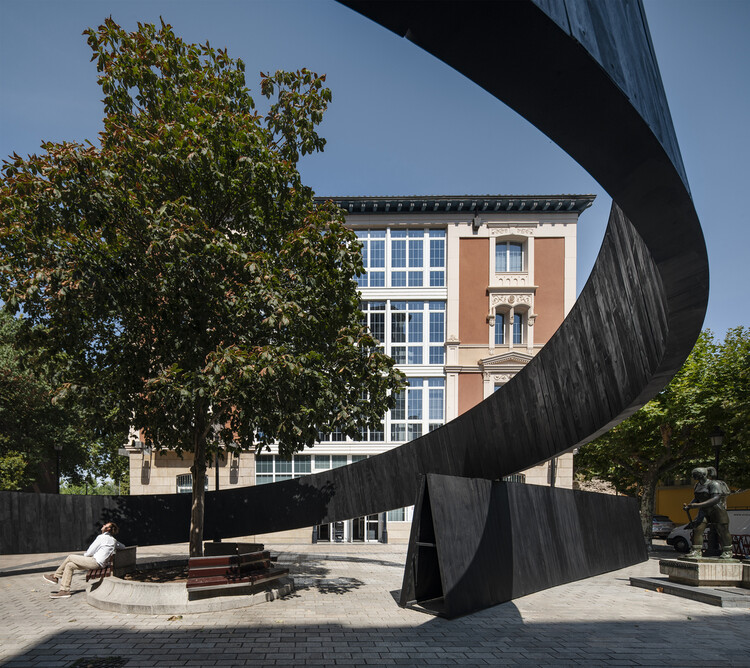
In response, a growing number of initiatives around the world are proposing short-term urban installations that test alternate futures for the city. These works aim to provoke dialogue between what the city is and what it could offer its communities through thoughtful, context-specific spatial practices. One notable example is Concéntrico, the international festival in Logroño, Spain, conceived as an urban innovation laboratory. Marking its tenth edition, the festival is about to publish Concéntrico: Urban Innovation Laboratory, a book that surveys a decade of urban design and collective transformation shaped through successive editions of the festival. Its launch is paired with an international tour designed to share a decade of insights on collective transformation and design.

The City as a Laboratory of Processes: A Decade of Urban Experimentation with Concéntrico - Image 1 of 4The City as a Laboratory of Processes: A Decade of Urban Experimentation with Concéntrico - Image 2 of 4The City as a Laboratory of Processes: A Decade of Urban Experimentation with Concéntrico - Image 3 of 4The City as a Laboratory of Processes: A Decade of Urban Experimentation with Concéntrico - Image 4 of 4The City as a Laboratory of Processes: A Decade of Urban Experimentation with Concéntrico - More Images+ 32

Helmut Swiczinsky, Co-Founder of the Coop Himmelb(L)AU, Passes Away at 81

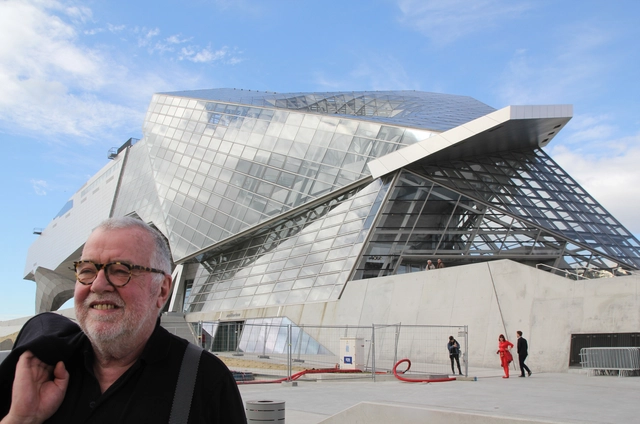
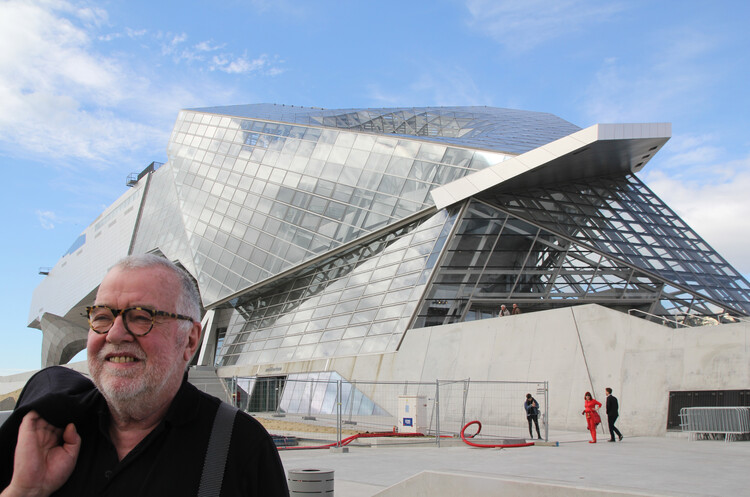
Helmut Swiczinsky, co-founder of the Viennese architecture collective Coop Himmelb(l)au and a key figure in experimental and deconstructivist architecture, passed away on July 29, 2025, at the age of 81. Born in 1944 in Poznań, Poland, he studied architecture at the Vienna University of Technology and the Architectural Association in London.

In 1968, Swiczinsky co-founded Coop Himmelb(l)au alongside Wolf D. Prix and Michael Holzer. The studio quickly gained international recognition for its radical design approach, defined by fragmented geometries, exposed structural systems, and spatial complexity. After Holzer's departure in 1971, Swiczinsky and Prix continued to lead the practice through the 1980s and 1990s, establishing it as one of the most prominent voices of the deconstructivist movement.

Helmut Swiczinsky, Co-Founder of the Coop Himmelb(L)AU, Passes Away at 81 - Image 1 of 4Helmut Swiczinsky, Co-Founder of the Coop Himmelb(L)AU, Passes Away at 81 - Image 2 of 4Helmut Swiczinsky, Co-Founder of the Coop Himmelb(L)AU, Passes Away at 81 - Image 3 of 4Helmut Swiczinsky, Co-Founder of the Coop Himmelb(L)AU, Passes Away at 81 - Image 4 of 4Helmut Swiczinsky, Co-Founder of the Coop Himmelb(L)AU, Passes Away at 81 - More Images

Designing a Living and Dying Structure: Picoplanktonics and the Canadian Pavilion in Venice

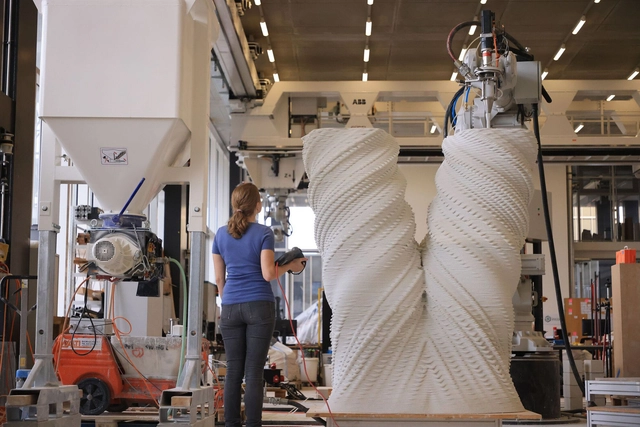
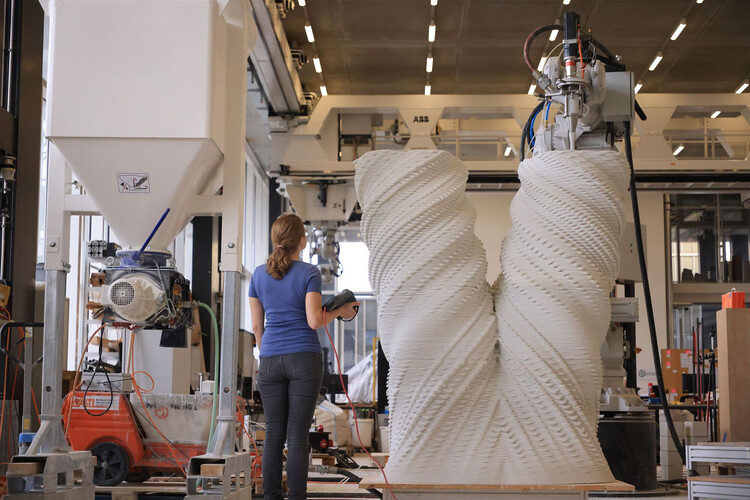
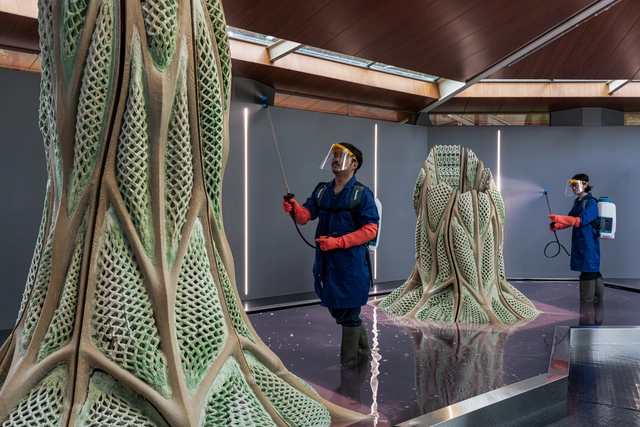
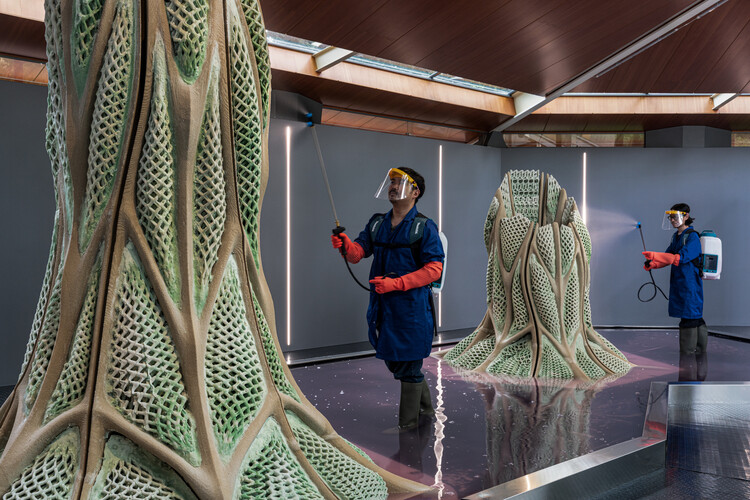
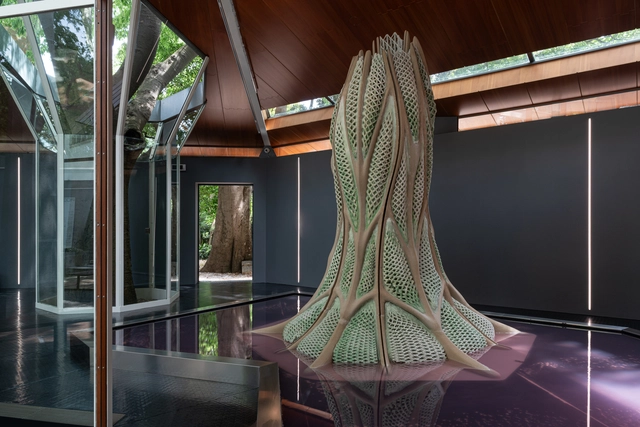
The Canada Pavilion at the 19th International Architecture Exhibition – La Biennale di Venezia, hosted Picoplanktonics. A research that emerged as a radical rethinking of how architecture can become a platform that blends biology, computation, and fabrication to propose an alternative future, one where buildings don't just minimize harm, but actively participate in planetary repair. At its core lies a humble organism: marine cyanobacteria, capable of both capturing carbon and contributing to the material growth of the structure it inhabits. The project has been developed over 5 years by a group of researchers at ETH Zurich, led by Andrea Shin Ling and a group of interdisciplinary contributors and collaborators. Together, they formed the Living Room Collective, founded a year ago to build upon this work and showcase it at the Venice Biennale. The Core team members include Nicholas Hoban, Vincent Hui, and Clayton Lee. This conversation with the team behind the project shares the philosophy, technical challenges, and speculative horizons that animated their work from printing living sand lattices to maintaining microbial life in a public exhibition. Their aim is to inspire people to reconsider architecture not as a static object, but as a living, evolving process. One that requires care, patience, and a radical shift in mindset.

Designing a Living and Dying Structure: Picoplanktonics and the Canadian Pavilion in Venice - Image 4 of 4Designing a Living and Dying Structure: Picoplanktonics and the Canadian Pavilion in Venice - Image 6 of 4Designing a Living and Dying Structure: Picoplanktonics and the Canadian Pavilion in Venice - Image 1 of 4Designing a Living and Dying Structure: Picoplanktonics and the Canadian Pavilion in Venice - Image 5 of 4Designing a Living and Dying Structure: Picoplanktonics and the Canadian Pavilion in Venice - More Images+ 6

Canada Pavilion Presents Picoplanktonics, a Living Experiment in Regenerative Architecture at the 2025 Venice Biennale

The Canada Council for the Arts presents Picoplanktonics at the Canada Pavilion as part of the 19th International Architecture Exhibition – La Biennale di Venezia, which will run until November 23, 2025. Developed by the Living Room Collective, the installation engages with ongoing global ecological challenges through a speculative, research-driven approach to design, featuring 3D-printed architectural structures embedded with living cyanobacteria capable of carbon sequestration. Developed through a four-year collaboration led by Andrea Shin Ling and a group of interdisciplinary contributors, the project investigates the potential of co-constructing built environments with living systems.

Canada Pavilion Presents Picoplanktonics, a Living Experiment in Regenerative Architecture at the 2025 Venice Biennale - Image 1 of 4Canada Pavilion Presents Picoplanktonics, a Living Experiment in Regenerative Architecture at the 2025 Venice Biennale - Image 2 of 4Canada Pavilion Presents Picoplanktonics, a Living Experiment in Regenerative Architecture at the 2025 Venice Biennale - Image 3 of 4Canada Pavilion Presents Picoplanktonics, a Living Experiment in Regenerative Architecture at the 2025 Venice Biennale - Image 4 of 4Canada Pavilion Presents Picoplanktonics, a Living Experiment in Regenerative Architecture at the 2025 Venice Biennale - More Images+ 9

From Prototype to Progress: How Small-Scale Sustainable Housing Models Are Shaping Our Future

Subscriber Access | 

Traditional building development follows a risky model - design, build at full scale, and hope everything works as planned. Sustainable housing prototypes flip this script by creating functioning micro-versions of larger visions. This methodical approach allows designers to experiment with new materials, technologies, and systems without the enormous financial and environmental risks associated with full-scale development. Sustainable building prototypes serve as compact laboratories where theories can be tested before wider implementation.

From Prototype to Progress: How Small-Scale Sustainable Housing Models Are Shaping Our Future - Image 1 of 4From Prototype to Progress: How Small-Scale Sustainable Housing Models Are Shaping Our Future - Image 2 of 4From Prototype to Progress: How Small-Scale Sustainable Housing Models Are Shaping Our Future - Image 3 of 4From Prototype to Progress: How Small-Scale Sustainable Housing Models Are Shaping Our Future - Image 4 of 4From Prototype to Progress: How Small-Scale Sustainable Housing Models Are Shaping Our Future - More Images+ 3

Architect and Archigram Founding Member Dennis Crompton Passes Away at 90

Dennis Crompton, an influential figure in the field of architecture, passed away on January 21, 2025, at the age of 90. Born in Blackpool in 1935, Crompton's remarkable career spanned several decades and left an indelible mark on modern architecture. As a key member of the avant-garde architectural group Archigram, established in London in 1961, Crompton played a pivotal role in revolutionizing architectural practice, together with Warren Chalk, Peter Cook, Ron Herron, David Greene, and Michael Webb.

Architect and Archigram Founding Member Dennis Crompton Passes Away at 90 - Image 1 of 4Architect and Archigram Founding Member Dennis Crompton Passes Away at 90 - Image 2 of 4Architect and Archigram Founding Member Dennis Crompton Passes Away at 90 - Image 3 of 4Architect and Archigram Founding Member Dennis Crompton Passes Away at 90 - Image 4 of 4Architect and Archigram Founding Member Dennis Crompton Passes Away at 90 - More Images+ 2

Bauhaus Earth Announces 2025 Experimental Fellows to Investigate Earth's Role in Contemporary Design

Maria Lisogorskaya and Kaye Song from the London-based collective Assemble, along with Lviv-based architects Anna Pomazanna and Mykhailo Shevchenko, have been announced as the 2025 Experimental Fellows at Bauhaus Earth. Selected from 120 submissions, their projects are set to explore earth as a material in contemporary architecture. The annual Bauhaus Earth Fellowship program was established in 2022 by architect Prof. Regine Leibinger. It aims to support diverse projects that explore new modes of practice across various geographies, that can contribute to ecological and social resilience. Fellows receive financial support, mentorship, and access to a network encouraging collaboration among architects, manufacturers, and local stakeholders.

Bauhaus Earth Announces 2025 Experimental Fellows to Investigate Earth's Role in Contemporary Design - Image 1 of 4Bauhaus Earth Announces 2025 Experimental Fellows to Investigate Earth's Role in Contemporary Design - Image 2 of 4Bauhaus Earth Announces 2025 Experimental Fellows to Investigate Earth's Role in Contemporary Design - Image 3 of 4Bauhaus Earth Announces 2025 Experimental Fellows to Investigate Earth's Role in Contemporary Design - Image 4 of 4Bauhaus Earth Announces 2025 Experimental Fellows to Investigate Earth's Role in Contemporary Design - More Images+ 16