1. ArchDaily
  2. Eero Saarinen

Eero Saarinen: The Latest Architecture and News

Architecture as Soft Power: Cultural Diplomacy and Its Role in Shaping Architectural Production

Cultural diplomacy refers to the use of cultural expression and creative exchange to foster understanding and build relationships between nations. In this context, architecture has long played a distinctive role. Beyond its functional and aesthetic dimensions, it serves as a medium of communication, a language through which countries express identity, values, and ambition on the global stage.

Architecture operates as a form of soft power — persuasive rather than coercive — enabling nations to project influence through material presence. From modernist embassies in the post-war era to monumental pavilions at world expositions, governments and institutions have recognized the built environment's potential to shape perception. By commissioning prominent architects and adopting specific design languages, countries have used architecture to signal modernity, tradition, innovation, or stability.

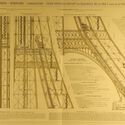
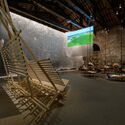
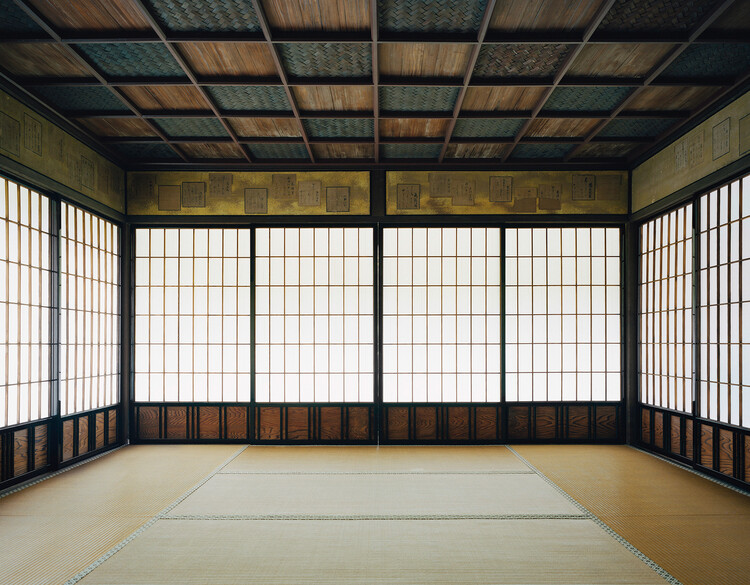
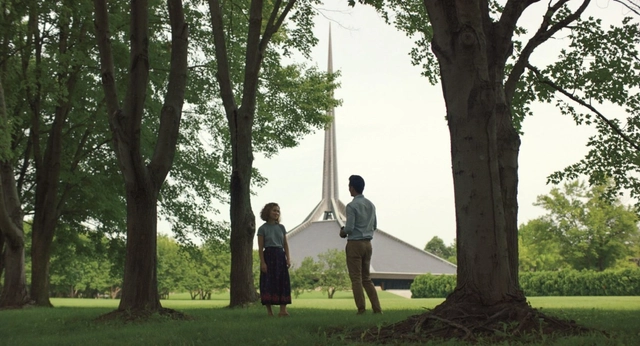
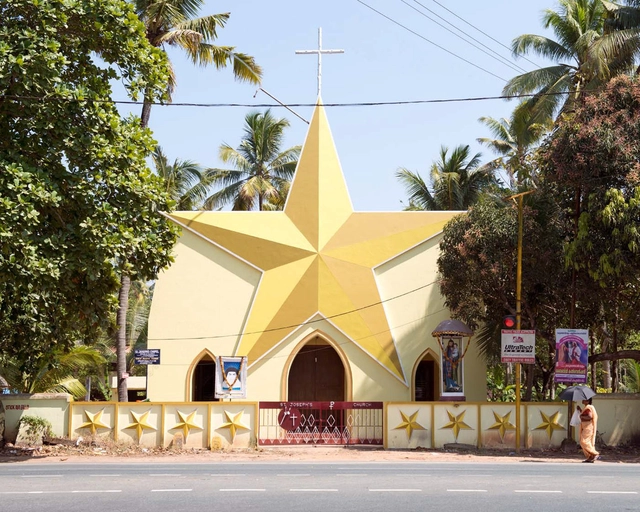
Architecture as Soft Power: Cultural Diplomacy and Its Role in Shaping Architectural Production - Image 1 of 4Architecture as Soft Power: Cultural Diplomacy and Its Role in Shaping Architectural Production - Image 2 of 4Architecture as Soft Power: Cultural Diplomacy and Its Role in Shaping Architectural Production - Image 3 of 4Architecture as Soft Power: Cultural Diplomacy and Its Role in Shaping Architectural Production - Image 4 of 4Architecture as Soft Power: Cultural Diplomacy and Its Role in Shaping Architectural Production - More Images+ 20

Architecture Now: International Projects by HOK, COLL-BARREU, and Knight Architects Reshape Public Space

Subscriber Access | 

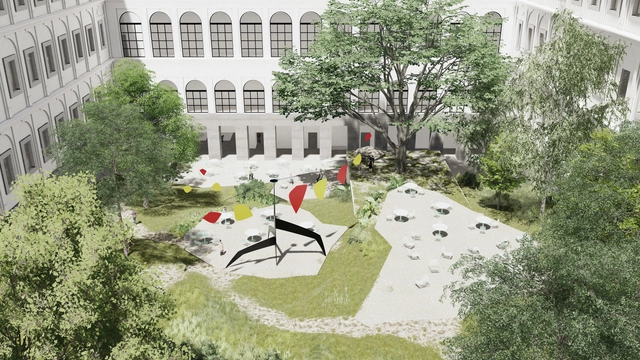
This month's architecture news spotlights a global wave of adaptive reuse, large-scale infrastructure, and public realm transformation. From airport expansions to museum reconfigurations, architects worldwide are rethinking how civic spaces serve communities in the 21st century. Notable developments include Sasaki, SLA, and MVVA being shortlisted to reimagine Toronto's Downsview Airport into a pedestrian-oriented public corridor, and HOK's 2.8 million-square-foot expansion of Dulles International Airport to accommodate future growth while honoring Saarinen's original vision. In Melbourne, Fraser & Partners received planning approval for a heritage-led redevelopment of the Boiler House precinct, while COLL-BARREU ARQUITECTOS completed a subtle reconfiguration of public access at Madrid's Reina Sofía Museum. Finally, in Canada, Knight Architects revealed the "Motion" design for the Alexandra Bridge replacement, an arching structure shaped by ecological references and inclusive public space. Read on for the latest updates shaping architecture today.

Architecture Now: International Projects by HOK, COLL-BARREU, and Knight Architects Reshape Public Space - Image 1 of 4Architecture Now: International Projects by HOK, COLL-BARREU, and Knight Architects Reshape Public Space - Image 2 of 4Architecture Now: International Projects by HOK, COLL-BARREU, and Knight Architects Reshape Public Space - Image 3 of 4Architecture Now: International Projects by HOK, COLL-BARREU, and Knight Architects Reshape Public Space - Image 4 of 4Architecture Now: International Projects by HOK, COLL-BARREU, and Knight Architects Reshape Public Space - More Images+ 4

Exploring the Legacy of Modernism in Landscape Architecture

Modernist landscape architecture marked a radical shift from traditional garden designs, emphasizing simplicity, functionality, and a stronger connection between people and their environments. From the 1930s through the 1960s, this movement saw the emergence of visionary landscape architects who integrated form and function in ways that redefined outdoor spaces. Their designs responded to the rapidly evolving urban landscapes of the time, prioritizing usability and creating environments that could accommodate modern life. The enduring influence of these principles continues to shape contemporary practices, while also presenting unique challenges in preservation as these landscapes age.

Exploring the Legacy of Modernism in Landscape Architecture - Image 1 of 4Exploring the Legacy of Modernism in Landscape Architecture - Image 2 of 4Exploring the Legacy of Modernism in Landscape Architecture - Image 3 of 4Exploring the Legacy of Modernism in Landscape Architecture - Image 4 of 4Exploring the Legacy of Modernism in Landscape Architecture - More Images+ 18

Architecture Classics: La Pagoda / Miguel Fisac

Where does the process of mythification of a work in architecture reside? What are the conditions inherently linked to the resource of memory? Firstly, the appearance of an intrinsic value within the architecture, such as highlighting the taste for the projected building. This would be accompanied by the historical factor—the echoes of the era in which it was built. If we add to all this a demolition loaded with theatricality and social drama, the building becomes something more, becoming part of the vast mythical territory of memory. Miguel Fisac's 'Pagoda,' which began construction in 1965, was demolished in just a few days in July 1999, being just over thirty years old at the time of its demolition.

Affectionately known as the 'Pagoda' by the people of Madrid, evidencing its similarity to Asian constructions, it was not held in the same esteem by the architects of the time. In the rise and fall of the JORBA Laboratories, the original name of the project, purely tragic elements converge: denunciations moved by religious conspiracies, neglect by the administrations, speculative businesses, professional jealousy, and rulers incapable of appreciating the quality of architecture that, today, becomes myth or martyr; the object of unjust destruction.

Abandoned Airport near Athens, Greece, Set to be Transformed into Europe’s Largest Coastal Park

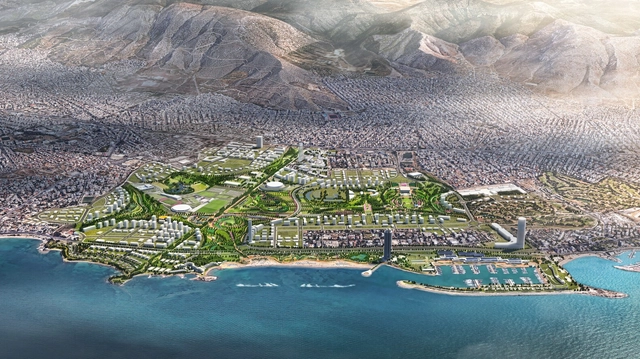
The Athens International Airport was decommissioned in 2001, leading to two decades of work for the local government to establish funding and a governance mechanism to transform the 600 acres of unused space into Europe's largest coastal park. The site has a layered history, from prehistoric settlements to the construction of the airport in the 20th century and the site being used for as an Olympic venue in 2004. Architecture office Sasaki is leading the design to transform the site again and create the Ellinikon Metropolitan Park, a restorative landscape and climate-positive design that will serve as a park, playground, and cultural center for the city of Athens. Developers are planning to break ground early next year.

Abandoned Airport near Athens, Greece, Set to be Transformed into Europe’s Largest Coastal Park - Image 1 of 4Abandoned Airport near Athens, Greece, Set to be Transformed into Europe’s Largest Coastal Park - Image 2 of 4Abandoned Airport near Athens, Greece, Set to be Transformed into Europe’s Largest Coastal Park - Image 3 of 4Abandoned Airport near Athens, Greece, Set to be Transformed into Europe’s Largest Coastal Park - Image 4 of 4Abandoned Airport near Athens, Greece, Set to be Transformed into Europe’s Largest Coastal Park - More Images+ 22

When Architectural History Meets Personal History

This article was originally published on Common Edge.

Writer Eva Hagberg and I have known each other for a long time. Way back, in a year I can’t remember, I assigned her one of her first magazine assignments. Literally, dozens of other assignments followed. So it was with some anticipation, and a bit of surprise, that I received her new book When Eero Met His Match: Aline Louchheim Saarinen and the Making of an Architect (Princeton University Press), an intriguing hybrid text, one-part Aline and Eero biography, one part memoir of Hagberg’s experiences as a design writer and publicist. (I am briefly mentioned in the book.) The book’s main argument is that Aline Saarinen largely invented the role of the architectural publicist. Recently I traveled out to the Brooklyn Navy Yard to talk to a very pregnant Eva about the impetus for her new book, its dual structure, and the journalistic ethics of Aline Saarinen.

Timeless Design Icons: How to Style your Home Sustainably

Sustainability is on everyone's lips these days – but mostly with a view to the future and the question of how it is possible to use fewer resources, produce more sustainably and reduce waste. However, sustainability can also be lived with a view to the past or the present – namely with a domestic environment that consists of durable furniture designs that outlast trends and never go out of fashion. In the third part of our series on design icons, we put Philippe Starck, Eero Saarinen, Achille Castiglioni, Patricia Urquiola and Max Bill in the spotlight with their evergreen furniture icons, which can be found on architonic.com.

New York City Architecture Guide: Discover 10 Must-See Landmarks and 20 Contemporary Attractions

Subscriber Access | 

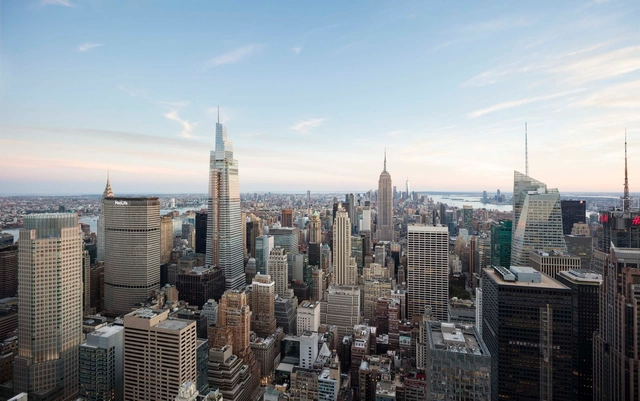
As the largest city in the United States, New York City is one of the most diverse and vibrant cities in the world, recognized by many as the center for global media, culture, fashion art, and finance. The city was founded in 1624 by settlers from the Dutch Republic and has since grown into “the city that never sleeps”.

While almost every style of architecture exists in New York City, the metropolis is most well known for its skyscrapers, both in historical styles such as Neoclassical and Art Deco and in their varied contemporary expressions. The first building to bring the world's tallest title to New York was the New York World Building, in 1890. Later, New York City was home to the world's tallest building for 75 continuous years, starting with the Park Row Building in 1899.

New York City Architecture Guide: Discover 10 Must-See Landmarks and 20 Contemporary Attractions - Image 1 of 4New York City Architecture Guide: Discover 10 Must-See Landmarks and 20 Contemporary Attractions - Image 2 of 4New York City Architecture Guide: Discover 10 Must-See Landmarks and 20 Contemporary Attractions - Image 3 of 4New York City Architecture Guide: Discover 10 Must-See Landmarks and 20 Contemporary Attractions - Image 4 of 4New York City Architecture Guide: Discover 10 Must-See Landmarks and 20 Contemporary Attractions - More Images+ 26

Materialising a Vision: Structural Engineering and Architecture

Recent years have seen an increased acknowledgement of the collective endeavour that is architecture and a better valuing of the different professions that participate in the design process. Within every extraordinary building, structural engineering plays an essential role in delivering the architectural vision. The article highlights the past and present contributions of engineering to the built environment, personalities that have stood in the shadow of architects delivering their design intent, and the collaboration between engineers and architects today.

Materialising a Vision: Structural Engineering and Architecture - Image 1 of 4Materialising a Vision: Structural Engineering and Architecture - Image 2 of 4Materialising a Vision: Structural Engineering and Architecture - Image 3 of 4Materialising a Vision: Structural Engineering and Architecture - Image 4 of 4Materialising a Vision: Structural Engineering and Architecture - More Images+ 3

Modern, Low-Budget and Easy to Build Living Spaces: the Case Study House Program

Between 1945 and 1966, the Case Study Houses program, following the Weißenhof-siedlung exposition, commissioned a study of economic, easy-to-build houses. The study included the creation of 36 prototypes that were to be built leading up to post-war residential development. The initiative by John Entenza, editor of Arts & Architecture magazine, brought a team to Los Angeles that featured some of the biggest names in architecture at the time, including Richard Neutra, Charles & Ray Eames, Pierre Koenig, and Eero Saarinen, among others.

The program's experiment not only defined the modern home and set it apart from its predecessors, but it also pioneered new construction materials and methods in residential development that continue to influence international architecture to this day. Take a detailed look at some of the program's most emblematic work together with recommendations for facing contemporary challenges. 

Etheral Luminosity from Above: General Motors Technical Center

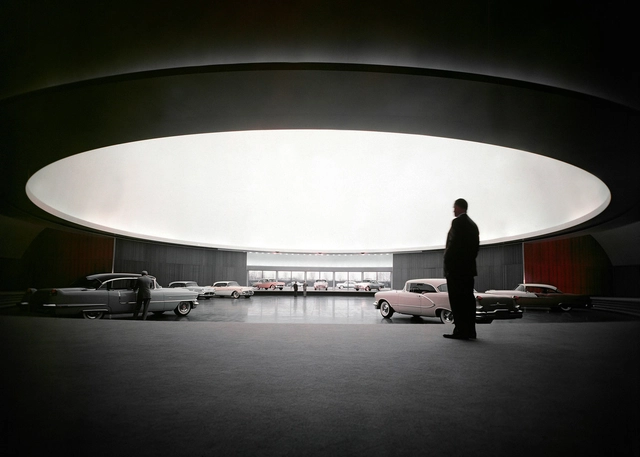
The General Motors Technical Center fascinates with architecture filled with an abundance of light. Interior offices and showrooms evoke the impression of a calm overcast sky for a human environment and beauty. The campus designed by Eero Saarinen represents an influential icon of midcentury design. Susan Skarsgard's book "Where Today Meets Tomorrow" opens intriguing perspectives to the origin of the American landmark.

Etheral Luminosity from Above: General Motors Technical Center - Image 1 of 4Etheral Luminosity from Above: General Motors Technical Center - Image 2 of 4Etheral Luminosity from Above: General Motors Technical Center - Image 3 of 4Etheral Luminosity from Above: General Motors Technical Center - Image 4 of 4Etheral Luminosity from Above: General Motors Technical Center - More Images+ 6

Hotel Transformation of Saarinen's TWA Terminal Tops Out

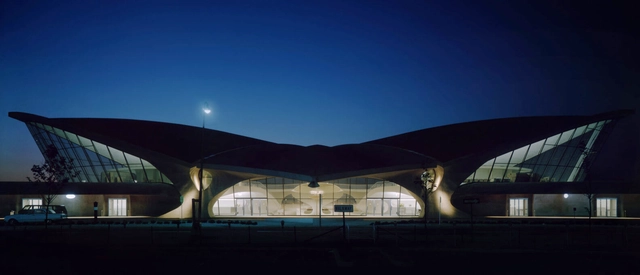
Construction on the transformation of Eero Saarinen’s iconic TWA Flight Center into the new TWA Hotel has hit major milestone, as the project has now topped out.

Hotel Transformation of Saarinen's TWA Terminal Tops Out - Image 1 of 4Hotel Transformation of Saarinen's TWA Terminal Tops Out - Image 2 of 4Hotel Transformation of Saarinen's TWA Terminal Tops Out - Image 3 of 4Hotel Transformation of Saarinen's TWA Terminal Tops Out - Image 4 of 4Hotel Transformation of Saarinen's TWA Terminal Tops Out - More Images+ 6

The Architect as Educator: Remembering Gunnar Birkerts

Subscriber Access | 

Gunnar Birkerts, Latvian-born architect and educator, passed away on August 15, 2017, at the age of 92. A passionate advocate of a creative process he called "organic synthesis," he leaves behind dozens of built works over three continents and influenced hundreds of architectural students and colleagues through his inquiry-based process and dynamic interactions. Eric Hill and John Gallagher, in their AIA Guide to Detroit, said of Birkerts’ architecture:

Each of his works seems to be approached as an opportunity to explore the essence of an architectural problem, resulting in a statement that often exceeds the immediate project.

The Architect as Educator: Remembering Gunnar Birkerts - Image 1 of 4The Architect as Educator: Remembering Gunnar Birkerts - Image 2 of 4The Architect as Educator: Remembering Gunnar Birkerts - Featured ImageThe Architect as Educator: Remembering Gunnar Birkerts - Image 3 of 4The Architect as Educator: Remembering Gunnar Birkerts - More Images

Architectural Adventures: Detroit—Motor City’s Architectural Revival

For most of the 20th century, Detroit was our nation’s economic dynamo. This heritage is reflected in the treasure trove of outstanding historic homes, buildings, and factories that still define the cityscape. While Detroit has struggled into the 21st century, its role as a center for architectural innovation is undiminished. With stunning early 20th-century mansions, grand Art Deco skyscrapers, and surprising mid-century masterpieces, the Motor City has more to offer than most realize. Explore the Cranbrook Academy of Art, Lafayette Park, Eastern Market, private homes, and special projects by local preservation organizations. Learn about how Detroit is rebounding while experiencing the innovative and seminal works of great architects like Eliel Saarinen, Daniel Burnham, Cass Gilbert, John Burgee, Albert Kahn, Minoru Yamasaki, and Mies van der Rohe along the way.

New TWA Lounge Opens as Construction Moves Forward on Hotel Transformation

A new space has been given a retro makeover while a historic one is racing towards modernization as work continues on the transformation of Eero Saarinen’s iconic TWA Terminal into a luxury hotel and event space.

Just completed is the TWA Lounge, a satellite space for the hotel located on the 86th floor of One World Trade Center. Part gallery, part mock-up, the Lounge space recreates the look and feel of the original terminal down to the smallest detail.

New TWA Lounge Opens as Construction Moves Forward on Hotel Transformation - Image 1 of 4New TWA Lounge Opens as Construction Moves Forward on Hotel Transformation - Image 5 of 4New TWA Lounge Opens as Construction Moves Forward on Hotel Transformation - Image 18 of 4New TWA Lounge Opens as Construction Moves Forward on Hotel Transformation - Image 24 of 4New TWA Lounge Opens as Construction Moves Forward on Hotel Transformation - More Images+ 22

AD Classics: The Entenza House (Case Study #9) / Charles & Ray Eames, Eero Saarinen & Associates

Nestled in the verdant seaside hills of the Pacific Palisades in southern California, the Entenza House is the ninth of the famous Case Study Houses built between 1945 and 1962. With a vast, open-plan living room that connects to the backyard through floor-to-ceiling glass sliding doors, the house brings its natural surroundings into a metal Modernist box, allowing the two to coexist as one harmonious space.

Like its peers in the Case Study Program, the house was designed not only to serve as a comfortable and functional residence, but to showcase how modular steel construction could be used to create low-cost housing for a society still recovering from the the Second World War. The man responsible for initiating the program was John Entenza, Editor of the magazine Arts and Architecture. The result was a series of minimalist homes that employed steel frames and open plans to reflect the more casual and independent way of life that had arisen in the automotive age.[1]

AD Classics: The Entenza House (Case Study #9) / Charles & Ray Eames, Eero Saarinen & Associates - Houses Interiors, Door, Table, ChairAD Classics: The Entenza House (Case Study #9) / Charles & Ray Eames, Eero Saarinen & Associates - Houses InteriorsAD Classics: The Entenza House (Case Study #9) / Charles & Ray Eames, Eero Saarinen & Associates - Houses Interiors, Table, LightingAD Classics: The Entenza House (Case Study #9) / Charles & Ray Eames, Eero Saarinen & Associates - Houses Interiors, Door, Facade, StairsAD Classics: The Entenza House (Case Study #9) / Charles & Ray Eames, Eero Saarinen & Associates - More Images+ 23

How to Pronounce the Names of 22 Notable Architects

Subscriber Access | 

There’s no doubt that one of the best things about architecture is its universality. Wherever you come from, whatever you do, however you speak, architecture has somehow touched your life. However, when one unexpectedly has to pronounce a foreign architect’s name... things can get a little tricky. This is especially the case when mispronunciation could end up making you look less knowledgeable than you really are. (If you're really unlucky, it could end up making you look stupid in front of your children and the whole world.)
To help you out, we’ve compiled a list of 22 architects with names that are a little difficult to pronounce, and paired them with a recording in which their names are said impeccably. Listen and repeat as many times as it takes to get it right, and you’ll be prepared for any intellectual architectural conversation that comes your way. 

Latest New Yorker Cover Addresses Ferguson Rift With Saarinen's Iconic Arch

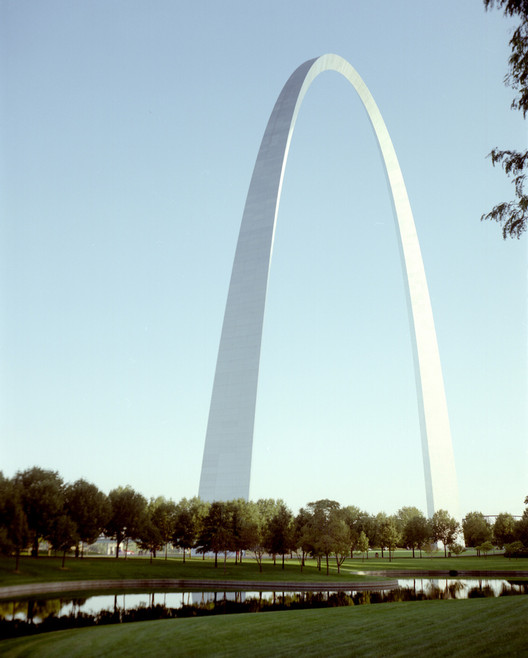
With their latest cover, The New Yorker is addressing the tragic unrest in Ferguson which has followed Monday's decision not to indict the officer who shot Michael Brown in August, using an image of Eero Saarinen's iconic Gateway Arch. The image, designed by Bob Staake, shows the arch divided, black on one side and white on the other in reference to the racial tensions that underpin the dispute. "At first glance, one might see a representation of the Gateway Arch as split and divided," says Staake, "but my hope is that the events in Ferguson will provide a bridge and an opportunity for the city." To read more about the ideas behind Staake's design, visit The New Yorker's website.