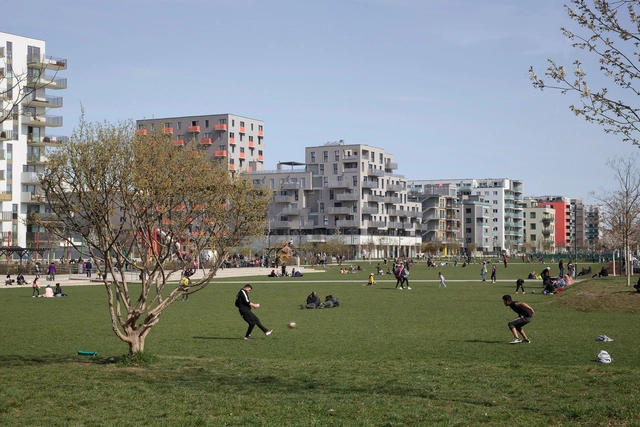
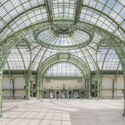
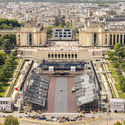
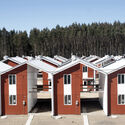
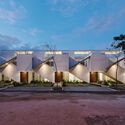
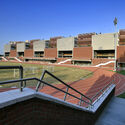
What defines good housing and a good living environment? What political framework is needed to create them? How can we design socially equitable, affordable housing? And what strategies lead to the best results? These are the questions guiding Lorenzo Romito, Sabine Pollak, and Michael Obrist's proposal for the Austrian Pavilion at the Venice Architecture Biennale 2025. The building, designed by Josef Hoffmann and inaugurated in 1934, will become an interactive space with the opening of the "Agency for Better Living", an exhibition dedicated to exploring the new political dimension of the fundamental right to housing. The proposal takes as its starting point a comparison of social housing models in Vienna and Rome, creating a space for sharing ideas on better living for all.
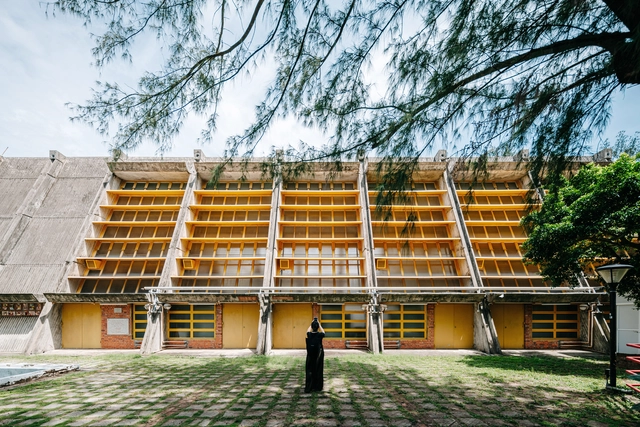
Modernism in architecture emerged at the beginning of the twentieth century, fueled by advancements in science and engineering and a deliberate departure from historical styles. It championed a focus on social equity, urban development, efficiency, and functional design, marking a significant shift in architectural philosophy. Originating primarily in Europe and the United States, modernism captivated the global imagination with its innovative redefinition of space and architecture. Its spread to Asia was facilitated by cross-cultural exchanges—East Asian architects who studied under prominent modernists and European architects working in East Asia through international collaborations or colonial-era influences.
The housing crisis, the need for effective land management policies, and the growing demand for housing aid are global challenges, and Spain has taken significant steps to address these issues in recent years. While this effort is closely tied to rehabilitating obsolete buildings, it also tackles the challenges of densification and gentrification. These factors have prompted the exploration of new housing models and ways of living, leading to the development of affordable residential buildings designed to accommodate large numbers of inhabitants while maintaining high-quality living standards.
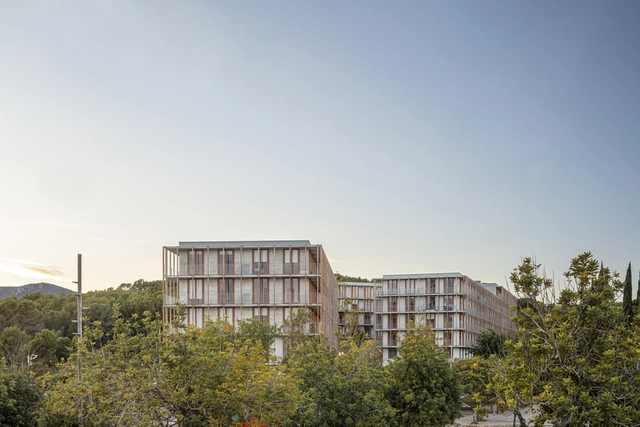
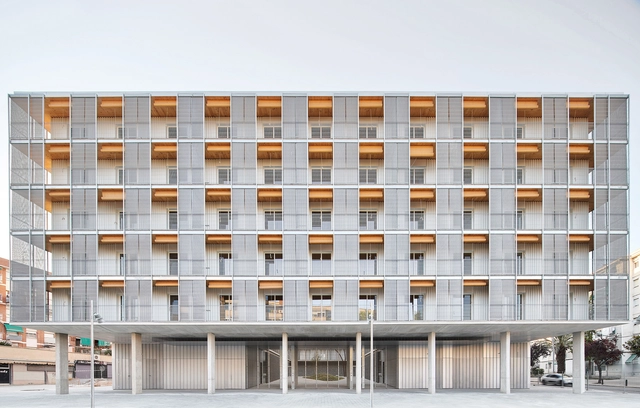
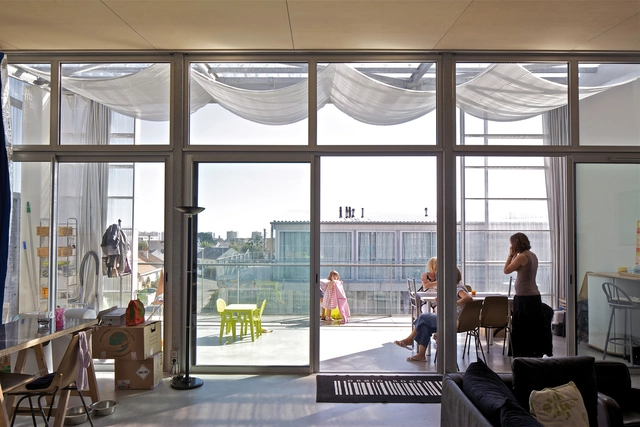
Modulus matrix -85 social housing in Cornellà, Barcelonaby Peris + Toral Arquitectes. Image Courtesy of RIBA
The Royal Institute of British Architects (RIBA) awarded its 2024 International Prize to Modulus Matrix, an 85-unit social housing development in Cornellà, near Barcelona. Designed by Peris + Toral Arquitectes, the six-story timber-framed building is a notable example of innovative social housing design. Its modular structure, based on a 3.6m x 3.6m grid inspired by traditional Japanese homes, creates a flexible and adaptable living space. The design prioritizes cross-ventilation, dual orientation, and a central communal courtyard, fostering social interaction and community building.
Architecture has long been understood as a powerful tool for shaping the physical environment and social dynamics within it. However, its potential to foster social equity is often overlooked. Empathy-driven design invites architects to approach their work not only as creators of space but as facilitators of human connection and community well-being. This approach centers on understanding people's lived experiences, struggles, and aspirations — particularly marginalized communities — and responding to their needs through thoughtful, inclusive architecture. It goes beyond aesthetics and functionality, instead focusing on creating spaces fostering dignity, accessibility, and social equity. By prioritizing empathy, architects can design environments that uplift communities, address disparities, and create inclusive spaces that promote positive societal change in a tangible, human-centered way.
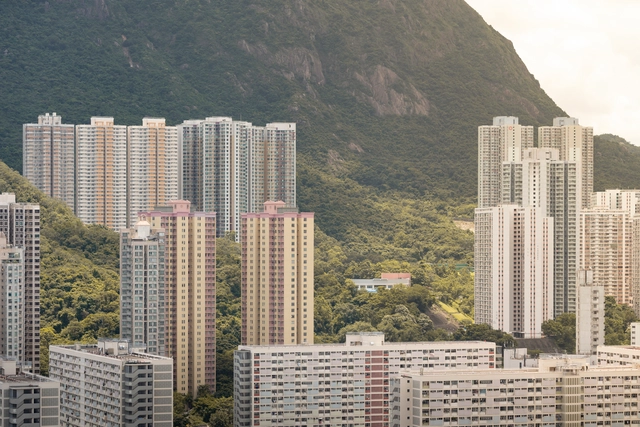
Naturally, a higher population density prevents the formation of ghost towns and vacant shops, which can become hotbeds for crime. However, these positive views on dense living environments often rest on optimistic assumptions about urbanism, such as minimal friction among individuals, easily maintained hygiene and a natural formation of diversity.
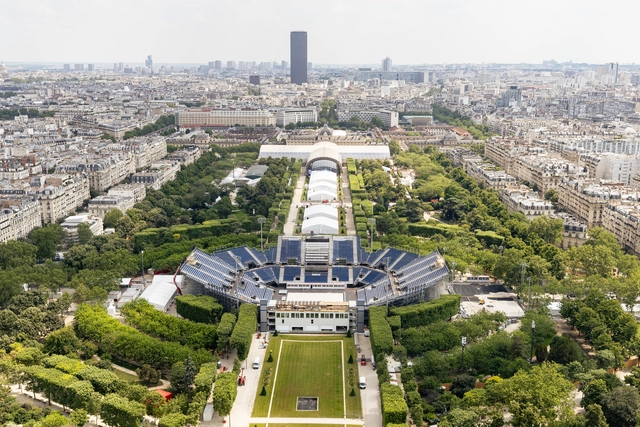
At the beginning of the 20th century, the Olympic games included some unusual medal competitions, including architectural design and town planning. While these are no longer awarded Olympic events, architecture and urban planning continues to continue to have a crucial effect on the development of the global sporting event. Cities that bid to host face an important challenge in adapting their infrastructure to accommodate not only the venues and facilities, but all the support structures needed for a safe and enjoyable edition. Paris is no different. While the city hosted 2 previous editions of the games over a century ago, the challenges of the modern-day Games have proven significant. However, the city’s expansive infrastructures have enabled officials to adjust the measures in an effort to have sustainable development for and after the Games. With less than a month to go until the opening ceremony, explore the measures taken by city officials and the long-lasting effects of hosting an Olympic event.
Anne Lacaton, renowned for her groundbreaking work with partner Jean-Philippe Vassal, has been working to push the boundaries of sustainable and socially responsible housing architecture for decades. The Pritzker Prize laureates are celebrated for their innovative approach to social housing and are committed to enhancing the quality of life for residents. Their philosophy centers around creating generous, adaptable spaces that rethink how we live together. Onsite in San Sebastián, ArchDaily had the chance to interview the Pritzker-Prize winner to delve into her architectural practice and philosophy. In the conversation, the architect explored core values, the significance of reuse in social housing, and the promising trends in collective housing design that emerged from the first edition of the awards.
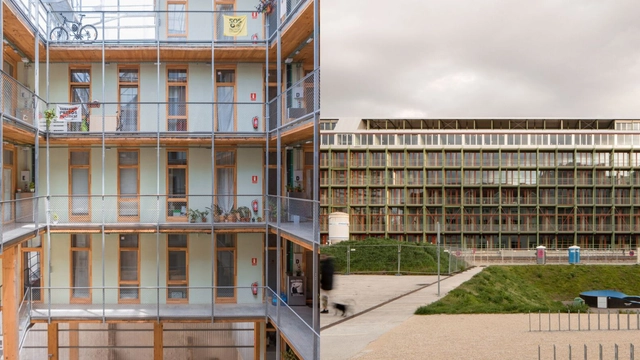
The European Collective Housing Award has selected the winners for the 2024 cycle. Created by The Basque Architecture Institute and Arc en Rêve Centre d’Architecture, in collaboration with the Department of Territorial Planning, the award highlights innovation and excellence in collective housing design, emphasizing aesthetics, social responsibility, and environmental sustainability. Selected from a category of 171 entries from 19 European countries, the winners are La Borda Housing Collectie in Spain and Construction of a Wine Storage into Housing in Switzerland for the new construction and renovation category, respectively. The inaugural edition of the European Collective Housing Award recognizes the importance of collective housing in creating sustainable and inclusive communities while also emphasizing the need to promote architectural excellence in this domain.
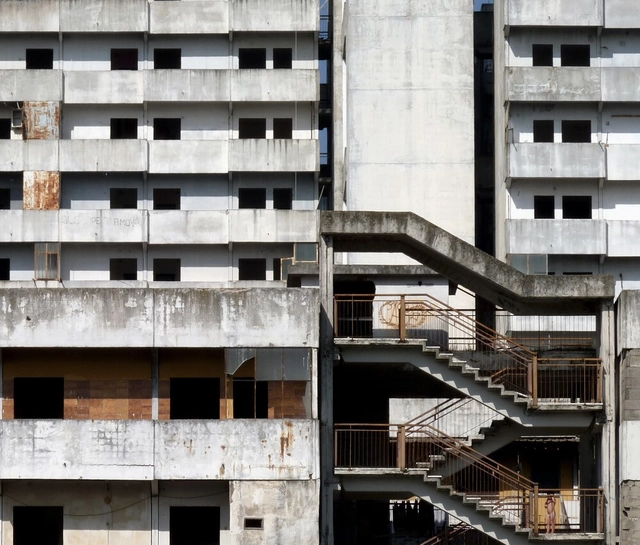
As the demand for affordable housing grows and the availability of low-cost properties diminishes, stakeholders in housing must become more innovative in their approach to social housing development. One opportunity lies in restoring and repurposing abandoned buildings. While building new houses remains the primary strategy for Housing Authorities and Associations, rehabilitating derelict buildings can be a more economical option. This approach not only maximizes the use of dilapidating infrastructure but also provides an economic opportunity to increase affordable housing within the city. Although rehabilitating derelict residential buildings may seem like an obvious solution, it becomes even more crucial when considering abandoned commercial, institutional, or historical buildings for social housing.
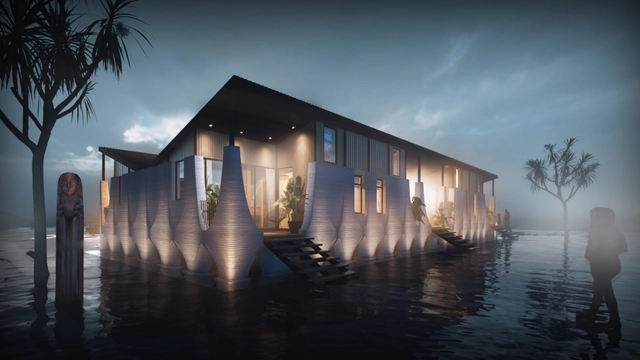
In an open competition, ICON’s Initiative 99 requested participants to design a home using ICON’s 3D printing technologies while keeping the construction budget under $99,000. Among the three selected winners for the Open Category, New Zealand-based office MTspace Studio proposes a robust flood-resistant design, in response to the housing crisis in New Zealand’s flood zones. Titled “Wai Home” after the Māori word for water, the concept revolves around the idea of working with this essential natural element. The design features innovative rainwater collection and storage systems, along with elements to increase the resilience of the construction in the face of increasing threats.
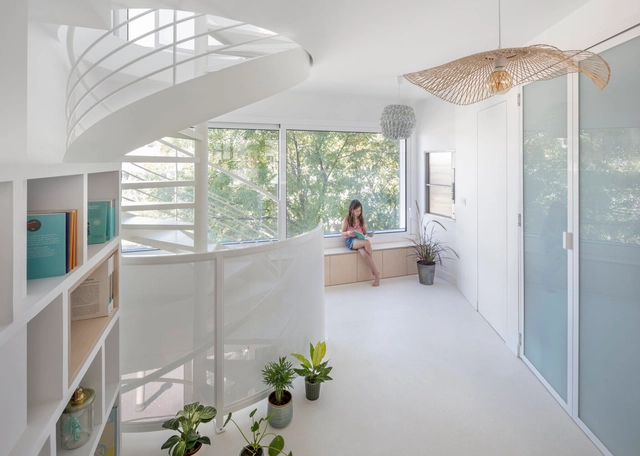
Whether rising to the highest room of the tallest tower in a Disney-esque castle, giving an admirer the chance to confess their love on an apartment buildingfire escape, or connecting a basement or attic room with a decorative period feature, there’s something unavoidably romantic about spiral staircases. But there’s more function behind these coiling forms than just their good looks.
One common-held theory is that spiral staircases were first installed in historic castles as vertical baffles, tiring out enemy infiltrators before they could make it to the top. This is why – it is said – many are set to turn clockwise on the ascent, so attackers have a smaller arc for swinging weapons (mostly held in right hands) than defenders making their descent.
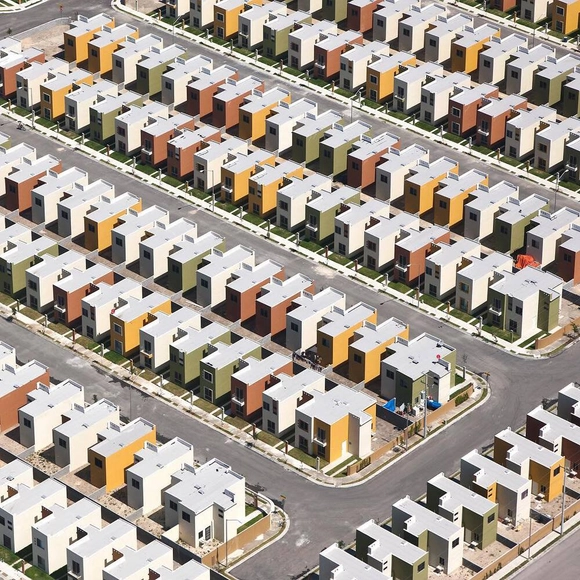
The opening scenes of the award-winning Brazilian film "City of God" (2002) portray a newly constructed housing complex situated on the outskirts of Rio de Janeiro. Subsequently, this complex evolves into a hub of poverty and violence. Despite the film being set in the 1960s, the housing development depicted was a recent construction.
This choice made no difference because, despite the 40-year difference between the depicted era in the film and the time of filming, the architectural solutions employed by housing programs in the country remained stagnant. They continued to replicate outdated models, showcasing a lack of progress in the sector.
If you follow housing policy in America, you may have noticed a particular term cropping up a lot recently: social housing. Maybe you’ve read a longform academic article, live in a city that is codifying a social-housing policy like Seattle or Atlanta, or seen one of the recent mentions in The New York Times, highlighting U.S. and Viennese success stories. On the design front, Dezeen is running a social-housing revival series.
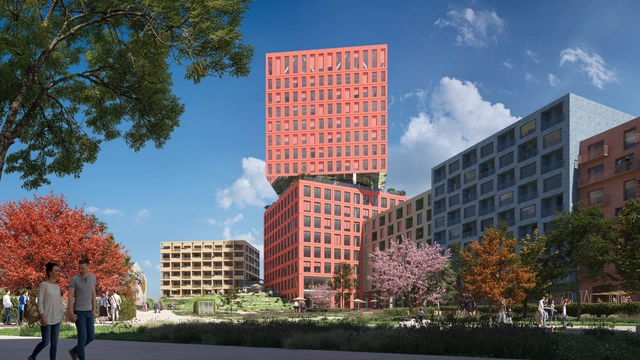
MVRDV and LOLA Landscape Architects have just revealed the new development of “Grüne Mitte” in Düsseldorf, Germany. Centered around open communication, negotiation, and compromise, the project aims to introduce 500 new apartments and community spaces to enhance the neighborhood. Approximately 50% of the scheme is designated as social or affordable housing, which was designed in participatory processes with the residents.
The flow of architectural values throughout the centuries demonstrates the prevalence of some parameters over others in each historical period. In terms of composition, one of the most fundamental considerations revolves around issues of symmetry and balance. Indeed, a design does not necessarily have to be symmetrical to convey the notion of compositional balance. Its elements do not have to be repeated side by side for the whole to convey a sense of completeness, stability, and... paradoxically, symmetry. Many contemporary projects achieve a balanced compositional whole without repeating their elements side by side.
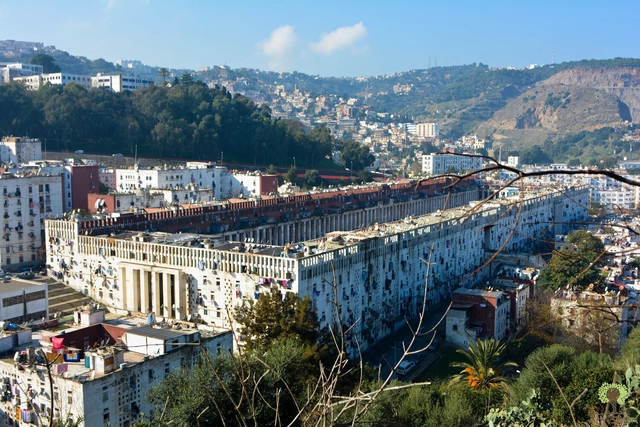
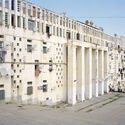
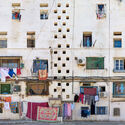
The Climat de France is a French colonial social housing project in Algeria designed by Fernand Pouillon and currently renamed Oued Koriche. Located approximately 8km west of the country’s capital, Algiers, it was built from 1954 to 1957, right in the middle of the Algerian War of Independence. The project has several buildings with different scales. Its most prominent structure is a large rectangular building that houses 3000 dwellings, along with a spacious interior square similar to a Roman forum and exterior windows inspired by the mosaics found in Islamic architecture.
This social housing scheme has a complex history, involving the integration of Algerians into the French lifestyle, the use of modern architecture to challenge traditional Muslim ways of living, and the transformation of its collective square into a site of protest and rebellion.