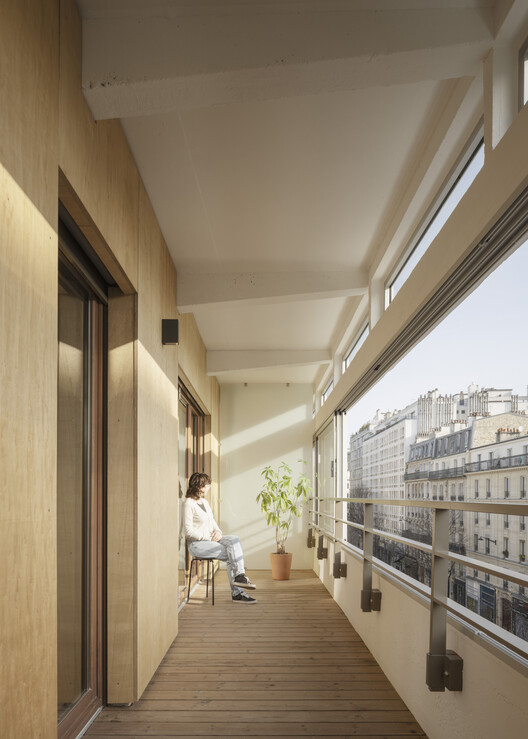
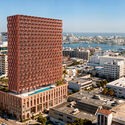
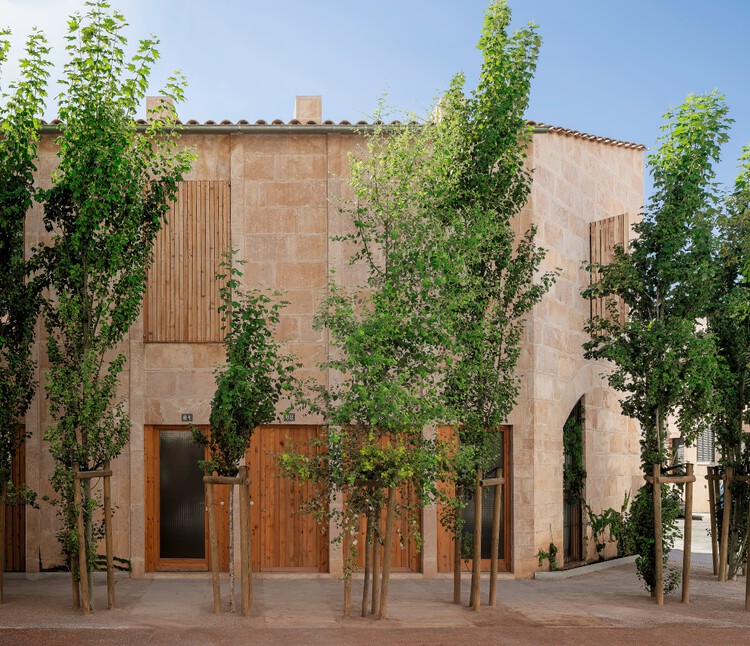
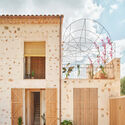
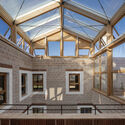
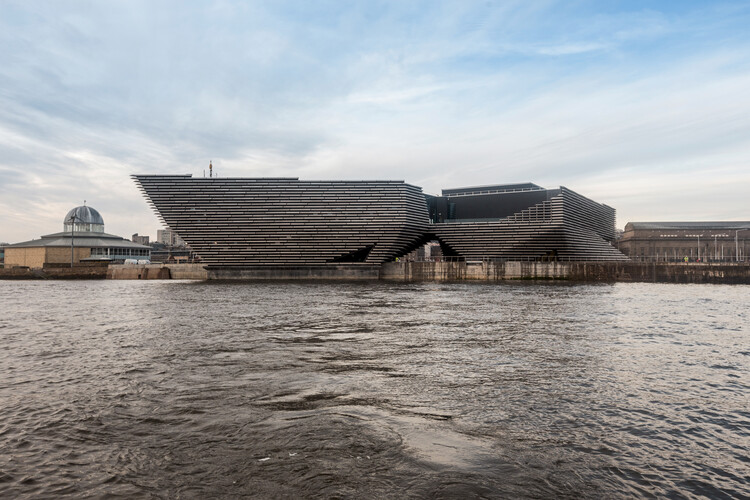
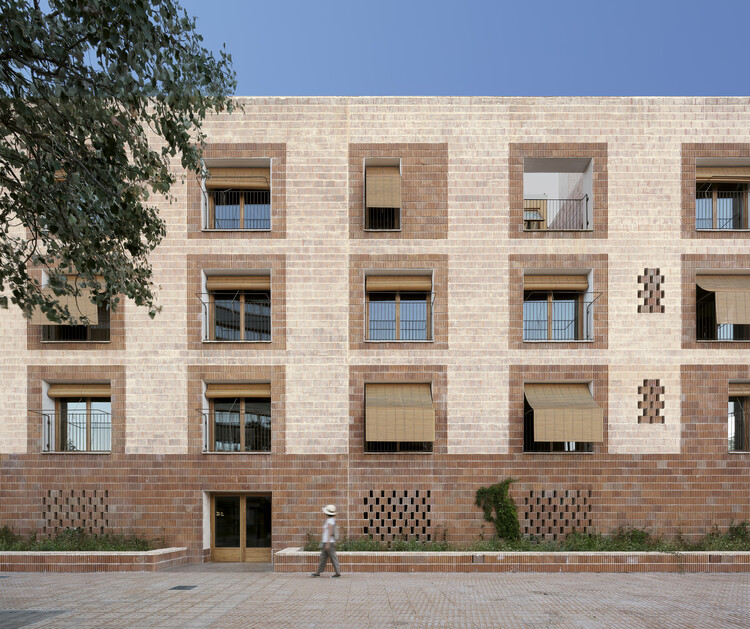
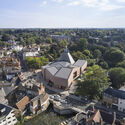
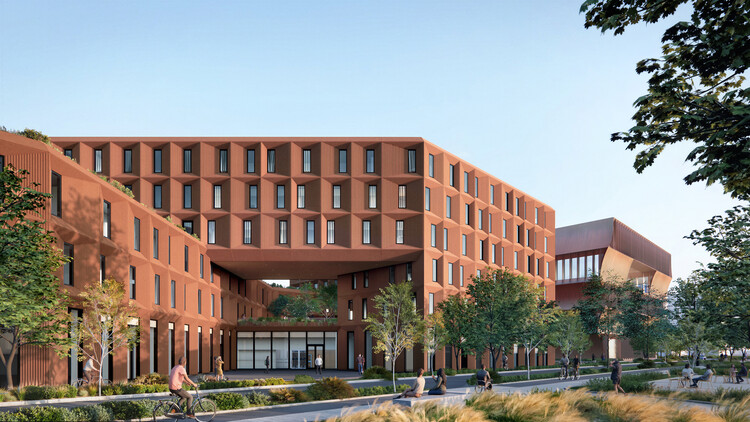
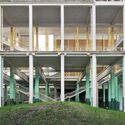
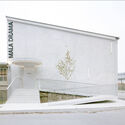
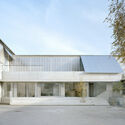
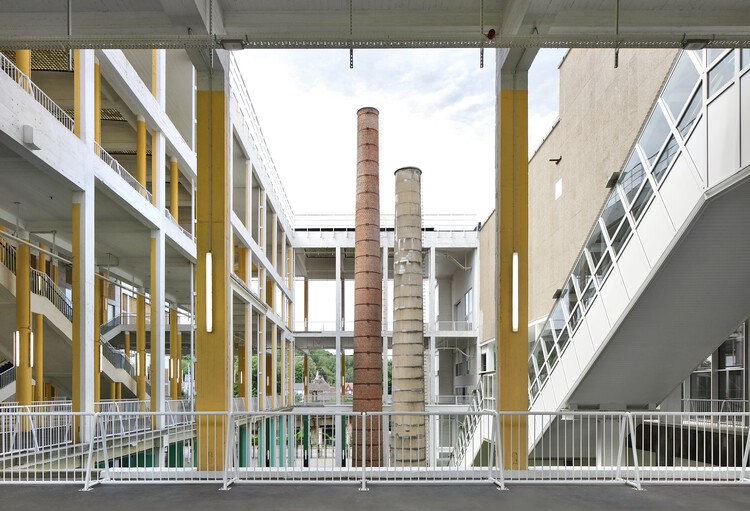
As cities struggle to provide adequate and affordable housing, examining built examples of collective housing can help inform decisions about what to build and how. These projects offer opportunities to assess solutions, understand their limitations, and consider what might be applied elsewhere. In Paris, two recent examples combine apartments of different sizes with access to gardens, courtyards, and other outdoor spaces, working with structures already in place.
Ammodo Architecture will launch the first edition of Ammodo Architecture Days in Amsterdam on November 9 and 10, 2026. Organized by Ammodo Architecture, a programme of the Ammodo Foundation, the event will bring together architects, landscape architects, urban planners, artists, communities, collectives and multidisciplinary design teams, alongside recipients of the 2024 and 2025 Ammodo Architecture Award. Taking place at Westergas, a former industrial complex now used as a cultural and public venue, the invitation-only two-day programme will combine a symposium, exhibition, publication launch and award ceremony, creating a setting for exchange between practices working across different geographic, cultural and disciplinary contexts.
Farshid Moussavi has been awarded the 2026 Soane Medal for her contributions to architectural practice, history, and theory. The Iranian-born architect and educator, who founded Farshid Moussavi Architecture (FMA) in 2011, will receive the medal at the Royal Academy in London on November 24, 2026, where she will also deliver a public lecture. The annual award, established by Sir John Soane's Museum in 2017, recognizes individuals whose work has contributed to a broader understanding of architecture and its role in society.
The Praemium Imperiale is a global arts prize that recognizes exceptional achievements in architecture, painting, sculpture, music, and theater or film. The award has been presented annually since 1988 by the Japan Art Association, with one postponement in 2020 due to the COVID-19 pandemic. Previous laureates include Portuguese architect Eduardo Souto de Moura, Japanese architect and humanitarian Shigeru Ban, and Burkinabé-German architect Francis Kéré, recognized by the association as professionals "who transcend national and ethnic boundaries, embodying the culture and arts of our time." This year, the laureate in the architecture category is Polish-American architect Daniel Libeskind, co-founder of Studio Libeskind, known for the design of the Jewish Museum in Berlin and the World Trade Center Master Plan in New York City.
A week of architecture news has highlighted the growing connections between environmental change, public systems, and the evolving role of architectural practice. Extreme weather events in different regions have drawn attention to the vulnerability of settlements, infrastructure, and territorial networks, while new approaches to housing demonstrate how changes in procurement, construction, and governance can influence architectural outcomes. At the same time, the recognition of established practitioners points to the lasting impact of architectural ideas across generations, as the profession continues to engage with questions of resilience, systemic change, and the broader conditions shaping the built environment.
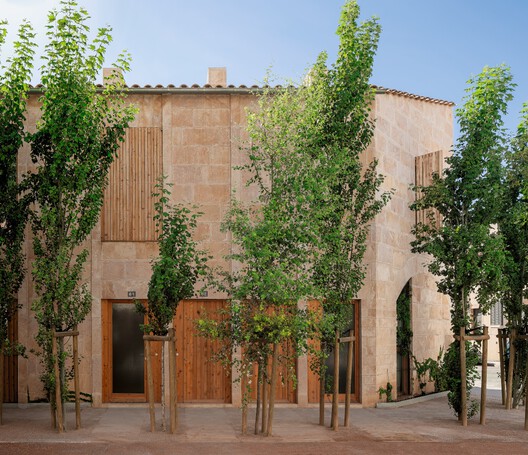
On 1 September 2026, the Balearic Social Housing Model was announced as the recipient of the 2026 OBEL Award. The focus of this award's cycle was "Systems' Hack," calling on architecture to critically engage with the systems that underpin contemporary society and to examine how these interconnected networks might be reconfigured in response to accelerating global challenges. The Balearic Social Housing Model, created by economist and independent consultant Cris Ballester and architect and civil servant Carles Oliver, is a six-point approach to public housing developed between 2019 and 2023, providing additional value and comfort to traditional affordable housing by bringing procurement, architecture, materials, energy, tenure, public capacity and learning together as responses to current social, environmental and economic challenges. In this interview with ArchDaily, the model's creators discuss its origins, ambitions, and material challenges in making social housing a desirable place to live.
Japanese architect Kengo Kuma has been selected to receive the Andrée Putman Lifetime Achievement Award at the 2027 Créateurs Design Awards (CDA). The award, one of two Legacy Awards presented by the organization, recognizes a career that has influenced architecture and the built environment across generations and geographic contexts. Kuma will receive the honor during the CDA Awards Ceremony, which will take place at the Shangri-La Paris on January 16, 2027.
Amid growing economic, political, and climatic instability, the 2026 OBEL Award highlights the need for architectural approaches that rethink both existing and emerging infrastructures. The title for this edition is "Systems' Hack," where "systems" are understood as interrelated mechanisms governed by shared rules and "hacking" is framed as a strategic intervention that seeks to alter how these mechanisms operate. Within this framework, the OBEL Foundation has announced the Balearic Social Housing Model as the winner of this year's award, while also announcing a new cycle in 2027 under the same topic. The Balearic Social Housing Model is recognized for "transforming the role of social housing administration in the Balearic Islands between 2019 and 2023," proposing new approaches in response to an acute housing shortage and a critically limited public rental housing stock in Spain.
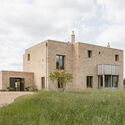
The Royal Institute of British Architects (RIBA)has announced the six shortlisted projects for the 2026 RIBA Stirling Prize, marking the award's 30th anniversary. Established in 1996, the Stirling Prize recognizes the building considered to have made a contribution to the evolution of architecture in the United Kingdom. This year's shortlist spans a broad range of typologies, including a new public square above one of London's busiest transport interchanges, the adaptive reuse of a 1970s theater into a cultural venue, a high-density residential development, two projects for Cambridge colleges, and a family home set on the edge of Epping Forest. The winner will be announced on October 15 at Old Billingsgate in London.
The World Architecture Festival (WAF) has announced the shortlist for its 2026 Awards, recognizing completed buildings, future projects, interiors, and landscape works from around the world. The finalists, selected from hundreds of submissions, will compete at this year's festival, taking place at the Broward County Convention Center in Fort Lauderdale, Florida, from November 18–20, 2026. During the first two days of the event, shortlisted teams will present their projects live to international judging panels, with category winners advancing to the festival's Super Jury for the final awards.
On UNESCO's International Day of Light, celebrated annually on May 16, the Daylight Award announced its 2026 laureates. Established to support research into the scientific understanding of daylight and its significance for health, well-being, ecosystems, and architectural design, the award recognizes achievements in two categories: Daylight in Architecture and Daylight Research. This year, Japanese architects Momoyo Kaijima and Yoshiharu Tsukamoto of Atelier Bow-Wow were honored for demonstrating how daylight can shape shared spaces and everyday life, while marine biologists Brittany N. Zepernick, Steven W. Wilhelm, and R. Michael McKay of the United States and Canada were recognized for their research on aquatic microorganisms and their implications for planetary health and biodiversity.