1. ArchDaily
  2. Adobe

Adobe: The Latest Architecture and News

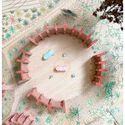
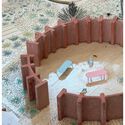
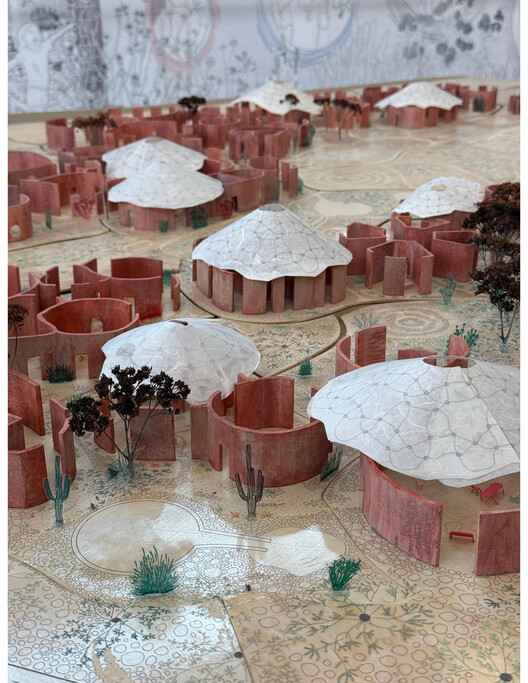
Escuelita Lochiel: An ArchDaily Student Project Awards Winner Reframing Education Through Adobe

Subscriber Access | 

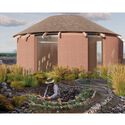
In the high desert of the San Rafael Valley, a few miles from the United States-Mexico border in Lochiel, Arizona, an adobe schoolhouse has stood for more than a century. Built before 1905, before Arizona was an incorporated state, the schoolhouse served generations of Mexican American students from Arizona and Sonora, cultivating shared cultural experiences, stories, and relationships that transcend physical and political boundaries. Over decades of education and shared histories, it became a place where language and narrative moved freely, even as geopolitical tensions continued to rise along the border. Today, it is one of the last remaining one-room adobe schoolhouses in the United States.

Adobe is among the oldest building technologies in the American Southwest, and among the most demanding to steward. In desert climates, earthen walls face intense weathering from temperature extremes, cracking due to seasonal shifts, and accelerated decay after storm events. These vulnerabilities require sustained and skilled maintenance over many seasons and compounding decades. After years of encroaching abandonment and structural threats, a twelve-year restoration effort by local community members who understood this building as critical cultural infrastructure brought the schoolhouse back from the edge of demolition. That the community chose to undertake this effort, given everything Adobe construction demands of those who care for it, is a statement about what the loss of this building would have cost. The result is a structure that now stands as a monument to Mexican American heritage and a living archive of rural border education.
Escuelita Lochiel: An ArchDaily Student Project Awards Winner Reframing Education Through Adobe - Image 1 of 4Escuelita Lochiel: An ArchDaily Student Project Awards Winner Reframing Education Through Adobe - Image 2 of 4Escuelita Lochiel: An ArchDaily Student Project Awards Winner Reframing Education Through Adobe - Image 3 of 4Escuelita Lochiel: An ArchDaily Student Project Awards Winner Reframing Education Through Adobe - Image 4 of 4Escuelita Lochiel: An ArchDaily Student Project Awards Winner Reframing Education Through Adobe - More Images+ 5

The Earthen Towers of Shibam: A Vertical City in the Yemeni Desert

Subscriber Access | 

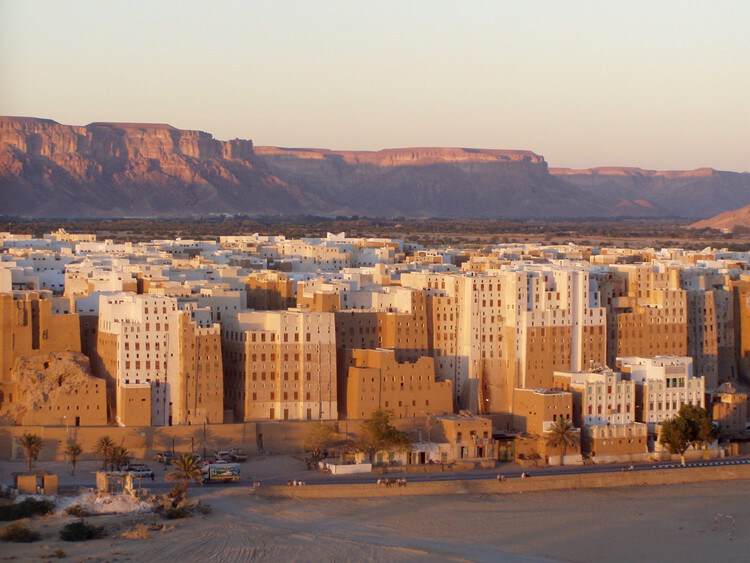
Symbols of technological development and urban density, tall buildings as we know them today emerged in the late nineteenth century, particularly in the United States, as a response to the rapid expansion of urban commerce and the need to grow cities without occupying additional land. The term skyscraper, for instance, was coined in the 1880s and originally referred to buildings with around 10 to 20 stories—an impressive height for the time.

However, the idea of building vertically is much older than the steel-and-glass skyscrapers of modern cities might suggest. Long before the Industrial Revolution, some societies were already experimenting with forms of vertical urbanization as a response to limited space, territorial defense, or environmental adaptation.

The Earthen Towers of Shibam: A Vertical City in the Yemeni Desert - Image 1 of 4The Earthen Towers of Shibam: A Vertical City in the Yemeni Desert - Image 2 of 4The Earthen Towers of Shibam: A Vertical City in the Yemeni Desert - Image 3 of 4The Earthen Towers of Shibam: A Vertical City in the Yemeni Desert - Image 4 of 4The Earthen Towers of Shibam: A Vertical City in the Yemeni Desert - More Images+ 7

Building with Earth: Traditional Knowledge in Contemporary Architecture 

Subscriber Access | 

In recent years, earthen construction has gained renewed attention in architecture. Materials such as adobe, rammed earth, and compressed earth blocks, once mainly associated with vernacular traditions, are increasingly being explored by contemporary architects. Rather than representing a simple return to the past, this renewed interest reflects a broader reconsideration of how architecture engages with materials, local resources, and environmental conditions.

For centuries, building with earth was part of everyday construction across many regions of the world. Techniques such as adobe, rammed earth, cob, and other soil-based systems developed gradually through adaptation to climate, available resources, and local construction practices. These methods responded directly to environmental conditions while shaping cultural ways of building. This knowledge circulated through collective practices rather than formal architectural education, allowing techniques to evolve through continuous experimentation.

Building with Earth: Traditional Knowledge in Contemporary Architecture  - Image 1 of 4Building with Earth: Traditional Knowledge in Contemporary Architecture  - Image 2 of 4Building with Earth: Traditional Knowledge in Contemporary Architecture  - Image 3 of 4Building with Earth: Traditional Knowledge in Contemporary Architecture  - Image 4 of 4Building with Earth: Traditional Knowledge in Contemporary Architecture  - More Images+ 13

Global Heating: How Vernacular Architecture is Affected by the Climate Crisis

Subscriber Access | 

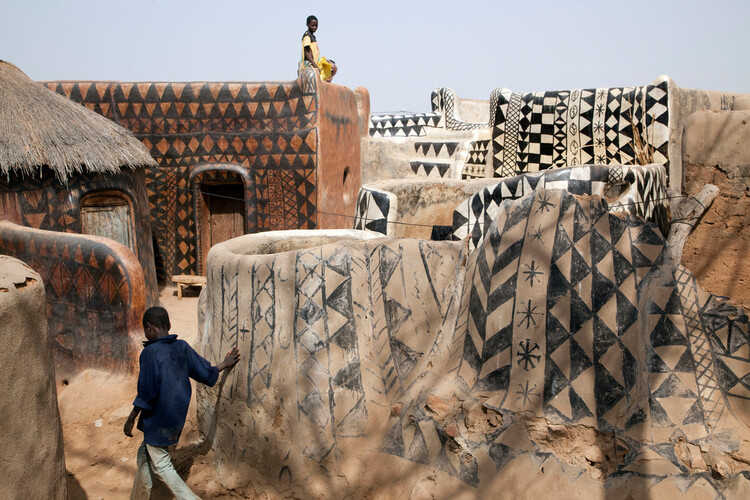
Vernacular architecture is often referred to as harboring lessons for creating low-energy buildings and the fight against climate change. Yet, as weather patterns are changing, there are cases where traditional building techniques are themselves becoming at risk. As well as changes in temperature, different regions have faced becoming wetter or drier, experiencing increased risk of droughts, flooding, storms, and changes to local flora. The painted houses of Tiébélé in Burkina Faso, recognized as a UNESCO World Heritage Site, are one example.

Global Heating: How Vernacular Architecture is Affected by the Climate Crisis - Image 1 of 4Global Heating: How Vernacular Architecture is Affected by the Climate Crisis - Image 2 of 4Global Heating: How Vernacular Architecture is Affected by the Climate Crisis - Image 3 of 4Global Heating: How Vernacular Architecture is Affected by the Climate Crisis - Image 4 of 4Global Heating: How Vernacular Architecture is Affected by the Climate Crisis - More Images+ 4

Slow Architecture as an Ethical Practice of Design and Construction

At the Bruder Klaus Field Chapel, designed by Peter Zumthor, the construction process involved the direct participation of residents from the small Swiss village of Mechernich. Using an internal formwork made of vertically placed wooden logs, concrete was prepared in small batches and poured manually, day after day, forming layers marked by subtle variations in the mix and application. At the end of the process, the wooden structure was reduced to ashes, leaving the chapel's interior impregnated with traces of fire and revealing a dark, tactile surface. The result was a quiet and deeply meaningful space, where collective action, time, and material transformation became part of the architecture. Centered on locally available resources and manual techniques, this construction method highlights how the choice of materials and building system can shape the experience of a space, reveal the time invested, and embed the culture of a place into the very matter of architecture. In doing so, it offers an example of how construction itself can become a regenerative act, restoring meaning, connecting communities, and honoring material cycles.

Slow Architecture as an Ethical Practice of Design and Construction - Image 1 of 4Slow Architecture as an Ethical Practice of Design and Construction - Image 2 of 4Slow Architecture as an Ethical Practice of Design and Construction - Image 3 of 4Slow Architecture as an Ethical Practice of Design and Construction - Image 4 of 4Slow Architecture as an Ethical Practice of Design and Construction - More Images+ 6

Grounded Interiors: Exploring Earth-Based Flooring Through 10 Contemporary Interiors

Earth-based flooring materials comprise natural elements such as clay, sand, silt, lime, and organic fibres. They offer both structural performance and sensory engagement when used in both outdoor and interior spaces. Due to their thermal properties, durability, and sustainable qualities, these materials have evolved from vernacular construction techniques into high-value architectural elements that are always being reinvented and optimized. There are several types of earthen floorings, each offering unique benefits, and they are increasingly used in interior settings.

Grounded Interiors: Exploring Earth-Based Flooring Through 10 Contemporary Interiors - Image 1 of 4Grounded Interiors: Exploring Earth-Based Flooring Through 10 Contemporary Interiors - Image 2 of 4Grounded Interiors: Exploring Earth-Based Flooring Through 10 Contemporary Interiors - Image 3 of 4Grounded Interiors: Exploring Earth-Based Flooring Through 10 Contemporary Interiors - Image 4 of 4Grounded Interiors: Exploring Earth-Based Flooring Through 10 Contemporary Interiors - More Images+ 18

Zaha Hadid Architects Breaks Ground on Asaan Museum in Diriyah, Saudi Arabia

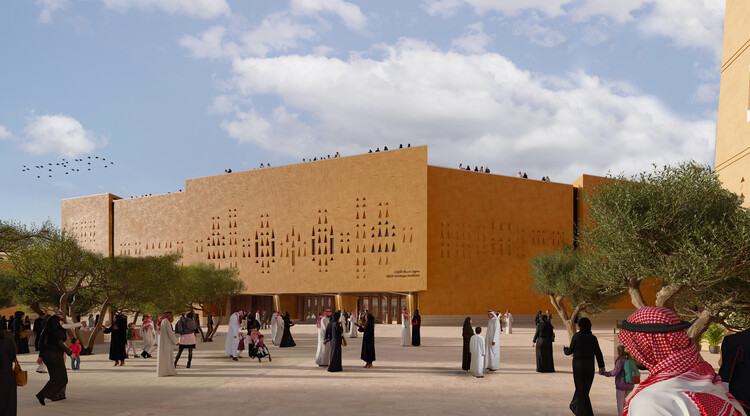
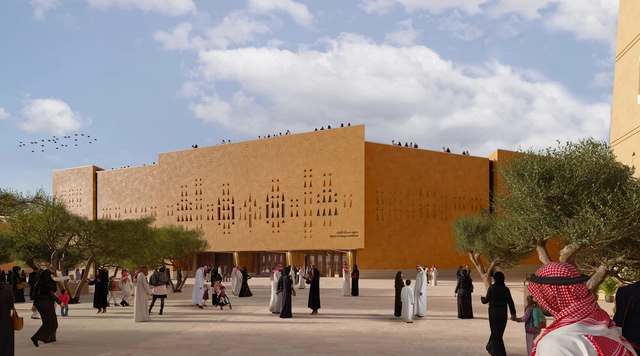
Designed by Zaha Hadid Architects, construction works for the Asaan Museum have recently begun. Located in the historic At-Turaif district of Diriyah, Saudi Arabia, the Asaan Museum aims to be a new cultural institution designed to preserve and celebrate the nation's heritage. Deriving its name from the Arabic word meaning "inheritance passed down through generations," Asaan underscores its role in connecting past and present. Situated within a site renowned for its mud-brick architecture and centuries-old urban fabric, the museum draws inspiration from traditional Najdi building techniques. Planned to be constructed using locally sourced clay mud-bricks, Asaan Museum will mark Zaha Hadid Architects' first project to employ adobe construction.

Zaha Hadid Architects Breaks Ground on Asaan Museum in Diriyah, Saudi Arabia - Image 1 of 4Zaha Hadid Architects Breaks Ground on Asaan Museum in Diriyah, Saudi Arabia - Image 2 of 4Zaha Hadid Architects Breaks Ground on Asaan Museum in Diriyah, Saudi Arabia - Image 3 of 4Zaha Hadid Architects Breaks Ground on Asaan Museum in Diriyah, Saudi Arabia - Image 4 of 4Zaha Hadid Architects Breaks Ground on Asaan Museum in Diriyah, Saudi Arabia - More Images+ 1

Comfort and Seclusion: 5 Hotels in the Deserts of Latin America

Subscriber Access | 

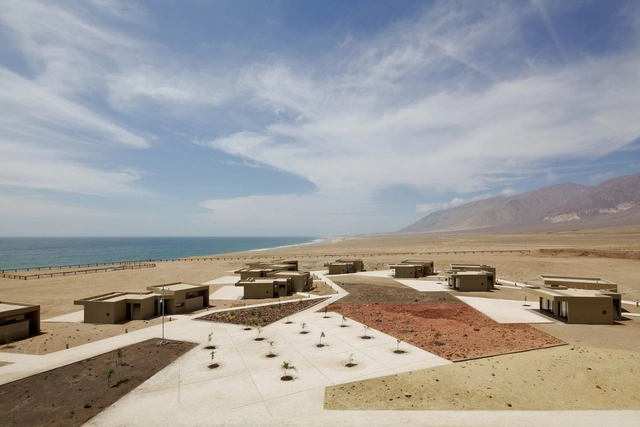
The desert is a landscape in constant transformation. Shaped by the wind, its dunes, ridges, and fissures emerge and fade in an ever-shifting expanse, as if the scenery itself were alive. It is a land of stark contrasts, where the scorching heat of the day gives way to the crisp coolness of the night, revealing nature in its most primal form. In such a dynamic and untamed environment, how can architecture not only integrate but also respect and engage with its surroundings? This is the challenge faced by hotels built within Latin America’s vast desert landscapes.

Comfort and Seclusion: 5 Hotels in the Deserts of Latin America - Image 1 of 4Comfort and Seclusion: 5 Hotels in the Deserts of Latin America - Image 2 of 4Comfort and Seclusion: 5 Hotels in the Deserts of Latin America - Image 3 of 4Comfort and Seclusion: 5 Hotels in the Deserts of Latin America - Image 4 of 4Comfort and Seclusion: 5 Hotels in the Deserts of Latin America - More Images+ 7

Beyond Green Architecture: 5 Middle Eastern Projects Redefining Landscape Design

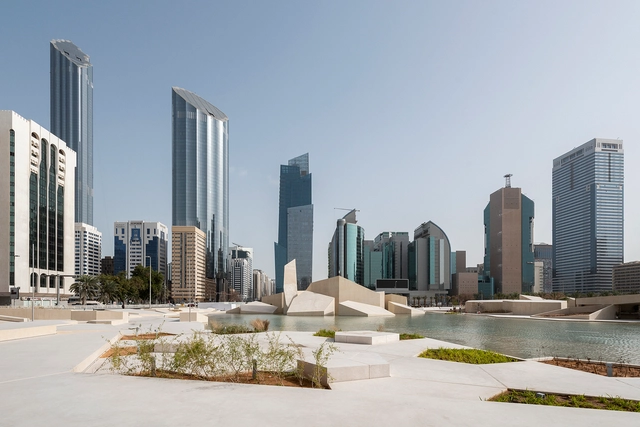
Landscape architecture has traditionally been associated with lush greenery, rooted in the historical development of gardens and parks as spaces that bring nature into urban areas. This connection to greenery is deeply ingrained in the origins of the field, where the creation of verdant retreats was seen as both aesthetically pleasing and beneficial to human well-being. However, in regions like the Middle East, where water scarcity and harsh climates are more prevalent, there is a growing trend toward using local materials such as sand, stone, minerals, and indigenous plants. This shift reflects a more sustainable approach, reimagining landscape architecture to align with the environmental and cultural contexts of the region.

Beyond Green Architecture: 5 Middle Eastern Projects Redefining Landscape Design - Image 1 of 4Beyond Green Architecture: 5 Middle Eastern Projects Redefining Landscape Design - Image 2 of 4Beyond Green Architecture: 5 Middle Eastern Projects Redefining Landscape Design - Image 3 of 4Beyond Green Architecture: 5 Middle Eastern Projects Redefining Landscape Design - Image 4 of 4Beyond Green Architecture: 5 Middle Eastern Projects Redefining Landscape Design - More Images+ 4

What Are Vernacular Technologies?

Vernacular architecture has been gaining more and more space in theory and design practice, with its characteristics being studied and revised. An impulse related to different factors, but mainly to the context of climate change that we are experiencing, which calls for more sustainable and context-connected construction solutions.

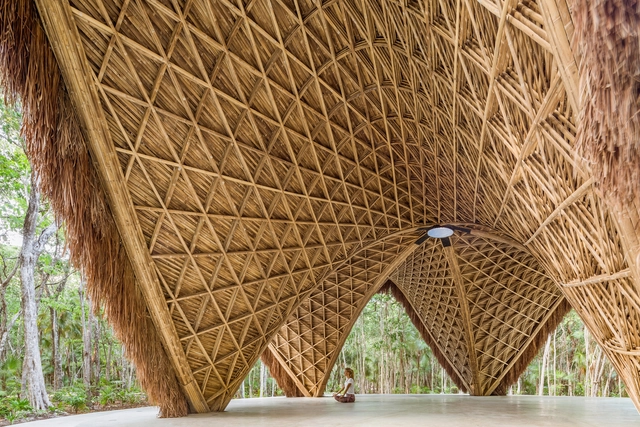
Within this scope, much is said about the different vernacular techniques employed in architecture, whether it is the production of adobe bricks, thatched roofs, woven bamboo walls, among many others. However, while vernacular technique focuses on specific actions or skills, its meaning differs from vernacular technologies.

What Are Vernacular Technologies? - Image 1 of 4What Are Vernacular Technologies? - Image 2 of 4What Are Vernacular Technologies? - Image 3 of 4What Are Vernacular Technologies? - Image 4 of 4What Are Vernacular Technologies? - More Images

7 Bioclimatic Façade Strategies for Tropical Architecture

Subscriber Access | 

When we think of the word "tropic," the image that typically comes to mind is an exotic space, characterized by perpetual warmth and humidity, with frequent and heavy rainfall nurturing lush vegetation. Throughout history, this tropical climate has been romanticized as a paradise and criticized for potentially fostering weakness due to its perceived clemency.

Thankfully, those judgments and associations have been relegated to the past, paving the way for theoretical and practical projects that outline the advantages and disadvantages of living in a tropical climate. These projects acknowledge the various strategies to enhance human adaptability within these distinctive climatic conditions.

7 Bioclimatic Façade Strategies for Tropical Architecture - Image 1 of 47 Bioclimatic Façade Strategies for Tropical Architecture - Image 2 of 47 Bioclimatic Façade Strategies for Tropical Architecture - Image 3 of 47 Bioclimatic Façade Strategies for Tropical Architecture - Image 4 of 47 Bioclimatic Façade Strategies for Tropical Architecture - More Images+ 15

The Merits of Greenwashing: Social Stigma around Natural Construction in India

Subscriber Access | 

In recent years, India has seen a resurgence of interest in natural building materials, a movement driven by escalating environmental concerns and a growing desire to revive traditional lifestyles. From the busy streets of Mumbai to the serene villages of Kerala, architects, builders, and communities are coming together to experiment with the potential of earth, bamboo, lime, and other organic materials in shaping contextually relevant structures that also embody India's contemporary ideals. The shift towards using natural materials and other vernacular resources reflects a movement towards sustainability and a deeper connection with nature.

The Merits of Greenwashing: Social Stigma around Natural Construction in India - Image 1 of 4The Merits of Greenwashing: Social Stigma around Natural Construction in India - Image 2 of 4The Merits of Greenwashing: Social Stigma around Natural Construction in India - Image 3 of 4The Merits of Greenwashing: Social Stigma around Natural Construction in India - Image 4 of 4The Merits of Greenwashing: Social Stigma around Natural Construction in India - More Images+ 3

How Rammed Earth Walls are Built

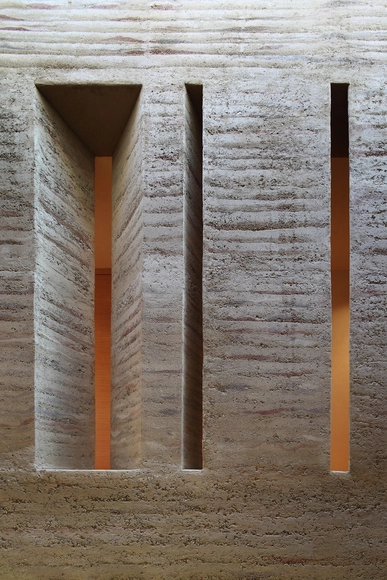
Rammed earth has been used in construction for thousands of years, with evidence of its use dating as far back as the Neolithic Period. Commonly used especially in China, the technique was applied to both ancient monuments and vernacular architecture, with the Great Wall utilizing the technique. Though interest in rammed earth declined in the 20th century, some continue to advocate its use today, citing its sustainability in comparison to more modern construction methods. Most notably, rammed earth structures use local materials, meaning they have low embodied energy and produce little waste. Below, we describe how to build with this material.

Does AI Correlate Materiality with Contemporary Architecture? An Experiment with Six Building Materials

Subscriber Access | 

As AI has become more accessible, we have witnessed examples illustrating its diverse applications. Prominent among these are generative AIs, which excel in their ability to “create” images through prompts, many distinguished by their composition and vividness. These AI systems are neural networks with billions of parameters, trained to create images from natural language, using a dataset of text–image pairs. Thus, although the initial question posed by Turing in the 1950s, “Can machines think?” still recurs today, the generation of images and text is grounded in existing information, limiting their capabilities.

What has surprised many is the increasingly apparent closeness to overcoming the Turing test and the growing similarity, in terms of visualizations, to what an architect with skills in this field can achieve. In this context, while the debate persists in the architectural community about whether AI can process architectural concepts, this article explores how it interprets materials to develop these visual representations. With that in mind, a single prompt was developed for this experiment (with materiality as its variable) to delve into the obtained results.

Materials That Define the Contemporary Mexican Architectural Aesthetic

Subscriber Access | 

From the pre-Columbian period of the Americas –during which cultures such as the Olmec, Maya, Purepecha, and Mexica (Aztec) thrived– to the modern era where architecture has been influenced by social movements and even natural disasters, Mexican architecture showcases a valuable architectural expression, with its own unique voice and distinctive characteristics. Nobel Literature Laureate Octavio Paz argued that architecture is an incorruptible witness to history. Likewise, the materials used to shape it have acted as protagonists of that history, enduring in many cases over time and evolving thanks to the generations of architects who have contributed to it, from different perspectives.

To trace a timeline, it is possible to take as a starting point pre-Hispanic architecture, which exhibited a diversity of nuances due to Mexico's vast territorial extension. This allowed diverse cultures to find their niche and develop their characteristic architectural styles. Subsequently, the era of Spanish colonization, which itself drew influence from Islamic architecture, represented a noteworthy turning point in architectural development. This phase endured until the advent of Mexican Independence in the 19th century. In turn, this marked the initiation of social and cultural movements, both during and after the Mexican Revolution in the early 20th century.
Which Building Construction Materials Are Ecological?

Subscriber Access | 
Which Building Construction Materials Are Ecological? - Featured Image
Timber Bridge in Gulou Waterfront / LUO studio. Photo: © Weiqi Jin

In the current scenario of a climate crisis, thinking about an architectural project without defining ecological guidelines has become practically unacceptable. One of the main emitters of carbon dioxide and other pollutants, the construction sector is increasingly looking for new ways and means that can make works more sustainable and, in some way, mitigate damage to the environment. Thinking about ecological materials can be one of the fundamental steps, but, which materials are these?

Which Building Construction Materials Are Ecological? - Image 1 of 4Which Building Construction Materials Are Ecological? - Image 2 of 4Which Building Construction Materials Are Ecological? - Image 3 of 4Which Building Construction Materials Are Ecological? - Image 4 of 4Which Building Construction Materials Are Ecological? - More Images+ 5

The Comeback of Curved Design: Materials That Can Bend and Curl

Subscriber Access | 
The Comeback of Curved Design: Materials That Can Bend and Curl - Featured Image
Hongkun Art Gallery / penda. Image © Xia Zhi

Take a second to imagine a building or a room. Chances are you are envisioning flat rectangular surfaces and straight lines. Whether it be walls, beams or windows, most architectural elements come in standard and extremely practical orthogonal shapes. However, the pandemic has shed light on designs that are not only functional, but also that improve our mood and well-being. In that sense, the power of curved, free-flowing surfaces is unmatched, which explains why they have been making a comeback as a modern design trend. Adopting beautiful nature-inspired shapes, organic curls and bends energize rooms and make users feel good. In fact, neuroscientists have shown that this affection is hard-wired into the brain; in a 2013 study, they found that participants were most likely to consider a space beautiful if it was curvilinear instead of rectilinear. In short, humans love curves.

Above Board Living / Luigi Rosselli Architects

Above Board Living / Luigi Rosselli Architects - Exterior Photography, House Interiors, FacadeAbove Board Living / Luigi Rosselli Architects - Interior Photography, House InteriorsAbove Board Living / Luigi Rosselli Architects - Interior Photography, House Interiors, Kitchen, Beam, TableAbove Board Living / Luigi Rosselli Architects - Interior Photography, House Interiors, Bedroom, BedAbove Board Living / Luigi Rosselli Architects - More Images+ 27