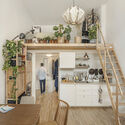
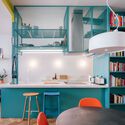
The Kitchen in the New Spatial Economy: 5 Contemporary Design Approaches

Subscriber Access

Space has become a luxury in many of the world's most densely populated cities—a growing reality that's hard to ignore. Megacities like Tokyo, Shanghai, Mumbai, Mexico City, and São Paulo already have populations exceeding 20 million, while other urban centers across Asia and Africa continue to expand rapidly. Among these, Delhi stands out: if current trends continue, it is projected to become the most populous city by 2028. As these cities expand, housing—especially new developments—follows a new logic: as square meters shrink, furniture adapts, and daily life learns to fit and thrive in high-density environments. This change isn't just about size; it reflects a new way of living. Where spaciousness once dominated, density now rules. Every corner gains spatial and commercial value, with the kitchen emerging as one of the biggest challenges in housing design today.
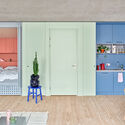
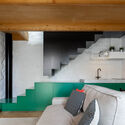
The Kitchen in the New Spatial Economy: 5 Contemporary Design Approaches - Image 2 of 23The Kitchen in the New Spatial Economy: 5 Contemporary Design Approaches - Image 3 of 23The Kitchen in the New Spatial Economy: 5 Contemporary Design Approaches - Image 4 of 23The Kitchen in the New Spatial Economy: 5 Contemporary Design Approaches - Image 5 of 23The Kitchen in the New Spatial Economy: 5 Contemporary Design Approaches - More Images+ 18

Content Loader

Image gallery

See allShow less
About this author
Cite: Enrique Tovar. "The Kitchen in the New Spatial Economy: 5 Contemporary Design Approaches" 27 May 2025. ArchDaily. Accessed . <https://www.archdaily.com/1030485/the-kitchen-in-the-new-spatial-economy-5-contemporary-design-approaches> ISSN 0719-8884

You've started following your first account!

Did you know?

You'll now receive updates based on what you follow! Personalize your stream and start following your favorite authors, offices and users.