1. ArchDaily
  2. Micro Apartments

Micro Apartments: The Latest Architecture and News

Design Solutions for Small Living: Maximizing Space in Apartments Under 40 Square Meters

Subscriber Access | 

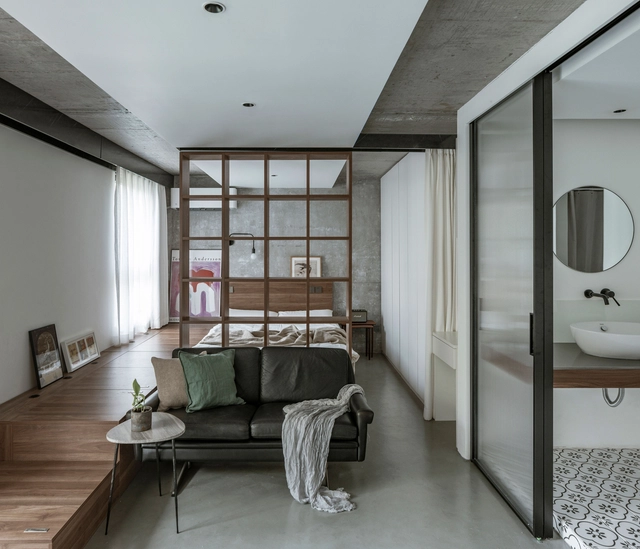
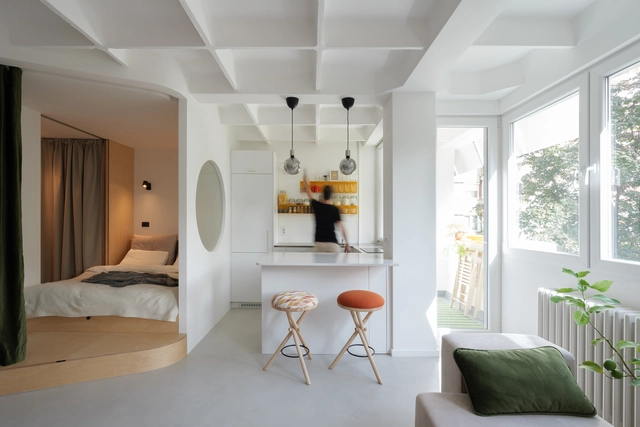
Living in densely populated cities is a reality for many. While the benefits of urban living—such as proximity to amenities, infrastructure, job opportunities, and lifestyle—remain highly valued, homes have seen a significant reduction in square footage. The trend toward smaller apartments has become increasingly common, with interior design playing a fundamental role. Reducing square meters demands efficient use of space and smart floor plan layouts. However, far from generating dull spaces, creativity in design has led to interesting architectural solutions that condense high-quality living into what is often called a micro apartment or studio, studios of 40m2 or under.

Design Solutions for Small Living: Maximizing Space in Apartments Under 40 Square Meters - Image 1 of 4Design Solutions for Small Living: Maximizing Space in Apartments Under 40 Square Meters - Image 2 of 4Design Solutions for Small Living: Maximizing Space in Apartments Under 40 Square Meters - Image 3 of 4Design Solutions for Small Living: Maximizing Space in Apartments Under 40 Square Meters - Image 4 of 4Design Solutions for Small Living: Maximizing Space in Apartments Under 40 Square Meters - More Images+ 22

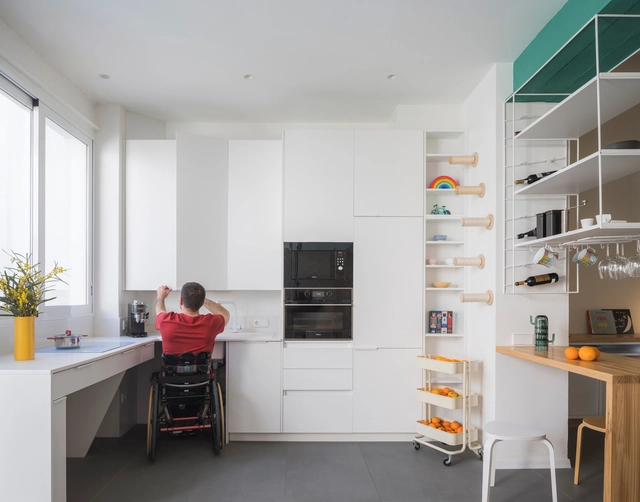
The Kitchen in the New Spatial Economy: 5 Contemporary Design Approaches

Subscriber Access | 

Space has become a luxury in many of the world's most densely populated cities—a growing reality that's hard to ignore. Megacities like Tokyo, Shanghai, Mumbai, Mexico City, and São Paulo already have populations exceeding 20 million, while other urban centers across Asia and Africa continue to expand rapidly. Among these, Delhi stands out: if current trends continue, it is projected to become the most populous city by 2028. As these cities expand, housing—especially new developments—follows a new logic: as square meters shrink, furniture adapts, and daily life learns to fit and thrive in high-density environments. This change isn't just about size; it reflects a new way of living. Where spaciousness once dominated, density now rules. Every corner gains spatial and commercial value, with the kitchen emerging as one of the biggest challenges in housing design today.

The Kitchen in the New Spatial Economy: 5 Contemporary Design Approaches - Image 1 of 4The Kitchen in the New Spatial Economy: 5 Contemporary Design Approaches - Image 2 of 4The Kitchen in the New Spatial Economy: 5 Contemporary Design Approaches - Image 3 of 4The Kitchen in the New Spatial Economy: 5 Contemporary Design Approaches - Image 4 of 4The Kitchen in the New Spatial Economy: 5 Contemporary Design Approaches - More Images+ 18

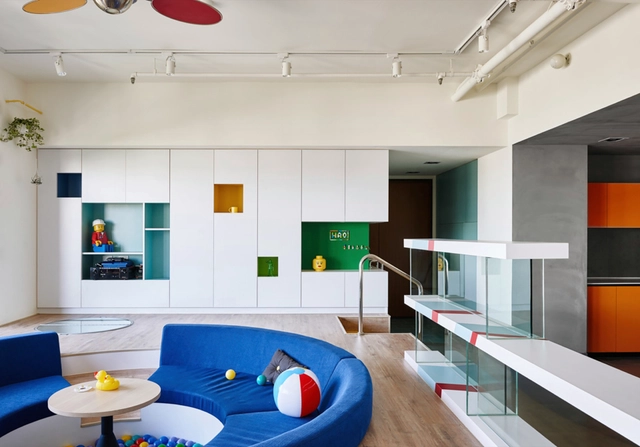
From Micro to Spacious: Maximazing Space in Taiwan’s Urban Apartments

Subscriber Access | 

Despite its small size, the island of Taiwan is densely populated, with more than 80% of its people living in urban areas. Available space is often limited, particularly in major cities like Taipei, Taichung, and Kaohsiung. Therefore, designers face the ongoing challenge of creating interiors that feel spacious, functional, and visually appealing despite their sometimes compact footprints. Rather than seeing these limitations as constraints, architects embrace them as opportunities to experiment with smart layouts and multi-functional furniture that enhances livability.

From Micro to Spacious: Maximazing Space in Taiwan’s Urban Apartments - Image 1 of 4From Micro to Spacious: Maximazing Space in Taiwan’s Urban Apartments - Image 2 of 4From Micro to Spacious: Maximazing Space in Taiwan’s Urban Apartments - Image 3 of 4From Micro to Spacious: Maximazing Space in Taiwan’s Urban Apartments - Image 4 of 4From Micro to Spacious: Maximazing Space in Taiwan’s Urban Apartments - More Images+ 7

nArchitects Receives National Design Award in Architecture 2023

nArchitects has just received the 2023 National Design Award in Architecture from the Cooper Hewitt, Smithsonian Design Museum. The award brings national recognition to the different forms of design that improve and enhance everyday life. In fact, the Architecture award selects a studio or individual for their holistic understanding of spatial experiences, and this year the committee picked nArchitects famous for their New York Micro-Apartment experiment, the cultural center A/D/O in Brooklyn, and many more interactive works.

nArchitects Receives National Design Award in Architecture 2023 - Image 1 of 4nArchitects Receives National Design Award in Architecture 2023 - Image 2 of 4nArchitects Receives National Design Award in Architecture 2023 - Image 3 of 4nArchitects Receives National Design Award in Architecture 2023 - Image 4 of 4nArchitects Receives National Design Award in Architecture 2023 - More Images+ 2

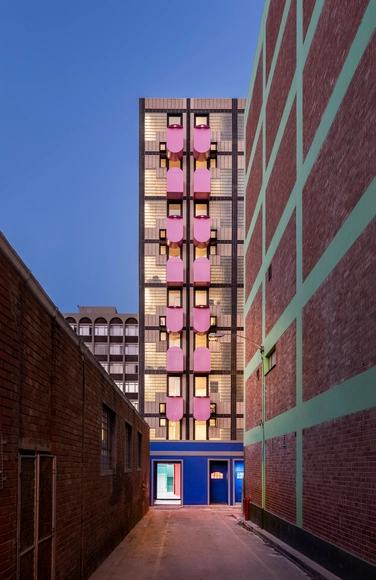
Uxolo Apartments / Two Five Five Architects

Uxolo Apartments / Two Five Five Architects - Exterior Photography, ResidentialUxolo Apartments / Two Five Five Architects - Interior Photography, Residential, KitchenUxolo Apartments / Two Five Five Architects - Interior Photography, Residential, Kitchen, FacadeUxolo Apartments / Two Five Five Architects - Exterior Photography, ResidentialUxolo Apartments / Two Five Five Architects - More Images+ 43

Interiors of Today: 17 Projects that Show How Current Cities and Living Trends are Influencing Modern Interior Architecture

Interiors of Today: 17 Projects that Show How Current Cities and Living Trends are Influencing Modern Interior Architecture - Featured Image
E Poolhouse / Habif Architects. Image © Vangelis Paterakis

The past couple of decades introduced the world to new ways of living as a result of different social, economic, and ecological changes. Naturally, these changes found their way into the architecture and urban practice, provoking new concepts within traditional typologies. Designing a space, regardless of its function, has always prioritized users' needs and ensured practicality and functionality, but recently, keywords like flexibility, privacy, inclusivity, and eco-consciousness have become driving forces behind design processes. In this interior focus, we will look at how current cities and living trends across the world have reshaped interior design and introduced modifications to typical typologies. 

Interiors of Today: 17 Projects that Show How Current Cities and Living Trends are Influencing Modern Interior Architecture - Image 1 of 4Interiors of Today: 17 Projects that Show How Current Cities and Living Trends are Influencing Modern Interior Architecture - Image 2 of 4Interiors of Today: 17 Projects that Show How Current Cities and Living Trends are Influencing Modern Interior Architecture - Image 3 of 4Interiors of Today: 17 Projects that Show How Current Cities and Living Trends are Influencing Modern Interior Architecture - Image 4 of 4Interiors of Today: 17 Projects that Show How Current Cities and Living Trends are Influencing Modern Interior Architecture - More Images+ 16

Micro Living in China: Tiny Houses as an Innovative Design Solution

According to the United Nation’s “The World’s Cities in 2018”, it is estimated that, “by 2030, urban areas are projected to house 60 percent of people globally and one in every three people will live in cities with at least half a million inhabitants.” Also, between 2018 and 2030, it is estimated that the number of cities with 500,000 inhabitants or more is expected to grow by 23 percent in Asia. China, as the largest economy in Asia, with a GDP (PPP) of $25.27 trillion, is expanding rapidly, both economically and demographically.

With more and more migrant workers coming into the bigger cities in China, it has become increasingly difficult for workers to find an affordable place to live. Some people decide to move away from urban centers and bear with the lengthy commute time, while others are seeking creative design solutions to transform their home into a tiny, functional space to meet their daily needs.

Micro Living in China: Tiny Houses as an Innovative Design Solution - Featured ImageMicro Living in China: Tiny Houses as an Innovative Design Solution - Image 8 of 4Micro Living in China: Tiny Houses as an Innovative Design Solution - Image 13 of 4Micro Living in China: Tiny Houses as an Innovative Design Solution - Image 14 of 4Micro Living in China: Tiny Houses as an Innovative Design Solution - More Images+ 13

SLICE Creates Apartments from Plugin Modules for Future City Living

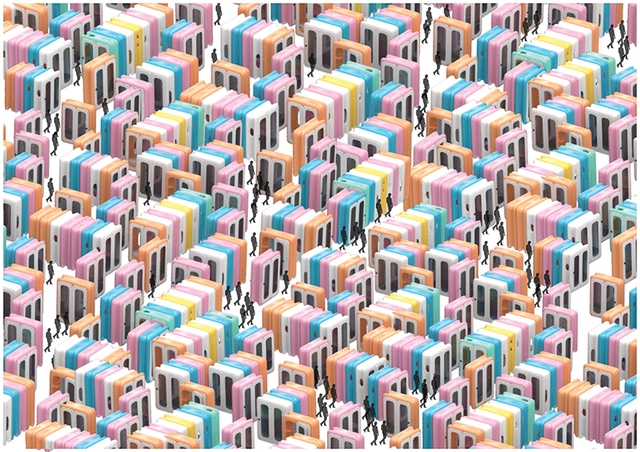
Iranian architect and concept designer Nasim Sehat has developed an alternative living module driven by adaptability for the gig economy. SLICE is described as a “sustainable, people centric, connected, self-contained, and flexible plug’n-play urban solution” targeted at future city dwellers.

SLICE consists of a layered module of functional plugins, combined to create basic spatial configurations. In tandem with the design of SLICE’s spatial profile, Shanghai-based Sehat has proposed a shared, on-demand digital service for module rental, maintenance, and payment.

SLICE Creates Apartments from Plugin Modules for Future City Living - Image 1 of 4SLICE Creates Apartments from Plugin Modules for Future City Living - Image 2 of 4SLICE Creates Apartments from Plugin Modules for Future City Living - Image 3 of 4SLICE Creates Apartments from Plugin Modules for Future City Living - Image 4 of 4SLICE Creates Apartments from Plugin Modules for Future City Living - More Images+ 2

The Economics Behind New York's Micro-Apartment Experiment

The Economics Behind New York's Micro-Apartment Experiment - Image 5 of 4
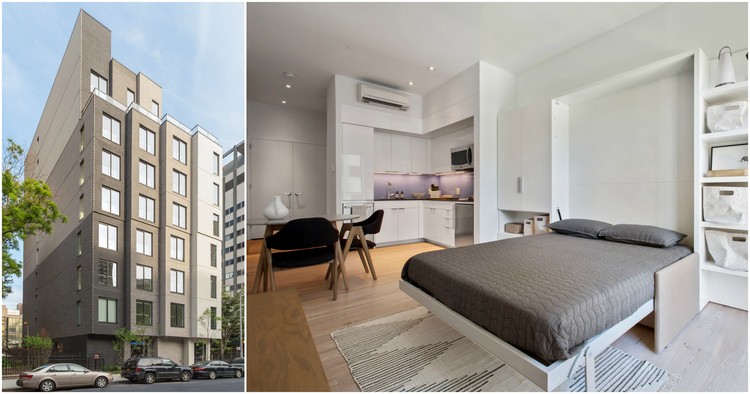
Are micro-apartments a revolutionary trend? Or are developers exploiting an out-of-control market? Carmel Place, located in Manhattan's Kips Bay, features 55 units that range from 260 to 360 square feet. Image Courtesy of Cameron Blayock

This article was originally published by The Architect's Newspaper as "Are micro-apartments a revolutionary trend? Or are developers exploiting an out-of-control market?"

The situation was dire: People were flocking to cities for work, but scarce land and lack of new construction were driving up rent prices. Middle-income residents couldn’t afford the high-end housing stock, nor did they want to enter cramped—sometimes illegally so—apartments. Luckily, a new housing solution appeared: In exchange for small, single-occupancy units, residents could share amenities—like a restaurant-kitchen, dining area, lounge, and cleaning services—that were possible thanks to economies of scale. Sound familiar?

It should: It’s the basic premise behind Carmel Place, a micro-apartment development in Manhattan’s Kips Bay that recently started leasing. The development—whose 55 units range from 260 to 360 square feet—was the result of Mayor Bloomberg’s 2012 adAPT NYC Competition to find housing solutions for the city’s shortage of one- and two-person apartments. Back then, Carmel Place needed special legal exceptions to be built, but last March the city removed the 400-square-foot minimum on individual units. While density controls mean another all-micro-apartment building is unlikely, only building codes will provide a de facto minimum unit size (somewhere in the upper 200 square foot range). What does this deregulation mean for New York City’s always-turbulent housing market? Will New Yorkers get new, sorely needed housing options or a raw deal?

The Economics Behind New York's Micro-Apartment Experiment - Image 1 of 4The Economics Behind New York's Micro-Apartment Experiment - Image 2 of 4The Economics Behind New York's Micro-Apartment Experiment - Image 3 of 4The Economics Behind New York's Micro-Apartment Experiment - Image 4 of 4The Economics Behind New York's Micro-Apartment Experiment - More Images+ 14

Micro-Apartments: Are Expanding Tables and Folding Furniture a Solution to Inequality?

Subscriber Access | 

This opinion-piece is a response to Nick Axel’s essay Cloud Urbanism: Towards a Redistribution of Spatial Value, published on ArchDaily as part of our partnership with Volume.

In his recent article, Nick Axel puts forward a compelling argument for the (re)distribution of city-space according to use value: kickball trophies and absentee owners out, efficient use of space in. Distributing urban space according to use certainly makes sense. Along with unoccupied luxury condos that are nothing more than assets to the 1% and mostly empty vacation apartments, expelling (rarely accessed) back-closets to the suburbs frees more of the limited space in cities for people to actually live in.