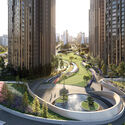
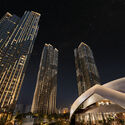
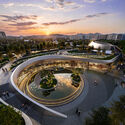
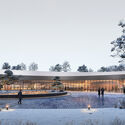
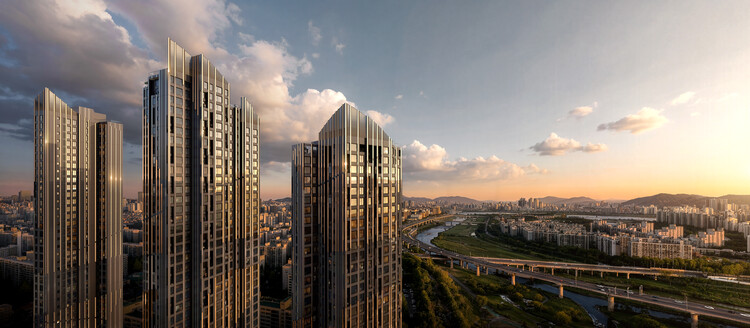
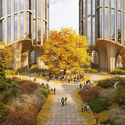
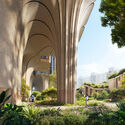
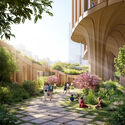
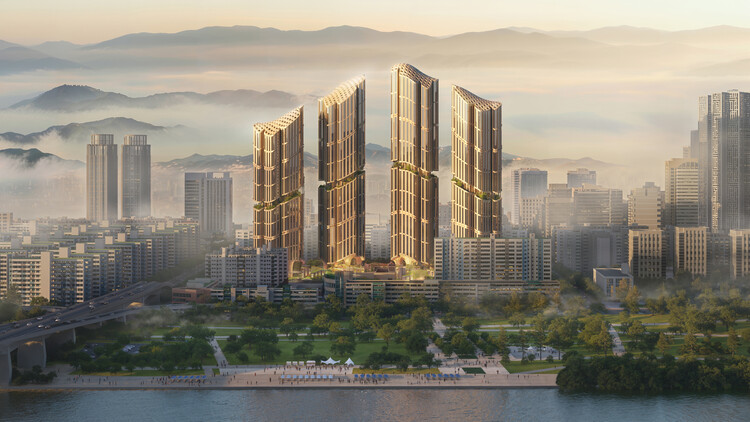
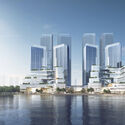
Studio Libeskind, in collaboration with HJ Design Partners and Seoul-based SAMOO Architects & Engineers, has designed a new high-density residential development in Seoul, South Korea. The Daechi Ssangyong 1 Redevelopment Project replaces an existing five-building, 630-unit complex in Daechi-dong, Gangnam-gu, with six new residential towers up to 49 storeys tall and nearly 1,000 housing units. The project is being developed for the Daechi Ssangyong 1 Redevelopment Union by Samsung C&T, with construction expected to begin in 2027 and be completed in 2030.
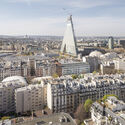
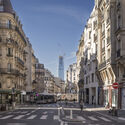
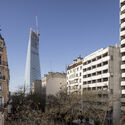
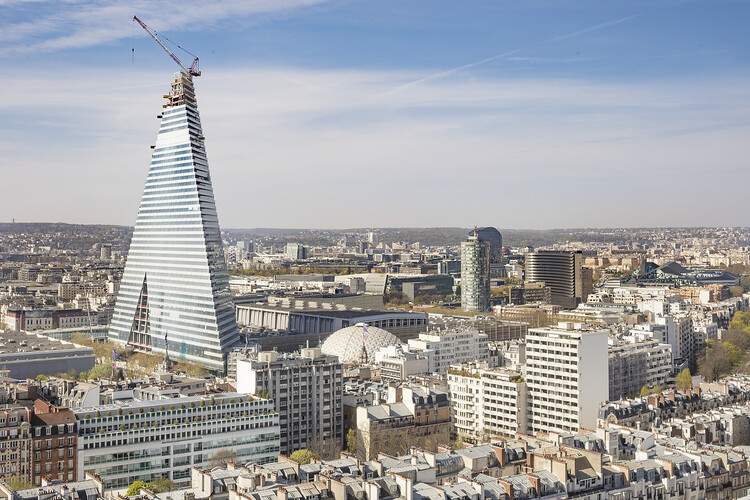
Twenty years after its ideation, Herzog & de Meuron's controversial Tour Triangle in Paris is reaching completion. The triangular, all-glass tower located in the city's 15th arrondissement topped out at 42 stories on April 24, 2026. The project's progress was marked by opposition, financial roadblocks, and legal disputes before construction began in 2022. The 180-meter tower is now the third-tallest building within Paris city limits, behind the 330-meter-tall Eiffel Tower, the 231-meter-tall The Link in La Défense, and the 210-meter-tall Tour Montparnasse. The building will retain this title indefinitely due to a skyscraper ban reinstated in 2023 by Mayor Anne Hidalgo, following persistent opposition to tall buildings in the city. The recent progress was documented by photographer Stefano Candito, ranging from an urban view of the building to a close-up look at its nearly completed structure.
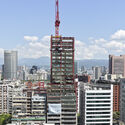
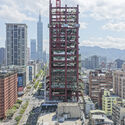
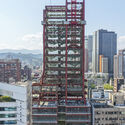
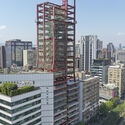
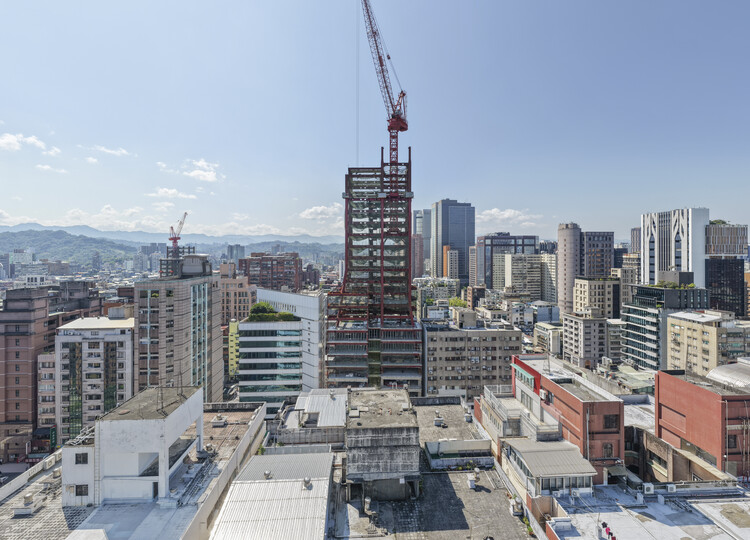
OMA's Metropolitan Village, also known as Taipei Xinyi–Wenchang Residence, is a new high-rise residential tower located in Taipei's Xinyi Central Business District. The project, led by David Gianotten and Chiaju Lin, with HCCH & Associates Architects Planners & Engineers as local collaborator, provides 11,961 m² of residential floor area on a 736 m² site. The 95 m, 23-storey building follows the concept of a "vertical village," reflecting the increasingly fluid boundary between living and working identified by the architects in post-pandemic Taipei. Commissioned by Continental Development Corporation, the project broke ground in 2024 and is scheduled for completion in 2027. Recent images show construction progress, with the highest structural element now being installed.
Heatherwick Studio has unveiled the first images of the design for the transformation of the Daegyo Apartments in Yeouido, Seoul. The project, the firm's first residential project in South Korea, was presented by Thomas Heatherwick to the Yeouido Daegyo Residents' Union at a meeting of their General Assembly on February 28, 2026. The development was first announced in mid-2025 as a community-led residential redevelopment, with the studio remaining involved throughout all phases of the project from concept to completion. The design is set to transform four residential buildings from 1975, aiming to establish a distinctive and appealing character, distinct from the average apartment building in Seoul.
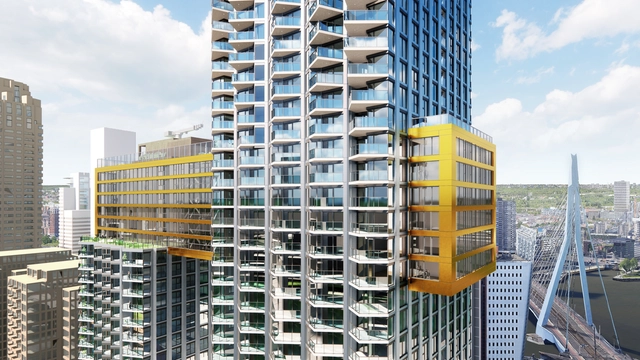
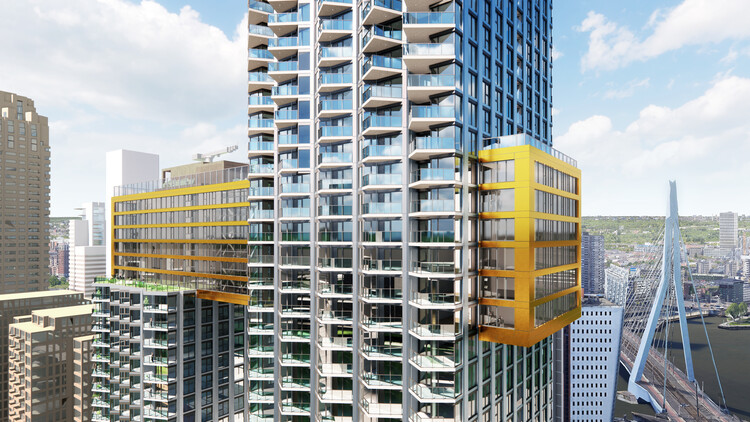
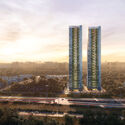
The Sax residential towers by MVRDV. Render. Image Courtesy of MVRDV
The City of Rotterdam, developers BPD and Synchroon, and architecture firm MVRDV have officially begun construction on The Sax, a major residential project located on Rotterdam's Wilhelminapier. Designed to contribute to the city's ongoing densification efforts, the development will deliver 916 apartments within two interconnected towers. Once completed, The Sax will make Wilhelminapier the most densely populated area in the Netherlands, making the project an example of compact urban growth. The design comprises two towers, combining a wide mix of housing types and shared amenities with strong connections to public transport and sustainable mobility solutions, including parking for 1,800 bicycles and a fully automated car garage. With its silver façade and undulating balconies, the building's form echoes the shape of a saxophone, reflecting the character of Rotterdam.
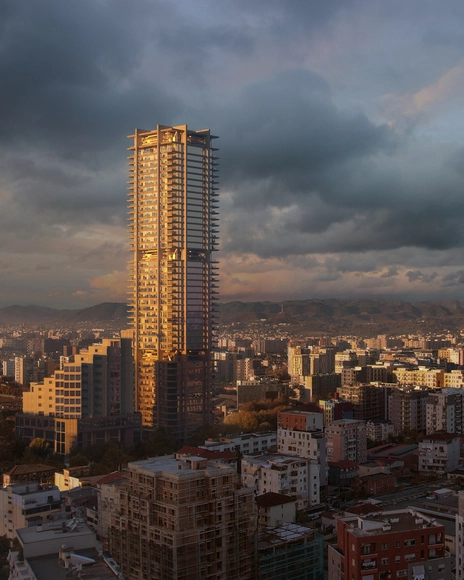
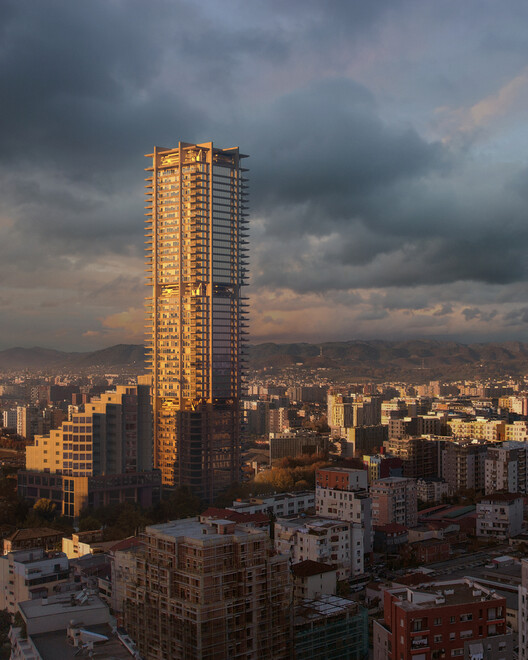
Oricon Tower project by Eduardo Souto de Moura and OODA. Exterior render. Image Courtesy of Plomp
Eduardo Souto de Moura and OODA have unveiled the design of the Oricon Tower, a 180-meter mixed-use skyscraper planned for Tirana, Albania. Located near OODA's recently completed Bond Tower, the project is part of the city's ongoing transformation under the Tirana 2030 Masterplan, which envisions a denser and more connected urban core. The tower will house offices, residences, retail areas, and a hotel, contributing to the city's evolving skyline and serving as a new urban gateway between Tirana's historic center and its expanding western districts.
The island of Taiwan presents a varied natural and topographical context, characterized by a land area of 36,197 square kilometers and a high population density of 644 people per square kilometer. Its geological location, situated on the edges of the Eurasian and Philippine Sea plates, has resulted in a predominantly mountainous and rugged topography. While this forces the majority of the 23 million residents to inhabit large urban centers on the western coastal plains, the island maintains an active agricultural sector, with approximately 22% of its land allocated to farming.
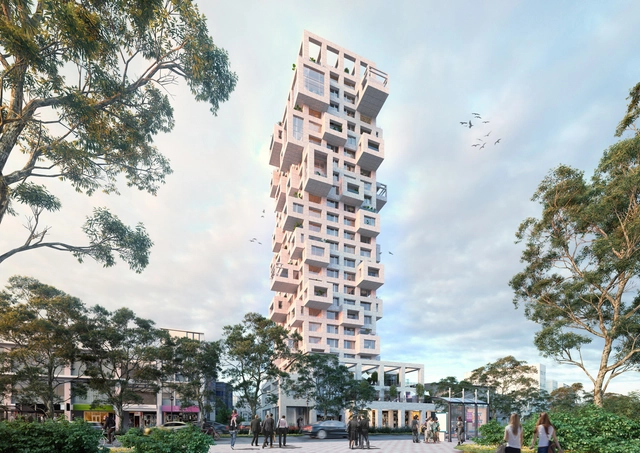
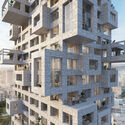
"Out of the Box" tower exterior render. Image Courtesy of MVRDV
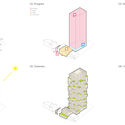
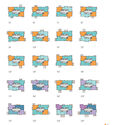
MVRDV has released images of "Out of the Box", a 12,025 sqm residential tower in Tianmu, one of Taipei's northernmost neighborhoods. Designed for Win Sing Development Company, the project began in 2019 and was developed using a system of standardized elements digitally distributed based on criteria such as habitability, efficiency, and access to community services. These elements are expressed in the tower's irregular, gridded façade, which features a layered marble cladding.
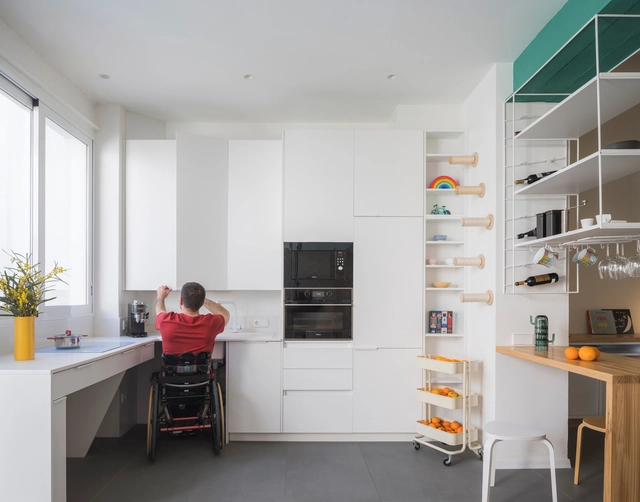
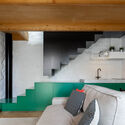
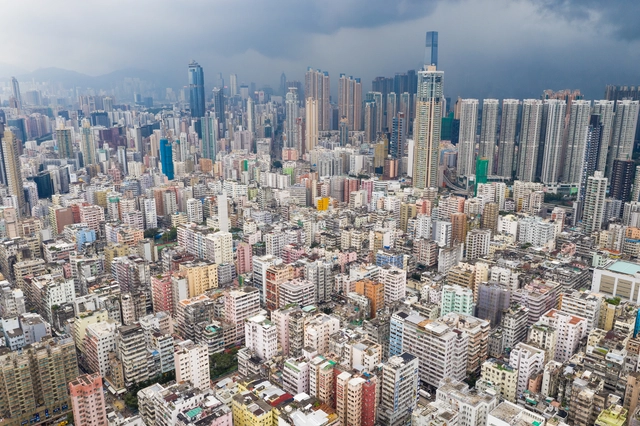
Space has become a luxury in many of the world's most densely populated cities—a growing reality that's hard to ignore. Megacities like Tokyo, Shanghai, Mumbai, Mexico City, and São Paulo already have populations exceeding 20 million, while other urban centers across Asia and Africa continue to expand rapidly. Among these, Delhi stands out: if current trends continue, it is projected to become the most populous city by 2028. As these cities expand, housing—especially new developments—follows a new logic: as square meters shrink, furniture adapts, and daily life learns to fit and thrive in high-density environments. This change isn't just about size; it reflects a new way of living. Where spaciousness once dominated, density now rules. Every corner gains spatial and commercial value, with the kitchen emerging as one of the biggest challenges in housing design today.
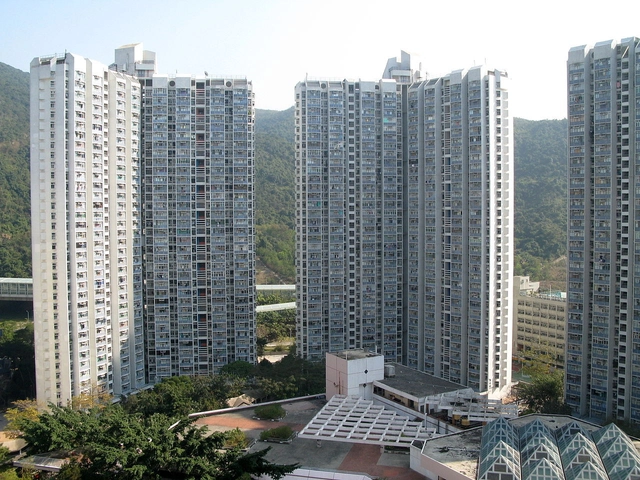
India finds itself a watershed moment with its urban evolution. With the United Nations projecting urbanization to reach 68% by 2050, the country's metropolitan regions needs to adapt to increasing populations while maintaining equity and quality of life. India's urban population is expected to exceed 600 million by 2030, drawing attention to both urban density and sprawl. As an emerging player in the domain of high-rise development, India is restructuring how it engages with urban growth by shifting from horizontal sprawl to vertical expansion.
When discussing modernist living, several iconic private residential projects may first come to mind—Le Corbusier's Villa Savoye, the Case Study Houses, most notably by Richard Neutra, Pierre Koenig, and Charles and Ray Eames, as well as the glass houses by Mies van der Rohe and Philip Johnson. Most of these projects exemplified an idealized vision of modern living, set in picturesque landscapes and characterized by experimentation with new construction methods, materials, and spatial concepts. Their designs embraced openness, blurring the boundaries between private and public spaces, largely unburdened by constraints such as density, efficiency, accessibility, public transit integration, or communal considerations.
While these modern homes remain influential in contemporary residential design, they also—perhaps unexpectedly—laid the groundwork for high-density housing principles. Concepts such as the interplay between public and private space, modular construction, and prefabrication, initially explored in these private residences, have been adapted to the vastly different constraints of social housing.
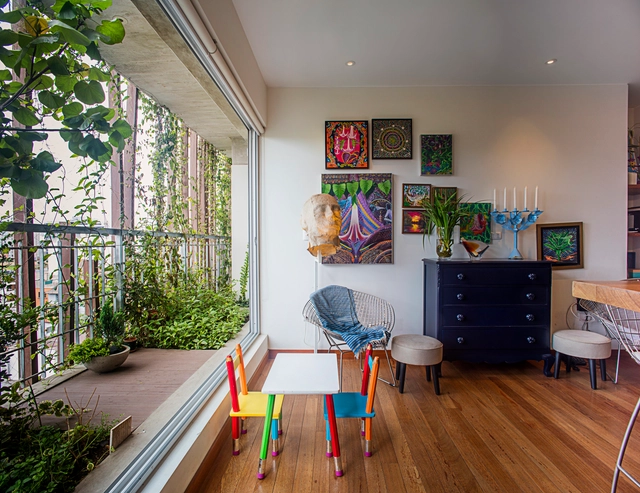
Urban living has become synonymous with limited space and creativity for compact apartments. As cities become more dominated by concrete and steel, there is an exciting, yet unsurprising, rise in interest in embracing the green thumb, even within the constraints of a dense urban environment. This interest is not purely to tend aesthetic tastes, as studies consistently show that exposure to nature reduces stress, improves focus, and enhances overall well-being. However, in dense urban environments, the challenge lies in finding innovative ways to make this vision a reality for apartments where every inch matters.
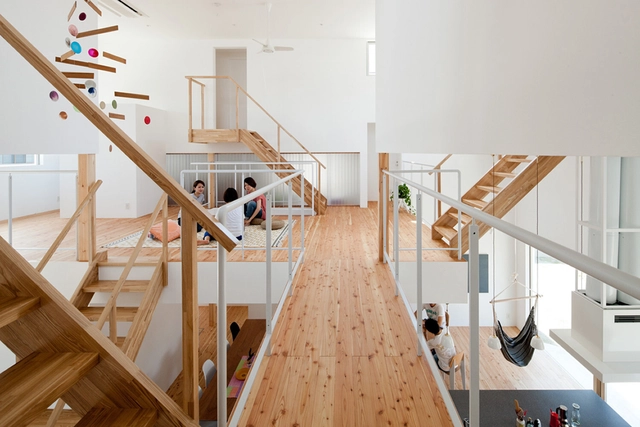
Rising populations and soaring real estate prices pose significant challenged to urban housing. In a desperate hunt for affordable living options, communal co-living spaces have emerged as a creative solution, offering quality living conditions through clever space optimization strategies. By implementing innovative design techniques, these shared living communities maximize every square foot to create functional spaces within compact footprints.
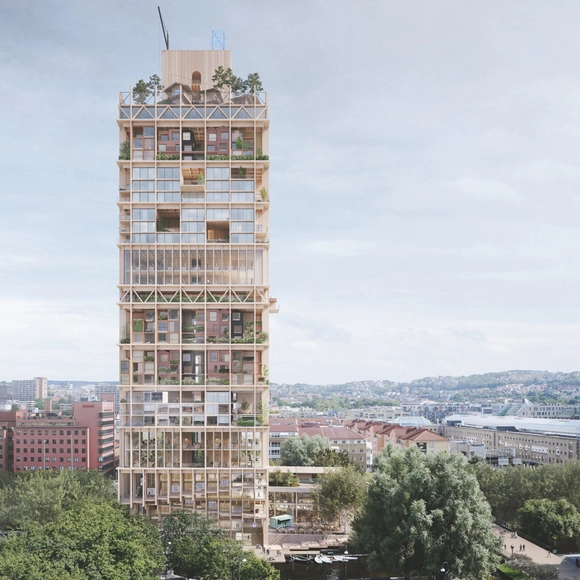
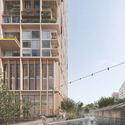
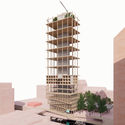
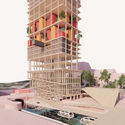
Haptic and Ramboll conceptualize a novel structure that hopes to eradicate the need for demolition. The timber high-rise construction is built for maximum flexibility and longevity, being able to change its configuration and, consequently, its functions to adapt to the city’s changing needs. The design concept is based on the idea of maximizing the potential of sites in inner-city neighborhoods. To exemplify the regenerative potential of this model, the architects have applied the concept to a tight urban area in the center of Oslo, Norway.
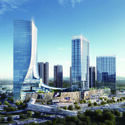
China is undergoing a rapid urbanization process, and in South China’s Greater Bay Area (GBA), it takes the form of a comprehensive development strategy. The region, comprising the cities of Hong Kong, Macau as well as other nine fast-developing municipalities in Guangdong Province, is being transformed into a city-cluster of world importance and architecture practice. Ronald Lu & Partners contributes to this vision through high-density urban developments shaped around principles of sustainability and human-centric design.
Do you know a great example of high density living environments built within the last 30 years? Share your knowledge and contribute to the creation of an open repository via Crowd Creation. To be truly exemplary, the area should include a mixture of functions (at least some of them high-rise) where the physical fabric retains a human scale at street level despite the high density.
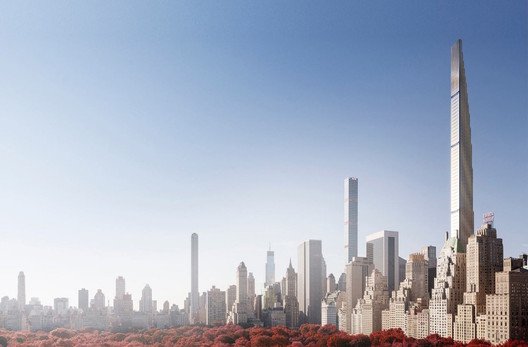
The hyperreal renderings predicting New York City’s skyline in 2018 are coming to life as the city’s wealth physically manifests into the next generation of skyscrapers. Just like millennials and their ability to kill whole industries singlehandedly, we are still fixated on the supertalls: how tall, how expensive, how record-breaking? Obsession with this typology centers around their excessive, bourgeois nature, but – at least among architects – rarely has much regard for the processes which enable the phenomenon.