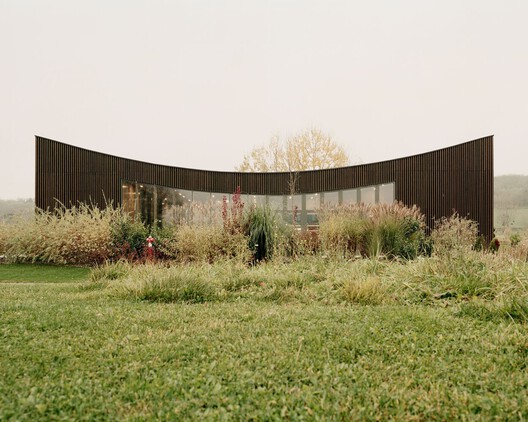
Hungary's architectural landscape spent the socialist decades being redrawn from above, its cooperative farms consolidated out of family plots and its standardized housing blocks distributed across the territory in a form that would have been identical anywhere else. The sociologist Virág Molnár, whose Building the State traces the political uses of architecture in postwar Hungary and East Germany, has made the case that this reshaping of the built environment was one of the political project's primary instruments and not a byproduct of it, a mobilization that carried through socialist modernization and into the transition that followed. The British critic Owen Hatherley, whose Landscapes of Communism explores the housing estates of Budapest alongside those of Warsaw and Kyiv, describes the far end of that same inheritance, where buildings have outlasted the ideology that commissioned them and remain occupied by people with little stake in defending the reasoning behind them.


Privatization scattered this administered territory. Farmland returned to smallholders through restitution, vineyards came back into private hands, and the civic buildings that had served the collective system emptied out with no clear successor. Levente Polyák, whose work at the Hungarian Contemporary Architecture Centre has centered on vacancy and on what can be built from the resources already sitting on the ground, identifies a shift in development thinking away from large-scale investment and toward the slow reuse of what exists. Budapest has moved in the opposite direction, concentrating its ambition in the Liget development, the largest cultural investment in the country's recent history, whose competitions have gone substantially to foreign offices, Sou Fujimoto's House of Music among them. For a younger generation, the work at that scale is not in Budapest, and has not been for some time.


